William Faulkner

  • Today we Live (1933)

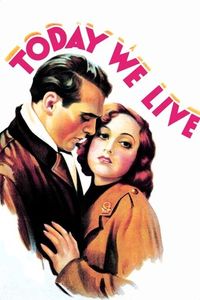
    Today we Live (1933)

    (On Cable TV, October 2021) I got interested in Today we Live because I’m trying to complete my Howard Hawks filmography, but not every one of movies is a hit, and this early effort goes right in the bottom tier. On paper, there’s certainly plenty to like about the film and the people it involves. I mean: Directed by Hawks! Dialogue by William Faulkner! Featuring Gary Cooper, Joan Crwford and Franchot Tone! A big romantic WW1 epic! Well, sometimes the ingredients don’t take in the mix: Today we Live has an excruciating first hour of drawing-room conversations set against the WW1 backdrop, with a love triangle between the heroine and two officers laboriously constructed according to familiar conventions. It’s dull in a way that we rarely associate with Hawks movies (even previous ones, such as Scarface). The pacing issues are compounded by a dour tone that leaves no place for Hawks’ usual humour, and even less for capable, vivacious characters. Fortunately, the reason why Hawks took the project becomes more obvious in the second half, with some aerial combat footage (much of it apparently recycled from Hell’s Angels) and characters in peril. On the other hand, the abrupt change in tone and style does give further credence to the idea that the film is a botched blend of creative influences, studio interference and mid-flight corrections—reading about the troubled production history of the film is very instructive. In the end, what’s left is something that feels a lot like a lesser take on material done better in Wings or Hell’s Angels, and nowhere near what Hawks himself would do in later years.

  • To Have and to Have Not (1944)

    To Have and to Have Not (1944)

    (On Cable TV, March 2019) On paper and on the screen, you really have Classic Hollywood running on overdrive in To Have and to Have Not: Let’s see—Howard Hawks directing from a script by William Faulkner from a story/treatment by Ernest Hemingway; Humphrey Bogart and Lauren Bacall as the lead couple, while they were having an affair behind the cameras that would lead to their marriage later on. Coming from Warner Brothers, there’s an obvious kinship here to be made with Casablanca, especially as the story delves into wartime shenanigans between the French Resistance and the Vichy government. Bogart himself clearly plays his own screen persona as the tough and glum smuggler, while Bacall (despite her young age) delivers an exemplary Hawksian-woman performance with more iconic lines of dialogue than most actors get in an entire career. None of this is particularly new (although the Hemingway/Faulkner collaboration is noteworthy), but it’s fun to have another go-around when it works so well—and the Bogart/Bacall chemistry would itself lead to a few encores. Typically for Hawks, there are a few choice quotes, and the direction is limpid, going to the heart of what you can do with Bogart-as-a-rogue and a luminescent Bacall as a strong wartime dame. Not quite noir but certainly not fluffy, To Have and to Have Not is so much fun to watch (although you may want to space your viewing away from Casablanca due to the inevitable parallels) that it ends a bit abruptly, although not without having Bogart shoot a guy, as it should be. The work of several craftsmen all working at the best of their abilities, it’s quite a treat, but also a good example of what the studio system could do when it was firing on all cylinders.