William Holden

  • Miss Grant Takes Richmond (1949)

    Miss Grant Takes Richmond (1949)

    (On Cable TV, October 2021) I happened to go overnight from a 1939 Lucille Ball film to 1949’s Miss Grant Takes Richmond and it wasn’t hard to appreciate what ten years did in defining her persona. Going from cute but largely undistinguishable ingenue to the patented look and behaviour that would ensure her epochal TV success, Ball also used the decade to gather her full face and curly hair that still distinguishes her today. In Miss Grant Takes Richmond, she plays a slightly ditzy young woman who graduates last in her secretarial class and is immediately snapped up by a shady bookmaker who puts up a false real estate front to camouflage his illicit business. After all, who really needs a competent secretary when she’s just supposed to be window-dressing? Alas, his plan doesn’t account for a few wildcards: What our protagonist lacks in secretarial competence she more than makes up in drive, goodness and interpersonal skills: before long, she has transformed our bookmaker in a reluctant but authentic real-estate developer, rallying the community around an affordable housing project—even when hilarious mistakes are made along the way. Then there’s the final flaw: Falling in love with her, even as an old flame threatens to pull him back in the shady life. Ball is in fine form here—there’s a moment where she stares wide-eyed at the camera and we can see the almost fully-formed Lucy of I Love Lucy, going for slapstick with an ease that would be remarkable if it wasn’t designed to look effortless. It helps to have William Holden as a co-lead, able to play a leading man that would be plausibly involved with organized crime. The comedy can get very broad at times—such as the construction site sequences—but Ball is better when she can go full-spectrum on verbal and physical comedy. While Miss Grant Takes Richmond is perhaps too basic to live on as a classic comedy, it’s quite entertaining, fun to watch and an excellent showcase for Ball’s talents just on the cusp of her becoming a superstar.
  • The Country Girl (1954)

    The Country Girl (1954)

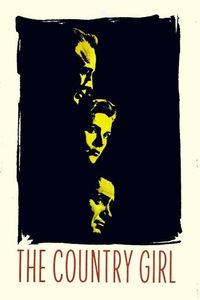
    (On TV, September 2021) There are several reasons why The Country Girl is a film still worth watching today. You can point to its quality as an Oscar-nominated film, you can laud its character-based plot following an alcoholic singer given one last chance at redemption, you can point at a cast that includes Bing Crosby, William Holden and Grace Kelly in de-glammed mode, or you can highlight the technical quality of the production. There’s quite a punch to seeing Crosby letting go of his likable persona to play a man troubled by a past tragedy, constantly at risk of crawling back into the bottle and bringing down an entire Broadway production with him. Holden is solid as a producer trying to keep his friend from imploding… until he starts having an affair with his wife. And then there’s Kelly in one of her least glamorous roles as the long-suffering wife of an alcoholic, tempted by another man for a while. Decent dialogue and plotting keep the film interesting despite some broad story threads and the familiar environment of a Broadway show: there’s some good narrative rhythm to the result. As an Oscar nominee, The Country Girl hasn’t aged too badly.

  • Picnic (1955)

    Picnic (1955)

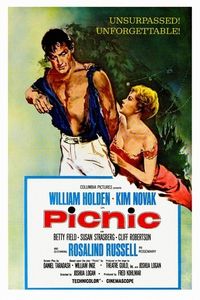
    (On Cable TV, July 2021) William Holden plays a slightly off-brand version of his persona in Picnic, as a hobo who walks into a small Midwestern town to ask for a job from an old college friend… but sees everything turn sour when his friend’s paramour falls for him instead. Much of the film’s atmosphere depends on how credibly it can portray a small Kansas town in the waning summertime, and Picnic actually does well there — much of the film’s middle act revolves around happenings at a Labour Day country fair and there’s a strong sense of atmosphere throughout the film as it plays out the “stranger comes to town” narrative. Holden is too old to play a twentysomething drifter with a strong attachment to a college friend, but his shirtless scenes bring all the girls to the yard (but especially Kim Novak, in an early role) and his star quality sustains much of the film. I did like Susan Strasberg, but it’s not clear if I like the actress or the tomboyish nerd she plays. On the other hand, I definitely dislike the shrewish character played by Rosalind Russell but the actress is magnificent here and never more so as when her characters deliver a merciless verbal bombardment to the protagonist. Picnic is a small-scale kind of drama, a bit overwrought by today’s standards but still interesting to watch in its own way. The final aerial shot is evocative (and novel enough for the time), but much of the film can be used as an exemplar for the way Midwestern America thought of itself in the mid-1950s, creating an artificial utopia belied by the unfulfilled desires of its characters.

  • The Devil’s Brigade (1968)

    The Devil’s Brigade (1968)

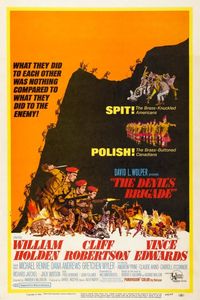
    (On Cable TV, May 2021) As a lesser-known counterpart to The Dirty Dozen, The Devil’s Brigade takes the same general formula, but gives it a somewhat more classic Hollywood approach — toned-down violence, amped-up adventure for a film that reflects more the war-is-an-adventure 1950s than the war-is-hell 1970s. The added wrinkle for Canadian viewers is that the premise of the film (based on a true story) matches the worst of the American Army with the best of the Canadian Army in what is, at least initially, a rather fun clash of sensibilities in which the Canadians don’t come out too badly. William Holden plays a senior office tasked with whipping up a crew of misfits and miscreants into a fighting force, and much of The Devil’s Brigade’s first half is spent describing training deep in the American hinterland, trying to polish the sharp edges of the bad boys brought together by narrative fiat. The Canadians are nominally better than their American counterparts, but the friction between the two is a highlight. (It also acknowledges, even if fleetingly and inaccurately, the French factor in having Canadians around.)  Following a familiar narrative path, the second half of the film takes us in far more familiar territory, as the newly unified commando group (nothing like a good bar fight with locals to shape a fighting force) takes on the Nazis in the battle of Monte la Difensa. Very loosely based on a true story, The Devil’s Brigade is instantly recognizable as pure Hollywood entertainment. But if it’s not quite as striking as The Dirty Dozen (against which it had the misfortune of competing at the yearly box-office), it’s a lot more fun to take in — the violence is minimized in favour of the character-building vignettes and adventures. Then there’s the Canadian aspect for us cinephiles north of the border.

  • Executive Suite (1954)

    Executive Suite (1954)

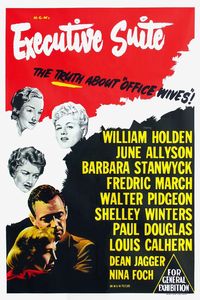
    (On Cable TV, October 2020) I am fascinated by tales of boardroom intrigue, a fascination that comes from my background as a white-collar office drone, constantly aware and at the mercy of senior management shenanigans. I also suspect that such high-level executive machinations are perhaps the closest modern equivalent to palace intrigue, what with the king having to deal with his scheming courtiers in modern attire. No matter the reason, I found myself very quickly drawn into Executive Suite’s steely-eyed depiction of the feeding frenzy that follows the death of a furniture magnate, as two visions of the company battle it out in a succession drama played in voting shares and personal grudges. The film’s opening moments are remarkable, as a first-person point of view of someone sending a telegram and going out to take a taxi turns tragic when the person dies and his wallet is stolen. It turns out that we’ve just seen the death of a company president, and the wallet theft means that no one (except for one executive using this knowledge for insider trading) will realize what happened for another day. The film settles down a bit after this fantastic opening sequence, but the sides are steadily described, what with a quality-conscious designer going up against a penny-pinching financial officer for control of the company. There are many similarities here with 1956’s Patterns, but Executive Suite is a solid drama of moves and counter-moves (with a seriousness underscored by, well, the lack of a score), with a likable hero played by William Holden and decent supporting roles for Barbara Stanwyck, Fredrick March and Shelley Winters. Director Robert Wise’s approach to the material is decidedly close to the ground, but there’s a decent understated flourish to the script, as it quickly sketches characters, and sometimes catches them in compromising positions. I don’t expect everyone to be as enthralled by Executive Suite as I was, but there’s something carefully balanced about its dramatic plotting and its almost realistic approach to the material.

  • The Bridges at Toko-Ri (1954)

    The Bridges at Toko-Ri (1954)

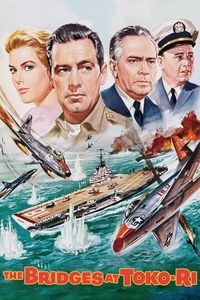
    (On TV, August 2020) You can cleanly fit The Bridges at Toko-Ri in the evolution of the war movie. It borrows equally from the propagandist past of WW2 movies, the reality of the then-recent Korean War and anticipates the nuanced statements of Vietnam-era films. About a third of the film is an exploration of Korean-conflict marine aviation: shot in colour, it focuses on search-and-rescue operations, and on carrier-based bombing missions. Executed with the full cooperation of the US Navy, it harkens to the propaganda films of WW2 in showing us life in the service and what awaited the conscripts who chose that branch of the service. But the formula gets a somewhat more nuanced twist than the WW2 movies—about another third of the film revolves around a protagonist taken from civilian life into the reserves, and asked to fly a dangerous bombing mission. Everyone around him—wife, hierarchical superior, friends— are concerned that he may not come back, and in a larger perspective that the war may not be worth its cost in lives. Such sentiments are a bit unusual to find in military-themed movies of the era (they probably owe much to the James Michener’s novel on which the film was based) and they have contributed to The Bridges at Toko-Ri’s generally well-regarded sophistication. This ambivalence toward combat is carried through the final third of the film, in which our protagonist (William Holden) kisses his wife (Grace Kelly) goodbye and goes bombing. He won’t be back. The dour ending feels like a cold shower if you’re expecting the film to be like the other military adventures of the 1950s—the protagonist is gone, and everyone is mourning a fate that they had clearly anticipated. While I’m ambivalent about my enjoyment of the result (I like my war movies victorious), I can’t deny that the film has plenty of great moments along the way. And The Bridges at Toko-Ri simply feels prescient about the direction that Hollywood war movies would follow a few decades later.

  • Paris When It Sizzles (1964)

    Paris When It Sizzles (1964)

    (On Cable TV, July 2020) It would have been enough to put together a romantic comedy starring Audrey Hepburn and William Holden, set in Paris, and have him play a burnt-out writer on a deadline being helped by a winsome assistant. It’s not an original premise, yet it’s more than enough to be fun. But Paris When It Sizzles goes quite a bit further into charming ridiculousness, by presenting the result of their collaboration (a thriller called The Girl Who Stole the Eiffel Tower) on-screen with them playing the main characters, and throwing in not just plenty of Hollywood in-jokes, but cameos from notables such as Tony Curtis, Mel Ferrer, Marlene Dietrich and Frank Sinatra. The romantic narrative is predictable (would you believe the writer falls in love with his assistant?) but it’s the very funny metafictional game that holds audience interest as the reality of Paris When It Sizzles keeps going back and forth between the writers’ struggles and the imagined movie. Hepburn is in her element in a romantic comedy—and once again back in Paris. Fans will note one scene in which she has her long hair down—wow. Meanwhile, Holden is quite good as well—he looks like Tom Hanks at times, and like an authentic action hero at others. While many of the references can only be appreciated by Classic Hollywood fans, Paris When it Sizzles has aged well with its metafictional conceit and main stars. It’s a lot of fun even if the ending doesn’t provide complete closure. (Am I the only one who likes it when protagonists meet their deadlines?) But then again, that may be the point—the film is intent on making audiences happy even when it doesn’t make sense. As a romantic comedy set in Paris, how could it be otherwise?

  • Love Is a Many-Splendored Thing (1955)

    Love Is a Many-Splendored Thing (1955)

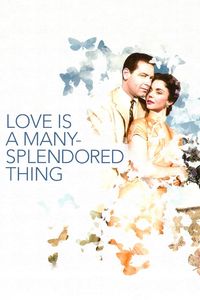
    (On TV, May 2020) To say that Love Is a Many-Splendored Thing is okay may not seem like a ringing endorsement, but compared to what it could have been, it’s almost a complete triumph. Consider that it’s a romance between an American journalist and a Eurasian woman in the late 1940s, as seen from mid-1950s America. Plus, it features all-Caucasian Jennifer Jones playing a character of mixed ethnicity through heavy makeup that she herself disliked. (The film’s production history is rich in anecdotes about how Jones did not get along with anyone on set, least of all co-star William Holden.) Also consider that the film dealt directly with adultery (well, “they’re separated” degrees of adultery) and interracial relationship in the waning years of the Production Code (a special dispensation was obtained, almost solely because the story was adapted from a popular novel). There are all sorts of ways in which Love Is a Many-Splendored Thing could have gone as wrong as other films of the time and… it didn’t. The sensible treatment of cross-ethnicity romance was somewhat daring for its time, and doesn’t feel all that terrible nowadays. What it does feel like is an overwrought romantic drama, but that’s not such a bad thing: it still feels romantic, and it still feels important. It’s easy to see why the film was nominated for eight Academy Awards (snagging three for song, score and costume design)—including some splendid colour cinematography of mid-1950s Hong Kong. Could it have been better? Absolutely, and that would be near-certain for any contemporary remake. Could it have been worse? Also, yes—this film is held together almost entirely by its sympathy for both of its lead characters.

  • Born Yesterday (1950)

    Born Yesterday (1950)

    (On Cable TV, October 2019) There’s a deceptive simplicity to the premise of Born Yesterday: from afar, it’s a standard Pygmalion spinoff, what with a journalist being asked to educate the girlfriend of a businessman. But it’s in its execution that the film proves to be quite a bit more than expected. For one thing, the film (which takes place in Washington) doesn’t miss an opportunity to link personal virtues to political values—the coarse businessman who slaps his wife is proved to be a criminal who aspires to fascism (how familiar!), and the ingenue who learns better about the bedrock principles of the nation uses that knowledge to emancipate herself from a bad situation. Then there’s Judy Holliday, who comes across (though a grating voice and uncouth manners) as a hopeless self-obsessed hick but eventually proves herself as smart as everyone else—and do so in an almost imperceptible manner, making us care before we even know it’s happening. William Holden and Broderick Crawford also provide good performances to round up the lead trio. The script is a bit blunt at times and certainly predictable overall, but it does have moments of cleverness and humour, good dialogue and effective directing. Handled by veteran George Cukor, Born Yesterday proves to be a solid comedy with a timeless message, a still-impressive lead performance and a political message that really wouldn’t be out of place in a Frank Capra film.

  • Stalag 17 (1953)

    Stalag 17 (1953)

    (On TV, December 2017) It’s hard to watch Stalag 17 and not think about the fetishization of history. Like it or not, World War II drama has grown more and more ponderous over the past decades, to the point where a World War II movie is presumed to be all about gravitas and serious considerations of the terrible cost of war. It wasn’t always so, though, whether we’re talking about the blockbuster WW2-themed action adventures from the seventies (The Great Escape, Where Eagles Dare) or, even closer to the war itself, a film like Stalag 17 that spends a lot of time in silly comedy before getting down to the thriller business. Early parts of the film, such as the white-line painting sequence, really wouldn’t feel out of place in an Adam Sandler movie. Keep in mind that Stalag 17 is based on the real-life experiences of its writers (filtered through a Broadway play adapted on-screen) and so presents the full range of humour and horror of German POW camps—not the almost idealized portrayal of later writers with an indirect knowledge of events. As such, Stalag 17 uniquely captures in time a historical truth of sorts, then wraps it up in entertaining thriller mechanics about uncovering an informant and helping a marked prisoner escape. William Holden is quite good as the resourceful but unjustly accused protagonist, while Don Taylor plays the other lead engagingly. Writer/director Billy Wilder has a long and varied filmography, and his Stalag 17 is still quite entertaining to watch, even as its closeness to the subject does give it a now-unusual quality.

  • Damien: Omen II (1978)

    Damien: Omen II (1978)

    (On Cable TV, August 2017) Laughing at deaths in horror movies isn’t necessarily a sign of psychopathy. As Damien: Omen II shows, it can be a perfectly valid reaction to over-the-top filmmaking. Let’s not pretend that this sequel is a vast step down for the series: The original The Omen certainly had its share of overdone moments and aggressive cues: its decapitation sequence remains a case study in how nominally terrifying material can become risible through pathos overload. Damien seems to have retained most of the wrong lessons from its predecessor in a very loose follow-up: Its death scenes are just as ridiculous, and its structure boils down to a series of loops in which secondary characters try to warn the protagonist about the evil of Damien, only to die horribly. It gets amusing, then ridiculous, then tiresome, then annoying. While I still like some elements of the film (giving the lead role to William Holden as a visibly elderly man, for instance, or the final twist in which the true allegiance of the wife is revealed), much of it is sensationalistic tripe with a blaring soundtrack that will tell you when you should be scared. The late-seventies atmosphere makes Damien slightly more interesting now than it was upon release, but that’s not quite enough to make it an essential viewing other than following up on the original.

  • Sunset Blvd. (1950)

    Sunset Blvd. (1950)

    (On VHS, November 2000) There’s a reason this film is often called a classic: Great script, archetypical characters, unconventional plotting and crunchy dialogue. Narration has quite possibly never been done this well ever since. Surprisingly enough, modern films have stolen a lot from Sunset Boulevard: The style of L.A. Confidential, lines from Cecil B. Demented, clichés from Hollywood exposés (“I’m still big; it’s the pictures that got smaller”), scenes from countless parodies… It’s a testimony to the impact of the film. Granted, Hollywood loves talking about itself, and that might explain Sunset Boulevard‘s enduring reputation, but the film itself is rather good. Not only a good story, but also a courageous film, with its willingness to go beyond the star system while simultaneously starring some personalities as themselves (Cecil B. Demille, Buster Keaton, a Warner brother, etc…) Wow.

    (On Cable TV, September 2021) For years, Sunset Boulevard was one of the few “classic Hollywood” films reviewed on this site, and this first viewing certainly reflects the perspective of someone unfamiliar with vintage filmmaking. Revisiting the same film after a few thousand black-and-white movies is certainly interesting, because I’m not seeing the same thing. I now hail the greatness of writer-director Billy Wilder, I’m aware of Gloria Swanson’s silent film stardom, I like William Holden, and I can recognize on sight such notables as Eric von Stronheim, Hedda Hopper, Fritz Lang and Buster Keaton. It’s easier to see the film noir influences (even if the film itself is a very different take on film noir), easier to catch the Hollywood in-jokes, and easier to appreciate the deceptive simplicity of the film’s structure. In other areas, however, the film simply feels as fresh as ever: The script is deliciously good, mixing a strong narration (from a dead man’s perspective, no less) with a carefully gradated escalation in the film’s intensity. It does a very fine job at balancing the outrageous, sometimes macabre drama with quips from the protagonist – and while the overall story remained in mind from a first viewing, I had forgotten some of the finer, more subtle moments, such as when the narrator allows himself to become manipulated by the older woman. Hollywood was roughly forty years old when Sunset Boulevard was released, and in the grand perspective, you can see this middle-age-crisis film being part of its evolution – reflecting on an earlier era, and making a good movie out of it. (Singin’ in the Rain would be released the following year.)  I thoroughly enjoyed my second viewing of the film – knowing more about Hollywood does make the result even more remarkable.

  • The Bridge on the River Kwai (1957)

    The Bridge on the River Kwai (1957)

    (On VHS, August 2000) There’s a lot to love about this film: The lush backdrops of the south-Asian jungle, the expensive sets, the great actors, the superb premise of wartime defiance by typically British soldiers forced to work for the Japanese. The script is very good for most of the film’s duration, presenting issues of ethics and conduct yet not browbeating anyone with them. All throughout the film, there’s a palpable sympathy with the bridge-building team, which makes things worse when the film decides that war is hell and that there can be no such thing as a fun wartime adventure. That’s when people start dying and the last-minute attempt to instill a Profound Message falls flat. Too bad, because the rest of the film is classic material.

    (Second Viewing, On Cable TV, April 2021) Considering that it’s been twenty years since I first saw The Bridge on the River Kwai and can now put it in context (of Hollywood’s thirst for spectacle at a decade when TV was entering households, in the context of epic director David Lean’s career, in the context of Alec Guinness and William Holden and the shifting context of war movies over the decades), I was curious to see what I would make out of a second view. While I wasn’t completely bowled over by the result, it’s still quite a remarkable film – perhaps the most entertaining of Lean’s epics (I meant: you can admire Lawrence of Arabia, but it’s not quite as much fun as this one), certainly one of Guinness’ landmark roles as a depiction of a British stereotype, a great turn from Holden and a shining illustration of what 1950s filmmaking could do when it was allowed to spend some time and money shooting on location. The portrayal of a British officer under pressure to do something good (like building a bridge) under bad circumstances (such as being a prisoner of war) in service of something distasteful (such as facilitating military transports) is suitably complex. The similarities to Apocalypse Now go much farther than opposing, “Madness!” to “The horror!” – if The Bridge on the River Kwai has aged so well, it’s in large part because it has a grim attitude toward war that would resonate just as well with later generations. As an older viewer, I now understand far better the grim conclusion and how it works in the context of the film as more than a downbeat tragedy or a spectacular sequence. I still think that the film is too long, that it meanders, that it’s unbalanced between its two leads. But it still works well enough, and it’s still worth a look.