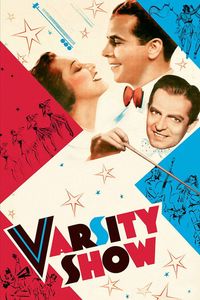
Varsity Show (1937)
(On Cable TV, May 2020) When measured against other musicals of the late 1930s, Varsity Show definitely comes across as a second-tier film. It doesn’t have snappy songs, barely ekes out a rousing finale thanks to Busby Berkeley, breaks no ground in matters of originality, and while it sports a fine Dick Powell, the rest of the cast isn’t particularly remarkable. (Well, except for Mabel Todd, very cute as a bespectacled blonde “class pest.”) On the other hand, Varsity Show does keep viewers’ attention and has a lot to offer if you’re willing to engage with it. Part of its fun is how it combines the archetypical “let’s put on a show” structure of a movie musical with the college campus culture of the 1930s—meaning that if you ever wondered what it would feel like to walk down a campus a few decades ago, then Varsity Show has a Hollywoodized answer for you. William Keighley’s direction is surprisingly interesting in the first few minutes, despite substandard actors—there are some Altmanesque ensemble cast-juggling and quick cuts to briskly introduce characters within the film’s 80 minutes. The first half of the film has strong comic moments, as students looking to put on a show hired an alumnus now on Broadway—while unaware that his last three shows have been a failure and he needs out of Manhattan fast. For twenty-first century viewers, there’s something utterly fascinating in seeing students from the 1930 complain about the stodginess of an authority proposing ideas that were in vogue back in the… 1910s. The second half of Varsity Show cranks up the musical numbers as the troupe goes to New York City and the show does go on. It concludes with one of Busby’s signature epic numbers, where human figures are a mere component of something much bigger. Some of the film’s sauciest moments bring to mind pre-code film—I could have sworn at times that this was an early-1930s film. For all of those reasons—Varsity Show is not a great musical, but it’s a fun one as long as you’re indulgent.