William Wyler

  • The Westerner (1940)

    The Westerner (1940)

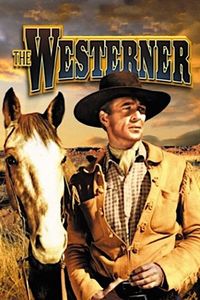
    (On Cable TV, July 2021) The Western film corpus is large and not always distinguished — it’s filled with humdrum horse operas merely parroting the mythology of the wild west, cheaply conceived and indifferently executed. The Westerner, however, manages to clear the bar thanks to some skepticism and above-average acting. The story of a drifter who ends up in a long-term adversarial friendship with notorious historical figure “Judge” Roy Bean, the film is slightly ahead of the curve for the genre in poking at the heroic narrative of the west. As early as 1940, it fictionalizes Bean in a somewhat unflattering light, taking for granted that he was abusing his authority for personal gain rather than civilizing the west through frontier justice. This take on a sometimes-beloved figure is already interesting, but then there’s the great interplay between Gary Cooper (stoic but bland as usual as the drifter) and Walter Brennan (in fine form as Bean) — they elevate the material, and make it do it justice to a years-long battle of wills. One shouldn’t read too much into the historical figure of Bean as portrayed in the film: numerous liberties were taken with the facts, and the film is more comfortable poking at the idea of a hanging judge than the reality of it. Still, The Westerner is directed with some narrative energy by William Wyler, and the blend of straightforward western themes with more unusual elements, such as an English actress becoming the obsession of the film’s villain, adds a bit more flavour to the mix. I have muted reactions to westerns and The Westerner doesn’t quite do enough to get me to be enthusiastic about it, but it is a better-than-average western and should appeal more specifically to fans of the genre.

  • Dead End (1937)

    Dead End (1937)

    (On Cable TV, July 2020) As much as I’d like to be more positive about Dead End, it just ends up being a fairly dull New York crime drama. It does star an ascendant Humphrey Bogart in one of the 1930s roles most suited to his later persona (albeit as a villain), plus a leading role for Joel McCrae. The plot is perhaps a bit more sedate than you could expect: it’s based on a theatrical play, spends a lot of time on social issues class commentary on gentrification and doesn’t quite capitalize on its assets—or maybe just isn’t interested in telling anything but a drama opposing high class characters and low street urchins. Director William Wyler does have a few impressive camera moves, especially in the film’s opening moments. Alas, that’s not enough to make Dead End any more distinctive—the plot is uninvolving, and even Bogart’s supporting turn can’t save it completely.

  • The Letter (1940)

    The Letter (1940)

    (On Cable TV, February 2020) If you’re looking for a defining sequence from Bette Davis’s career, you could do a lot worse than the opening moments of The Letter, in which she viciously unloads a gun into a man we don’t know yet. Explaining how we got to that point (and whether the titular letter undermines her claims of self-defence) is the bulk of the narrative, which adapts a play from W. Somerset Maugham and heads to Malaya for an exotic setting. An early film noir, The Letter is merciless in its conclusion and in describing the corruption of its protagonist. A moody atmosphere from director William Wyler completes the package. Davis is exceptional here, taking on a protagonist’s mantle with typical skill and determination. It’s easy to see why The Letter is held in high esteem today, and how it influenced the film noir subgenre in the decade that followed. I defy anyone to watch the opening scene and not go “All right, tell me more.”

  • Dodsworth (1936)

    Dodsworth (1936)

    (On Cable TV, April 2019) Much of the interest in exploring classic films is not only experiencing solid movies that have wowed past audiences, but measuring them against our own modern standards, and seeing how some of them still make an impression even through decades of changes. Dodsworth is a more interesting case than many—it clearly reflects the standards of the 1930s, but it still manages to surprise through some unusual character work that goes beyond clichés and easy stereotypes. The story starts once a small-city mogul sells his company, with the hazy goal of doing nothing for the rest of his life, spending time with his wife and visiting faraway destinations. That’s already an interesting character (even though he’s warned by others that he won’t like a loafing retirement), but the situation becomes even more complex once his wife makes it clear that she does not approve of that plan. As is often the case, retirement doesn’t suit the couple, who steadily drift apart in many ways (none as simplistic as “he wants this, she wants that”—these are multifaceted characters, and so are their conflicts) until a mutual breakup that ends up confirmed by the end of the film. Walter Huston stars as the title character with Ruth Chatterton taking on the ingrate role of his wife, and small appearances from Paul Lukas and David Niven as suitors. Some 1930s tropes are indissociable from Dodsworth—the romance of long-distance cruises as the best way to cross the Atlantic, the details about the early decades of the automobile industry, the lingering remnants of the European class system as intertwined with the aristocracy, and the cut-and-tried gender roles of an American marriage: There’s a supposedly playful line said from the wife to her husband, “Will you beat me?” that betrays a whole lot. At the same time, there’s no clear gender stereotype here between the husband wanting to step away from workaholism, and the wife gladly lusting after other men. The characters are strong enough to avoid clichés, and I have some respect for the way Dodsworth makes the wife a gradual villain without quite becoming misogynistic. (Viewers are clearly meant to identify with the fun-loving husband rather than the wife increasingly revealed to be an arriviste.)  There’s also something intriguing in the way director William Wyler ensures that the story—adapted from a theatrical play, even if that filiation is nearly obscured by the film’s globetrotting settings—makes upper-class ennui relatable by asking itself what would happen if people would be free to do that they wanted without artificial obstacles, and letting things play out. There are plenty of timeless lessons here even for modern couples, and it’s such things that ensure that Dodsworth remains relevant and interesting even after eight decades.

  • Funny Girl (1968)

    Funny Girl (1968)

    (On Cable TV, March 2018) The best reason to see Funny Girl was and remains Barbra Streisand—for all of her diva reputation, here she is at the beginning of her career with the chance to play a few decades’ worth of a character through early success and later heartbreak. In taking on a star-making debut role loosely based on Fanny Brice’s life, Streisand gets to be funny and attractive, then increasingly embittered by a bad marriage even as her fame grows. Most of all, Streisand gets to sing in a musical that becomes a showcase for a broad range of talents, from light-hearted to dramatic. It’s quite a performance, and it should charm even though who have grown dubious of post-fame Streisand. The great Omar Sharif shows up in a key role as her no-good husband—the story here is rather standard, but Streisand’s performance elevates it. Funny Girl is also notable in that while it was made in the twilight years of the big Hollywood musical (and during the big upheaval that brought New Hollywood to the forefront), it doesn’t suffer all that much from the encroaching bitterness that killed off the genre in the 1970s—while the second half of the film is significantly less amusing than the first, the transition is accomplished gradually, and much of the first half is actually quite funny. William Wyler’s direction is fine—with some standout sequences such as the last scene of Act One. Still, this is Streisand’s show and she remains the single best reason to watch Funny Girl even today.