Yvette Mimieux

  • Where the Boys Are (1960)

    Where the Boys Are (1960)

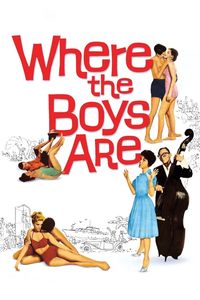
    (On Cable TV, February 2021) I’m uncomfortable calling Where the Boys Are a sex comedy, even though it’s most commonly described as such. For one thing, the moniker “sex comedy” as applied to 1960s films means something very different than when applied to its much coarser post-1975 equivalent: Even in movies squarely taking a look at the changing nature of sex in a liberating society, 1960s sex comedies were usually charmingly restrained by today’s standards. The second, most fundamental objection is that Where the Boys Are may start as a sex comedy with boys and girls heading to Fort Lauderdale in order to you-know-what, but the film steadily slides into a dramatic register, with a sobering ending that kicks the joy out of nearly all of the characters thanks to a rape sequence (largely off-screen, but still disturbing) that punctuates an increasingly disillusioned arc. If you think that circa-1960 films were innocent, you may be confusing the execution with the fundamentals: As our characters, both male and female, head to the beach, everyone is acutely aware that boys prey on girls and that nice girls must learn to say no — the girls who escape the worst have developed defences against common come-ons, honed by constant practice. If that’s not a damning, timeless lesson, I’m not sure what is. It does put Where the Boys Are in an uncomfortable spot, though: if you stopped watching at the three-quarter mark, you’d probably recall the film as an amiable, naughty, clever sex comedy examining the burgeoning spring break culture among college students heading south for a week of fun. There’s some truly funny material here, whether it’s physical comedy, girls accumulating more and more floor-sleepers in their hotel room every passing night, some satirical material about “dialectic jazz” and unusually kind police officers. The cast is also pretty good, what with a slim George Hamilton, lovely Paula Prentiss, cute Yvette Mimieux and funny Connie Francis, along with Dolores Hart playing band leader to this clever merry bunch. But then there’s the letdown of the film’s last few minutes that, ironically, saps the comedy but sharply increases the interest of the film for modern viewers—as a shining demonstration that people of the 1950s–1960s, despite the neutered contemporary depictions of their times, knew perfectly well what it was all about and what was going on. It feels like an inevitable tragedy that the films inspired by Where the Boys Are, most notably the Beach party series, were considerably lighter to the point of fluffiness — but they made money and offended no one.

  • The Wonderful World of the Brothers Grimm (1962)

    The Wonderful World of the Brothers Grimm (1962)

    (On Cable TV, December 2020) An intriguing artifact from one of the corners of film history, The Wonderful World of the Brothers Grimm is not only a George Pal fantasy spectacle, but a rare feature film to have been shot in panoramic Cinerama – a film process that recorded and projected on three separate screens, as to immerse the audience in wraparound experience. No, the gimmick didn’t last a long time, and yes, trying to fit that to a TV screen can lead to some very strange visual artifacts. Still, it’s one of those curios made for technical appreciation as much as for plot: while the story weaves the life of the real Brothers Grimm with short fanciful interpretations of their tales, viewers may be more interested by cinematography that attempts to take advantage of the near-surround screens of the Cinerama process. Some scenes are long wide takes where the camera doesn’t move; others make a conscious effort to move through space to wow audiences. Little of this works on the small screen, but that’s fine – sometime, just seeing what The Wonderful World of the Brothers Grimm tries to do can be entertaining in itself. As for the narrative, well, it’s a clumsy, almost endearing fantasy from times where fantasy tropes literacy wasn’t as commonplace: At least, with fairytales, we’re attaching the plot devices to familiar childhood material. The stop-motion animation sequences remain impressive, while in between Barbara Eden and Yvette Mimieux, at least there’s something more than special effects to see. (Otherwise, there’s a young and sprightly Russ Tamblin playing the hero, with comic relief from a short appearance from Terry-Thomas.) I’m ambivalent about whether to recommend The Wonderful World of the Brothers Grimm as a purely narrative experience – on a TV screen, the compromises of Cinerama filmmaking make it almost impossible to watch without noticing the making of the film more than focusing on its substance. Still, even budding film historians will get a kick out of seeing an alternate future never taken for cinema.

  • The Black Hole (1979)

    The Black Hole (1979)

    (Second Viewing, On Cable TV, September 2019) I distinctly remember seeing trailers for The Black Hole on TV—it’s hard to forget the spectacular “meteorite heading for the heroes” shot that capped it off. Viewing the film as an adult is something else—It’s a film with a strong split personality, both aimed at kids with cute robots and terrible logic, but also a dark and nightmarish Science Fiction drama that almost literally ends in hell. (“Event Horizon for kids” strikes far too close to the truth to be a joke description.) As a result, The Black Hole can feel like a schizophrenic experience: a special effects showcase (they aged better than you’d expect), a summer blockbuster clearly taking aim at Star Wars’s success, a horror-lite story with easily guessable “twists,” and a good old-fashioned space adventure. In the middle of so much stuff, the cast doesn’t get enough attention, what with names such as Maximillian Schell, Robert Forster, Anthony Perkins, Yvette Mimieux and Ernest Borgnine—what kind of movie was this? There is stuff in there that is so clearly of the 1970s that watching them today feels alien—I mean: a robot shooting gallery, ESP with robots, a quote-spewing robot? If you haven’t seen The Black Hole in a while, have another look at it. If you haven’t seen it yet, do it now, and strap yourself in for a wild mixture of elements that you wouldn’t necessarily put in the same movie.

  • The Four Horsemen of the Apocalypse (1962)

    The Four Horsemen of the Apocalypse (1962)

    (On Cable TV, August 2019) Sometimes, the best-intentioned projects mutate into a monstrous parody of themselves, and we know this about the 1962 version of The Four Horsemen of the Apocalypse because there is another version to compare it to: The 1920s original version of The Four Horsemen of the Apocalypse. In this case, we can see the worthwhile intention in updating a WW1 story about a family torn by war to a post-WW2 setting. Director Vincente Minnelli, already familiar with the logistical demands of musical movies, should have been an ideal taskmaster for a sweeping multi-year epic involving a large family over two continents. And yet, watching the remake of The Four Horsemen of the Apocalypse, the entire thing falls flat. As satisfying as it can be to see Nazis getting what they deserve, whether it’s a slap or a bullet, there’s not a whole lot to the film. Much of it seems to be discussions rather than actions, weighed down by interminable dialogues. Sure, it’s great to have Glenn Ford here, except that neither the role nor the style of the film does him many favours. The sets are fantastic, mind you—but there’s a strange detachment to the entire film, as if it was consciously holding back from getting into the thick of the action. At least Yvette Mimieux is there to add some interest: her character is the best that the film has to offer. The rest is ponderous, slow, far too well-mannered even for an expensive early-1960s colour production. Historically, The Four Horsemen of the Apocalypse is often remembered for having been one of the films (along with a colour remake of Cimarron which was actually decent enough) that hastened MGM’s decline into the 1960s. That’s a far heavier burden that this disappointing film should bear, but you can see in it the Hollywood studio malaise that was starting to exasperate moviegoers in the 1960s and would later lead to the rejuvenated New Hollywood.

  • The Time Machine (1960)

    The Time Machine (1960)

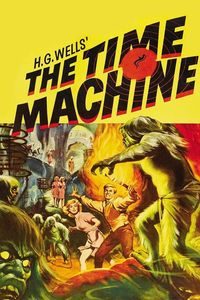
    (On DVD, December 2017) The bad news is that The Time Machine isn’t particularly faithful to the H.G. Wells novel, but the good news are that the film is at its most fascinating when it does diverge significantly from the source material. While the film suffers a partial lobotomy in not really taking an interest in Wells’ social-class parable about the Eloi and Morlocks (instead presenting the Morlocks as straight-cut monsters) and isn’t geared toward the melancholic far-future envoi of Wells’ narrative, it does make up for these deficiencies by strong period content. Diverging from the novel in order to update our Victorian-era protagonist on the evolution of the twenty-first century up to the film’s release, The Time Machine touches upon both World Wars and a nuclear holocaust, inserting them where the original novel could only imagine. The film being from 1960, this means that we get twice-filtered atmospheric content, as we look at the late 1950s look at Victorian England look at the far future. Whew. It may be scientifically indefensible (I rather liked the way our protagonist ends up in 1966 right on time for a nuclear war … and then outruns a lava flow) but it is interesting in its own way. Director George Pal concocts an entertaining blend of SF concepts, then-ground-breaking special effects and intriguing set design. Rod Taylor makes for a likable square-jawed hero, while Yvette Mimieux is fetching enough as promoted-to-love-interest Weena. Special-effect evolution aside, this 1960 version is significantly better than the dull 2002 remake.