Zack Snyder

  • Army of the Dead (2021)

    Army of the Dead (2021)

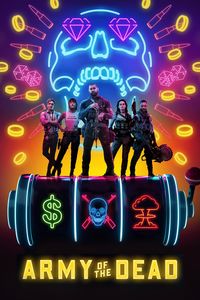
    (Netflix Streaming, May 2021) On paper, Army of the Dead sounds pretty good: blending a casino heist film with a post-apocalyptic zombie-infested setting is reasonably newish and certainly a great fit for writer-director Zack Snyder’s filmography. Unfortunately, there’s always a “but…” or two to any Snyder project, and this one is certainly no exception. The core of the film is fine — present Las Vegas as a zombie-infested zone on the verge of being nuked, assemble a team hyped to be able to do the heist, drop them in the zone, have them fight out various dangers, suffer the inevitable betrayal, whittle their numbers down and have the survivors narrowly escape the impending nuclear explosion. Good bones on that story, and Snyder sometimes knows how to make it look great. It’s the rest that doesn’t quite work. After a dynamite opening sequence cramming an entire film’s worth of exposition (and two or three low-budget movies’ production expenses) in five minutes, Army of the Dead gets down to business and almost immediately gets weird. And I don’t mean weird as in quirky, atmospheric or eccentric, but weird as in indulging in excess, puzzling tangents, extraneous bits of worldbuilding and elements that are far less interesting than they should have been (namely, the “Alphas” smart zombies). The most charitable explanation that has been provided for all this is that Army of the Dead is the first chunk of a more expansive imaginary universe that may expand to include aliens, robots, time-travel, parallel universes and (depressingly, once again…) a complete zombie takeover of the Earth. Maybe. [October 2021: First spinoff Army of Thieves, which I preferred to Army of the Dead, offers some support for this theory.]  But it does make the film a bit vexing to watch, as its overinflated running time keeps diverging in tangents. (But not all tangents are bad: the tiger zombie? Terrific.)  Other areas of the film are disappointing for more familiar reasons: Snyder likes gore a lot more than I do, and his sense of story is often deficient — witness the dumb ways team members are taken out. But at least we’re on more familiar ground with those issues. At least things are handled with a decent amount of energy and some appropriate actors in key roles. Dave Bautista is rarely less than charismatic and this time is no exception, Matthias Schweighöfer is a bit of an audience stand-in between obvious action heroes, and while Tig Notaro was added to the film during post-production (replacing a problematic actor via CGI and careful editing), she ends up being one of the clear highlights. It all adds up to a film that delivers the goods, but is held back in many ways from going beyond that. Worse than that is the feeling that Army of the Dead, like far too many corporate products of the 2010s and beyond, is incomplete by design — we may get the full story later if the vagaries of the market allow for it, or we may never do. (Or by the time it’s delivered, it may have mutated into something else.) But so it is in today’s mass-market movie industry: have a bite now, stay hungry for more. Just once I’d like a story with a resolution, a zombie film where they’re all destroyed in the end, a Snyder film I could just enjoy without going “but…”
  • Batman v Superman: Dawn of Justice (2016)

    Batman v Superman: Dawn of Justice (2016)

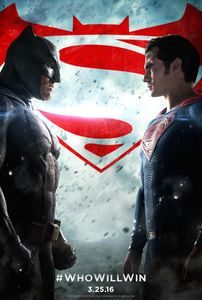
    (Video on Demand, October 2016) Hmm. As much as I’d like to be the well-meaning optimist who thinks that there shouldn’t be a Marvel-vs-DC movie rivalry and that great movies are good for everyone, I must confess that lately, DC’s artistic choices (i.e.; handing over the series to Zack Snyder, going for angst-and-gloom, kick-starting a shared universe without building the groundwork) have led me to see them as the incompetent villains to Marvel’s generally competent spectacle factory. As much as I would have liked Batman v Superman to prove me wrong, it ends up confirming what a lot of reviewers are saying to DC: “Gaaah, what are you thinking?” The thing is, I like some of what they’re doing. The idea of building upon Man of Steel’s ruins (literally) and presenting a glum vision of how Superman would be received in a more realistic context is not bad. Snyder is often a gifted visual stylist with an eye for arresting images. Introducing Wonder Woman as a secondary character before her big film is pretty good. Ben Affleck is great as a grizzled Batman, Jesse Eisenberg has a promising take on Lex Luthor, Gal Gadot makes us look forward to Wonder-Woman, while Henry Cavill is picture-perfect as Superman. But the blend of those elements together proves to be weaker than expected, harmed by bad editing, a lack of flow and ponderous pacing. By the time in the opening credits it takes five (or ten?) seconds for the slow-motion gun to tear through Martha Wayne’s pearls, it’s obvious that Batman v. Superman is going to have severe pacing issues, spending forever on trivial details, while fast-forwarding through the plot. The grimness of the tone is unrelenting, and the confusion between subplots makes the extended dream/prophecy/time-travel sequence looks far weaker than expected. It all amounts to an operatic carnival of sound a fury, signifying not much besides setting up another instalment in the series: By now, we’ve come so accustomed to those calculations that the death of a major character seems more like perfunctory fake drama than anything worth taking seriously. So it goes in the DC superhero movie mould: “Just wait for the next movies (or the director’s cut)! We’ll swear it’ll be better!” Yeah, sure, whatever. I’ll see it anyway when it hits cable TV. I just won’t look forward to it.

  • Man of Steel (2013)

    Man of Steel (2013)

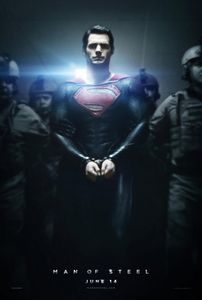
    (Video on Demand, November 2013) There’s something both annoying and admirable about the entertainment industry’s insistence at rebooting and shoving down superhero movies down our throats.  DC’s maniacal insistence at reviving Superman after the 2006’s disastrous Superman Returns is understandable: Superman is iconic, the superhero film genre is still going strong, and there’s still some goodwill among genre fans for a good Superman film.  Man of Steel, fortunately enough, is pretty much as good as it gets from a narrative perspective: Screenwriter David S. Goyer (with some assistance from Christopher Nolan) has managed to find a compelling story to tell about a fairly dull character, and it’s more thematically rich than we could have expected.  Man of Steel, in the tradition of Nolan’s Batman films, voluntarily goes gritty: Zack Snyder’s direction favour pseudo-documentary aesthetics, the cinematography is more realistic than glossy, and the final act’s destruction feel more traumatic than purely entertaining.  Much of this grittiness feels wrong for those raised on the squeaky-clean Superman character, causing more discomfort than necessary.  On the other hand, the result is a film that’s reasonably captivating to watch: Superman has an inner conflict to solve, the action sequences aren’t generic and there’s a real effort to ground Superman to an identifiable reality.  Henry Cavill is pretty good in the lead role, while Amy Adams does the most with a somewhat generic character.  Michael Shannon brings some unexpected complexity to the antagonist, while both Russell Crowe and Kevin Costner get small but plum roles as the protagonist’s two fathers.  While Man of Steel is (ironically) a bit too down-to-earth to feel like a blockbuster epic made to be re-watched over and over again, it’s a cut above the usual superhero fare: There’s some real pathos here, an origin story built on well-used flashbacks, sense of personal growth for Superman (something rarely seen) and the solid foundation for further entries.  Recent superhero movie history has shown that it could have been much worse, and if I’ll happily take a glossy Superman movie over an unpleasantly gritty one, it would be churlish to deny the successes of this version of the character.

  • Sucker Punch (2011)

    Sucker Punch (2011)

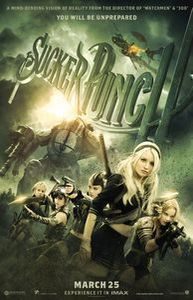
    (In theatres, April 2011) Zack Snyder’s first fully-original film after four successive adaptations of existing material isn’t a disaster as long as you have a short attention span.  Sucker Punch is, like 300, quite a bit of fun to look at: Nearly the entire film seems post-processed to a smooth deliberate gloss, hopping between two levels of reality and four fantasies in an attempt to say something about female empowerment in-between scantily-clad women.  At times, it works: The first few minutes shows a great example of wordless storytelling, blunt but effective in telling us how a young woman lands in an insane asylum, headed for lobotomy.  After that, Sucker Punch periodically presents us with elaborate visual fantasies in which our heroines take on Japanese samurais, World-War-One Germans, dragons and robots.  (That last sequence ambitiously attempts to combine a continuous series of action into a continuous-but-blurry shot.)  Taken by themselves, snippets of the film show to which extent movie reality can be altered for storytelling purposes and, at the very least, can be enough to recommend the film on a purely visual level.  It’s when those elements are meant to be combined together that Sucker Punch becomes less impressive than the sum of its parts: While the film wants to be a female empowerment statement, it still does so at a rudimentary level where the heroines are infantilized (“Baby Doll”, “Sweet Pea”), sexualized, armed and asked to show a lot of skin.  The film is also annoying, on a structural level, in how it sets itself up in a series of levels that have to be endured before anything dramatically interesting happens.  (Attempts to avoid referring to video games in discussing the film usually end in failure.)  Rumours of fifteen minutes of deleted scenes may explain the gradual incoherence of the ending, but they’re unlikely to address the gulf between the empowerment fantasies we’re asked to enjoy, and the horror at the center of the plot.  While Sucker Punch really wants to be like Brazil, it doesn’t have the maturity to pull off the dramatic ironies necessary to an owl-creeking, nor the discipline to make use of its levels of reality.  See the film for the pretty pictures if you must, but don’t expect anything particularly interesting –the most remarkable thing about Sucker Punch being how dull it can feel after a while.