Zsa Zsa Gabor

  • Jack of Diamonds (1967)

    (On Cable TV, September 2021) As much as we’d like to pretend that we watch movies for their intrinsic worth, that doesn’t always stay true once you get into classic films and the way they show things according to the standards of their times. Every era has its highlights, and the 1960s remain distinctive for their comedies. Something like Jack of Diamond is not a hidden gem. It is, at best, a perfunctory, competent exercise (thanks to director Don Taylor) in a familiar formula — that of a likable jewel cat-burglar whose only crimes are really against rich insurance companies and spoiled actresses such as Zsa Zsa Gabor. The film quickly sets up a mythology of famous thieves — the titular Jack of Diamond, played by a trim and not-so-tanned George Hamilton, his mentor the Ace of Diamonds, and a mysterious female competitor who quickly becomes as much of a rival as a love interest. As I wrote: familiar formula, but Jack of Diamond has the charming quality of having been executed in the 1960s, right at the cusp of the New Hollywood and mid-century modern class. As such, it still has a classical quality, but its colour cinematography (slightly blurry, as the film hasn’t been seriously restored) that brings it closer to the modern age. It’s not that good and the ending feels like a let-down, but it’s occasionally fun to watch Hamilton as a suave cat burglar, especially when the sparks start to fly with his distaff competitor played by Marie Laforêt. It’s not a great film, but Jack of Diamonds is a good period piece and something that can be watched easily enough.
  • Lovely to Look At (1952)

    (On Cable TV, August 2021) Now that I’ve seen most of MGM’s biggest musicals of the 1950s, I’m left to track down the rest of them, and Lovely to Look At certainly isn’t one of their best. You can tell a lot about a film’s status by how it looks when it’s shown on standard-bearer TCM, and in this case you’ll have to struggle through a 1.37:1 TV-like aspect ratio (apparently the original shooting ratio) and a terrible blurry image quality that suggests that the film hasn’t been on anyone’s recent restoration schedule. Still, even a second-rate musical from the best years of the genre does have its qualities. It opens on a rather good musical number, “I’ll Be Hard to Handle” that features a splendid later-day appearance from Ann Miller in a leggy purple outfit. The cast includes not only Kathryn Grayson (almost as beautiful as Miller), but Red Skelton doing his usual comic mugging for the camera, and a feature film debut for Zsa Zsa Gabor (as “Zsa Zsa”). Vincent Minelli reportedly directed the fashion show toward the end of the film, although then-veteran Mervyn Leroy is the credited director. The premise and music are taken from the early Fred Astaire vehicle Roberta, but the details are very different from the start. Alas, this doesn’t necessarily lead to anywhere very interesting — sure, the romance and the comedy work, but little of it sparks in the way other MGM musicals of the time did. It’s still not bad (the craftsmanship, comic acting and overall tone are enjoyable no matter what), but Lovely to Look At is one of those films that’s best approached by those who have already seen better examples of the form and can appreciate the details even when the whole is lacking.

  • Moulin Rouge (1952)

    Moulin Rouge (1952)

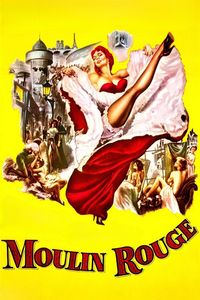
    (On Cable TV, December 2020) There is a particular charm to the way Hollywood used to make biopics – a mixture of caricature, big stars in famous people’s roles, mannered filmmaking and some very specific idea of what a “prestige” picture could be. So it is that in Moulin Rouge, we head to late 19th-century Paris to learn about the life of Henri de Toulouse-Lautrec, as played by José Ferrer. The attraction to the topic should be obvious: Toulouse-Lautrec was a genius and a tortured man – physically stunted due to a childhood accident, unlucky in love, spectacularly alcoholic and perpetually living close to poverty. He incarnated much of what many people imagine when they think about troubled artists in the 1890s. For 178cm Ferrer, taking on the role of 152cm Toulouse-Lautrec meant undergoing a physical transformation and making good use of unusual filmmaking techniques such as trenches, fake knees and body doubles. Then there’s the visual attraction of the topic: It would have been unthinkable, even in the 1950s, to shoot Moulin Rouge in anything but colour. The musical numbers are, of course, very can-can: I strongly suspect that most of what we think of as being the aesthetics of the Moulin Rouge (or that period), including the 2001 version of Moulin Rouge!, can be traced back to this film. Absinthe shows up (naturally), as do dark stockings and garter pants. The character of Toulouse-Lautrec perfectly fits the colourful, seedy, exhilarating world created here: Director John Huston knew what he was doing, and the result is a film that deserved its Academy Award nominations. Ferrer is quite good, and there are other known names, such as Zsa Zsa Gabor, Peter Cushing and Christopher Lee in the cast. The 2001 Moulin Rouge! (which doesn’t share much than the title and the setting) is one of my favourite movies of all time, but this 1952 title is perfectly likable in its own way.

  • Queen of Outer Space (1958)

    Queen of Outer Space (1958)

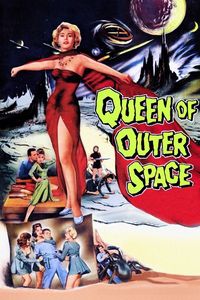
    (On Cable TV, March 2020) If there’s any comfort in watching the mess of silliness, misogyny and terrible logic in Queen of Outer Space, it’s that the film was made—even then—as a parody and not as serious Science Fiction. No, our grandparents weren’t as dumb as the films of the era suggest: contemporary reviews state that they were aware that this wasn’t to be taken seriously at all. Still, watching from 2020, it can be difficult to accurately gauge what the filmmakers were trying to do. The science and plotting are terrible in ways that cannot be detailed succinctly, but suffice to say that our male protagonists go up in a rocket, crash-land on Venus after a missile attack, and discover that not only is Venus quite inhabitable, it’s host to a misandrist dictatorship solely in need of a revolution. Working with a courtier (Zsa Zsa Gabor!), they overthrow the queen, save Earth from destruction, restore a male-friendly regime and have to await rescue from Earth on a planet filled with beautiful women. Watching this film sixty years later, despite assurances that the filmmakers knew what they were doing (the film began as a proposal from legendary screenwriter Ben Hecht), it’s tough to differentiate between male-gaze power fantasy and barely sublimed eroticism, as the film parades miniskirts, tight tops and low décolletage in Technicolor detail. No matter the original intention, Queen of Outer Space is both laugh-out funny and unbearably misogynistic—the silliness isn’t always clearly intentional, and while the ineptness can be charming, it remains ineptness in the first place. It’s not without amusing moments or clever touches (it even nails the modern flatscreen monitor form factor!) but you’ll have to work harder than usual in putting this kitschy classic back into the context of the time. Although, if you’re looking for a visually striking example of terrible 1950s Science Fiction…

  • Lili (1953)

    Lili (1953)

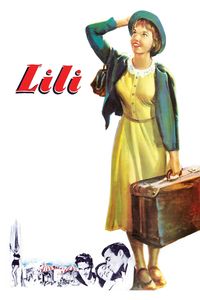
    (On Cable TV, February 2020) The comparison points between Lili and other hit movies of previous years underline that this was a follow-up film trying to capitalize on many of the same crowd-pleasing elements without quite having what it takes to pull it off. Itemizing the obvious similarities: MGM musical, picturesque French setting, Leslie Caron in the lead, and a big fantasy ballet number in the last third of the film. Yup; some studio executives saw Gigi or An American in Paris and thought they could do more of the same. It’s hard to fault their thinking—Lili did good business and was nominated for a surprising number of Academy Awards. Let’s remember that this was at a time when MGM could not do wrong. Unfortunately, it hasn’t aged so well: Mel Ferrer is good, but no substitute as a singer/dancer for someone like Gene Kelly, and Caron can’t quite sustain the entire weight of the film on her shoulders. Worse yet is the feeling that this is a rethread, a very deliberate attempt to capture past glory. The puppet motif seems a bit too self-satisfied, and the musical aspect of the film is underwhelming—there aren’t many songs, and they’re not particularly catchy. From a twenty-first century perspective, the idea of a thirtysomething man puppeteering a suicidal sixteen-year-old character into a relationship is far creepier than the puppets themselves. Even if Lili is not bad per se (it even features Zsa Zsa Gabor, if that’s your thing), it’s only worth a shrug when placed alongside the other musicals that inspired it.