Month: June 2003

  • Finding Nemo (2003)

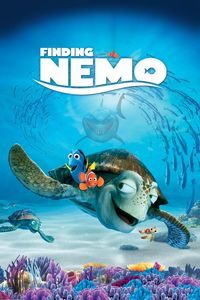
    Finding Nemo (2003)

    (In theaters, June 2003) Pixar seldom misses its target, and they succeed once again with Finding Nemo, an irreproachable animated feature aimed at kids but appropriate for adults. Once again, everything is top-notch: The animation is spectacular, the script is pure gold, the characters are sharply defined (Who doesn’t love surfer-turtle Crush? “We were like ‘Woah!’ and you were like ‘Woah!’ and I was like ‘Woah.’”) and the direction takes advantage of the possibilities of CGI while remaining firmly grounded in real-world conventions. You already know you’re going to see it and you already know you’re going to like it; why should I even spend more time discussing it? The only serious complaint I’ve got is that in their quest to please Disney, Pixar has released their most Disney-like (and their weakest) effort to date. Even the bad old clichés hold true, with the mother of the protagonist dying a horrible death in the prologue (c’mon; this was tired even in Bambi‘s time!) Oh well; it’s still better than most of the other films you’ll see this year.

  • Charlie’s Angels: Full Throttle (2003)

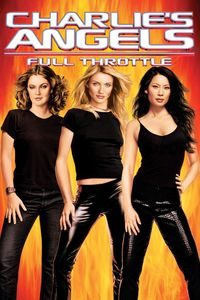
    Charlie’s Angels: Full Throttle (2003)

    (In theaters, June 2003) I loved the original film for its sense of go-for-broke energy and its casual disregard for mere conventions such as, oh, physics. The sequel is bigger, louder and even more furious than the original (the opening dam sequence is a perfect Big Dumb Action Sequence; I was left wishing for more, more, more!) but somewhere along the way, the delirious pace starts working against itself. More money and more attention has made director McG a needy and insecure director. The fantastic long shots, the mean focus, the clear palette of the original are gone and replaced with mayhem, chaos and confusion. It doesn’t work quite as well; the composition of the shots lacks confidence and clarity; we’re left with grittier pictures, sequences with few outstanding shots and a sense that someone is just trying too hard to win our approval. Not that I’m a demanding viewer; in this case, the adorable goofiness of Cameron Diaz (plus my unquenchable thirst for more Lucy Liu) is enough to make me giddy with excitement. Some of the stunts are, indeed pretty cool and Charlie’s Angels 2 is a beautiful monument to nonsensical blockbuster-making. But the structure is off (Demi Moore’s true alignment it revealed much too late), the subplots are irrelevant (did we need all of those back-stories?) and even capable players like John Cleese, Crispin Glover and Bernie Mac aren’t particularly well-used. Heck, I shouldn’t complain: There are some very cool moments (Lucy Liu doing the ferret; the use of Edwin Collins’ “A Girl Like You”; Crispin Glover’s backstory; the CSI sequence) but it’s not as purely entertaining as the first one. Darn!

  • Bottle Rocket (1996)

    Bottle Rocket (1996)

    (On DVD, June 2003) Low-key film about a pair of very small-time criminals trying to decide whether they should break into the crime business or stay outside of it. Brothers Owen and Paul Wilson star in this first Wes Anderson film (Owen co-wrote the screenplay) and if you’ve seen his latter Rushmore and The Royal Tenenbaums, you can already expect the sort of awkward comedy and sympathetic losers favoured by Anderson. It’s not a spectacular film nor even a particularly interesting one, but it eventually works its way up to something adequate. There’s a notable lull midway through as Inez is brought in the picture. Both Wilson brothers turn in good performances, though fans of both actors will find it weird that their usual hair styles are here inverted. Anderson and Wilson completists will find plenty to like in Bottle Rocket, though it remains to be seen if others will have the patience to sit through what can be a series of lengthy moments. The bare-bones DVD edition is decidedly lacking in special features; a commentary would have been worthwhile.

  • Big Trouble In Little China (1986)

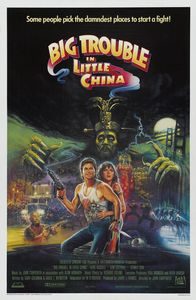
    Big Trouble In Little China (1986)

    (On DVD, June 2003) Despite the rather good cult reputation of this film, I was surprised at how… ordinary it ended up being. Even though Kurt Russell shines as all-American Jack Burton (his charming ineptness is one of the film’s highlight), the film isn’t as endearing nor as memorable as I was led to believed, or half-remembered from TV memories. It’s certainly not a dull film, mind you: The pacing is steady and the action rarely stops. (Plus, there’s a neat hero/sidekick reverse dynamic at play here.) But the dialogues fall flat (always an important factor when dealing with a protagonist with such an attitude) and the effect simply isn’t as electrifying as similar fare such as, say, Evil Dead 2. Part of this tepid reaction, I suspect, is that kung-fu fighting has been done elsewhere since then, with a greater degree of sophistication: The tongue-in-cheek parody of classic Chinese martial arts film may have been loads of fun in 1986, but years after America’s newfound fascination for Jet Li, Jackie Chan and Crouching Tiger, Hidden Dragon, there isn’t anything startlingly new left in the movie. Structurally, the film covers the same ground again and again in a succession of underground lairs that end up featuring the same few villains. I do realize that this film wasn’t aiming for high art, but the truth is that it doesn’t completely succeed as a fun camp classic. Fun, sure, but also a disappointment. On the other hand, the film is well-worth seeing again if only for the audio commentary starring Russell and director John Carpenter; maybe half of it directly relates to the film, but all of it is fascinating. A few unmemorable supplemental features round the special edition DVD set.

  • Total Risk: Nick Leeson and the Fall of Barings Bank, Judith H. Rawnsley

    Harper, 1995 (1996 reprint), 256 pages, C$7.99 mmpb, ISBN 0-06-109535-4

    In many ways, it seems like a tale too implausible to be true: How a young 28-year-old trader managed, through a series of increasingly risky trades, to wipe out the assets of a major British bank and drive it to bankruptcy. You probably heard about it a while ago; the story made plenty of headlines in early 1995. In 1999, the docu-fictive film, ROGUE TRADER (starring Ewan McGregor) even brought the story to European silver screens. (The film was a straight-to-video release in North America, perhaps indicative of its low-budget, mildly-imaginative execution.)

    Though ROGUE TRADER was based on a book, it used Nick Leeson’s autobiography as a starting point, not Judith H. Rawnsley’s rather more objective account. Total Risk is a more straightforward retelling of the story by someone who’s familiar with the context: Interestingly enough, reporter Rawnsley found herself fascinated by the fall of Barings Bank because she herself had worked there years before the scandal, even meeting Leeson on a few occasions. In the early parts of the book, she makes full use of her personal experience by describing the environment in which Nick Leeson operated and how it may have fostered the sense of invulnerability that lead to the financial collapse of the bank.

    Structurally, Total Risk begins with an explanation of the author’s relationship with Barings Bank, a short description of the collapse of the institution and only then begins to explain what led to this crisis. It’s a good decision, but a risky one; as it stands, Total Risk is never as good as when it describes both the fall of Barings and the background elements that allowed such ambition to take hold in Nick Leeson. (Latter parts of the book delve into financial minutiae and are not quite as fascinating as the first half.) One of the strengths of the book are the numerous quotes and opinions presumably obtained by Rawnsley herself, allowing us to peek under the curtain of what happened during that time.

    As Rawnsley explains, Barings Brothers lasted some two hundred years as one of Britain’s most renowned banks before deregulation was introduced in 1986 in an effort to improve the efficiency of British financial institutions. As a result, Barings started looking for more exciting ways to make money, spinning off a unit called Barings Securities, which in looking around for profitable markets, settled for Far East bureaus. Total Risk hits its stride in describing the alpha-male social environment in which the expatriate young traders evolved, and how this led to some curiously excessive behaviour. Still, initial successes were so impressive that the Singapore branch was allowed greater and greater independence, a lot of it concentrated in the person of one hot-shot trader —Nick Leeson.

    When Leeson’s luck ran out (as it usually does in every gambling environment, high finance being no exception), he started making illicit loans to cover his losses. When his further investments also started panning out, he borrowed some more. Rawnsley is quite effective in describing the all-or-nothing frenzy which may have gripped Leeson at this junction, racing with himself in order to obtain the one break -only one lucky break- which would pay off everything.

    But it didn’t, and soon enough no one could hide the magnitude of the disaster. Leeson escaped, was caught, manipulated public opinion (the description of this PR campaign is another of Total Risk‘s best moments) and went to jail. Most of Barings was bought by ING and controls were tightened to ensure that nothing like this will ever happen again.

    Well, at least until the next new financial scam. As the spectacular collapses of Enron and Worldcom, indicates, there may be an infinite market for financial-swindle non-fiction. What sets Total Risk apart from such other works as Diane Francis’s markedly inferior Bre-X is a viewpoint halfway between an insider and a reporter, a sense of closure and an interesting writing style that often has more similarities to fiction than to financial analysis. While it would be unfair to say that this book has wide appeal, it’s more fitting to suggest that readers with a built-in interest in such stories will find a lot to like about this particular account.

  • The Animatrix (2003)

    The Animatrix (2003)

    (On DVD, June 2003) Yes, this is a ploy to get even more money out of The Matrix fans. But when it’s such an interesting money-grab, one can even be enthusiastic about the attempt. A collection of nine anime shorts set in the world of The Matrix, this is a fun little collection showcasing the strengths of “Japanese-style animation” along with the possibilities of the Wachowski Brothers’ creation. Styles vary enormously, from the hyper-CGI photorealism of “The Last Flight of the Osiris” to the stylized hand-drawings of “Kid’s Story”. The tone is uniformly dour, though, with death to the protagonists being a recurring motif; few happy endings here, and even one piece that can be seen as an apology for teen suicide. But it’s pretty good stuff, and the interest level remains constant despite stories hindered both by length and by the constraints of operating in another person’s universe. The DVD is stuffed with supplements, from an introduction to anime to making-of featurettes that are almost longer than the pieces themselves. It’s an essential stop for all anime fans, and an interesting curio for others that are at least familiar with either anime or The Matrix.

  • All About The Benjamins (2002)

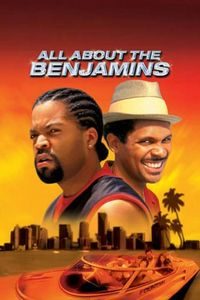
    All About The Benjamins (2002)

    (On DVD, June 2003) I don’t think anyone will ever claim this to be a great film, but frankly, it doesn’t have to be: As soon as we’re dropped into this lush Miami backdrop, with Ice Cube playing a burly protagonist, the rest takes care of itself. As the title suggests, the story revolves around millions of dollars, to which we can add Cube’s bounty-hunter, a con artist, evil euro-villains, hot girls, sunny locations and enough ebonic profanities to exasperate even a hardened sailor. The rhythm is well sustained, the locations are worth looking at and the chemistry between Mike Epps and Ice Cube works well enough to make us forget that Epps often tries to be as irritating as Martin Lawrence. Certainly the female side of the film’s Miami creds is impressive: Valarie Rae Miller, Eva Mendes and Carmen Chaplin make the most of their limited screen time and if Mendes has looked better in other films, she here displays some good comedic skills. Plot-wise, m’well, the film takes some regrettable shortcuts: the importance of the lottery ticket seems to diminish midway through and there are a few unfortunate coincidences here and there. But is it really worth discussing when the whole package is so charming? Probably not. Throw that film in with the Bad Boys series, 2 Fast 2 Furious and reruns of Miami Vice for plenty of undemanding fun. The DVD contains a pleasing array of short documentaries (including a general piece on music video directors making the leap to the big screen) as well as a mildly engaging audio commentary.

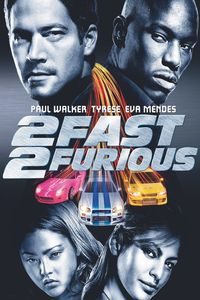
  • 2 Fast 2 Furious aka The Fast And The Furious 2 (2003)

    2 Fast 2 Furious aka The Fast And The Furious 2 (2003)

    (In theaters, June 2003) Cars, crime and chicks in sunny Miami; what else could you ask for? Okay, so Vin Diesel is missing and so is a lot of the energy of the original The Fast And The Furious. But it doesn’t matter as much as you think: This time around, the cars look better, and if no one can outfox Michelle Rodriguez from the first film, Eva Mendes and Devon Aoki are totally appropriate eye-candy. Paul Walker doesn’t have to struggle under the shadow of Diesel, and he emerges as a mildly engaging protagonist. (The homo-erotic subtext of his character’s relationship with buddy Tyrone can be a little ridiculous at times, though; how many jealous glances can we tolerate before bursting out laughing?) It’s a shame that about half the car chases don’t really work; dodgy camera moves, overuse of CGI over stunt driving and over-chopped editing don’t help in building a gripping action scene. At least the two highway sequences are nifty. The last stunt is weak and so are many of the plot points before then, but 2 Fast 2 Furious goes straight in the guilty pleasures category; a fine way to spend a lazy evening.

    (Second viewing, On DVD, March 2004) Fast cars, curvy women and sunny Miami: Even the second time around, it’s hard to be angry at this film even as the dialogue is painful, the action scenes aren’t particularly successful and the ending is lame. At least the DVD offers some consolation through a series of interesting making-of documentaries and a few extra car-related goodies. John Singleton’s tepid audio commentary does much to demonstrate the uninspired nature of the film’s production. Competent without being particularly commendable, adequate without being particularly satisfying. This one goes out straight to Eva Mendes fans and car buffs. Not that there’s anything wrong with being either.

    (Third viewing, Streaming, December 2025) Roughly ten installment later, there’s little doubt that 2 Fast 2 Furious is the runt of the Fast and Furious franchise.  Hurriedly put in production to capitalize on the first film’s box-office and missing the mark on several elements that would make the success of the film series, it’s a weak movie that does not deserve any pretension of it holding up.  At best, the success of its many sequels give it a halo effect to help get past its worst moments.  For fans of the series and its characters, this is the film that explains how Taj and Roman met, and how Brian lost his badge.  You can even detect the series’ first foray into ludicrous high technology with the “EMP harpoons” used twice during the plot. It does have a few good action beats: the two racing sequences aren’t bad, and there are two highway sequences with good moments (even if the sequences as a whole aren’t particularly good and filmed in unusually muted fashion). The rest of the film, though, is much blander than one would expect.  The Miami location is only used perfunctorily, while everything that touches Cole Hauser’s villain feels like it comes from an undistinguished straight-to-video police thriller (including a torture sequence that doesn’t fit with the series’ tone at all.)  Most of all, though, is that the film barely seems to touch upon either car culture, big stunts, increasingly solid web of interpersonal relationships or effortless entertainment that would come to define the series.  No wonder the later installments wouldn’t crib too many things from this one. (While I do regret not seeing Devon Aoki in other installments of the series, I gather that acting was more of a temporary thing for her, and she’s happy away from the screen.) There are many reasons why 2 Fast 2 Furious was fated to under-perform (hurried production, Vin Diesel’s hubris-driven decision not to return to the series, director John Singleton’s lack of affinity for the material, etc.) but the result is such a drag that it probably ends up being the most-skipped film in the Fast and Furious box-set.

  • Anonymous Rex, Eric Garcia

    Villard, 2000, 276 pages, C$35.00 hc, ISBN 0-375-50326-9

    If you’ve been searching for a deliciously original piece of fiction, look no further than Eric Garcia’s Anonymous Rex. Easily one of the freshest novel I’ve read in a while, this is a book that lures readers with a delicious mixture of classical gumshoe prose and an off-beat twist on the usual. Then it keeps them flipping the pages with a sustained rhythm. What more could we ask for?

    Part of the appeal of Garcia’s first novel is how, on the surface, protagonist Vincent Rubio is virtually indistinguishable from prototypical down-on-his-luck Private Investigator so beloved of mystery fiction. He used to be a hot shot, but then his partner got killed, he developed a serious substance abuse problem and went on a violent bender. Now he’s broke, his name is mud and no one wants to even talk to him save for the debt collectors —and even those aren’t terribly interested in idle talk. No, nothing revolutionary here so far.

    Same thing with the plot, which involves Rubio’s old boss handing over an investigation to our unfortunate protagonist. A sombre arson affair, which our hero has to untangle because no one else wants to do it. The classic elements follow: the witnesses, the diseased, the secret, the wife, the mistress, the affairs, the wealth, the hired thugs and the casual assassination of informers. Even the late slide of the narrative in science-fiction isn’t terribly new when considering that the same shtick’s been attempted by just about every SF writer trying to break in the mystery genre. (See Walter Jon William’s excellent Day of Atonement, etc.)

    No, the real find of Anonymous Rex is that it presupposes that our protagonist is… a dinosaur. And so is a sizable proportion of humans living on planet Earth today.

    No, not metaphorical we-loved-the-fifties arch-conservative dinosaurs, but the literal stuff of the fossil record: T-Rex, Velociraptor, Brontosaur, Stegosaurus and the rest of the gang. Thanks to elaborate costumes, strong species discipline and the influence of a hilariously inept system of “Councils”, dinosaurs live among us, participate in society, own most of the nightclubs, love the mind-altering effects of aromatic herbs and try their best not to prey on puny humans. (They also presumably enjoy palaeontologist trade publications)

    It’s a concept that could be described as unusual (or “zany”, should you be of the less imaginative sort), and which could have very well been amusing for a chapter and a half before starting to recycle its own cleverness. But there’s no reason to worry; Garcia’s dino-universe is well-stocked with interesting new surprises and sufficiently fast-paced to keep us interested even when he’s not busy exploring the social customs and quirks of modern-day sapient lizards.

    Among many other fine qualities, Anonymous Rex is generous enough to allow the reader to follow along with the mystery, being neither too obscure or too simple. Rubio is a sympathetic protagonist (he’s a Raptor who could eat you for lunch, sure, but then again he’s meddling with dinos who could eat him for lunch!) The writing is brisk, but also loaded with fine descriptions and dialogue that would make any hard-boiled novelist proud by association. This is a clever novel that’s pure fun from beginning to end; don’t be surprised to find yourself reading it late at night.

    The gumshoe mystery has been exploited in fantastic ways for a while, by virtue of well-established genre conventions that are easy to subvert. (even forgetting about the countless genre SF and Fantasy novels with a mystery template, one could easily recall Jonathan Lethem’s Gun, with Occasional Music and the original Who Censored Roger Rabbit?) Anonymous Rex is another fine entry in this offbeat vein, a wonderful little book that is well-worth your time and attention. Don’t miss it, especially if you’re looking for something endearingly different.