Year: 2006

  • Descent (2005)

    Descent (2005)

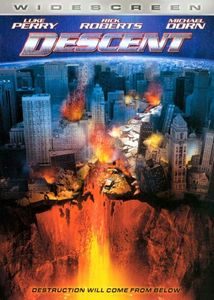
    (On DVD, May 2006) They say that imitation is the best flattery, but the producers of The Core can enjoy at least one other benefit from the dull made-for-TV train wreck that is Descent: It will actually make people say ‘You know, The Core wasn’t actually all that bad!’ You can count the similar plot points between the two films and run out of fingers: a government project that goes wrong; the ridiculous “demonstration” of the problem; a machine designed to burrow underground; the necessity to set up bombs deep under the surface; the heroic sacrifice; the underwater finale… and so on. If Descent is not without a few decent moments (the banter between the post-doc students is amusing, Mimi Kuzyk looks scrumptious and Luke Perry at least tries to do a good job as the hero), all those moments serve to do is highlight how much better The Core was in actually delivering on its shaky premise. Here, the catastrophe looks cheap and tedious, barely shaking up Seattle and deep-frying a hockey-loving farmer. Low budget film-making is usually an exercise in compromise, but believe me: I could have tolerated even fewer death and destruction in exchange for better dialogue and clever plot twists. If the script can’t be bothered to care, then neither will I.

  • Clade, Mark Budz

    Bantam Spectra, 2003, 372 pages, C$10.99 mmpb, ISBN 0-553-58658-0

    The publishing industry has evolved a lot over the past decade, and one of the most profound changes has been nearly-invisible to end-readers. The consolidation of book distribution to just a few players has wreaked havoc on mass-market paperback distribution in non-bookstore outlets, which means that if your corner convenience store may once have boasted a well-stocked paperback section, today’s books are selling primarily in bookstores and nowhere else. Financially, this has destroyed the niche for mass market paperback, concentrated the buying public in bookstores visitors and driven publishing toward higher-priced formats, hence the explosion in hardcover and trade paperback publishing. The classic mass-market paperback survives, but as a second life for books already very successful on the hardcover circuit.

    Alas, this squeezes out newer and mid-list writers who had, up until that crunch, relied on sales from truck stops and drugstores to make up their numbers. Today’s mass-market paperback original is a solitary and beautiful creature in danger of extinction.

    Which brings us to Clade, a first novel by SF writer Mark Budz. I know that I should pick up more first novels by unknown writers as a matter of principle, but I can claim no such lofty intention for buying Clade: I just loved Stephen Youll’s luminously futuristic cover. That, and the fact that Budz’s second book, Crache, was neatly shelved right next to it, with matching cover art. Who can tell what will work in convincing people to pick up strange new books?

    As it turns out, I’m not displeased at all by this debut novel. The central conceit of Clade is simplicity itself: what if we end up using our knowledge of biotechnology to enclave ourselves? Social classes are already a fact of life, but what if poor people could be made to be sick in rich people’s presence? Wouldn’t that be an efficient way to clean the room for the rich? But why stop there? Why not codify racism as an allergen responses? What if the presence of a certain ethnic group can truly made you sick?

    Not a fun future, but one worth pondering. Despite SF’s claims as an all-inclusive literature, class issues don’t often pop up as a issue of interest to its writers. (Cynics will say that as a middle-class American literature, SF loathes to cut too close to the central assumptions of its readership: the very thought that America is a class-stratified society is so taboo that everyone pretends it’s not there.) In Clade, Budz doesn’t shy away from a future where Caucasians are in the minority, where the rich use everyone else for their own purposes and where ethnic/social/cultural barriers are accepted with scarcely more than a resigned shrug.

    Calling a novel “post-cyberpunk” nowadays is doing no one any favour, but it doesn’t take too much imagination to see the common links between this novel and the Gibson generation of the late eighties. The world awareness, the dirty side of technology, the idea that corporations certainly aren’t our best friend: These ideas, now familiar, permeate Clade and yet do much to give it the feel of a contemporary piece of Science Fiction.

    Given such high and exciting ambitions, it’s perhaps no surprise that the execution of the novel can often be disappointing. Budz’s writing betrays a lack of polished experience, and the structure of the story can be a bit clunky: the ending, in particular, seems rushed and pat. It is a conclusion, but one that seems to leave a lot of material up in the air. (Crache is billed as an independent sequel –we’ll see what that means.)

    The other problem with the book is that it works as long as you’re willing to grant the author a bit of indulgence. When words like “ecocaust” figure heavily in the novel’s backstory, it’s a good hint to stop worrying about consistency and just enjoy the ride: Standard post-apocalyptic SF reading protocols suggest that said catastrophe frees the author to do whatever is necessary to required to set up the world of the story. That the “cades” and “pherions” of the story aren’t plausible isn’t the point: The point is using those tools to tell a story about something. It’s just a shame that it’s impossible to believe in this future as anything but authorial decree, a feeling that the sometimes-silly thriller mechanics don’t do much to dispel.

    But I still enjoyed the book: as a debut novel, it’s got good energy, a few terrific idea and -perhaps most importantly- the willingness to engage with some vital issues. Crache is up next on my reading stack and I’m looking forward to it. While Clade may not blow open any doors nor any minds, it’s a perfect example of the type of good solid mid-list SF that is threatened by the disappearance of mass-market paperbacks. Do yourself a favour: The next time you’re in a supermarket, have a look at the paperback originals on the wire racks.

    [June 2006: Alas, sequel Crache isn’t nearly as interesting. While more complex, better written and gifted with higher stakes than the prequel, Crache is far less grounded in reality, and that ultimately takes away a lot of Clade‘s initial appeal as a champion of the lower classes. There are three plot-lines in Crache and the only one I found constantly interesting was the one about “L. Mariachi”, a former rock star now surviving as a migrant worker. The rest was hit-and-miss, damaged by lengthy interludes, wonky plot mechanics intersecting hard science (including programmable matter, straight from Will McCarthy’s speculations) with quasi-mysticism in which a guitar song can cure cancer. (Well, maybe not cancer, but at least an otherwise incurable disease.) Some aspects of the book are stronger than Clade (something I have to admire), but the overall impact is muted. Though billed as an independent sequel, Crache uncompromisingly re-uses so much jargon and setting from the first novel that people reading this without the required background may find it a hard slog.]
  • The Da Vinci Code (2006)

    The Da Vinci Code (2006)

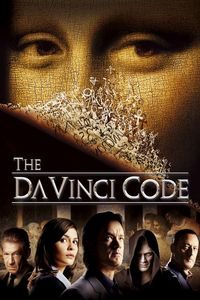
    (In theaters, May 2006) This film is as critic-proof as they come, what with its built-in audience, puffed-up controversy and all-star cast and crew. No matter what anyone say, it’ll make zillions and find a modest place of some sort in film history. Stripped of the hype, though, it’s no surprise to find that The Da Vinci Code is merely an average thriller, competently made but hardly innovative. In many ways, it’s fitting that two of the blandest (but competent) Hollywood stars of the moment, director Ron Howard and star Tom Hanks, would help in delivering the epitome of mass-market cinema entertainment. Perfectly blending French and American cinema, The Da Vinci Code delivers endless conversations rudely interrupted by car chases and modest gunfights. Of the actors, only Ian McKellen is any fun at all as a mischievous historian with a flamboyant streak: Tom Hanks, Paul Bettany, Jean Reno and Audrey Tautou are wasted in roles that either don’t suit them or are cut short without much conclusion. But the film’s most distinctive trait is how it alternates between talky exposition and very average thriller episodes. To be fair, the book was just as bad, except that the roughshod charm of Dan Brown’s clunky-but-earnest prose had a forward rhythm of its own. I expect a huge number of academic papers to be written on the adaptation of this story from one medium to another, especially when you consider that the book seems faster-paced that the film. While the critical knives had been drawn in anticipation of this film, the end result in no way deserves a critical savaging: in most aspects, it’s perfectly serviceable, with a tiny thrill of irreverence considering the subject matter. I’ve seen both better and worse this week. In the end, most people will find this film to be a mirror of their own expectations: Fans of the book will be pleased, curious film-goers will be satisfied and literary critics will find another reason to call Dan Brown the Anti-Christ. Now that’s entertainment for everyone!

  • Alien Apocalypse (2005)

    Alien Apocalypse (2005)

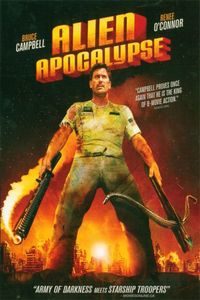
    (On DVD, May 2006) The Sci-Fi channel is now infamous for producing trash films that only serve to hook the dumbest members of its audience, and if Alien Apocalypse isn’t quite the worst film I’ve ever seen, it does make Battlefield Earth look good… and I write this knowing fully well the repercussions of admitting such a thing. Bad movies are usually exasperating, but Alien Apocalypse quickly reaches a level of apathy that is only reserved for those stuck watching kiddie TV shows over and over again. To put it bluntly, Alien Apocalypse seems written for dumb twelve years olds by an even dumber sixteen-year-old. The tired shtick of the premise (Astronauts come back to Earth to discover that humanity is enslaved by aliens: they teach everyone to fight back) wouldn’t have be publishable for the past forty years in the lit-SF world, but the treatment is even less imaginative than the premise. Even lead actor Bruce Campbell can’t salvage this piece of trash (though he does get a fun drunken monologue and one Ash-worthy line of dialogue: “Your stupidity is terminal. And now you’re cured.”), which get progressively less pleasant as it advances. You will stop caring a lot sooner than the film finishes, leaving the rest of the experience as a grating sensation of losing brain cells to the burning stupidity of the film. Not a pleasant experience; celebrate every day in which you don’t get to see Alien Apocalypse.

  • Absolute Zero (2006)

    Absolute Zero (2006)

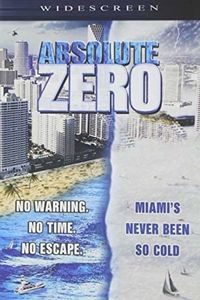
    (On DVD, May 2006) Some say that you can learn as much from the bad than from the good, and in this case you can probably try to get a full credit in dramatic arts from watching Absolute Zero. Incompetently structured, badly written, this straight-to-DVD film (by way of TV broadcast, we’re told) can’t even be bothered to do a good job in ripping off The Day After Tomorrow. While the CGI shots aren’t too bad, the writing shows a rare streak of tone-deaf dialogue, unimaginative developments and lack of scientific literary. Suffice to say that in this doomsday scenario, global warming polar inversion mumbo-jumbo freeze up the tropics while heating up the poles. (If you can figure how that’s possible without four-dimensional topology, email me.) But that’s a minor sin compared to the way the script can’t be bothered to introduce most of its character until after the thirty-minutes mark (in a film barely 96 minutes!) or where dialogue is seen as an afterthought. (“Science is always right”; uh, no, and every real scientist will tell you so.) It eventually degenerates in a low-budget “suspense” last-act that seems to slow down even as various countdowns are supposed to make us care. Yawn. This is almost worth a look thanks to its truly awful science… but just listening to an eight-year-old explaining his vision of the world can be just as entertaining.

  • The Merchants of Souls, John Barnes

    Tor, 2001, 398 pages, C$10.99 mmpb, ISBN 0-812-58969-6

    John Barnes’ work may have polarized readers, but his career has been fascinating to follow. Now solidly ranked in the Science Fiction mid-list after a promising debut in the late eighties, Barnes has written everything from hard-SF blockbusters (Mother of Storms) to glorified men’s adventure (The Timeline Wars trilogy), with an orthogonal side-step in fantasy fable with One for the Morning Glory. And yet, over a career that now spans two decades, his most solid work may be the cycle initiated by Ten Thousand Doors: four novels charting the life of special operative Giraut Leones as he works in a far-flung future where humanity has colonized thousands of planets.

    The first novel in the series was interesting and almost charming, but the second one (Earth Made of Glass) ended on such a terrible note that it felt like a sucker punch: The double whammy of a failed marriage and a failed mission, with the likely death of an entire planet as a consequence. Not the kind of stuff that’s worth cheering for, especially when it looked like the end of the story for Giraut.

    But it wasn’t the end of the story. As The Merchants of Souls picks up, Giraut is still reeling from the aftermath of his divorce and what has since become known as “the Briand disaster”. Friends get together to cheer him up, but nothing works like getting back in the saddle again. Before he can catch his breath, Giraut is once more an Office of Special Projects operative. This time, he’s headed for Earth and its billions of inhabitants at centre of human civilization. But he’s not working alone, and this time he’s trying to stop all of human society from making a big mistake. What’s more, he has no clue who his true enemies are, or what they’re up to…

    Beyond the “portal” technology linking all thousand planets together, the most distinguishing feature of Barnes’ “Thousand Cultures Universe” has been the “psypyx”, a device allowing another mind to “ride” a functioning human. This usually takes place for medical purposes, as a clone is force-grown for a psypyx personality back-up: To train their mind, resurrected personalities undergo a period of apprenticeship by re-learning human skill in someone else’s skull. Perhaps the best thing about The Merchant of Souls is how it plays with the concept, both as a plot driver and as am innovative feature of the narration.

    Giraut gets fitted with a psypyx not only to help out a friend who is about to be re-born, but also to demonstrate (on OSP’s orders) something vital to the teeming population of Earth. As humanity has retreated further and further in entertainment-driven lives, some are pushing for psypyx exploitation: imagine the lure of millions of lives saved on silicon, ready to be popped into the entertainment console for cheap thrills. The fact that those are human lives and not ready-made casual entertainment barely resonates among those pushing for the exploitation of that particular natural resource: in fact, they’re denying that psypyx images are even sentient. Giraut, allowing an old childhood friend (Raimbaut) access to his mind and body, hopes to convince the decision-makers that this isn’t the case. From a special operative, he’s reluctantly forced into the role of a lobbyist.

    And so The Merchants of Souls goes on, with the added narrative twist that the tale is told by two narrators sharing a single body. This makes for curious scenes and ellipses, as Giraut may go to sleep just to allow Raimbaut to do his thing (or vice-versa). Hilarity ensues when both of them end up falling for different women. While the mechanics of body-sharing can be a cause for some head-scratching, it adds another layer of interest to a novel that, for a long time, seems to spin its wheels.

    Let’s be clear about this: The Merchants of Souls is never dull, but there are times, especially in the middle third, where it looks as if the plot is just idling and waiting for something to happen. If it’s an intentional ploy, it works remarkably well: When the third act kicks in, it does so with an event so shocking that it sends the novel spinning in another direction entirely. Suddenly, psypyx-drilling becomes a front for something much more dangerous. While this part of the tale isn’t flawless (Barnes can be a bit abrupt and gloss over crucial details when the action starts firing up), it strengthens what had been, up until then, a moderately good but unspectacular SF novel.

    It also made me reconsider a number of things I didn’t initially enjoy about the series. Now that I’ve seen where Barnes intended to go with this book, Earth Made of Glass suddenly feels a lot more appropriate as a step away from the innocence of the first novel. With its juiced-up ending, The Merchants of Souls fulfils its potential and promises much for the fourth volume, The Armies of Memory, which made it in bookstores as I was reading this volume. You can be sure that it’s going on the pile of things to read.

  • Rebel Without a Crew, Robert Rodriguez

    Plume, 1995, 285 pages, C$22.50 tpb, ISBN 0-452-27187-8

    As a certified fan of director Robert Rodriguez (I saw THE FACULTY in theatres; I’ve got ADVENTURES OF LAVA BOY AND SHARK GIRL on DVD), I had meant to pick up his tell-all non-fiction account Rebel Without a Crew for a while. The story of Rodriguez’s 1992 debut EL MARIACHI is now well-known, but anyone who has sat through one of Rodriguez’s entertaining audio commentaries already know that the man can be a show of his own: Who better to tell the story of Rodriguez’s breakout than Rodriguez himself?

    Rebel Without a Crew mostly take the form of a diary detailing Rodriguez’s adventures while making EL MARIACHI, and then what happened to him as he was courted by Hollywood studios. It began as Rodriguez consciously decided to make an ultra-cheap feature film for the Spanish-language video market —as nothing more than a practise movie. Strapped for cash and free time, Rodriguez then volunteered for medical experiments (a thirty days stint in which he hoped to make money and write a screenplay), travelled south of the border and shot an entire film in two weeks without the benefit of a film crew. Most of the film’s $7,000US budget went to pay for the film stock: Rodriguez’s contacts and personal charm helped do the rest.

    Strictly speaking, the story of the making of EL MARIACHI isn’t unique to Rebel Without a Crew. A trip to the local video store will net you the DVD edition of EL MARIACHI, complete with enough special features to give you a complete picture of how the movie was made. In the book, the shooting phase of the film barely takes 17 pages: the real story comes after, as Rodriguez drives himself sick editing the feature on primitive equipment, then goes off to Los Angeles to find a buyer for the feature. But then something very weird happens: thanks to an unbelievable series of coincidences, contacts and a really good film, Rodriguez caught the eye of major studios players. (As the subtitle states, this is How a 23-Year-Old Filmmaker with $7,000 Became a Hollywood Player) The bulk of the story is seeing Rodriguez negotiate his way to a contract, even as things are grim at home. In a poignant moment, Rodriguez is forced to hock his prized film camera even as the studios are promising him a six-figure contract.

    Then it’s the whirlwind of film festivals, audience acclaim, media frenzy and the unbelievable experience of seeing that $7,000 feature film (suitably sweetened) released nationwide. Day by day, entry by entry, we see Rodriguez stumble upon wild success, bewildered by the changes in his life. As a rag-to-riches story, Rebel Without a Crew is hard to beat. As a look inside the mechanics of the film industry, it’s invaluable. Legend has it that the book has quietly become a cult item for the last generation of independent filmmakers: it’s not hard to see why thanks to Rodriguez’s indefatigable optimism, awe-inspiring determination and personal charm. Much as I defy anyone to listen to Rodriguez’s DVD commentary without feeling admiration for the man, it’s impossible to read Rebel Without a Crew and escape the contact high of a supremely confident artist. Few of us are as brilliant as Rodriguez (who can write, draw, compose and direct), but we can all learn a lesson from his experience.

    (Rodriguez makes it sound relatively easy, but it’s worth remembering that he didn’t get up one morning and decide to make EL MARIACHI: he had been shooting video, drawing and writing since childhood. It’s no accident if EL MARIACHI, even today, feels more self-assured than most of the slick straight-to-video trash you can find in video stores: Rodriguez had already mastered storytelling before shooting his feature film. This may serve to explain why there hasn’t been a glut of Rodriguez-level talent recently despite the wide availability of digital video cameras and material such as Rebel Without a Crew. For extra credits, cinephiles may want to compare Rodriguez’s approach and results with Lloyd Kaufman’s Troma-tic Make Your Own Damn Movie!)

    As a straight-up narrative, Rebel Without a Crew is a great read, even for those without film-making experience or intent. Rodriguez is an enormously likable narrator, and it’s all too easy to root for him as he’s slowly noticed by Hollywood’s hype machine. Fortunately, the story has a happy ending: Today, Rodriguez reigns as a filmmaker at the threshold between niche and popular success. At 38, he already has two successful film trilogies under his belt, a handful of standalone features and seems poised for Tarantino-level stardom with the success of the first SIN CITY film. As if that wasn’t enough, a look at his DVDs shows that he’s making exactly the films he wants to make, with a home-grown studio and a low-budget cleverness that protects him against studio interference. If Rebel Without a Crew, proves something, it’s that it couldn’t happen to a more deserving guy.

  • Wry Martinis, Christopher Buckley

    Harper Perennial, 1997, 294 pages, C$20.00 tpb, ISBN 0-06-097742-6

    April 2005, all told, was a pretty good month for Christopher Buckley: THANK YOU FOR SMOKING, the movie based on his 1994 novel, enjoyed a wide release across North American theatres. It may not have been much of a hit, (Budget: $6.5M. Box-office results: $23M), but the associated sale of the novel must have been a nice little bonus. Buckley, of course, is well-known for being a humorist, a journalist and an editor: Those who may know him only through THANK YOU FOR SMOKING may want to have a look at Wry Martinis, his non-fiction collection, to see what else he’s been writing.

    Whimsically illustrated around a Martini theme, Wry Martinis begins with an introduction that purports to describe Buckley’s search for a good collection title, but ends up describing nearly everything in the book before smoothly moving over to the acknowledgements. Subdivided in several sections, Wry Martinis brings together a number of Buckley’s pieces published over twenty years, from the serious to the very, very funny.

    The serious pieces may surprise some: Buckley, after all, is best knows for his satirical novels. But there’s a lot of heartfelt material in Wry Martinis, and some of it is bound to trip readers who are expecting a cover-to-cover laugh riot. The serious material ranges from travel writing (“One Way To Do the Amazon”) to straight-up reportage (“I Visit the Nimitz”) to op-ed (“What Did You Do in the War, Daddy?”). Buckley is never deathly serious, of course, but some pieces do mix real-world material with a keen eye for hyperbole. “Driving Through the Apocalypse” manages to make fun of bodyguard training, while “How I went Nine Gs in a F-16” is a hilarious take-off on a day-trip most of us would pay dearly to experience. Other pieces are more somber, even reflective: “Macho is as Macho does” discusses the trappings of a manly attitude with something approaching melancholy, an interesting reflexion on some of the most testosterone-driven material elsewhere in the book.

    As a mostly reformed fan of Tom Clancy, I thought that one the highlights of the book was the “Homage to Tom Clancy” section, a series of pieces about the author. It begins innocently enough with “The Ego Has Landed”, a mostly-sympathetic piece on Clancy as a new writer in the wake of the boffo success of The Hunt For Red October, and continues in a similarly affectionate vein with “Tired Gun”, a wickedly funny take-off on Clancy’s usual writing style. But Buckely then unsheathes the knives with “Megabashing Japan”, a hilariously mean review of Clancy’s Debt of Honor that hits all of the book’s sore points. This, in turn, leads to “Fax Fire”, the only piece in the book not authored by Buckley: It’s a fluffy newspaper piece detailing the acrimonious exchange of faxes between Clancy and Buckley that followed the publication of the piece (complete with Clancy’s final apology) Taken together, those pieces illustrate Buckley’s strengths in Wry Martinis: a willingness to tip over sacred cows, a ferocious sense of observation and a sense of wit that cuts to the essential.

    As with most humour columnists, the shorter pieces take on a free-form quality that can go from fake new reports to bestseller list parodies. Fans of Buckley’s Thank You For Smoking will enjoy “How I Learned to (Almost) Love the Sin Lobbyists”, a description of the research Buckley undertook to write the book, up to and including portraits of the real-life lobbyists Buckley interviewed for background material. Finally, a number of portraits betray Buckley’s more serious writing, from memories of his mother (“Mom, Fashion Icon”) to a profile of the woman behind “Ann Landers”.

    If there’s an problem with the collection, it’s that it remains a prisoner of the context in which its individual components were written. Topical humour seldom remains relevant for longer than the current issue of the publication in which it appears, and so younger readers may need a refresher on two decade’s worth of cultural icons before making sense of some material in here. (I recommend a healthy usage of Wikipedia for the Reagan years.)

    But all in all, there is a lot to sip in Wry Martinis for both Buckley fans and newcomers. While the inclusion of more serious articles can be surprising to those who know the author solely for his humour pieces, it’s a testimony of Buckley’s writing that the serious pieces can be just as fascinating as the more overly humorous texts.

  • A Paradigm of Earth, Candas Jane Dorsey

    Tor, 2001, 366 pages, C$37.95 hc, ISBN 0-312-87796-X

    As regular readers of these reviews already know, I’m not much for fuzzy-huggy Science Fiction that deals with grand statements on what it is to be human. I’ll leave that to others who are fascinated by the idea: they’re probably as uninterested in what does fascinate me, and that’s perfectly okay. Science Fiction is big enough to accommodate all type of readers, and the only mistake lies in criticizing what is obviously best suited for others.

    No, I didn’t expect much from Candas Jane Dorsey’s A Paradigm of Earth: Her previous Black Wine had left me shrugging, and there wasn’t anything in her latest novel’s premise to get me interested. In some way, A Paradigm of Earth is yet another variation on the old “first contact with alien serves to illuminate human nature” SF story. In this case, a dozen alien infants are left on Earth (roughly distributed around the globe) to learn everything they can about humanity. As it happens, one of them ends up in Edmonton, Alberta, where it’s assigned to a social worker named Morgan. Morgan, as it happens, is a woman with a number of unsettled issues: the recent death of both of her parents has left her without any clear goal, and even the vast house she has inherited isn’t much comfort. But when the alien decides that he’d rather stay at her place rather than at the government facilities, she realizes that she’s humanity’s representative… no matter how ill-prepared she feels for it.

    While I can respect the quality of Dorsey’s writing, she is obviously writing for a very, very different type of reader. A Paradigm of Earth is the type of quiet and contemplative story that, most days of the week, would send me running to faster-paced works. But great writers can be recognized in how they can cross boundaries and reach readers of all type, and so I felt myself sucked into A Paradigm of Earth almost despite myself, gradually wondering what would happen next to the characters.

    There is a very comforting Canadian-ness to A Paradigm of Earth, a quiet matter-of-fact quality that seems almost calculated to trump traditional genre expectations. No explosions, no “aliens are going to destroy the planet unless we show them how worthy we are” histrionics. The alien decides to live in a boarding house, and the Prime Minister thinks it’s a splendid idea; how much more Canadian could this novel be? Heck, one of the protagonist is even a bureaucrat with tremendous depth of personality. Despite the murders that pepper the narrative (!), this novel has a comfy feel: call it a “cozy first-contact” novel. Dorsey’s stripped-down style chugs forward despite some plot lulls, leaving no barrier between reader and story.

    Readers of Theodore Sturgeon’s story will feel at home with this book: Though well-labelled as Science Fiction, A Paradigm of Earth uses aliens as an excuse to explore humanity and how they react to this new situation. Love of people permeates this novel from beginning to end. But Dorsey’s slice of humanity, as is happens, is not the type of overachieving clean-cut atomic stereotypes so prevalent elsewhere in SF: They’re a diverse bunch of misfits, rebels and dissidents. Even the policemen and bureaucrats, defenders of the orthodoxy, often prove to be as unusual as their charges.

    Gender issues are raised (the alien has no specific gender, which makes an odd match given Morgan’s own preferences), although the impact of those issues remains diffuse: The quiet intensity of the novel tends to make the gender issues disappear in the background of the novel, as just another piece of the alien’s education. As a reader who’s not particularly interested in gender issues, I remain unsure how I was supposed to be affected by this material, or if I was supposed to have strong reactions to a number of scenes that, to me, just blended with the rest.

    But as I said, I’m not the kind of reader who’s supposed to be enthusiastic about this type of novel. That it worked well enough on me is enough of a compliment: Imagine what an effect if could have on you, if you think you wouldd enjoy this type of stuff!

  • The Summons, John Grisham

    Dell, 2002, 373 pages, C$11.99 mmpb, ISBN 0-440-24107-3

    For a writer often decried as a populist hack, John Grisham sure stretches his grasp a lot wider than some critics may be willing to acknowledge. After a few debut novels so similar in tone that they made Grisham a sitcom gag, readers were delighted to find a slightly different style following The Rainmaker: Novels that were as much characters studies as social critiques, coming at the “southern legal thriller” label from very different directions. Then came even looser works such as the straight-up family drama A Painted House or the holiday comedy Surviving Christmas. The Summons is another successful entry in Grisham’s post-Rainmaker renaissance, still a southern legal thriller, but with yet another emphasis.

    It starts as law professor Ray Atlee receives a letter: His father, a well-known judge in a small rural Mississippi community, is dying and wants to see his two sons. Summoned to his childhood home, Ray makes two shocking discovery: First, that his father died before he could meet his sons a last time; second, that there are millions of dollars in cash hidden away in the house. Where does the money come from? And who else knows about it? As a comfortable academic, Ray doesn’t really need the money… but it sure would be handy. But it’s not simply a matter of picking up the money and depositing it at the nearest bank: as the threats pile up and the mystery of the money’s origin becomes more dangerous, Ray may have to do a lot of hard thinking in order to keep the money… or his life.

    But there’s more to The Summons than just a thriller about a man and three million untraceable dollars in cash. Perhaps the most satisfying aspect of the novel (beyond its awesome page-turning appeal) is how it engages in a moral discussion about money and how it affects people. Ray Atlee is a decent man, but his first thought at the sight of millions of dollars is to hide and keep it all. Potentially complicating his actions are his doubts about the origins of the money: was his father part of a criminal ring? Was he bribed for a decision? Was he holding on to the money for a shadowy acquaintance? As Ray takes stock of his own life (divorced, comfortable, perhaps a bit lonely), the money -even left unspent- starts having an influence. For the reader, a lot of time is spend on the razor’s edge, wondering about Ray’s likability. Much like Scott B. Smith’s A Simple Plan (which is even acknowledged in Chapter 19), The Summons is an attempt to square off morality against or alongside money. Unlike Smith, however, Grisham isn’t so dark or so blunt to assume that money is evil: His thinking leads to a conclusion that twists without snapping believability and brings along an interesting moral reversal. Not since The Partner has Grisham played so well with expectations.

    There are other treats here and there in The Summons, of course: Ray is an amateur pilot, and so we get a glimpse of life at ten thousand feet aboveground. Ray’s brother is what could be called a professional addict, with all the consequences and detox details that this implies. The portrait of the elder Atlee’s lingering influence in a small town is a nice piece of atmosphere that probably owes much to A Painted House. A late-book visit to a multimillionaire lawyer nicknamed “The King of Torts” oozes contempt.

    As a thriller, The Summons isn’t Grisham’s best, but that’s unlikely to be much of a bother: it wouldn’t be a Grisham novel without the author’s usual terrific style. The Summons reads at two hundred pages an hour, propelled forward by an easy prose style, solid structure and a good bunch of characters.

    Still, there is a bothersome aspect to the final revelations, which satisfy on a moral standpoint but leave a lot to be desired in terms of plausibility. Worse; a number of questions about the how of the deception are casually dismissed by a reference to two hoodlums conveniently kept off-stage. After the red herrings raised earlier in the book, it all seems a bit quick, a bit pat in order to bring along the last few pages on which Grisham wanted to end. A slight problem in a book otherwise so fun to read it’s hardly worth the trouble to complain.

    What more satisfying is the constant appreciation of how Grisham is leveraging his strengths and limits into a series of highly enjoyable books. After his blockbuster success during the nineties, it’s good to see that Grisham is still stretching the envelope, still playing along with his chosen areas of expertise, still delivering good entertainment to fans and readers. The Summons may not be anything more than a good thriller, but it’s satisfying enough as it is.

  • Air Battle Force, Dale Brown

    Morrow, 2003, 426 pages, C$39.95 hc, ISBN 0-06-009409-5

    Let us resolve, from the onset, that people in the military are, as a group of people, worthy of our admiration. After all, they’re doing dangerous jobs that would make most of us readers cower in helpless fear. Let us also maintain that military hardware is often a thing of beauty, marrying human ingeniousness with fearsome power. (Like power tools, except cooler). Furthermore, let us state blandly that military fiction, when properly written, can combine the best of several traditions, marrying slam-bang adventure with clever commentary on the nature of power and competition between nations.

    This being stated, let’s now turn our attention to why Dale Brown’s Air Battle Force is not just a career low for Brown (which takes some doing after stinkers like Fatal Terrain or Wings of Fire) but is also one of the most inept piece of military fiction I’ve had the misfortune to read so far.

    Most of the book’s problem stem from Brown’s now-ridiculous obsession in continuing a series that should have been put of of its misery a long time ago. Having locked himself far away in his imagined universe, Brown now finds himself unable to engage meaningfully with the issues of the day: Explicitly set in 2003, Air Battle Force declines to even recognize the events of 9/11 (save in the acknowledgements) despite mentioning here and there that the American government has spent years and millions of dollars chasing down the Taliban. Beyond the cartoonish dullness this gives to Brown’s “Air Battle Force” military unit, this refusal to acknowledge contemporary geopolitics betrays an author that may be unable to engage with current reality.

    His skills as a storyteller certainly aren’t improving. While he doesn’t repeat some of Wing of Fire‘s stupidest moments (no nine-year-old PhD. in Air Battle Force), Brown here struggles to even define an exciting story. In boldly examining the US Air Force’s future in unmanned vehicles, Brown has also taken his heroes out of the action. Protagonist Patrick MacLanahan only get in danger once in the prologue, and that’s following Yet Another Dumb Command Move. Otherwise, Brown’s series is becoming a series of fancy technological demonstrations in which the back-room boys look on as their unmanned weapons remotely kick whatever anti-American ass there is to kick.

    This doesn’t help Air Battle Force‘s pacing one tiny bit. For a 426-page novel, not a lot happens: Despite the interesting rumblings of an upcoming presidential campaign between Thorn and Martindale, Brown loses himself (and his readers) in dull back-water geopolitics that can be skipped one chapter at a time. Brown has never been an elegant stylist, but even his low standards are slipping with passages in which character viewpoints switch from one paragraph to the next. Brown has struggled with plot even since Storming Heaven, but Air Battle Force marks an even bigger failure than usual. By the end of the novel, all that remains is the impression of having read an extended prologue to the next novel. Brown shows no sign of actually being willing (let alone able) to fix what’s wrong with his fiction. Even by the undemanding standards of military fiction readers, Brown has reached the bottom of the barrel and seems intent of clawing his way even further down. His characters are as bland as ever and he can’t even write a decent action scene with whatever new toys he has. Add that to his inability to adapt his fiction to the new shape of the real world and one question remains: Why would anyone want to read anything by Dale Brown ever again?

    I have long considered Brown’s post-Hammerheads output as being inferior to what he’s capable of writing (which truly dates us), but now has come the time to consider (reluctantly) that this may be as good as it gets; that Brown will never again be able to write the kind of stuff he did so well earlier in his career. It speaks volume that in sinking lower and lower, Brown has never acquired the kind of inspiring right-wing craziness that now makes Clancy so much fun to read: He has simply become a rambling, boring writer coasting on the laurels of better books long past gone (and possibly a percentage of Dan Brown’s new fans.) I’ve got two more books by Brown on my shelf, bought well before he went in his current death spiral: I can’t wait until I’m done with them.

  • The Snow, Adam Roberts

    Gollancz, 2004, 297 pages, C$24.95 tpb, ISBN 0-575-07181-8

    Canadians enjoy a worldwide reputation as easygoing, unflappable, even dull people. It’s long been a national contention that our long winter have something to do with this placid nature. Good government and central heating really do sound like excellent ideas in a country that spends at least four months per year in freezing temperatures. But don’t think we can’t be scared out of our wits. If you want to give nightmares to a Canadian, just start talking about a winter that never ends.

    That’s exactly how The Snow begins. Snow starts falling on September 6th… and never stops. Our narrator for most of the novel, Tira Bojani Sahai, is a young English woman of Indian descent that manages to survive the snowfall as London gets buried under a blanket of snow of glacial thickness. Not that the rest of the world has done much better, she finds out once she’s rescued after this harrowing first section: As far as anyone knows, the entire globe is now encased in an icy shell. And yet humanity endures. But to what purpose?

    As the stuff nightmares are made of, The Snow is top-notch. Straight in the conceptual footsteps of J.G. Ballard’s catastrophe novels, Adam Roberts’ fifth novel starts off by killing billions of people. Promising start, delivered with matter-of-fact prose that only makes the horror more obvious. But those of you expecting the hard-SF version of THE DAY AFTER TOMORROW may be disappointed: In Roberts’ typical fashion, this is a novel about precariousness, weird environments, unreliable narrators, ludicrous plot twists and unsatisfying developments. As with the author’s previous novels, it’s both lovely and frustrating in equal fashion, praiseworthy and damnable for never doing the expected thing. One thing is for sure: this is not a boring book.

    The narrator alone is a piece of work: While it’s easy to feel a lot of initial empathy for Tira as she struggles through a situation that would kill most of us, latter developments refine her personality in increasingly complex fashion. We come to doubt her narrative, a doubt that is rewarded late in the novel as her unreliability is exposed in a short heartbreaking conversation. As far as characters are concerned, Tira is one of Roberts’ most achieved creation.

    A shame that one can’t be so complimentary about the story that surrounds her. The Snow may be a clever metaphor for many different things, and that’s part of the problem: Readers flail around like Canadians without snowshoes, sucked into a bottomless pile of fluffy stuff.

    Reigning in my runaway metaphors, it suffices to say that The Snow goes nowhere for a while, spends some time describing yet another repressive regime, spends more time doing nothing, backtrack to a current-day narrative (a first for a Roberts novel) then goes on a wild tangent in which the real story behind the real story of the Snow is exposed. The end takes a loony turn that is as endearing (in a “Whee!” fashion) as it seems clobbered out of thin air. Lengthy delirious passages leading to the conclusion don’t do much to prepare anyone for the last few twists.

    By this point, you can figure out that The Snow leaves a scattered impression. Parts of the novel are brilliant, and other parts feel like filler. (A digression about skin colour never quites gels, even as an instance of the narrator’s unreliability) As with most other Roberts novels, there is a hidden narrator between the text and the reader: Here, an unseen censor peppers the text with [Blank] character names and a few [expletive deleted], warning the reader of dire consequences if those top-secret pieces are read by unauthorized personnel. Interesting, although the tell-all epilogue takes away part of the fun.

    In some ways, The Snow is the best thing that Adam Robert has done. The initially endearing narrator, the suffocating first fifty pages, the layering of an unseen layer of interpretation are all top-notch. Heck, even some of the disappointing elements are pure genius. But the final result lacks cohesion even as the novel works overtime to drive readers away. While it’s easy to appreciate Roberts’ constant refusal to do the easy thing, how hard would it be, once in a while, to throw a bone to his audience? Could that explain why, even after a string of disappointing novels, I keep coming back to his stuff in the hope that this, finally, will be his novel that truly satisfies all expectations?

  • The Toxic Avenger (1984)

    The Toxic Avenger (1984)

    (On VCD, April 2006) Troma films have acquired a very special reputation in the low-budget movie industry, and this is the prototypical Troma film: A mixture of horror and comedy on a shoestring budget, with plenty of gore effects and a sense of humour that’s best described as wide-ranging. Most straight-to-video films have more maturity than this film, but the unabashed looniness of Troma film is part of their charm. In fact, one could say that Troma has managed the singular feat of turning every single potential problem into an advantage. Nonsensical plot; lousy production values; exploitative nudity; interminable fight sequences: who cares? Even more than twenty years later, you can still watch the film with some interest, which is more than one can say about some of 1984’s Oscar-nominated films. It goes without saying, though, that you have to be able to tolerate a considerable amount of silliness to make it to the end of this film. This version of The Toxic Avenger is the (legal) “Gametek cinema digital movies” one that was converted to Quicktime format and sold in computer stores in the mid-nineties. Audiovisual quality: atrocious, but at least you can make up most of the film.

  • Thank You For Smoking (2005)

    Thank You For Smoking (2005)

    (In theaters, April 2006) Christopher Buckley’s satiric novel had me pleased, but hardly bowled over. The film adaptation produces a similar effect, though the sardonic tone of the narrator seems to work better in a cinematic context, especially when it’s strengthened by some clever direction. But after a promising start, Thank You For Smoking gradually settles in a comfortable groove, a move that’s not helped by changes bringing this film away from the thriller plot-line of the book to a more conventional “moral redemption on the kid’s behalf” third act. But even those changes fail to do much damage to the film: Aaron Eckhart does really well with a role that allows him to caricature his squared-jawed all-American looks; other supporting players do just as well. While Thank You For Smoking fails to make any lasting impression, it’s a pleasant time at the movies and plays well enough to satisfy anyone.

  • Slither (2006)

    Slither (2006)

    (In theaters, April 2006) Horror/comedy hybrids aren’t rare, but given how they tend to flop at the box office, seeing such an unabashed monster comedy like Slither is always something of a wonder. Boldly indulging in the limits of its R rating (except, alas, for the nudity), writer/director James Gunn delivers a movie that would make his old Troma pals proud. (It’s no accident if there’s footage of The Toxic Avenger on a TV screen midway through the film) Slither isn’t really interested in horror, but it’s keen on grossing you out; indeed, one could argue that it’s even more interested in showing gore than in making you laugh: This is a film where the one-liners are tossed off with negligent verve, but where every single gunshot takes off a chunk of flesh. The overall impact of the film will be amiable for gore-hounds, but a bit puzzling for civilian moviegoers: too much yuck, not enough yucks. Otherwise, well, Nathan Fillion retools his Firefly persona to good effect and Elizabeth Banks does her best to be as innocuous as possible. Frankly, it’s a measure of the film’s good-natured tone that it doesn’t leave much of an impact despite some truly stomach-churning visuals. But don’t get too excited: in the genre, it’s not up to Eight-Legged Freaks, and nowhere near the classic Tremors.