Year: 2006

  • Counting Heads, David Marusek

    Tor, 2005, 336 pages, C$33.95 hc, ISBN 0-765-31267-0

    2005 has been an embarrassingly good year for high-end science-fiction: Stross’ Accelerando, Schroeder’s Lady of Mazes… Gee! And now, like a cherry on top of an excessively rich sundae, here’s Counting Heads, David Marusek’s long-awaited first novel. While it doesn’t completely live up to its advance expectations, Marusek’s novel is a head-spinner of the first degree, a vision of the future with three times the idea density of other solid SF works. Despite a number of misfires that would doom a lesser novel, it’s also a lot of fun.

    Counting Heads spins rather directly from Marusek’s excellent 1995 novella “We Were Out of Our Minds with Joy.” Slightly revised and included as the first part of the novel, the original story tells of one Samson Harger and his union with an unbelievably powerful woman named Eleanor K. Starke. Ten years after publication, the novella doesn’t seem so fresh (signs of evolving genre expectations, now that people like Charles Stross are writing entire novels in that exuberant style), but it’s still a delight to read. I compared the revised version with the original and the changes, at one searing exception, seem limited to a stream of line-editing corrections that neither add nor subtract much from the 1995 version.

    The real plot of Counting Heads begins nearly thirty years later, as a assassination plot kills off Eleanor and severely wounds her daughter Ellen. In a deliciously intense scene, Ellen’s skull is preserved in its own crash-proof helmet, setting in motion the rest of novel: In a few words, Counting Heads is a treasure hunt in which the prize is Ellen’s cryogenically preserved head.

    But the book can’t be reduced to a few words, because Counting Heads quickly takes on the quality of an amusement park ride. In a world where nanotechnology is a fact of life, life isn’t as easy as you’d expect. Unemployment is prevalent, money is hard to come by, and being poor in a society of abundance can be even more maddening than living in a backward society. (Plus, there are good chances that you’re genetically identical to thousands of other clones bred for personality quirks) The threat of rogue nano-bugs (“blooms”) makes today’s fears about terrorism seem laughable, leading straight to the book’s humourless “HomCom” police forces. Eleanor Starke’s assassination turns out to be the opening salvo of a “correction” among the affluent populations of the novel, with consequences that are still very much in play by the end of the novel.

    Because, oh yeah, Counting Heads is the first volume in a series, even through you’ll find no hints of this anywhere in the book. While the story reaches a resting point of sorts, most overarching threads are left dangling, with the identity of Starke’s enemy still a point of contention by the last page. (Careful readers will have a rough idea of who’s to blame, but there are no definitive answers here.)

    This unfinished quality severely harms the novel’s impact. For all of its clever details, cool ideas and amusing sight-seeing, Counting Heads leaves the impression of an unfinished work. The high-flying virtuosity of Marusek’s speculation carries along its own dangerous possibility: that it may fail in the next instalment, that the ride may not lead anywhere. As it stands Counting Heads‘s last fifty pages betray a lot of movement and not much development: any further evaluation will have to wait until the conclusion, whether it comes in the second volume or much later.

    This makes me hesitant to recommend Counting Heads as a standalone unit. I certainly can’t get enough of that type of Science Fiction, but I freely acknowledge that cool ideas can often overshadow more significant problems in my appreciation of any work of fiction. I’m not sure what less dedicated readers may think of the novel: This is a dense piece of work both conceptually and visually (to save money, the designers crammed an extra 20% of text on every single one of the book’s 336 pages). My unconditional love for the result is, well, unconditional: not everyone will be so taken with the result.

    What is certain, however, is that I’ll be one of the first in line to buy the sequel. Counting Heads may only leave half an impression, but it’s one heck of an impression.

  • The Sentinel (2006)

    The Sentinel (2006)

    (In theaters, April 2006) It had been a long time since the last thriller set in the White House, and The Sentinel is a good return to the sub-genre with a welcome emphasis on Secret Service characters. While the film can never completely shake off the shadow of In The Line Of Fire, it’s not a bad take on the same elements. What is a bit more distracting is the presence of two TV mega-stars in important role. “Desperate Housewives” Eva Longoria is Teh Cuteness, but her casting here seems more like a stunt given how that role could have been played by just about any actress in Hollywood. Meanwhile, Keifer Sutherland reprises a role very, very similar to the one he plays on “24”, constantly welcoming comparison to the TV show’s intensity. Alas, it’s a comparison that often works to The Sentinel‘s disadvantage: loosely adapted from a novel by Gerald Petievich, the film moves well but doesn’t have the same breakneck pacing nor surprising plot twists. Which isn’t to say that the script holds together: There are a number of troubling implausibilities through the entire film. Almost entirely bereft of humour, The Sentinel will still amuse Canadians given how the last act is spent shooting and running near the Toronto City Hall. Director Clark Johnson does an unspectacular job: whatever stylistic flourishes there are in the movie disappear once the film’s second act is well under way. While this certainly won’t go down in history as anything more than an adequate thriller, The Sentinel delivers what’s expected from a genre B-movie: It’s the cinema equivalent to a decent beach-side page-turner.

  • Scary Movie 4 (2006)

    Scary Movie 4 (2006)

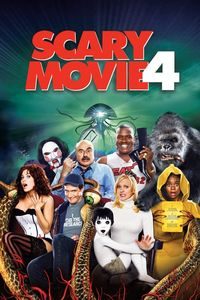
    (In theaters, April 2006) Roughly similar in tone to the previous Scary Movie 3, this one is a comedy grab-bag that chiefly goes after (in decreasing order of importance) War Of The Worlds, The Grudge and The Village, with other assorted pokes and tweaks at other films (Saw, Million Dollar Baby and Brokeback Mountain) and pop-culture icons. Scary Movie 4‘s biggest problem is that it’s quite happy to pastiche other films, but seldom goes for the jugular: Movie critics had funnier jabs at War Of The Worlds during the summer of 2005 than the parody ever manages to put together. (The constantly-screaming little girl shtick isn’t even mocked.) Scary Movie 4, alas, is almost completely bloodless in its parodies: it recreates the original with some goofiness but seldom more. (This being said, the production values are often impressive, especially considering the short shooting schedule) Even the rare political gags only make us wish for much more. It’s no surprise, then, if some of the film’s cleverest moments stand completely apart from previous films. As for the actors, well Anna Faris is still cute in an increasingly irritating clueless shtick, while Craig Bierko does well with the thankless task of parodying Tom Cruise. Still, it’s Regina Hall who steals the show as the insatiable Brenda: her arrival in the movie kicks it up another notch (plus, doesn’t she look unbelievably gorgeous in founder’s-era clothing?) Yes, Scary Movie 4 will make you laugh. Dumb, cheap, easy laughs but still; consider it your reward for slogging through endless mainstream horror films.

    (Second Viewing, On Cable TV, October 2021) One of the side-benefits of my Scary Movie series marathon is a renewed appreciation of how the series is broken down into three distinct phases, and how closely related are the films of those phases. Phase one is the Wayans Brothers phase—closely following genre protocols, often very funny but just as frequently too gross or too dumb for any laughs. Phase Two, the Zucker phase, is more controlled in tone but deliberately chaotic in plot, with fewer gross-out gags but far more comic violence that quickly gets old. Scary Movie 4 is very much of a piece with its predecessor, blending together the plots of very different films in order to create a clothesline on which to hang smaller film-specific parodies. There’s an effort to go beyond simple re-creation to create a more comic tone, and the number of known names in the cast is proof enough of the budget that went into the thing. Anna Faris makes a final appearance in the series (Phase Three of the series is the Faris-less one, which doesn’t help anything) and once again bears the brunt of much of the gags, but Regina Hall sharply improves the film once she joins in mid-plot. (She does look real nice playing a nymphomaniac in 18th century garb.)  Craig Bierko does well in a role asking him to spoof Tom Cruise, while various smaller roles are held by Leslie Nielsen, Bill Pullman, a pre-stardom Kevin Hart and many others —alas, Chris Elliot is once again a laugh-inhibitor whenever he shows up on-screen. In the end, Scary Movie 4 is not a great spoof comedy, but it’s better than many others (including Scary Movie 2) and works reasonably well when the filmmakers can keep their worst tendencies in check (their fondness for hitting women and children aside, at least they don’t include an excruciatingly long door unlocking/opening sequence). It’s more or less the end of the series, though—Scary Movie 5 is a different, almost unrelated beast, and another other sharp turn lower for a series that doesn’t have a lot of room to spare before hitting the bottom of the barrel.

  • Lucky Number Slevin (2006)

    Lucky Number Slevin (2006)

    (In theaters, April 2006) There are two good films in this movie, but their union is far less impressive than the sum of their parts. First up is a sympathetic crime comedy, in which an amiable protagonist (Josh Hartnett, playing up his usual lack of passion) see himself stuck between two competing crime-lords. As a fluffy premise, it works well and earns a few laughs, bringing to mind some of the least-annoying post-Tarantino criminal comedies. Plus it’s got Lucy Liu: I could watch her in just about anything, but she’s particularly appealing here as the frazzled-hair girl next door. But this seemingly amusing caper is leading toward a twist loudly foreshadowed by curious ellipses and a number of nonsensical details. When the plot twist comes, it changes the nature of the film, turning it in a story of violent revenge that leaves few threads untied. Taken in bits and pieces, Lucky Number Slevin isn’t bad at all. The impressive cast (featuring Morgan Freeman, Bruce Willis, Ben Kingsley, etc.) often makes it appear as being much better than it actually is, as do the occasional good lines and arresting set design. There is enough quirkiness in the first half to give the impression that it’s leading somewhere fun. But in the final analysis, Lucky Number Slevin looks like a twist in search of a script. Whatever good ratings it gets are mostly based on potential, because the execution can’t fulfil initial expectations.

  • Word of Honor, Nelson DeMille

    Warner, 1985, 738 pages, C$10.99 mmpb, ISBN 0-446-30158-2

    Every book review presents its own special challenge, but taking on Nelson DeMille’s Word of Honor presents challenge of its own. Simply put, this is a book that shouldn’t work. Describing it will send you in a coma and make you wonder how it can possibly be a pleasant reading experience. And yet it is. And yet it works.

    For fans of DeMille’s books, this won’t be much of a surprise: While most of his books could be cut by half without much sacrifice, DeMille seldom deliver anything less than excellent novels. Despite the lengths, the indulgences and the sometimes tepid pacing, DeMille means entertainment. Word of Honor may be a bit less interesting than his other books, but it’s still crackerjack good stuff.

    Writers are often advised to “start the story at the beginning, but no earlier” and the first page of Word of Honor is a textbook example of that axiom as Manhattan middle-manager Ben Tyson sees a fellow commuter reading a nonfiction book about Vietnam. Upon verification, Tyson is in the book, highlighted as a commanding officer who allowed a wartime atrocity.

    And so it begins. The book outrages a segment of the American population and forces the US military brass to do something: before long, Tyson finds himself recalled to duty and in serious danger of being court-martialed. The obvious question, of course, is just what happened back there and then: what is the truth behind those so-called atrocities? Could there be some more to the story than wholesale massacre?

    Of course there is. This is a DeMille novel, after all, and anyone who’s read works such as The General’s Daughter knows that the author can spin quite a yarn from the most ordinary beginnings.

    But frankly, Word of Honor is more about soul-searching than plot. DeMille has been to Vietnam and if his latter Up Country remains a classic exploration of the conflict’s lasting legacy, Word of Honor can be seen as the first draft of his feelings about the war. War makes losers of everyone, seems to be saying DeMille, and there are no statue of limitations on atrocities. Ben Tyson may have become a well-adjusted, moderately successful all-American protagonist after Vietnam, but Word of Honor is the story of consequences for what he’s done. The perfunctory plot is just an excuse to think about what happened and continues to happen.

    Doesn’t sound too riveting, right? Can you imagine more than seven hundred pages of that stuff? Contrarily to other DeMille novel, there aren’t too many crazy twists in here: The story progresses linearly to its conclusion, with the expected revelation late in the book and the protagonist’s just punishment. Even The Explanation, when it comes, seems underwhelming.

    And yet Word of Honor is never boring. DeMille’s natural storytelling abilities are such that every page is a delight, that every character is worth understanding. Tyson may be a bit rough around the edges (the sarcasm so prevalent in DeMille protagonists seems muted here, often taking the form of anger rather than flippancy), but he’s worth caring about throughout his entire odyssey. As a Vietnam novel, it’s tremendously effective.

    This 1985 book has aged a lot, but not in the way you may think. In these brave early days of the twenty-first century, it’s impossible to read without making parallels between Vietnam and Iraq. As with Up Country, reading Word of Honor brings along the certitude that the American invasion of Iraq is another national traume in full bloom: We know that there will be further stories of atrocities in the years to come. We know that in some ways, many people have learned nothing from Vietnam. Word of Honor has not aged in twenty years. If anything, it has become even more current.

    So don’t let the lack of plot of the book discourage you. Just sink into the novel’s easy narration and enjoy, if that’s truly the appropriate feeling, DeMille’s sure-handed storytelling. It’s an unconventional novel, but one that delivers solid satisfaction. It shouldn’t work, but it does so magnificently.

  • Class of Nuke ‘Em High (1986)

    Class of Nuke ‘Em High (1986)

    (On VCD, April 2006) Troma film; what more is there to say? Actually, this is a bit more interesting than The Toxic Avenger, with a touch of social commentary, decent special affects (for 1986) and the unbelievably cute Janelle Brady as the heroine. The plot is a mess of radioactive goo, monsters, bodily changes, teen sex, potent soft drugs, student unrest and motorcycles. You can’t call this film good, but you can say it’s spirited, with almost enough energy to make anyone ignore the wall-to-wall inanity. Compared to The Toxic Avenger, this film is less linear, somewhat denser, a bit funnier and generally more competent from a technical standpoint. (There are a number of arresting scenes that wouldn’t be out-of-place in a better film.) Still, it goes without saying that this form of film-making is for a very specific type of viewer: It probably loses half its charm per year once you’re older than 15. This version of Class Of Nuke’em High is the (legal) “Gametek cinema digital movies” one that was converted to Quicktime format and sold in computer stores in the mid-nineties. Audiovisual quality: atrocious, but at least you can make up most of the film.

  • Basic Instinct 2 (2006)

    Basic Instinct 2 (2006)

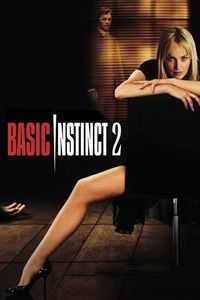
    (In theaters, April 2006) Aside from Sharon Stone, the only people who were actively waiting for this film were the cosmetic surgeons who made sure that Stone still holds together at her age. If you don’t mind bolted-on body parts that nonetheless hang on either side of her navel, you’ll probably find something effective in Basic Instinct 2; otherwise, well, it’s hard to avoid a serious case of the giggles which watching this train-wreck. Nominally billed as an “erotic thriller” rather than the far more honest “silly mess”, this sequel stars David Morrissey as one of the dumbest psychiatrist in England (“You’re addicted to risk! The only thing that will stop you is your own death! So, hey… wanna make out?”) and the most unintentionally hilarious script of the year. Partly set in London’s Gherkin Tower, it brings back memories of Match Point and suffers for the comparison. But perhaps the worst thing about the film is how defyingly boring it becomes in its latter half, as the film frantically tries to spin more and more plot twists that just don’t make sense, while actively failing to engage its audience. What becomes sadly obvious by the end is that frankly, no one actually cares about Stone’s character –and that this is a sequel most of us could very well have done without.

  • Learning the World, Ken Macleod

    Tor, 2005, 303 pages, C$33.95 hc, ISBN 0-765-31331-6

    Stories of first contact between humanity and extraterrestrial civilizations have been a staple of the Science Fiction genre ever since the very beginning of the genre. It’s one of SF’s central myth: what happens when different mindsets meet. While the classic “First contact” story usually involved the aliens coming to us (“Take us to your leaders! No, wait, let’s land on the White House front lawn!”), it’s not rare to see the scenario played in reverse: In Vernor Vinge’s Hugo Award-winning A Deepness in the Sky, for instance, a nomadic human delegation encountered the aliens on their own turf, precipitating a technological revolution.

    For better or for worse, Ken MacLeod’s Hugo-nominated Learning the World has a lot of superficial similarities with Vinge’s novel: It, too is a novel of first contact in which the humans are the visiting party. It, too, features a brand of humanity that is almost unrecognizable to us stock humans. It, too, takes a keen interest in the social consequences of first contact. (The title itself comes from the first obvious lesson to be gained from First Contact, and what it means for basic world-view assumptions.)

    But Learning the World is a novel that comes five years after A Deepness in the Sky: It’s much shorter and has a different agenda in mind when comes the time to confront the issues of First Contact. High on its list of priorities is a set of reflections on the Fermi paradox and what it can possibly mean. As a piece of twenty-first century SF, it’s fluent in economics (the humans of the novel think nothing of describing their interactions in financial terms, with a constant impact of how they act and perceive their actions) and is very familiar with the accumulated mass of other First Contact scenarios. (Heck, the industrial-era alien characters are big fans of “engineering fiction”) It doesn’t innovate as much as it revisits a familiar scenario with the latest lingo and plenty of conceptual cross-breeding: the visiting humans, for instance, are genetically modified immortals traveling on a generation starship. As with MacLeod’s other novels, it’s often the details that make the story worthwhile: tantalizing hints of “fast burn” civilizations and of a society indissociable from ultra-capitalism. There are more than a few good laughs as the First Contact scenario escapes all careful planning. Heck, a good chunk of the novel is made of, essentially, blog posts.

    Unfortunately, all of these good bits can’t amount to a spectacular novel. For such a short book, Learning the World is thin on plot: Not much happens in the first half, and the alien viewpoint chapters can often feel superfluous. Most of the novel’s truly interesting material comes in the last few pages, and even then they roll in a casual “hey, isn’t this interesting?” fashion. Heck, there’s an overall lack of danger, of passion from this book: It ends up passing through as a gentle first cozy contact novel featuring entirely rational characters without much at stake. (“Why, yes, we will break up our society… but everything has to be done for tea-time”) Indeed, some of the final plot developments take on a “ha, aren’t humans silly?” quality for which I’ve never had much use. Looking back upon the entire book, I remain surprised at how so much good material can feel so inconsequential: Is it worth asking if a more dynamic writer would be able to make more out of those same ideas? Or should I feel disappointed for feeling so disappointed?

    I’ve had problems with MacLeod’s fiction before (it’s no accident if I hadn’t read anything of his since The Sky Road), and if Learning the World is a bit more accessible than his other books, it still doesn’t give me much reason to be enthusiastic about his fiction. Simply put, Learning the World has the impact of a minor work, with the slight advantage of being a completely standalone novel. MacLeod is a frighteningly smart guy, but this novel reads almost as a half-sketched first draft, with potential for more but a weak execution. It’s been nominated for a Hugo; great news for MacLeod, but there are at least two other better books on the ballot. I’m glad I read it, but no more.

  • Crystal Rain, Tobias Buckell

    Tor, 2006, 351 pages, C$33.95 hc, ISBN 0-765-31227-1

    So this is the twenty-first century. Doesn’t feel much different from the last one so far, doesn’t it? Still no giant robots, lunar bases or flying cars. But sometimes, things change profoundly even when they don’t seem to. Attitudes evolve. New ideas come in. It may be more important to shift our understanding of the world as it exist than try to change it radically. As a genre, Science Fiction is no exception. While it too is pushing forward, it’s also changing from within, opening up to cultural backgrounds other than plain old white boring Anglo-Saxon roots. Look carefully, and you can see the first young wolves of twenty-first-century Science Fiction, and they’re thinking differently even when they’re following the good old recipes.

    Tobias Buckell, for instance, doesn’t stretch any definition of Science Fiction with his first novel Crystal Rain. A good old rollicking adventure across a primitive landscape littered with relics of a high-tech past, Crystal Rain is not particularly original or innovative. But it it succeeds at what it attempts and benefits from Buckell’s atypical background.

    It all takes place on a planet which, as far as we know in this first volume, is inhabited by two very different civilizations: The dominant Azteca and isolated Nanagada. As the story begins, the Azteca (who, as the name suggests, have pretty much adopted everything from the Aztecs… including ritual sacrifice) launch an invasion against Nanagada’s peaceful peninsula. They’ve got number and ruthlessness on their side, but there’s more to Nanagada than a small militia and a capital at the end of the railways: There’s John deBrun, our protagonist, a man who has managed to rebuild his life after being found at sea without memories. There’s a lot more to him than the simple existence he lives, and events will soon push him from one discovery to another.

    An adventure story in a somewhat pulpish tradition (though with far superior prose), Crystal Rain reads like a bucket of fun. The characters are well-drawn, their adventures rarely let up and there’s a satisfying progression to our understanding of the world they live in. The cover jacket illustration has a man with a hook and a gun, parrots, airships and plenty of colour: the novel inside isn’t much different. The cultural nature of the feud between Nanagada (heavily based on Caribbean culture) and the merciless Azteca is a welcome change of pace that does much to distinguish this novel from other planetary romances. Despite a few beginner’s missteps (such as the explanatory conversation in Chapter Two), Buckell’s writing is crisp and self-assured: Don’t be surprised to wrap up this novel in a single afternoon. One fair warning: Buckell’s characters often speak using broken syntax and while the effect is a pleasant reminder of Caribbean accents, it may be distracting to some.

    Unlike superficially similar novels like Karl Schroeder’s Ventus, Crystal Rain has no aspirations at pushing the SF envelope: It delivers the goods, promises more for the sequel and then stops while it’s still ahead of the game. I’m not too fond of series fiction, but don’t be worried by this volume: There’s a satisfying end to the story in this book even as some of the implications of the background suggest a much larger canvas for latter volumes. The Aztecan gods, for instance, are very real and very inhuman: Nanagada’s centuries-long isolation portends nothing good for the rest of the human race. We’ll probably learn more about it in the sequel. (And hopefully make sense of some details that look like contrivances: The focus of this novel is so tightly focused on Nanagata that it often feels like a series of arbitrary authorial decisions: “See, there’s a chain of Wicked High Mountain here… from one sea to another. Yup. Aztecas had to dig through for a hundred years. Couldn’t go above or beside it. Sea-to-sea mountains. Wicked High Mountains.” Best not to scratch the background too deeply here: just enjoy the adventure.)

    But all told, this is an praiseworthy take on the good old Science Fiction adventure genre, with enough action and gadgets to make this a fun read. It doesn’t do anything new, but it does so well, and thanks to Buckell’s own cultural heritage, provides a setting with a welcome difference from what we’re used to. Others may push back the conceptual limits of SF, but Buckell is changing it from within —making it a more diverse, more accessible, more enjoyable genre. That’s not to dismiss lightly.

  • Digital Fortress, Dan Brown

    St. Martin’s, 1998, 430 pages, C$10.99 mmpb, ISBN 0-312-99542-3

    There it is. Dan Brown’s first book, well before The Da Vinci Code, and the last one of his I still hadn’t read. Closer to Deception Point‘s techno-thriller feel than either one of the Langdon adventures, Digital Fortress is still nonetheless all about codes and how to break them. Unfortunately, it also seems to be about how many stupid mistakes one can stuff in a novel and still claim to have done research.

    You don’t need to know much about the plot, especially if you’ve read other Brown novels: It’s about an unbreakable code, a disabled assassin, a honest man and a honest woman trying to uncover a conspiracy and enough twists and turns to make anyone’s head whiplash. Oh, and it’s also about how, in Brown’s novels, the mentor is always the bad guy. No, seriously.

    But what you do need to know is that the technical details are completely ludicrous. I don’t know much about cryptography, but it doesn’t take much knowledge to realize, not even fifty pages in the novel, that Brown is simply ignoring some of the most fundamental axioms of the field. The idea that you can brute-force any unidentified encryption algorithm without understanding its inner workings is moronic. (Hey, what if they’re using one-time pads, hm?) Cryptography experts will suffer while reading this book, but computer specialists won’t do any better: Brown mis-uses elementary concepts (“virus” instead of “worm”, for instance) and still believes, poor child, that computers can ignite when they overheat. (Free hint: fuses.) And that’s not even talking about the hideous security mechanism that seem to be standard procedure at Brown’s NSA… yow.

    While a number of those details get overturned by latter plot developments, they still don’t make sense in the story’s internal logic: Our characters, super-brainy cryptography experts they are, should know much better: That they let those things pass without comment only serves to highlight plot holes and deliberate authorial mistakes, not clever hints or deliberate gotchas. What’s worse is when the so-called smart characters blindly flail around trying to pierce together clues that are blatantly obvious to the rest of the readers.

    Where those glaring technical problems really hurt is that Brown is trying to position himself as a trustworthy Knower of Stuff, and yet anyone who knows the stuff can clearly see that he’s deliberately making it up. This faux-geek dissonance is enough to break any suspension of disbelief that is a large part of the unspoken pact between reader and writer. You can compare and contrast, if you wish, Brown with authentic nerd-chic authors such as Neal Stephenson: they rarely mess around with the basics, and there’s usually a good reason when they do, as with Cryptonomicon‘s “Finux”.

    If you do get past the nonsensical technical details, the novel isn’t particularly well-written or refined. Plot-wise, it seems to be made up of random plot beats taken out of a hat, regardless of sense and plausibility. It just keeps going on until the very last page, which features a “twist” that serves no purpose whatsoever. As far a characters are concerned, it’s all surfaces and clichés: If you want fat Germans tourists, obese computer hackers, well-groomed university teachers and workaholic spinsters, don’t look any further than this book.

    But I’ll give one thing to Brown: Like his other novels, Digital Fortress is impossible to drop down once it starts heating up. The short chapters carry along a delicious sense of “just one more…” compulsiveness and Brown’s habit of ending them in false cliffhangers is crudely effective. (One eventually gets the sense that Digital Fortress is plotted like those cheap comic books, with a page ending with “Look out!” and the next one continuing “…isn’t that a pretty flower?”) Brown may have a number of faults, but creating forward momentum is one of his strengths. The writing is simple, the prose is uncomplicated and to undiscerning eyes, the techno-babble must sound impressive. (Much like, I fear to think, the historico-babble in The Da Vinci Code sounded plausible to me.)

    It’s unfair to point out that the book flopped when it first came out in 1998 and that it only lives on today on the coattails of its far more famous sibling. And yet I have to wonder who was the original audience for the book: Clumsily written down to what seems to be a broader audience, Digital Fortress is untenable for technical readers, and barely-palatable to techno-thriller fans who know enough about this stuff. (You can’t seriously try to sell the NSA as an ultra-secretive organization to thriller readers; that Brown tries to do so on page 9 either smacks of naiveté or condescension.) But, hey, it’s by that guy who wrote The Da Vinci Code!

  • Polystom, Adam Roberts

    Gollancz, 2003, 294 pages, C$24.95 tpb, ISBN 0-575-07179-6

    Part of the reason why I’m still blathering reviews on this web site after ten years (what, you didn’t notice our ten-year anniversary? Aw.) is that I remain fascinated by the mysteries of reading. I’m not an overly analytical reader, so I always end up discussing a variation on So, how much did I like it? Even after years of voracious reading, there are always a few surprises in store. For instance, why I can go nuts for dull thrillers that don’t do anything new (see above for John Grisham) yet feel dissatisfied by ambitious novels.

    Which brings us to Adam Roberts’ Polystom.

    I’ve been following Roberts’ work with some interest this far: Salt On Stone were imperfect novels, but short and quirky enough to warrant a bit of admiration. Additionally, Roberts is a keen critic (I still haven’t found any of his paper-based critical essays, but his annual examinations of the Clarke Awards short-list for Infinity Plus are always a joy to read) and his pseudonymous work writing literary parodies such as The McAtrix Derided are simply a lot of fun. Would Polystom be Roberts’ big breakout novel?

    No.

    Under a different form, it could have been Robert’s big breakout short story. But as it stands, it’s simply too problematic to be anything more than a disappointment.

    Oh, the setup is interesting. Taking place in an alternate pocket solar system where the rules of physics allow air travel between planets and moon, the world of Polystom is one that seems charmingly stuck between Victorian England and World War One. Our eponymous hero is one of the upper classes, owner of a vast estate and absolute master over a population of servants. But Polystom is an unlucky fellow even in love: his new wife turns out to be unbalanced (though what part Polystom plays in the unbalancing is left to the reader) and the marriage flounders. Further shocks are to come when his uncle, a genius-level scientist, is murdered by parties unknown. Soon enough, Polystom finds himself stuck on Mudworld, dodging bullets and leading his own servants to serve as cannon fodder.

    If the above sounds interesting, reflect upon the fact that it’s about as exciting as the novel ever gets. Some novels draw in their readers from the first few pages and never let go; others tempt the audience with cryptic events that will hopefully make sense later on: Polystom is definitely in that second category, though it doesn’t exactly make sense once it’s all over. Worse; it’s actively disjointed. Consciously divided in three parts, Polystom moves from love to murder to war with picaresque abandon, only to end with a metaphysical twist that is not without raising memories of The Robertski Brothers’ work. I don’t begrudge the final twist: the four pages appendix is a neat little literary/scientific joke, easily the most amusing thing about Polystom. But said twist can seem to exist simply to distract our attention from all the frayed threads: One gets the mental image of confronting Roberts with explanations, only to be answered by “Oh, look at that comet!”

    There is another possibility, of course, one that I am far too proud to consider at length: that all the answers are there, that Polystom is a tight little piece of literary Science Fiction and that I’m simply too dull/stupid/ignorant to get the references. Maybe the hand-shaped hole means something. Maybe the uncle/father slip-up means something (well, beyond the obvious). Maybe the names are all highly significant in a literary tradition I’m ill-equipped to follow. Maybe the late-third ghosts all make perfect sense. Maybe the metaphysical twist brilliantly ties everything together. Maybe.

    But my first feeling after closing the last pages of the book is that Polystom is the chatty first draft of something else. That Cleonicles’s info-dump is a clumsy re-thread of On‘s wizardly explanations, although without that book’s interesting adventures. I’m glad to see that Adams’ usual world-building prowesses and gentle stylistic experimentation are back, but I’m sorry to find out that they’re not used to significant impact. And that’s too bad, because I keep hoping that Adams will turn out a book that I will be able to enjoy whole-heartedly. As it stands, I’m still partial to Salt and Stone: Maybe The Snow will be a step in the right direction.

  • The Street Lawyer, John Grisham

    Island, 1998, 452 pages, C$11.99 mmpb, ISBN 0-440-29565-3

    Oh, that wily John Grisham. That clever, manipulative, populist, puppy-like John Grisham. No wonder why he’s said to be one of the nicest guys in the business. No wonder why he sells books by the truckload. No wonder why he’s been at the top of the game for ten years.

    A flat description of The Street Lawyer would make you shake your head in sorrow: It’s about a young lawyer! Who rebels against the system! And sues big bad corporations on behalf of the people! And fights crime! It’s like all the other John Grisham novels ever published so far! It’s packed with coincidences, familiar plot structures and an ending you can see coming from half the book away! Plus, it’s written with short sentences and a vocabulary of less than a thousand words: it’s guaranteed to be understandable by 95% of reading-age Americans!

    But boy, does it work.

    Forget your yearnings for fine literature, break out that Nietzsche dust jacket you use to camouflage your commuting reading and jump head-first in The Street Lawyer. You will know within pages if this is going to be a good ride.

    It certainly starts on a high note, as our young lawyer protagonist is taken hostage by a homeless man with a grudge against his legal firm. The siege soon ends thanks to the timely intervention of a sniper, but the impact lingers on for our protagonist who, thanks to a hideous series of coincidences we rarely see outside the movies, finds himself divorced, laid-off and somewhat on the run. Tell no one, but The Street Lawyer is a keenly disguised mainstream novel about a character undergoing a major life crisis: dissatisfied by his money-grubbing career, he descends through society to find himself helping the poor through his mad legal skillz. A street lawyer is born, but this being a Grisham novel, you can bet that there’s a major civil lawsuit just waiting to make an appearance. Will our hero find a way to stick it to the man, help improve his city and find love in entirely expected places? Well of course: we wouldn’t have it any other way.

    The Street Lawyer is a cleverly manufactured book that gives us exactly what we expect, and it’s hard to disrespect something like that. Every step of the character’s changing life is carefully telegraphed, described and significant: If it takes a random car accident to make sure that the protagonist finds himself painted in a corner, well, why not? But what could have been exasperating in the hands of a different writer here comes across as par for the course. The attraction of the book is not in its conclusion, but in the way it hits the appropriate beats with exact timing.

    It helps a lot that the writing is so crisp. Many of Grisham’s contemporaries could learn from the way he shapes his scenes and consciously avoids any stylistic flourish: the non-nonsense first-person narration echoes The Rainmaker, while the interest in an odd corner of the law (here, lawyers for the very poor) recalls his previous Runaway Jury (though without the intensity of that previous work.) Here again, we find dozens of small and telling details about the life of an everyday lawyer, bolstered with eloquent pleas in favour of greater social equality. (But not too eloquent: In a telling scene, the protagonist finds himself commiserating with a homeless man whose life story suggests that homelessness can happen to anyone… only to find that he’s a fake.)

    Compared to previous Grisham novels, The Street Lawyer fits comfortably in the middle of the pack: It doesn’t have the clockwork elegance of The Partner, but remains more polished than Grisham’s first few books. What’s obvious, though, is that Grisham will have a long and successful career as long as he can keep delivering books like this one. The point is not that he’s better than other writers working in the same field (you and I can both name at least a dozen authors who somehow “deserve” as much success), but that he can deliver what’s expected of him, year after year. As far as I’m concerned, this is another successful entry in Grisham’s post-Runaway Jury revival: Expect more reviews of his books here, continuing with The Kings of Torts.

  • Grave Secrets, Kathy Reichs

    Pocket, 2002, 366 pages, C$11.99 mmpb, ISBN 0-671-02838-3

    Condemning with faint praise is a favourite sport of reviewers everywhere, and so let us start by saying that I come to talk about Kathy Reichs’s fifth novel with no intention of burying it. For once.

    It’s no secret that I’m not Reich’s biggest fan: After a promising start in Deja Dead, Reich’s next few novels took a rapid turn for the worse, repeating themselves and ripping off headlines with less than admirable grace. Familiarity breeds contempt, they say, and so it grew tiresome to see Quebec-area headlines being recycled almost wholesale in her novels. Worse yet was Reich’s lazy approach to plotting, in which newly-introduced relatives of the heroine inevitably found themselves in mortal peril before the end of every single novel. There were other things too, but my memory has since thankfully blanked them out.

    So imagine my surprise in saying that Grave Secrets is not entirely horrible.

    For one thing, Reich leaves Quebec to set her story mostly in Guatemala. This is not a sudden abandonment of her “stealing from real-life” strategy as much as it’s a displacement: Reichs (for all her flaws as a writer) is a real-life forensic anthropologist, and she has worked in Central America to resolve past crimes through cadaver examination. From a French-Canadian perspective, it makes her fiction just a touch stranger, and stronger for it. (On the other hand, Guatemalans are probably reading her stuff and shaking their heads in much the same way that Quebecers are wont to do with her previous novels.)

    What Reich’s perennial narrator/protagonist Temperance Brennan discovers in Guatemala, beyond the ubiquitous maggoty corpses, is evidence of a small-scale conspiracy. Expression-du-jour “stem cells” is brought up and then never go away, along with the expected stuff about conspiracies in high places, abusive local officials, a Canadian connection and a small trip back to Montreal that actually feels refreshing in the middle of the rest. The protagonists’ so-called love life is once again unearthed as a fake source of sexual tension that is as ridiculous as it’s ineffective. Unsurprisingly, Brennan finds out that her police partner in Guatemala turns out to be (hear this!) an old high-school chum of her perennial lust interest Andrew Ryan. No less.

    But that last clumsy misstep aside, Grave Secrets at least has the decency to avoid actively insulting its readers’ intelligence with nonsensical developments. The superficial thriller mechanics are in place, and Brennan’s own moment in jeopardy late in the novel is feebly justified, but mercifully brief. The techno-thriller part of the plot is too obvious to be credible –and comes along with a half-hearted defence of Bush’s stem-cell ban.

    Still, it’s worth noting that “not being bad” is still some distance away from “being good”. In this case, we still get a novel that’s far too chatty for its own good (often inanely so, especially when it comes to the attempt at a romantic sub-plot), erring in too many red herrings and the usual contrivances.

    Reich may have produced a novel that doesn’t make me want to claw my own brain out, but Grave Secrets will not be mistaken for anything more than an average piece of criminal fiction. Beyond the premise, the different setting and the broad strokes of the plot (not to mention the convenient coincidences), there isn’t much worth remembering in the novel. You may argue that rapid forgetfulness is the best that Reich can hope for at this point in her career, is it not better to be talked about badly than not talked about at all? All I know is that I’ve got an entire bookcase of books to read, and there’s not a single Reichs left in it.

  • V For Vendetta (2005)

    V For Vendetta (2005)

    (In theaters, March 2006) It may be too early in the year to talk about 2006’s best films, but it’s certainly not too early to say that this is the first good movie of the year. I’m always a sucker for tales of insurrection against totalitarian government, and this one is slicker than most. Somewhat faithfully adapted from the graphic novel, V For Vendetta remains faithful to the spirit of the original, and delivers a tighter, more cohesive take on the basic story: the film is likely to become my preferred version. (Alan Moore may pout and fume about Hollywood betrayal, but this one’s really not that bad.) From a cinematographic standpoint, the film is gorgeously designed and directed with a great deal of self-confidence: James McTeigue may be overshadowed by the Wachowski producers, but his work is crisp and clean. Blessed with capable lead actors, V For Vendetta showcases some fantastic mask work by Hugo Weaving and one of Natalie Portman’s best role yet. Despite the lack of action set-pieces (don’t believe the trailers), the film has considerable forward momentum and only falters slightly late in the film. Politically, it’s a loud scream against the dangers of totalitarianism, and successfully manages to integrate the Thatcher-era fears of the original with current-day concerns over the so-called War on Terrorism: If it touches a nerve, it’s only because there is something to be concerned about right now. Otherwise, unfortunately (and there’s my biggest problem with the film), it remains quite literally a comic-book fable that tackles ideas in a stylized fashion, but falters on the follow-up: Totalitarian regimes never spring up completely without popular roots, and are seldom defeated by a grandiose gesture. V For Vendetta, hobbled by the necessities of a feature film’s running length and the low bandwidth of cinema, does not seriously engage with the demands of political thought, or the solutions required by real-world trade-offs. It’s all well and good to scream revolution, but it’s not going to do much good unless there are solid alternatives behind the reform. (And it’s what distinguishes comic-book-reading teenagers from adults used to the real world). But I’m being overly harsh: After all, I didn’t say such things after Equilibrium, right? But if V For Vendetta is going to propose itself as a bold political thinking piece, it better withstand the scrutiny it invites. That rabid political point aside, there’s little doubt that V For Vendetta is going to be one of 2006’s good films. Now let’s see the competition before deciding if it’s one of the best.

  • Wings of Fire, Dale Brown

    Putnam, 2002, 446 pages, C$37.99 hc, ISBN 0-399-14860-4

    The problem with Dale Brown’s work is not that it’s incompetent: The problem with Dale Brown’s work is how inferior it is to what he’s capable of writing. Wings of Fire, for instance, is a frustrating mixture of the good, the bad and the silly. Brown has a few good ideas, but wastes them in a story that struggles to be interesting.

    While I’ve often criticized military thrillers for being inextricably tied to American foreign policy, I had forgotten to consider the alternative: American military forces fighting a meaningless made-up conflict between two other countries we struggle to care about. Here, Libya takes on Egypt for oil interest, but Brown tips the scale by making Libya’s leader (not Qaddafi) a fundamentalist poseur and Egypt’s president a beautiful Egyptian/American ex-fighter pilot with a background in intelligence operations. Uh-huh. Not that this is the most unlikely character in the novel: Ubergeek protagonist Jon Master here faces his match thanks to a precocious nine-year old with a bunch of doctorates. If you’re laughing, just wait until she gets to teach Masters about the finer points of high-energy physics: The dialogues alone are fit to make you howl (or hurl). Or at least seriously consider whether Brown is just screwing with his readership.

    As usual, most of the problems stem from Brown’s insistence in continuing a dead-end series that has gone on for too long: The accumulated weight of the series’ established continuity is now so burdensome that Brown has to cheat and selectively forget elements of his background to raise dramatic stakes. A subcutaneous gadget allowing personal private communications between protagonists of the series is conveniently forgotten, except in one scene where the president thinks nothing about chatting up protagonist Patrick MacLanahan for a while. Alas, other gadgets are not so quickly forgotten: The quasi-magical “Tin Man” armour suit is almost always on-screen, recycling a one-book idea far past the point of no return. All of Wings of Fire, of course, is supposed to take place somewhere near 2002. Readers won’t be surprised to learn that despite a mention in the book’s dedication, there is no mention, nor even an acknowledgement of the events of September 2001. We’ll have to read the next book in the series to be sure, but it’s entirely possible that Brown’s has retreated so far in his imagined universe of super-powered gadgets that even the real world won’t be able to reach him.

    And that raises a paradox: Brown has seldom been better than while being profoundly unrealistic: Re-read Day of the Cheetah or Silver Tower for proof. And yet he here manages to make even the extraordinary seem commonplace: Airborne lasers vapourizing anything in sight? Bah, whatever. It doesn’t help that Brown seems to have forgotten how to write dramatic action scenes: Most of his books are now taken up by gadget demonstrations in which the character just gosh themselves to contentment by staring googly-eyed at the destruction they’ve wrought.

    To raise dramatic tension in the middle of this snore-fest, Brown kills off a few character, wasting what could have been affecting moment in Patrick MacLanahan’s evolution to a few throwaway scenes lost in the desert. It struck me that even as Brown seems to be writing his novels on autopilot, I’m reading them through similar inertia. The problem is that I’ve long since stopped caring about any of the characters: killing those faceless names just doesn’t do anything, even if I find myself thinking that they deserved a better send-off than what happens to them in a book as insubstantial as Wings of Fire. The last Brown novel to kill off main characters was Fatal Terrain: It may not be a coincidence that it was also the worst Brown novel until Wings of Fire.

    I’m skipping over a lot of my problems with the book just because I don’t want to bore you even further with the details. There’s the silly presidential stuff; the unrealistic depiction of middle-eastern politics; the padded narrative; the lazy approach to characterization (once, just once, I’d like to see a foreign leader whose moral alignment is not rigidly mapped to their attitude toward American hegemony. Just once.); the lack of soul-searching from our mercenary heroes; the casual use of neutron bombs; bad dialogues; and so on. What’s worth remembering is that this is an unremarkable novel, even by Brown’s increasingly indistinguishable standards. Given how tightly integrated it is to his previous Warrior Class, only self-identified Brown fans will get anything out of the book –and dissatisfaction is likely to be what they’ll take away from it.