Year: 2006

  • Firewall (2006)

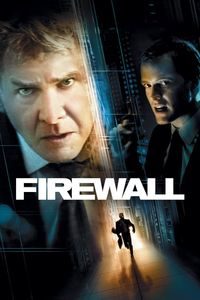
    Firewall (2006)

    (In theaters, February 2006) Action grandpa Harrison Ford is back throwing punches in this limp thriller, at a time where even his stunts doubles are more likely to worry about broken pelvises than landing a good hit. Yet another suspense film in which a man must save his family from ineffectual criminals, Firewall gamely tries to get on with today’s technology, but only succeeds in highlighting how silly it is. The technical details are wrong (Hurrah for continental wi-fi coverage!), but even nit-picking IT jargon pales in comparison to the script’s other problems. Paul Bettany’s villain is weak enough to be stopped by a good spanking, but Ford himself doesn’t look so dynamic at an age where he should be contemplating retirement-home hobbies. (We’ll let the whole marrying-a-woman-twenty-years-younger shtick slide on the basis that Hollywood producers are always fond of wish-fulfilment fantasies, and that Ford himself seems to be having no problem dating younger women.) Actually, Ford isn’t half bad as either a security expert or an older family man, but it’s when he starts playing the action hero that Firewall becomes very amusing: a better script would have recognized the problem and played the character to his strengths. But that’s a tall order for a script that simply goes through the motions of a thriller without much conviction, peppering the dialogue with technical terms it doesn’t understand and making only the most cursory efforts at drawing credible characters. Some twists happen too late for us to care, which is to say that Firewall can’t hold anyone’s interest for more than a few minutes. It may do if all you’re looking for is a very conventional thriller… but otherwise, forget about it.

  • Enron: The Smartest Guys In The Room (2005)

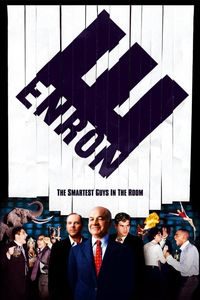
    Enron: The Smartest Guys In The Room (2005)

    (On DVD, February 2006) The Satirical journal The Onion once ran a story titled “Americans Would Be Outraged If They Understood Enron Collapse”. Well this it it, the film that ties everything together and does its best to enrage you. Embezzlement, machismo, political connections, lack of auditing, amoral executives, deliberate suffering, culture of excess, refusal to admit responsibility: everything wrong about American capitalism seems to be on display here. Best of all, director Alex Gibney makes sense of a complicated scheme, tracking Enron’s rise and fall in a limpid fashion. As financial vulgarization, it’s top-notch, with both the script and the direction keeping things moving along at a fast clip. But beyond a simple expose of criminal numbers, the film also shows the real consequences for some ordinary people whose pensions were essentially wiped out by the Enron collapse. Make sure you don’t have any Enron business literature left lying around, otherwise you will find yourself burning it in sheer hopping anger. 2005 was another excellent year for feature-length documentaries, and this is only one of the flagship titles.

  • The Charm School, Nelson DeMille

    Warner, 1988, 630 pages, C$10.99 mmpb, ISBN 0-446-35320-5

    As we uncertainly make our way through this fifth year of the current self-proclaimed “war on terrorism”, it’s good to remember that it wasn’t always so. That barely twenty years ago, everyone was looking anxiously at the Soviet Union as the potential source of nuclear Armageddon. Now, of course, we know better: The Soviet bear turned out to be a paper tiger, a third-world country with a nuclear arsenal and not much else.

    But as of 1988, paranoia and cold war thrillers were still hot viable commodities. The Charm School, an espionage thriller set deep behind Russian borders, may seem a charming antiquity today —but it must first be viewed through its historical context before being criticized as a relic of another era.

    It begins with an American student, as he makes his way through Russia on his own set of wheels. A chance encounter allows him to see something he shouldn’t know about, rolling the plot into motion. Before long, intelligence officers inside the American embassy are alerted to the horrible secret, and plunge neck-deep in a vast conspiracy. DeMille being DeMille (see Up Country), he can’t resist the temptation of using his novel as an excuse to travel and probe the depths of late-Cold War Russia.

    The Charm School has both its good and less-good aspects, but one of the highlights of the book -indeed, one that has survived intact through what we now know of the defunct Soviet Union- is to be found in its depiction of the USSR as a joyless place barely subsisting above poverty levels. Through its investigating protagonists, DeMille takes us deep in Russia, from the tourist spots of Moscow (which, I gather, DeMille visited) to the rural countryside. DeMille nails down two important aspects of the experience; first, the sheer backward nature of a place where electricity is still a tenuous privilege; second, the domination of a totalitarian regime where anything can happen to anyone on a whim from the upper hierarchy. Nearly twenty years later, The Charm School is a time capsule dedicated to a defeated enemy: Let’s just hope that things are better over there today.

    The not-so-good parts of the novel come when the Vast Conspiracy is exposed, the one that directly threatens America’s very own social fabric. Knowing what we know about the relative strengths of both societies, especially given the problems described by DeMille elsewhere in the novel, it seems unlikely that the Charm School could have had even a minimal impact on America. (Heck, some will say that home-grown Americans are far more likely to behave stupidly on their own than due to a Vast Conspiracy. Indeed, it remains to be seen if a Soviet-penetrated US would end up more like Canada than Russia.)

    But it’s a constant strength of DeMille’s writing skill that we’re more than able to overlook this dated piece of hysteria. (If there’s something to overlook, naturally; readers with a good knowledge of Cold War clichés and rumors will just read the back cover blurb, guess the conspiracy, raise their shoulders and read on anyway.) The first half of the book is a quick and impeccable espionage thriller full of trade-craft details and slices of life in an embassy. Protagonist Sam Hollis is a tough-guy that clearly represents the early prototype for such latter-day DeMille heroes as Plum Island‘s John Corey or The General’s Daughter Paul Brenner, minus the polished sarcasm. The relationship he has with Lisa Rhodes is also emblematic of DeMille’s male/female character dynamics, though Up Country keeps coming back to mind thanks to the “travelogue in a totalitarian regime” aspect. (This being said, I keep going back up DeMille’s early bibliography and finding those elements over and over again. Don’t be surprised if an upcoming review ends up saying something about earlier characters being early drafts for Sam Hollis.)

    If the novel suffers from a third-quarter slowdown (in which description takes the place of action), DeMille’s terrific prose is delicious enough to keep us reading without pause. Fans of the author already know all about the addictive nature of his plotting: The Charm School is no exception to the rule. It helps that the ending is both suspenseful and mournful, allowing both personal triumph and political hard edges. As a novel, The Charm School has aged relatively well, especially when compared to other similar novels of the era: It counterbalances its wilder moments with enough careful accuracy to make the final result seem worthwhile. Even today, it remains an essential piece of DeMille’s work.

  • Crash (2004)

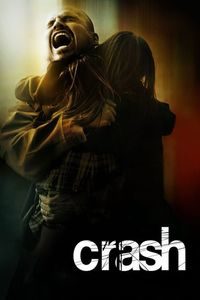
    Crash (2004)

    (On DVD, February 2006) Seen from the perspective of a French-Canadian, life in Los Angeles often takes on an alien quality that makes it hard to distinguish reality from exaggeration, especially when it’s seen from the distorted prism of cinema. Small surprise, then, if this tale of racism in modern L.A. often feels too unbelievable to be entirely credible. I don’t know the state of race dynamics in today’s southern California, but Crash paints a damning portrait that leaves few ideals standing once it’s done smashing all its characters to pieces. Unfortunately, the way it does so smacks of arbitrary plotting and authorial intent: It’s as if characters, in-between scenes, traded an instruction card saying “You’re now going to do something incredibly stupid.” The result is a film that may aspire to much, but ends up playing the same note over and over again, resulting in a melodrama that can’t be taken too seriously. (Indeed, by the end of the film, I was referring to character in term of their standing on the “Wish They’d Be Hit By a Bus” scale.) What’s unfortunate is that there is some very good material in here, from the ambiguous characters to the chaotic nature of their interaction to the film’s deep acting talent to the cinematography. A number of scenes, as unlikely as they are, still resonate well after the end of the credits. But that’s not nearly enough. The film may self-consciously rely on the vagaries of chance and coincidence, but it only ends up making the experience frustrating and, yes, ridiculous. There aren’t any easy answers here, but there are a lot of silly questions.

  • Cinderella Man (2005)

    Cinderella Man (2005)

    (On DVD, February 2006) I’ve seen this film before, except that it featured a horse and was called Seabiscuit. I know, I know, but what can one say about two depression-era sports drama released two years apart, especially when they’re both meant to represent an elusive “triumph of the American spirit?” As you may guess from the premise (down-on-his-luck boxer gets a second chance), this is old-fashioned Hollywood movie-making in more ways than one: sweeping period recreation coupled with solidly conventional moral values. Thankfully, Ron Howard’s workmanlike direction is efficient, and once you get past the inevitable “ooh, we’re poor” moments to get into the sport sequences, Cinderella Man becomes surprisingly effective. Russel Crowe does fine in the title role, and “Da Vinci” Nicholas Campbell has a crunchy supporting role as a sport journalist. Perhaps too conventional to be worth more than a good look, this is nonetheless a professional work of mainstream cinema. Yes, it’s still Seabiscuit in a ring. But don’t let that dissuade you from this film if ever you find yourself in the mood for something so classic it could have been made at any moment since the seventies.

  • Les chevaliers du ciel [Sky Fighters] (2005)

    Les chevaliers du ciel [Sky Fighters] (2005)

    (In theaters, February 2006) Oh yes, baby: Top Gun, French Mirage style! As a shameless attempt to replicate the boffo success of Hollywood blockbusters, Les chevaliers du ciel is more successful than most: Fast planes, competent protagonists, attractive female characters and superb cinematography… what could be better? Sure, the script is filled with howlers (the rationale behind the cannonball run, for instance, is ludicrous), but the rest of the film holds up so well and we almost know when the screenwriters are playing with us. While the ending is disappointing and some details don’t make much sense (of course, the American pilot paid her way through school by stripping; how kind of her to have kept up in shape), they don’t hold a candle to the fabulous aerial scenes. This is where the film shines, with eye-popping footage of fighter jets doing what they do best. Reportedly filmed without digital trickery, this techno-thriller kicks Stealth in the teeth and makes a proud statement for the French Air Force. As a certified plane nerd, I geeked out several times during the plentiful aerial sequence, including a deeply effective moment during which the beauty of multi-million supersonic flight is explored. It’s a welcome change to see some European hardware on-screen. Les chevaliers du ciel may have been conceptualized as a French answer to Top Gun, but it ends up as a challenge to Hollywood; now let’s see the Americans top that!

  • Warrior Class, Dale Brown

    Berkley, 2001, 473 pages, C$10.99 mmpb, ISBN 0-425-18446-3

    As long as Dale Brown will continue to write more novels in his increasingly unworkable series, his fiction will continue to suffer. Warrior Class, like Brown’s last few books, is no exception to this trend: at best, it’s a grab-bag of ideas made weaker by the necessities of serial fiction. At worst, it showcases why Brown has lost the place he enjoyed at the top of the techno-thriller writers’ pantheon.

    Plot-wise, it’s another re-thread of the usual: Once more in this comfortably post-Cold War Browniverse, US interests and world peace are indissociably threatened when a Russian gangster seizes an advanced warplane to ensure his own plans for private economic supremacy. It’s up to Patrick McLanahan, again, to fight the good fight using his high-tech toys and a complete disregard for the protocols of military engagement.

    But in what feels like a breath of fresh air, there are consequences to this type of cow-boy mentality. As the novel slowly opens, we’re introduced to a new US President: Thomas Nathaniel Thorn is Kevin Martindale’s successor and as befits his name, he proves to be quite a thorn in the heel of the US military. A third-party governor from eeevil liberal Vermont, Thorn is not much for official ceremonies but truly enjoys Transcendental Meditation. What more, he’s ready to sharply reduce the size of the armed forces and reveal confidential information to the public. Surprisingly enough, Brown resist the temptation to paint him as a foolish villain (though this may come later in the series).

    Meanwhile, Patrick McLanahan is sitting pretty in Nevada as the operational chief of the top-secret high-tech “Dreamland” facility. When tensions erupt in Eastern Europe, he’s fast up on a plane trying to do what he does best: breaking direct orders. When things turn sour, only a presidential gambit saves him from certain death. Unsurprisingly, he finds himself nudged toward the civilian life as soon as he lands. This, of course, just won’t do…

    From the above, you may suppose that this is a significant entry in the McLanahan saga, and you would be half-right: On some aspects, Warrior Class shows some promise and excitement. McLanahan has often defied orders without consequences, so it’s only too fitting to see him suffer from the fallout once in a while. His trajectory out of active service surely won’t be allowed to stand for more than a volume or two , but it’s a development that could be interesting. (Indeed, by the end of the novel it’s only too obvious that Brown is indulging into one of the favorite fantasies of many right-wing writers: A private armed force that can pretty much kill whoever it wants without any kind of paperwork.)

    But there are problems, and many of these spring from the uneasy interaction between reality and Brown’s universe. It’s bad enough that an author’s note at the beginning of the book has to explain what fictional constraints were introduced in previous books, only to be followed with three pages of “real-world news excerpts”. A significant problem is, of course, that Brown gets to keep what he likes and ditch what’s inconvenient; there’s a mention of what happened in Day of the Cheetah even despite the fact that Brown’s 1988 novel was clearly a story that took place in a world where the USSR made it intact to 1997!

    But even overlooking the problems in trying to stick to a series well beyond its best-by date, Warrior Class has problems of its own. As with most of the latest Brown novels, it spends too much time with “the enemy” even as the emotional strength of the novel is with the American characters: Little of what’s discussed by the antagonist is relevant to the rest of the novel. McLanahan himself doesn’t make an appearance in the first fifth of the novel, a delay that highlights the narrative’s padded nature more than anything else. A number of subplots go nowhere and do nothing, bringing along a few supporting characters: You really have to work hard at extracting the good from the bad in this bloated excuse for a military novel.

    It doesn’t get any better later on, as fancy gadgets work alongside realistic military hardware. Brown has never been at his best portraying realism: Chains of Command tried to stick as closely as possible to reality, and it was a singularly dull novel. On the other hand, Brown’s earlier deftness with fancy hardware has lately metastasized into an unwieldy habit of reusing the same gadgets over and over again. Here, the silly “Tin Man” suits make a return appearance and the result is more ridiculous than exciting.

    As callous at it may sound, Brown’s next, Wings of Fire, should be worth a read if only to find out how he’ll handle 9/11’s major reality reset. How will he square Bush, al Quaeda and the rest with increasingly fanciful tales of big bombers and super-powered suits? Of course, he could choose to ignore it completely and go even deeper in his dead-end universe… which wouldn’t be surprising.

  • Freakonomics, Steven D. Levitt & Stephen J. Dubner

    Morrow, 2005, 242 pages, C$34.95 hc, ISBN 0-06-073132-X

    As a reviewer, part of my mission is to single out worthy books that deserve your attention. There’s nothing better in this hobby than to discover an unjustly forgotten work and sing its praises in the hope to convince even just another reader to seek it out.

    In the case of Freakonomics, though, it’s far too late to be celebrating anything: Published in early 2005, this book of practical sociology quickly became one of the best-selling books of the year, topping the charts even as I write this, even after finding a 24th hardcover printing copy at the local remainder bookstore. Critics ranted and raved, blogs embraced and dissected, readers bought and enjoyed: At this point, there doesn’t seem anything left to proclaim about Freakonomics, the book of choice for everyone who was looking for a brainy-but-not-too-much gift for Christmas 2005.

    So much for trying to find a hidden gem. But what about celebrated gems? Knowing its massive runaway success, it’s difficult to read Freakonomics, without trying to identify what made the book such a hit. There’s the catchy title, there’s attractive green-apple-and-orange cover, there’s the short page count, there’s the enticing cover blurb by global best-selling author Malcolm Gladwell.

    But there’s more. As the subtitle suggests, Freakonomics describes how “a rogue economist explores the hidden side of everything.” The premise is simple: Apply the dismal science of economics to study how people behave. While sociologists have been doing this kind of social science thinking for a long time, Steven D. Levitt has the added distinction of being a certified economist. Is it possible to suppose that Americans, fascinated by the comforting certitude of numbers, would flock to a kinda-scientist if he promised to make sense of the world?

    Maybe. But that kind of description severely belittles the sheer fun and impact of Freakonomics. The book doesn’t lose any time in announcing its colors. In the introduction alone, we’re told that legalized abortion lowers the crime rate; that real-estate agents demonstrably shirk their clients; that money doesn’t buy elections. Then Levitt promises to overturn conventional wisdom through hard numbers. In short, Levitt promises a better understanding of the world. Think of is as unlocking the inner working of society’s engines. Who could resist such a call? It’s like the intellectual appeal of The Da Vinci Code… for real.

    Culled from Levit’s academic work (with, presumably, prosaic glue by Dubner), Freakonomics upsets a few bandwagons, teases fascinating results out of spreadsheets and does a fine job at applying the analytical tools of economics to real-life conclusions. The result is closer to sociology than economics, but who cares when you’re having so much fun?

    And if Freakonomics has one particular distinction, it’s the sheer reading pleasure with which readers will tear through it. Dubner’s style is crystal-clear and Levitt’s conclusions are fascinating: It doesn’t take much more to blaze through this book without slowing down. The only thing to stop anyone, in fact, may be the desire to slow down and think about what’s just been written.

    Because there is plenty of food for thought here. Among the book’s controversial assertions is the elegant deduction that the current slide in crime rate is partially due to legalized abortion: Disadvantaged people who would have committed crime starting from the early nineties were simply never born thanks to 1973’s Roe-vs-Wade decision. While the proof of such an argument is left to people curious enough to track down the references (Freakonomics is exquisitely well annotated), it’s certainly a decent conversation item at your next cocktail party. This shock-conclusion also announces Levitt’s twin interest in both parenting and crime. Levitt has spent a lot of time thinking about both, and Freakonomics spends most of its length studying the interactions between incentives, crime and parenting, teasing out conclusions that you will either find self-obvious or provocative.

    Levitt concludes, for instance that pools are far more dangerous for children than keeping a gun at home. Similarly jolting conclusions are to be found throughout the book, whether it’s the revelation that teachers cheat, that seven million American “children” disappeared on April 15, 1987 and, perhaps more amusingly, that parenting doesn’t matter as much as you’d think in raising a child.

    (I might as well explain that last one rather than tease you about it: Levitt, looking at the data, figures that who parent are is more important than the explicit steps they take in order to be good parents. Simply put, well-adjusted individuals are, almost by definition, more likely to be great parents than problem personalities trying to compensate through fancy educational programs and techniques. Good parents will have books in the house, for themselves, before the baby is born: they don’t rush out and buy a library for the kid in the hope that proximity to books will somehow increase their child’s IQ. It’s cause-and-effect all the way, baby.)

    Freakonomics rates highly on the idea-per-page scale, with at least one provocative fact or one inspiring conclusion every few pages. Beyond just being good conversation fodder, this is a good that does present some sensible ideas about today’s society.

    There’s a flip side to the book’s razzle-dazzle, though: For one thing, it’s very short at less than 250 loosely-packed pages. Even though the book contains both a great “Notes” section and a complete index, it often feels like an advertisement for more serious research. Readers with a greater craving for details, methodology and “proofs” will have to go digging in academia to be satisfied. There are also times where the authors make sweeping assertions and fail to connect them satisfactorily to their specific proof, leading me to think that any of the book’s fantabulous theories should be taken with a grain of salt. Finally, I wasn’t taken by the quotation of Dubner’s New York Times article about Levitt here and there between chapters: Why not reprint the article as an introduction and let the rest of the book expand on it?

    But those disappointments seem minor compared to the intellectual charge that Freakonomics contains. Even hyped as it is, it’s well worth a read: Like most ideas-driven work, Levitt’s theories expand your mind in strange and pleasant directions. The last few years have seen a rise in this type of “let’s rethink the world” non-fiction (what with authors such as Malcolm Gladwell, Thomas Friedman and others) and the result is a big cauldron of new ideas, counterintuitive theories and fresh approaches. Why not jump in and and see that’s brewing?
  • Persuader, Lee Child

    Dell, 2003, 465 pages, C$11.99 mmpb, ISBN 0-440-24100-6

    I like to think of myself as well-read in the modern thriller genre, but now and again I get a reminder that I still have a few blank spots in my evaluation of the field. Lee Child was one of those regrettable oversights: I had managed to avoid any of his nine novels so far. With Persuader, the seventh book of his “Jack Reacher” series, I finally correct the error.

    Jumping in the middle of a series is supposed to be a difficult thing, but there’s no such trouble with Persuader, as the plot is quickly set in motion with a minimum of back-story fuss. Narrator Jack Reacher, we are quick to understand, is a man without a fixed address, a capable operative -last formally employed as a military policeman- with a tendency to take the law in his own hands. In Persuader, he’s called to action to protect a young man from a kidnapping attempt… or does he? The deliciously untruthful first chapter sets the tone with a sharp action scene and a frenetic escape sequence with a twist.

    If you like thrillers, Persuader quickly becomes a compelling read full of developments, twists, counter-twists, shocks and suspense. Reacher, as a narrator, is the prototypical strong silent type, an attitude that sometimes clashes with the demands of storytelling. Still, we get a strong impression of a no-nonsense guy with a frightful amount of experience. The prose can be overly descriptive at times, but the overall impression is of a lean thrill ride with a sufficient amount of technical details to make it completely convincing. After reading the book, I was half-convinced that Child must have been a military operative himself, but from interviews I gather that’s he’s “just” unusually skilled as a researcher. Among other crunchy details, Persuader digresses on the advantages and disadvantages of Uzis, how to smuggle things past a metal detector and the way to beat Russian Roulette. (Kids, don’t try it at home. Or anywhere else.)

    Persuader attains a comfortable balance between the thriller conventions and the need to be original. Even as we get the usual twists and double-crosses, Child often throws in a interesting sequence or two with a flair for the dramatic. Reacher is not someone who dawdles a lot on his convictions, and so the novel can ofter veer suddenly into hard-edged violence, which is always a good way to keep things interesting. But beyond surprise, Child also knows to to create suspense efficiently: One of the book’s standout sequence occurs late in the novel as Reacher knows that his cover is about to be blown by two escapees. What he does to stop them is suitably inventive and dangerous.

    But as satisfying as it is, this is hardly a perfect novel. Perhaps the single sustained low-point of Persuader are the running flashbacks: While Reacher’s motivations in this book are more than partly personal, I’m not sure that we needed to read the entire subplot explaining his present-day attitude, especially since we already know where Reacher ends up. As a newcomer to the series, I can’t say whether this look back at Reacher’s career introduces incoherences with his story line up to now, but I suspect that Child may be running into the typical problems of a series writer trying to stuff too many significant episode in a character’s pre-series history.

    On the other hand, Persuader makes very few references to Reacher’s previous adventures, which may or may not be a good thing: newer readers such as myself can enter the series without too much trouble, while seasoned fans may miss the development of the characters and the consequences of his previous actions. I keep writing that series fiction is double-edged sword, but this is one of the few times I find myself on the “neophyte” side of the equation rather than in the “established fan” category.

    This won’t remain the case much longer, of course: While I’m stopping short of rating Persuader as a solid formula thriller, it does show that Child is an author worth investigating further. Don’t be surprised if reviews of other books in the series start appearing here soon, as I pick them up in used book sales and remaindered sections. There may not be anything completely fresh in the Jack Reacher books, but well-handled thrillers are always a joy to read.

  • Be Mine, Rick Mofina

    Pinnacle, 2004, 344 pages, C$9.99 mmpb, ISBN 0-7860-1526-8

    I’ve been following the career of local Ottawa-based mystery writer Rick Mofina with some interest, even despite my occasional reservations about the way he re-uses and overuses elements of his continuing series. As I mentioned in my review of his previous novel No Way Back, protagonist Tom Ridge has had members of his family kidnapped or threatened roughly once per book so far, and it was a fair question to ask whether Mofina could free himself from one of the cheapest thrills in the genre.

    If nothing else, Be Mine shows that Mofina is capable of playing creatively in his own sandbox. While firmly set in the established universe of Mofina’s series, Be Mine has the good sense to focus on other things: The result is, despite a number of mis-steps, closer to what feels like a reasonable thriller as much as it’s a murder mystery.

    While series protagonists Tom Reed (journalist) and Walt Sydowski (policeman) are in no immediate danger this time around, one can’t say the same about Tom’s colleague Molly Wilson. Molly, a supporting series character here getting a starring turn, is devastated when she learns that her cop boyfriend has been found dead, possibly murdered. Could this possibly be the work of a desperate stalker trying to kill any possible competition for her affection?

    Of course it is. The only questions worth asking in this type of thriller are Who? and How long before he strikes again?

    Quickly, efficiently, Mofina cranks up the tension. His real-life experience in newsrooms serves him well when comes the time to show how the media reacts to a crisis, especially when one of their own is concerned. As with the series’ previous novels, editorial conflicts, procedural details and deadline imperatives all add to the verisimilitude of the book and give a different spin to the usual police thriller. Tom Reed is once more on the case, and everyone will be overjoyed to learn that neither he or his family even come close to being kidnapped during the course of this adventure.

    The prose is brisk and transparent, delivering the kind of efficient reading experience that Mofina fans have come to expect from the author. This is a classic paperback thriller, fit to entertain on the bus and be read in not much more than an afternoon.

    Which isn’t to say that the book doesn’t have its occasional weaknesses. The identity of the killer (after multiple red herrings and a narration that pretty much lies to us), is a real let-down, completely ludicrous yet easily deducible by experienced genre readers. (For the second time this month, I found myself muttering “Don’t do that, don’t go there, don’t make this guy the real killer” as I was nearing the end of a book.) It’s fortunate that there’s more to mysteries than a simple revelation of the killer’s identity, because that “No! It’s him!” shtick is getting seriously old. (What happened to real procedurals? Eh, don’t answer that.)

    Among other minor let-downs, I note a weak resolution to this book’s bit of newsroom infighting, almost as if Mofina was reaching the degree of diminishing returns with his series of Bad Editors. Then there’s the book’s last-minute slide from murder mystery to action thriller, in an explosive finale that feels disconnected from the rest of the novel. Maybe it’s time for Mofina to commit himself to a full-fledged action thriller from start to finish?

    But all in all, it’s hard to be disappointed: After five books, Mofina fans know what they’re going to get with every book. While annoying, Be Mine is generally as enjoyable as Mofina’s previous novels and avoids many of the pitfalls that plagued his last few books. While I remain convinced that the Reed/Skydowski protagonists are played out as dramatic leads, Be Mine is fair in how it uses their particular skills in service of someone else’s story. I remain hopeful that Mofina will next tackle a different set of characters (Indeed, The Dying Hour seems to feature new protagonists) and maybe step up the ambition of his projects, but Be Mine is a solid entry that should satisfy his fans.

  • Woken Furies, Richard Morgan

    Gollancz, 2005, 436 pages, C$24.95 tpb, ISBN 0-575-07326-8

    I’d been waiting a while for Richard Morgan’s follow-up to Broken Angels in the “Takeshi Kovacs” SF/thriller series. After the unsubtle but strangely compelling singleton Market Forces, where would Morgan take his tough-guy hero?

    Back home, of course. As Woken Furies open, Kovacs is back on his native Harlan’s World, trying to stay alive as he pursues his own little vendetta. Scarcely anything is left of the Envoy he once was, or the widely-respected operative he then became: Reduced to taking up arms with a mercenary unit, Kovacs looks as if he has nowhere lower to go. But just wait, for famous revolutionary Quellcrist Falconer just may be back from the dead… and few on Harlan’s World are ready for another uprising.

    An amusing feature of the Kovacs series so far has been seeing how Morgan buried hints about his upcoming books in the previous ones. Altered Carbon mentioned Martians, which were covered in Broken Angels, which spent some time discussing Quellist philosophy, which is studied in Woken Furies. Also worth mentioning is how the flavor of each entry differs slightly: the first was a hardboiled mystery; the second was closer to military science-fiction; the third is more akin to a straight-up thriller.

    Unfortunately, those are just about the most interesting things in the book. After three vivid novels, Morgan here displays a creative stall: Kovacs is too familiar to be interesting, his universe now seems too well-worn to be surprising and the quality of the novel’s individual scenes never reaches the level of his first three books. Wasted elements abound, perhaps showing a lack of interest in pursuing the story to its logical end.

    There is a tricky equilibrium between being “intimate” and being “dull”. While no one will deny that this is Takeshi Kovacs’ most personal story so far, it’s a matter of preference to say that Woken Furies is the series’ most boring entry so far. Kovacs may be more involved in this story than in any of the previous ones, but it’s difficult to care. Indeed, it seems as if we learn even less about him than in either of the previous two books. His motivations become increasingly implausible as he is drawn into another uprising. The sad truth may be that there isn’t much left to learn about Kovacs.

    But worse is the dawning realization that the same may be true about his universe. The joyously fresh “sleeving” tricks used to such great effect in the the previous Kovacs book here seem ordinary and expected. While Altered Carbon and Broken Angels each had a handful of dynamite set-pieces, Woken Furies is far less distinctive, fading in memory almost as soon as it’s completed. There is as much sex and violence here than elsewhere in Morgan’s oeuvre, but even it seems forced and featureless.

    This lack of distinction further contributes to the sense of aimlessness while reading the book. At a dense 436 pages, Woken Furies simply doesn’t deserve to be that long. It takes forever for the ghost of Quellcrist Falconer to emerge from the morass, and when it does, the novel scarcely focuses on that aspect. It says much about the book that I’ve managed to come this far in the review without mentioning the sub-plot in which Kovacs is being hunted down by a younger version of himself. Unfortunately, the encounters between the two don’t seem all that worth a mention. Oh well.

    But be careful: don’t jump ahead of me and presume that this is a bad novel. For all of my ambivalence regarding its length and impact, Woken Furies is still better than the majority of the books I’ll read this year. There’s plenty of political material, for instance, with assorted fundamentalist-bashing. (Or, in Kovacs’ case, rather more than just a bashing). There are musings on the nature of revolutions and popular movements. There’s action, sex and violence, as expected as they may seem from a Morgan novel. There’s an interesting development to the revolutionary ideal (when people essentially live forever, it become reasonable to say “if all else fails, enjoy life and wait until the time is right”). If that had been a first novel by an unknown author, chances are that I would have flagged the author as someone to watch.

    But this is Richard Morgan we’re talking about. One of the brightest young firebrands of British SF. Despite the body count and the established series, Woken Furies is dull, and that activates a warning signal regarding Morgan’s next few novels. I really do hope that Black Man is a step in the right direction; at the very least, it appears to be disconnected to the Kovacs universe, and at this point, that can only be a good thing.

  • 1st to Die, James Patterson

    Warner, 2001, 462 pages, C$10.99 mmpb, ISBN 0-446-61003-8

    If I had a subtitle to this review, it would be something like “A Twist Too Far”: James Patterson is a professional thriller writer, but with 1st to Die, it looks as if he got caught in the who-blinks-first game of twisty chicken, where authors always try to top themselves in shocking the readers out of their socks with unpredictable endings in which everything we know is wrong. With credibility-shattering circumstances.

    Here’s a hint, thriller authors: It ain’t the twists, but what leads to them. There’s a reason why procedural thrillers are good fun to read: Everything is on the table and if the writing is good enough, there isn’t any need to twist the story. Because the most twists you try to put in a novel, the more you run the risk of wringing the story dry. And with that type of stuff comes the annoyed reactions of readers about a novel which doesn’t make sense.

    First in a series titled “The Women’s Murder Club”, 1st to Die (Annoying title, grrr) is the story of a serial killer going after newlywed couples. As the overbearing prologue suggests, the officer on the case is about to drop straight through an abyss of madness trying to catch the killer. The rest is fairly standard thriller territory, what with a clever killer, an overwhelmed protagonist, twists and turns and alibis and fake-outs. We get first-person chapters told by the protagonist and third-person chapters from the misleading perspective of the killer.

    But as the first novel in a series, it is also an origin story. Here, Inspector Linsday Boxer spends a bit of time making friends from different professions (journalist, lawyer and doctor; a handy bunch of people to keep around) and bringing them around a table to think about her newest case. Neat idea, which will probably pay off in a later novel, but not here: 1st to Die is first a foremost a novel about Lindsay Boxer, and she’s the one who does most of the work. The Club is really just a sideshow, a set-up for the series’ main premise.

    While I’ve seen a number of films based on Patterson’s books, it improbably seems as if this is my first novel of his. I suppose that at this point, my first question is to ask whether Patterson always thinks he can get away with such obvious plot cheats. At one point, for instance, a prisoner escapes thanks to… an earthquake, which somehow snaps open his prison transport van. Hmmm. Elsewhere in the novel, the first big twist is fine (it’s well-announced, and somewhat reasonnable), but the last-chapter twist (which is predictable, but more in a “no, don’t do that Patterson, nooo” sense) is just one big piece of tripe that actually diminishes the novel’s impact. It only makes it obvious that Patterson isn’t content with the usual amount of misdirection –he actively cheats and lies in order to maintain a thin presence of plausibility when the final twist comes around.

    To that, you can add a number of other flaws. The super-heroic abilities of the villain, for instance: I’m tired of antagonists who seem to know more than even the author. Patterson also crams too much stuff in too little space: The gratuitous death of one character is so predictable in an “no permanent attachment for the protagonist” fashion that it barely raises any emotional stake. There is also a medical subplot which doesn’t really lead anywhere nor do anything, but acts as, I guess, further set-up for the rest of the series.

    And yet, and yet I must say that I’m not that disappointed, overall, by the book. The ending is often far less important than anyone may think, and so perhaps the only thing worth remembering about 1st to Die is the energetic writing. The story advances at a nice pace, and even if the upcoming twists are obvious, it’s a pleasant read. There are a number of interesting details that show that Patterson at least knows how to do research, plus a thriller-writer character that almost makes me wonder if the novel’s just an elaborate game of “screw you, reader”. That’s got to be worth something, even if only for audacity.

    It all amounts to a fast novel that ends just as you realize that it’s not all that good. Fun to read, but unpleasant to think about, 1st to Die is, I hope, some kind of an anomaly in Patterson’s career. Of course, I’m not in too much of a hurry to find out right now: There may be no 2nd Chance.

  • Transmetropolitan, Warren Ellis & Darick Robertson

    Vertigo, 1997-2002 (1998-2004 reprint), ??? pages, C$???.?? tpb, ISBN Various

    Originally published as a series of sixty comic books from 1997 to 2002, Re-published as a ten-volume series of trade paperback from 1998 to 2004

    Well, that was an experience.

    Over the years, friends having succumbed to the Transmetropolitan bug kept pressing issues of the comics on to me. “It’s great!” they said. “Spider Jerusalem! You’ll love him!” Oh, I was convinced all right from the first few issues… but finding the money to buy the entire ten-volume trade paperback run was another challenge entirely. I finally broke down and went ahead in January 2006, using the thin pretext of a New Year’s present to myself. The comic book shop guy and amazon.ca were both pleased with my choices, though they probably each kicked themselves for not having the entire series in-stock when I wanted them.

    So I finally sat down and read the series in full, re-experiencing the issues I had already read and tearing straight through the remainder of the story. From a distance, it’s an admirable model of narrative simplicity: Journalist Spider Jerusalem comes back to a city he dislikes yet can’t live without. As a skilled stranger with a number of archetypal resemblances with Leone’s The Man With No Name, it doesn’t take a long time for him to start clearing the system. And then the system starts fighting back…

    Transmetropolitan takes place in an unspecified future (even the characters aren’t too sure when) in a city obviously modeled after New York, complete with a Kafkaesque sword-raising Statue of Liberty. The city is a teeming mass of wonders and misery, and Jerusalem has a wonderful romantic relationship with it, simultaneously disgusted by its excesses, yet dependent on it to survive and thrive.

    But if Transmetropolitan is such a success, it’s in no small part thanks to the character of Spider Jerusalem himself, a pushed-to-eleven take-off on Hunter S. Thompson’s model of a gonzo journalist with a cynic’s heart and a staccato vocabulary. Jerusalem is alive in a way that very few characters are, and if nothing else, Transmetropolitan is worth a look just for seeing him do what he does best. Great secondary characters complete the portrait, from a two-fisted editor to filthy assistants to a drug-addicted universal assembler to the vast cast of characters necessary to keep a 1,300-page novel running.

    Surprised by the length? You should be: Unusually enough, this sixty-issues, five-year-long series was designed with a specific end in mind. As a result, the complete run of Transmetropolitan feels like an unusually satisfying complete story, along with a lengthy prologue (Book one sets up Spider; Book two sets up the series.), a few interstitial mood pieces and an issue-long epilogue. Transmetropolitan may at first look like science-fiction, and then like edgy comedy, but as it progresses it inches closer to political satire with a real heartfelt message. Fiction for budding revolutionaries, stuck between evils of differing statures.

    I’m not completely sold on certain aspects of the series (the technological levels shown here seem mutually inconsistent, for instance) and I’m still smarting over the cost of the series (I could have bought six hardcover novels for that price! Six! That’s the rest of this month’s reviewed books alone!), but there’s little doubt in my mind that Transmetropolitan is one of the most important SF novel of the late nineties. Its drawn-out episodic publication nature made it difficult for non-comics SF specialists to evaluate properly, but now that everything is out in trade paperback format, it’s time for a critical reassessment, and hopefully a wider acceptance in the written-SF community. Here’s my Transmetropolitan low-cost guarantee: Buy the first two volumes. If you can’t stop at the end of the second trade paperback, forge forward with the confidence that you’ll enjoy the rest.

  • Hot Six, Janet Evanovich

    St. Martin’s, 2000, 336 pages, C$8.99 mmpb, ISBN 0-312-97627-5

    There used to be a time, I imagine, where murder mysteries were deathly serious things. The very British origins of the mystery genre may account for it: It’s difficult to imagine Agatha Christie’s Miss Marple bitching about her sex life or dealing with mobsters with a flip remark and a few four-letter words. These days, of course, things are different: comedy and chaos go well with all sorts of criminal activities.

    Janet Evanovich’s Hot Six, as the cheeky title suggests, definitely isn’t your grandma’s cozy mystery. Protagonist Stephanie Plum is a bounty hunter with a complex caseload and too many personal problems. As the novel begins, her dynamo grandmother moves in her apartment. A dog soon follows. Tasked with finding and bringing back a fugitive who taught her everything she knows, Stephanie can barely deal with the lack of sex, grandma worries, casual threats and multiplicity of crises that soon overwhelm her life.

    One thing’s for sure, there’s no chance to be bored when you’re riding with Evanovich: As Stephanie Plum finds herself juggling with half a dozen subplots, the action switches tracks faster than you can catch your breath. Scenes crash into one another without warning, and you can often find the protagonist juggling two, even three things in the span of a single page. This isn’t a quiet way to spend an afternoon: This is an all-point-bulletin, fire-alarm running, acrobats-and-fireworks carnival of plotting. It’s exhausting and still somehow highly satisfying.

    The good thing is that this speed-metal riff on criminal investigations is packed with terrific characters and slick writing. Evanovich writes clearly and packs more meaning in a short conversation that most other writers can achieve in entire chapters. This is partly a consequence of the speed at which her novel flies by, but it’s certainly effective: Once you start reading the book, it will be difficult to stop. There are plenty of laughs along the way and few speed traps as the pages breeze past without effort.

    But my biggest surprise with Hot Six is how quickly I got drawn into a series despite having no clue about the character or the setting. While I suspect a number of running gags (hmm… The bad luck with cars? The bad shooting? The donuts?), Evanovich does an excellent job at holding the newer readers by the hand and showing the main series landmarks even as the action starts. I suspect that some of the book’s romantic tension may have been heightened had I read the previous books, but that’s not really a significant complaint. (More serious are the shifts in tone required whenever the author needs to show that her heroine is in real trouble, but that comes with the territory when you’re writing a comic crime novel.)

    If I have a single complaint about the book, it’s that it leaves a sweet but empty impression. Looking at the book only days after completing it, I remember having a good time, but very few of the specifics. But is that so bad?

    As the title indicates, this is the sixth book in the series (which has since grown to include a twelfth volume, with no signs of slowing down) and I can only presume that the chaotic, pedal-to-the-metal style of Hot Six is representative of the rest of Evanovich’s fiction. If so, I’ve got plenty of reading to do. (Of course, it also remains to be seen if Hot Six is too representative of the rest of the series…)

  • Underworld: Evolution (2006)

    Underworld: Evolution (2006)

    (In theaters, January 2006) I like to start movie years with an indifferent film that resets my expectations for the next twelve months. Given that goal, I couldn’t have found better than this limp sequel to remind me of how ordinary movies can be. If you liked the first Underworld, this is pretty much the same thing: Vampires, werewolves, automatic weapons, a vague East-European setting (though less urban this time around) and Kate Beckinsale in tight clothes. On paper, it founds fabulous. On screen, though, it just doesn’t work. Despite Beckinsale’s form-hugging costumes, this film, like the first one, can’t be bothered to develop anything past banality: even the action scenes are dull. There’s a semi-neat five minutes at the end, but that’s about it. Fans of the first film (there are a few) will note how tightly this sequel integrated with its predecessor’s plot, but everyone else will spend half the film figuring out how’s who, who wants to kill who and, most importantly, why we should care. The flat bichromatic palette doesn’t help, and neither does the indifferent direction. The first film didn’t deserve a sequel, especially if it’s going to be a lackluster effort like this one. On the other hand, consider my movie-critic sensors properly calibrated for the rest of 2006.