Year: 2006

  • A Scanner Darkly (2006)

    A Scanner Darkly (2006)

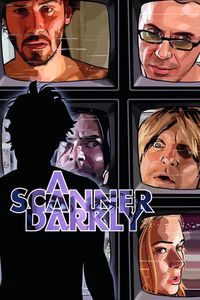
    (In theaters, July 2006) Richard Linklater mystified many observers with Waking Life, but all of the prep work finally pays off in A Scanner Darkly, which uses the curiously off-putting rotoscoped animation technique to good effect in representing the inner life of heavy drug users. Things are never what they seem as even the shapes keep shifting on viewers. Yet the heaviest irony of this science-fiction film is how the SF elements are the film’s least convincing aspect. For all of Dick’s clever positioning of his themes in a triangle between paranoia, surveillance and drugs, it’s the home life of his blasted-out protagonists that is the most interesting. When the glossy SF elements are introduced, they feel like a distraction from the story’s real content. Alas, the end result is a film that dawdles a long time before getting down to business abruptly and decisively. When it ends, we’re left contemplating a fascinating premise, an intriguing atmosphere, a merciless twist but a wafer-thin plot. While I remain unconvinced by the overall appeal of the film, it’s hard to deny that it’s crammed with a number of great moments.

  • Pirates of the Caribbean: Dead Man’s Chest (2006)

    Pirates of the Caribbean: Dead Man’s Chest (2006)

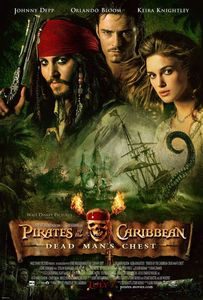
    (In theaters, July 2006) Hail to the king of the summer, baby: This sequel has everything a blockbuster needs, and maybe even twice that. All of the characters are back, and while it’s hard to focus on the bland Bloom/Knightley lead couple when Johnny Depp keeps stealing the show, everyone gets a good moment this time around. (Even Jack Davenport’s Norrington gets a beefed-up role in this sequel.) The adventure/fantasy aspects of the tale are pumped up, leading to a different atmosphere (one where everyone acknowledges the supernatural from the get-go) but one that is conductive to a succession of thrills. The direction is crisp, the script is tight and the special effects are astonishing even at a time where we think we’ve seen everything. Bill Nighy’s “Davy Jones” has the potential to become a cultural icon and the meshing between his performance and ILM’s special effect team is a huge part of this effectiveness. For the rest, well, what’s left to say? Johnny Depp outshines all of the special effects, Naomie Harris is lovely as Tia Dalma and the film ends up on a fascinating cliffhanger. Don’t miss any opportunity to see the first film shortly before seeing this sequel, as the Elliott/Rossio screen-writing team were able to refer to several events and jokes from the first film.

  • Miami Vice (2006)

    Miami Vice (2006)

    (In theaters, July 2006) This is not Heat, but it sure looks a lot like Collateral. The grainy digital look is back, but what looked like a justifiable cinematographic choice in Michael Mann’s previous film now looks like a self-conscious affectation. For a while, it works mostly because the script doesn’t allow you one moment’s worth of respite: Miami Vice launches almost in mid-sentence, and the first act forces you to pay attention through bad audio, cryptic dialogue and a reassuring lack of hand-holding. But that initial interest soon peaks and fades as soon as a romance is hammered in place for no good reason except for the demands of the third act. At least Colin Farrell and Jamie Foxx are tolerable as the leads: they don’t really take over the roles of Sonny and Crockett, but that’s in large part due to the fact that Miami Vice shares only a title, a premise and character names with its TV series namesake: The rest is all brand-new, and unfortunately it recalls fonder memories of the Bad Boys series more than anything else. (The shadow of Michael Bay is obvious during the gunfights: they’re not particularly coherent, but they’re very very loud.) But this being Michael Mann, even his misses are more interesting than other people’s successes. What’s more, the film is partially redeemed by its female performances: While most male viewers will focus on Gong Li’s appearances, Naomie Harris handles part of the film’s emotional appeal, while Elizabeth Rodriguez is blessed with the film’s best line of dialogue. Ultimately, the film’s sputtering rhythm only serves to build interest in the inevitable Director’s Cut DVD.

  • Stinger, Nancy Kress

    Tor, 1998, 342 pages, C$8.99 mmpb, ISBN 0-812-54038-7

    You can call it the Crichton manoeuvre or the techno-thriller side-slip. But if its title may be in dispute, the move itself is highly familiar: If you’re a hard-SF writer looking at the bestselling list, it can be hard to figure out why techno-thrillers can reach such a big audience when their level of technical verisimilitude is either equal or inferior to traditional nuts-and-bolts science-fiction. Perhaps you voice your frustration to your agent, who then suggest that you try writing a conventional thriller. Perhaps the idea comes up by itself. In either case, the end result is a present-day thriller with gobs of actual science, emblazoned by the name of an author better known for SF. Examples abound, from Gregory Benford’s Artifact (1985) to Bruce Sterling’s The Zenith Angle (2004), with no end in sight.

    In this case, it’s SF sensation Nancy Kress (Beggars in Spain, Brain Rose, etc.) who jumps on the thriller train, trying her luck and commercial appeal with Stinger, a self-styled thriller of biological terror. The cover blurbs does the rest: “Has a fringe hate group bio-engineered a weapon to decimate the black population?”, “Move over Robin Cook”, “it’s a bit like The X-Files with more interesting characters and a more sensible plot.”

    At first blush, there’s a lot to like in Stinger. The prose is mass-market clean, and the action efficiently centres itself on two capable characters with enough flaws to make them endearing: Robert Cavanaugh is a fine FBI agent, displaced to Maryland against his will to fulfil staffing requirements in a state where nothing usually happens. His biography includes literary studies, a penchant for symbolic doodling and a failed relationship that still tortures him. Also up for protagonist status is Melanie Anderson, a black CDC expert with a chip on her shoulder that’s big enough to balance an entire history of racial oppression.

    What brings them together is a shocking discovery: A mosquito-borne disease that causes fatal heart problems pretty much exclusively in black victims. Despite their problems, despite the fact that they don’t like each other, running against their supervisors’ wishes, the two vow to discover who is at the origin of the plague.

    As a premise for a thriller, it’s hard to do better: Racial tensions always lurk beneath the surface, and there’s no surer way to prod at people’s sensitive prejudices that by raising the possibility that wholesale racial warfare may be possible. As you would expect from a hard-SF writer, Kress bolsters her notion with a convincing amount of technical detail reaching deep down bioengineering jargon. The rest of the novel’s verisimilitude is just as convincing, whether it’s in areas of law-enforcement or in how to collect wild mosquitoes for study. As the action briefly moves away from Maryland to another continent, we’re reminded that Kress can write, and that her sense of place is top notch. Her chops as a writer show up more obviously in agent Cavanaugh’s meaningful doodling and literary musings.

    But despite all of the above advantages, Stinger only manages a whimper as a thriller. As much as I hate to write it, the main problem with it is that it’s too cerebral. The novel is almost completely free of action sequences, car chases, gun-play or just about anything you may remember from thriller movies. Characters talk and talk and talk and investigate a bit. The development of the novel is strictly intellectual, with procedural antagonists that are so distant that they may not exist. On one hand, it’s probably how things would unfold in the real world. On another, it does mean that you can accuse Kress of not delivering the goods, especially with the “thriller” label so prominent on the spine.

    Maybe it’s an occupational hazard: hard-SF writers may be so used to the indulgence of SF readers in tolerating purely intellectual action that they may not realize the extra level of spectacle that seems to be de rigueur for modern thrillers. As it stands, Stinger seems a bit limp, a bit tepid. Technical details isn’t enough: some action and suspense would be nice.

    As a convinced SF reader, it’s hard to avoid the idea, when reading those SF-infused techno-thrillers, that the author is slumming out of genre. I wouldn’t be surprised to find out that modern techno-thrillers requires more research efforts than big SF novels (if only to keep it coherent with the real world), but to which end? Yes, we wish all SF authors the best of luck and embarrassing amounts of money. Sure, it’s possible that another Dean R. Koontz may emerge from the SF field. (Except that Koontz was never all that comfortable in the field.) But in the meantime, such attempts from hard-SF writers to write mass-market techno-thrillers usually end the same way: after one, two or three such novels, they’re back in the friendly SF ghetto with barely any mention of the side-step.

  • Hoodwinked! (2005)

    Hoodwinked! (2005)

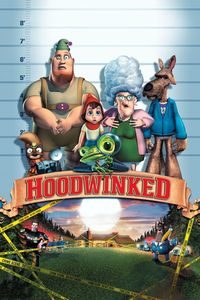
    (On DVD, July 2006) The biggest problem with Hoodwinked! is obvious from the trailer: This is a low-budget CGI-animated film, with the lack of sophisticated animation this implies. While this may be off-putting after being used to the superlative work of Pixar and PDI/Dreamworks, it shouldn’t become an obstacle in order to enjoy this earned and light-hearted comedy. Yes, it’s made of kids (which only becomes intrusive when the songs run on for too long, or when some points are made too obviously), but it’s a lot of fun for adults too. Characters that should work eventually do (including the film’s single best character, a singing goat with interchangeable horns) and the initial lack of fluidity to the animation becomes charming in time. There are enough chuckles to keep anyone interested, and some of the film’s best moments pay off handsomely. It’s not completely original (the riffs off fairy tales will remind a few viewers of Shrek, while the hyperactive squirrel is immediately reminiscent of Over The Hedge‘s Hammy), but given the film’s long gestation period, it’s more a case of parallel development than anything else. Seen from a slightly wider perspective, Hoodwinked! may end up being the first of a new category of animated films made possible by the increased capacities of personal computers: Earnest, highly personal B-movies made as much to scratch a creative impulse than to produce corporate profits. Frankly, I’ll take ten Hoodwinked! over one cynical and overproduced The Polar Express.

  • Himalaya – l’enfance d’un chef [Himalaya] (1999)

    Himalaya – l’enfance d’un chef [Himalaya] (1999)

    (On DVD, July 2006) This film certainly deserves such a majestic title when you consider the beauty of its cinematography. From the very first images, we’re in for a treat: wide-screen isn’t sweeping enough to contain the mountains, the colours and the dusty rusticity of the Himalayans. The music is similarly haunting, and the film never loses an occasion to remind you of it. Alas, fans of actual plot-driven films will soon hop in expectation as the film takes its time to advance. What story emerges is a decent competition between two heroes (one of the film’s most appealing traits is that there are no villains beyond the weather and the environment), one that comes to showcase the Himalayas in their entirety. Not for hyperactive moviegoers (though Himalaya features what may be the first action scene ever to involve a yak), but still a satisfying experience. Especially if you stick it in fast-forward.

  • Grease Monkey, Tim Eldred

    Tor, 2006, 352 pages, C$37.95 hc, ISBN 0-765-31325-1

    A significant proportion of Science Fiction readers pride themselves on the fact that they see life with a cool steel gaze, conditioned by the genre to ask the next question, investigate beyond appearances and stay free from sentimentality. Which is all well and good, except that a good chunk of SF’s impact (its much-vaunted “Sense of Wonder”) is about going gosh in the face of the universe. In SF’s rush toward literary respectability and engineering believability, it’s all too easy to forget that SF is all about humans. We shouldn’t afraid to feel something when we ought to.

    There is a sequence in Tim Eldred’s Grease Monkey , Episode 9, which ends on a note of such earnest sentimentality that seasoned readers may be tempted to laugh, right before catching themselves and feeling guilty for being so cynical. For me, episode 9 is where Grease Monkey came into focus after a rough start and misplaced assumptions. You probably heard about those who come to graphic novels expecting kids’ comics. In this case, I made the mistake of approaching a teen graphic novel with too-adult expectations.

    For one thing, Tor is relatively new at the graphic novels game, a state of things that brings along a disorienting lack of expectations. Grease Monkey is -I believe- the second such recent effort, and I happened to pick it up solely on the basis of it editor, the inestimable Teresa Nielsen Hayden. Tor’s production efforts certainly can’t be praised enough given how Grease Monkey looks like what Graphic Novels should look like: A handy hardcover that looks comfortable alongside other novels, with sturdy binding, wide-enough margins and a reasonable price. The entire book, as an object, is packaged exactly like the rest of the Tor fiction line and that’s how it should be.

    But if you’re coming to Grease Monkey with expectations that this is going to be the same reading experience as the rest of Tor’s adult SF line, the first few pages may be disconcerting. The writing is sharp, the art is accessible and the characters are introduced efficiently. But there’s a tone, not of naiveté, but of earnestness that’s so old-fashioned that it’s unfamiliar. Grease Monkey opens as young mechanic Robin Plotnik arrives on spaceship Fist of Earth, an outpost perpetually on the edge of combat readiness. His boss, as it happens, turns out to be Mac Gimbensky, an uplifted 800-pound gorilla with a gruff sense of humour. Bildungsromans are an old staple of SF, and this is another one of them as it follows Robin during his first year as a working mechanics. It’s a year of friends and love gained and lost, with plenty of action and humour to keep the story gears running smoothly.

    It takes a few pages (indeed, until Chapter 9) to understand that this is primarily a teen graphic novel that happens to have considerable adult appeal rather than the other way around. Once that particular piece falls in place, the rest of Grease Monkey works very well, with a tone juggling between sharp sitcom jokes and heartfelt character development. The art and storytelling also get better, which may not be a surprise when you read the notes at the end of the book and find out that the novel was a long time in development. The story itself is seamless, but the way it’s told keeps on getting better until the end.

    There are fabulous moments here and there, whether it’s Mac and Robin’s respective romantic tribulations, what happens when their fathers (rival political operatives) meet on station or the back-story of how the Grease Monkey universe came into place. All throughout, Eldred’s straight-ahead charm is simply disarming: Reading Grease Monkey is like being reminded of how inspiring SF can be, when it simply tells us to be as good as we can in even the most desperate circumstances. (This is the Christmas gift you should buy for your younger relatives.) The characters are intensely practical blue-collar workers and their concerns are very real. It doesn’t take much to consider them friends. I’m curious as to how many types of readers (young, old, naive, sophisticated) Grease Money could reach.

    But as good as Tim Eldred’s graphic novel may be, the best thing about it may be what it could represent as a beginning. From the open-ended conclusion, it’s obvious that there are other stories left to tell in this universe (an impression confirmed by the afterword, which announces a volume 2). But if we’re really lucky, Grease Monkey also means the possibility of a line of graphic novels from a major SF publisher. And if that’s not enough to rekindle your child-like wonder at the possibilities, I don’t know what it will take.

  • Der Untergang [Downfall] (2004)

    Der Untergang [Downfall] (2004)

    (On DVD, July 2006) The last days of the Nazi regime are a natural dramatic point of interest. As the entire German infrastructure was being destroyed and the Russians were racing east, imagine the reactions of those left in Berlin. Based on several books and contemporary account, Downfall flits about Berlin as Hitler and his advisers retreat in an underground bunker. There is a lot of material to cover, perhaps more that can comfortably fit into a single motion picture: Downfall occasionally feels halfway between a miniseries and tighter film, with a result that feels long even though it should be interesting. Those hoping for a sweeping view of Berlin will be as disappointed as those who are hoping for a story exclusively centred on Hitler’s bunker. In any case, it’s hard to fault the actors as they attempt to recreate the slightly unhinged atmosphere of the time, or the claustrophobic cinematography as the walls come closer and closer to the characters. The script is graced with polish and a good amount of period details, down to capturing the essence of many historical characters. I suspect that WW2 buffs will be fascinated by the film, while others will want to snip entire segments of the film.

  • Clerks II (2006)

    Clerks II (2006)

    (In theaters, July 2006) That’s it, Kevin Smith is out of the doghouse: After the disastrous Jersey Girl, this film is a thematic retreat, but an overall progression for the writer/director. Sure, going back to the Askewniverse smacks of desperation for a sure-fire redemption. There are enough fans of Jay and Silent Bob to cover the production costs of the film and that’s all that counts, right? Still, it doesn’t necessarily imply an artistic regression: Smith’s progression as a director continues to impress: While Clerks II had nowhere near the budget of the studio-backed Jersey Girl, the direction continues to progress. There are even a few nice moments here (including a sing-along to the Jackson 5’s “A.B.C.”) along with a camera that moves (!) from time to time. The editing, on the other hand, could use some work: too many shots last just a bit too long, which saps the comic energy of the film. See the far-too-indulgent “donkey show” sequence for the best examples. But it’s as a writer that Smith continues to make the most progress. Even though Clerks II continues to rely on its usual crutches (pop culture dialogue, in-your-face shock frankness, fantasy characterization), there is a solid emotional core in the middle of the R-rated dialogue, and the conclusion puts all the pieces together with a satisfying thunk. Smith is also fortunate in his choice of actors. Here, Rosario Dawson steals the show by grabbing a character seemingly written as a male dream-girl and transforming it into something extra. The film certainly won’t appeal to everyone, and that’s a huge part of its charm: While you may not understand why it’s funny to insult a Transformer fan by calling him a “Gobot”, I can guarantee you that it’s hilarious in its proper context. Now all we have to hope is that after finding solid ground once more, Kevin Smith will try something else for his next film.

  • The Aristocrats (2005)

    The Aristocrats (2005)

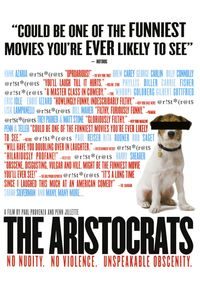
    (On DVD, July 2006) This may look like a one-joke film, but it’s really about more than that, from the meaning of free speech to the inner working of professional comedians. Certainly, there hasn’t been a film making more mileage out of simple words since the original Clerks. The Aristocrats has been left unrated, but there’s no doubt that it would probably earn an X on language alone. There is no nudity, no violence and in fact very little meanness here: it’s all about the power of words to shock and amuse at the same time as comedians try their best at a joke designed to transgress taboos. Dozens of interviews give a multifaceted approach to the subject as we hear (and see) as many variations as possible on the same theme. (There are even mimed and card-trick versions of the joke!) While the film cloaks itself in the comforting embrace of the first amendment, The Aristocrats is never as interesting as when it provides access in the inner working of professional comedy. The mechanics of humour are dissected with precision, with the director’s audio commentary track providing an additional viewing experience that adds an entire layer of context to the film. This is an essential film for anyone interested not simply in laughing, but in what makes anyone laugh.

  • Glasshouse, Charles Stross

    Ace, 2006, 335 pages, C$32.50 hc, ISBN 0-441-01403-8

    After the massively successful Accelerando, expectations ran high for Charles Stross’ follow-up SF novel Glasshouse. Would he try to top his wide-screen vision of a post-singularity future? Would it even be possible to go even one step beyond Accelerando? Wisely, Glasshouse doesn’t even try. Instead, it heads for a different territory with a more focused narrative and an intent to satirize.

    It begins more or less hundreds of years after the events of Accelerando, in a comfortably post-human empire scattered around the galaxy. Our narrator is learning the world again, fully conscious that his latest incarnation has had entire chunks of his memory removed. That doesn’t worry him all that much, through: Simply being human is a challenge enough after a lengthy period being something else. To heighten the experience, he declines regular personality backups, risking everything on his continued existence. The first chapter even has a sword fight, just to keep things hopping. As it turns out, the biggest problems with amnesia is that you can’t remember your worst enemies…

    But there may be a way to hide away for a while, as his medical advisers have an idea to facilitate his recovery. Why not, they suggest, volunteer for a harmless psychological experiment? Nothing serious, of course: just a few years locked-up in a fabricated environment, interacting with other volunteers according to a predefined set of experimental social rules. A good way to take a break from the infinitely mutable, constantly evolving post-human diaspora. Completely harmless. Completely safe.

    Oh sure. Just as the opening quotes by Kafka and Hitler are there completely by accident. Just as the Zimbardo references are purely coincidental. Things are about to go bad really quickly for our narrator, and they indeed do from the start of the experiment: Waking up with no memory of actually signing and backing its mind up, it also finds itself stuck in a weak female body after a long stay in a succession of powerful male bodies. But then it has to contend with its fellow lab rats…

    Glasshouse quickly turns into a nightmare as the narrator slowly comes to realize the insanity of the experiment, recover bits and pieces of its previous memory and pieces together a sinister motive behind its current situation. While deceptively simple at first, Glasshouse eventually comes to reveal itself as a narrative simultaneously working on different levels, as Science Fiction thriller, as post-human speculation and as social satire.

    Because, you see, the micro-society in which the narrator finds itself turns out to be American Suburbania, circa 1950-2000. Built from fragmented records, of course, given how few reliable accounts of the period survived the various information wars that followed the Acceleration. As a female, our narrator finds itself relegated to the role of a housewife, weakly built and socially ostracized. But then she finds out what’s really going on…

    If, at first, Glasshouse seems a step back after Accelerando, it eventually becomes obvious that this is, in many way, a more complex novel: Voluntarily mirroring Accelerando in regressing from a post-human future back into something innately familiar to us, Glasshouse then uses its not-quite-contemporary setting to deliver, in interweaving instalments, both a social critique and an affecting military SF thriller.

    The satire is easy to perceive, especially as the narrator can’t figure out the massively counterintuitive social mores of suburban America. The gender roles are inefficient, the religious and social restrictions are insane and the technology is brain-damaged. There are a number of smirks and gags in store as readers get to see a post-human try to cope with our restrictions. As an alienating device, it works well. Given how Glasshouse seems to target a quasi-mythical cold-war American way of life that died with the sixties, it’s not hard to emphasize with the narrator while taking along the points that are still valid today. Gender roles, in particular, are thrown in a blender and whirred around: It will be interesting to see if the book manages to make it on the Tiptree Awards lists next year.

    But there’s also an espionage/military thriller lurking in the back of Glasshouse as hidden identities are revealed and the protagonist’s own mind reveals its mysteries. This is where Glasshouse, for all of its hyped-up links to Accelerando, is more likely to remind readers of Stross’ own Iron Sunrise in its grim depiction of a post-humanity that nonetheless keeps all of its pre-human brutality. The protagonist’s flashbacks offer the equivalent of a military SF novelette in which fancy weapons do their best to destroy anything that can be called human. One particular scene in which heads have to be decapitated in order to be saved is likely to remind some readers of a related scene in Richard Morgan’s Broken Angels. As a writer now fit to be compared to Morgan, Stross fulfils his growing reputation as a writer able to be, even in the same book, both hilarious and horrifying.

    The non-flashback thriller also succeeds brilliantly, especially given how it has to take place in a panopticon environment. Plotting an escape, or even a hassle-free life, can be a real problem if you can reliably be expected to be under surveillance all the time, whether by unseen experimenters or by fellow experiment subjects. Some scenes carry a real thrill as the narrator plots and schemes how to reach set objectives while trying to avoid detection. There are even unexpected payoffs in the form of bonus points for craft. But the penalties for being caught can be high, especially when your enemies have complete access to your brain chemistry…

    It goes without saying that Stross’ similarly-renowned ability to cram four times as much speculation as other SF writers is also on display here: although he lightens his prose after the mega-pascal intensity of Accelerando, there is still plenty of good crunchy speculation, fancy gadgets, excellent techno-fluidity, appalling back-stories and shock-a-minute ideas. The narrator literally perceives suburban life differently. It’s one of the book’s small treats to hear perfectly ordinary objects being described using ultra-technical vocabulary.

    Given all of the above, it almost seems petty to complain about weak plot points. But the sometimes rough caricatures of the antagonists (relying on the ever-popular wife-beaters or religious leaders) aren’t particularly sophisticated and take away some of the creeping horror of the situation: It’s one thing to show normal people being manipulated in committing hair-raising horror, but its a different, lesser thing to simply show monsters without conscience running free. Worse still are at least two coincidences essential to the plot: The narrator meets and then recognizes two powerful allies in ways that seem awfully convenient. (Though I may have missed an unseen manipulation: this book isn’t light on unseen controls and made-up contrivances, after all.) &ldqu
    o;Awfully convenient” is also a good way to describe a mid-book discovery which facilitates plotting in a panopticon environment, or the way the villains seem unusually forgiving of perceived threats.

    But every Stross book seems to top the previous ones, if not in scope then at least in execution. Here, the theme may not be a broad as Accelerando, nor as guilt-free as The Atrocity Archives, but Stross is showing even more maturity in how he tackles his story on several different levels, weaving and shuffling his stuff without pausing for breath. Reading Glasshouse is a lot like seeing a card trick being performed right in front of your eyes: focus on this, focus on that, oh didn’t see this coming didn’t you? Stross has recently been a regular on the various SF awards ballots, and you can expect Glasshouse to go on to similar success. It’s a strong entry in a year already blessed with plenty of good science fiction books.
  • Act of War, Dale Brown

    Morrow, 2005, 384 pages, C$32.95 hc, ISBN 0-06-075299-8

    Finally! After more than half a dozen increasingly awful novels set in the the same tired universe, Dale Brown finally comes to his sense, ditches the Patrick McLanahan series and starts afresh. At a time where military thrillers readers are increasingly reluctant to “take a chance” on unfamiliar characters, it’s tempting to give grudging respect to Brown for doing what he should have done ten years ago.

    But don’t be so sure that he’s stretching or being audacious. For one thing, Act of War is not a pure act of literature: Sharp-eyed readers will read the copyright page and notice that “Act of War” is a trademark of Atari Interactive, Inc. Those with a gaming background will already know about the “Act of War” Real-Time Strategy game. In other words, this is a tie-in novel, whether Dale Brown contributed to the game or vice-versa.

    For another proof that the author’s not being too ambitious, consider that we’re not too far away from Brown’s pet toys of late: Starting from the “Real-World News Excerpts” that open the novel, we’re back into the “armoured exoskeleton” shtick that Brown has carried along since The Tin Man. Yup, it’s all high-tech robots from there to the end of the novel, as valiant Americans battle terrorists who dare take on the Empire. A new universe? A departure? A stroke of marketing genius? Eh, you decide.

    And yet, despite Brown’s unwillingness to stray too far from what he has come to know best, there is an undeniable sense of freedom to be found in this departure. The book opens with a bang, as terrorists set off a tactical nuclear warhead to destroy a petroleum facility in Texas. Then the new characters take over, and for a while it’s fun to see where the tale goes now that McLanahan is nowhere in the way. New protagonist Jason Richter isn’t a big switch from McLanahan, mind you: Younger and more technologically sophisticated, Richter otherwise shares the same personality template with Brown’s best-known protagonist. Rebellious to a degree that seems implausible, Richter gets repeatedly chewed out for disobeying orders but, like McLanahan, always ends up vindicated for using his giant robots against the evil terrorists. Naturally, it’s no real surprise if big robots end up being the perfect solution for everything.

    This naturally raises the question of finding out which part of the novel wags the other around. A clumsy mixture of the strategic and the tactical, Act of War initially sets out to re-fight the War on Terrorism on pure wish-fulfilment. As the story advances, we get the feeling that Brown thinks that Bush is a big kitten in national security matters, and that only decisive actions can truly save the American way of life. As Brown’s President seems gung-ho on declaring war on a concept (literally, despite those accursed civil-rights advocates in Congress), it seems obvious that this high-level muck is just there to justify the giant robot antics of Richter and his gang. The alternative -that this ridiculous pap is meant to be taken seriously- is almost too ridiculous to contemplate. Considering that Act of War is a video-game and that the point of video-games is blowing up stuff real good (a task uniquely suited to giant robots), one gets the sense that there’s a bigger dog wagging the novel around.

    This being said, I’m trying really hard to avoid painting this as yet another video-game novelization. The prose style is all Brown, including the stiff prose and lack of technical prowess. The characters are generic and if the plotting is generally better than any of the author’s previous half-dozen novels, Act of War still suffers from jerky pacing, and a single-minded obsession about giant robots. It doesn’t help that Brown’s vision of terrorism remains hopelessly quaint: Unlike what we’ve come to expect from the real world those past years, the acts in Act of War take on a cartoonish quality as they are masterminded by an evil cabal too clichéd to feel real. Even in a “hard-hitting” post-2001 novel about terrorism, Brown infantilizes the issue and can’t face the real forces at play.

    And yet, even as lousy as it is, Act of War represents a definite step up for Brown. The first few pages of the book carry a little frisson, as it looks like Brown will finally take the next step up. Free of the McLanahan shackles, the novel stretches a little bit and gets back to the wide-screen feel of the author’s first few books. There is a surprising amount of hidden agendas and ambiguous motivations to be stripped off on the way to the true “terrorist-vs-USA” plot and if the end result is another disappointment, the indifferent impression ultimately left by the novel was not a foregone conclusion. It may not be enough to make me read the next one… but it’s sufficient to stop me from discounting the thought altogether.

    [February 2009: When you’re got a hammer, all problems look like nails, and ever since Brown ditched his B-52s for Giant Robots, it looks as if he wants to take on every single issue of national interest with his cool toys —including illegal immigration. So don’t expect Edge of Battle to be any better than his previous novels. In fact, it’s markedly worse: bad characters, dumb situations, reams of spurting exposition and some ill-advised plotting all combine to bring this book down. The robots aren’t the worst part, actually: nearly every attempt to use them backfires. No, it’s the attempt to combine innefectual Mexican political leadership with an evil Russian terrorist/criminal that really sinks the novel beyond its lack of entertainment value. And yet, from time to time, we get some exposition that suggests that Dale does understand some of the issues he’s dealing with. It’s just that he never follows up on his best ideas, and that the comic-book plotting of the novel never seems to be adressed to adults. We are, clearly, a long way away from the guy who wrote Hammerheads.]

  • The King of Torts, John Grisham

    Dell, 2003, 472 pages, C$11.99 mmpb, ISBN 0-440-24153-7

    There is, at first, a comforting familiarity to John Grisham’s The King of Torts, especially if you’ve read most of the Grisham oeuvre: A young lawyer stuck at the Public Defender’s Office gets saddled with a dead-end case that ends being a lot more important than anyone can guess. Pretty soon, hey, we’re back in the old usual groove: The lawyer’s client was on experimental drugs, and the pharmaceutical company sends one of its top fixers with an offer to our hero: a few million dollars in exchange for a quick and jurisprudence-free resolution.

    If this would have been an early Grisham novel, you could probably write the end yourself: Lawyer tells fixer to get stuffed, takes the case to court, triumphs over Big Pharma, avoids client’s death penalty, gets hot girlfriend and strikes one victory for the common people. The end, soon to be followed by a major Hollywood adaptation.

    But this isn’t early Grisham. Ever since The Runaway Jury, Grisham has been playing around in the legal thriller sandbox, writing variations on a populist theme. Here, we get a bit of The Street Lawyer before slamming into the concrete facade of a few million dollars. Because, oh yes, our young plucky protagonist jumps on Big Pharma’s offer faster than you can say “tort reform”. Just a few millions, he thinks, and he’ll be set for life. Just a few.

    Set squarely in an American society where legal matters are often indistinguishable from fiscal ones, Grisham’s novels have often revolved around vast sums of money. The Partner‘s protagonist is only interesting because he’s sitting on a pile of hidden cash. The Runaway Jury and The Rainmaker both revolved around multi-million dollar settlements. More directly, The Summons recast sudden wealth as a morality play: What if you abruptly found yourself in possession of a small fortune of dubious origins? Would it destroy you?

    The King of Torts is a thematic sequel to The Summons in more ways than one. Faithful Grisham readers will remember Patton French, the “King of Torts” lawyer whose mastery of mass torts earned him hundreds of millions of dollars and a short but memorable supporting role. French makes another appearance here as a mentor of sorts, counselling our lawyer protagonist as he gets caught up in the high-flying world of mass tort lawyers and a lifestyle where private planes are de rigueur. (Another element back for a return engagement is the dangerous “Skinny Ben” obesity pill.)

    From one familiar arc, we jump to another. There is little doubt that the money will come to poison our protagonist’s life: All that remains is to hop along for the ride, tasting luxury with the self-congratulatory certitude that it’s temporary. Pretty soon, after all, our boy-hero will find himself brought back to the pasture where most of us graze. The only real question of importance is in wondering if the protagonist will be very, mostly or slightly redeemed by the time the ending rolls along.

    It plays as you would expect. Grisham’s prose style may not be sophisticated, but it’s astonishingly good at what it sets out to do. This is reading as pure entertainment, packed with details about the world of mass torts and the crazy impact that sudden money can have on people. The Summons tracked the impact of a mere two or three million dollars (as a physical object, even), but The King of Torts kicks it up one or two orders of magnitude. Crazy money means crazy people, of course, and part of the fun of the novel is seeing a down-to-earth protagonist being corrupted by so much wealth… and then finding that there is never such a thing as “too much” money.

    Technically, The King of Torts slips up from time to time, breaking away from a restricted third-person POV to sequences from a broader perspective. On the other hand, there are a number of fascinating supporting characters, though most of them are unceremoniously abandoned in the rush for the entirely-expected ending. The disappearance of “the fixer” from the narrative is especially disappointing, given all sorts of questions raised about what he knew… and whether part of the plot was a set-up.

    But in the end, this is another solid hit for Grisham, who keeps producing surprising results from a limited palette. Gripping from start to finish, The King of Torts is Grisham remixed, almost a compendium of the author’s other work. Think of him as a jazz musician, spinning variations on a few solid themes. Who can go wrong by talking about “too much” money?

  • Year’s Best SF 11, Ed. David G. Hartwell and Kathryn Cramer

    EOS, 2006, 496 pages, C$10.99 mmpb, ISBN 978-0-06-087341-8

    While I’m a pretty faithful purchaser of the Hartwell/Cramer “Year’s Best SF” series, I seldom review them: For one thing, I’m never too fond of reviewing anthologies: my satisfaction for them, even Year’s Bests, usually takes the shape of a nice bell curve. Why review only half a book of good stories when I can’t find anything nice to say about the other half?

    But Year’s Best SF 11 is an exception. Maybe it was just me, unusually “clicking” with story after story. Then again, it is possible that the selection for 2005 was better than for other years. One thing is for sure: I had a lot more fun reading through those stories than making my way through the Hugo nominated material.

    The collection starts on a high note with David Langford’s New Hope For the Dead, a short (800-words) piece originally published in the “Nature” scientific journal as part of their recurring “Fiction” column. “Nature”, ironically enough, ends up being the source of nearly a dozen stories in this Year’s Best volume –more than any other source. The short-short story ends up being an ideal length for punchy explorations of a big idea. Langford takes on a net.joke and makes a delicious treat out of it, a broad description that also applies to Greg Bear’s “Ram Shift Phase 2”. Amusement also comes with Larissa Lai’s “I Love Liver: A Romance”. Meanwhile, Ted Chiang tackles predestination in “What’s Expected of Us”, another creepy/fun story that fits right into Chiang’s exceptional track record. Big ideas in short texts mean big fun, as demonstrated in Oliver Morton’s “The Albian Message”. Elsewhere, Vonda McIntyre has “A Modest Proposal for the Perfection of Nature” that muses on the uniformity of utopia, even as Tobias Buckell crams an entire geopolitically-aware space program in “Toy Planes”. Not to be outdone, Bruce Sterling imagines the hair-raising results of a 10Kilo-scientist commune. The “Nature” shorts are so much fun that I’m hoping that someone, somewhere, will put together an anthology of those “Futures”. I can understand why Hartwell and Cramer would choose so many of them –twelve story for the space of two!

    But as good as those quick-and-snappy short-short stories are, a few of the longer pieces are nothing short of remarkable. A good number of them are slow burns: stories that initially don’t seem to make sense, but eventually reach escape velocity. Hannu Rajaniemi’s “Deus Ex Homine” is the first of them –a story that works even when it looks that it shouldn’t. But nothing quite summarizes the impact of Daryl Gregory’s “Second Person, Present Tense”, which quite unexpectedly hits you on the head midway through and never lets up until the end: It goes from “this is not going to work” to “best story of the year” in a few pages, and that’s nothing short of remarkable. Sometimes, the stories grow on you after they’re over: I didn’t think much of Bud Sparhawk’s “Bright Red Star” while reading it, but the last few lines and a few days’ worth of hindsight make all the difference.

    There are also a slew of stranger stories that show how wide an umbrella the term “science-fiction” now encompasses: “When The Great Days Came” by Gardner Dozois shows the apocalypse from the perspective of those who will inherit it all: rats. Small mammals make a further appearance later on with “Mason’s Rats” a not-so-funny tale of farming trouble and tool-using rodents. If you think that’s weird, just wait until Rudy Rucker’s “Guadalupe and Hieronymus Bosch”, a romance whose title tells you nearly everything you need to know. Then there’s the irreverent madness of Adam Robert’s “And Future King…”

    There are also more conventional tales of good old-fashioned SF in stories like Matthew Jarpe’s “City of Reason” (Kuiper belt pirates! Arrr!), Lauren McLaughlin’s “Sheila” (AI in-fighting!), Joe Haldeman’s “Angel of Light” (Christmas, Muslims, pulp SF and aliens, oh my!) and R. Garcia Y Robertson’s “Oxygen Rising” (“Hey, human, time to earn your pay!”) Combining straightforward SF story telling with Dickian mind-twists is Alastair Reynold’s “Beyond the Aquila Rift”, another contender for best-story-of-the-year status.

    In fact, I ended up reading Year’s Best SF 11 concurrently with this year’s crop of Hugo-nominated short stories and was struck time and time again at how much better the stories in this volume were compared to the works up for the Hugo. For SF fans, this is the one book of short stories you have to grab to get a lot of good SF in one handy package. Year’s Best, and one of the best Year’s Best for Cramer and Hartwell.

    [June 2006: A final note: Mark your calendars! This June 2006 release is the first book I’ve bought that feature the ISBN-13 number of the book. Get ready for the future… (And this happened, in an odd coincidence, on the same weekend the Ottawa area switched to ten-digit phone dialling…)]

  • Barracuda 945, Patrick Robinson

    Harper Torch, 2003, 498 pages, C$10.99 mmpb, ISBN 0-06-008663-7

    There are five stages to reading a Patrick Robinson novel.

    The first is surprise. Surprise that any editor, anywhere, would still be publishing Robinson after reading any of his previous novels. Robinson, after all, is the ultimate anti-writer: the clunkers he serves under the optimistic label of “novels” are nothing more than an exploration of mistakes to avoid for any budding writer of military fiction. Awful writing is only a beginning for him: what usually follows is a parade of undistinguished caricatures in lieu of characters, impulsive militarism standing in for actual thinking and geopolitics that would make blood-thirsty right-wing pundits blanch. Plotting, for him, is just a series of steps to get from Cool Idea A to Cool Idea B… except that both of those Cool Ideas would best be described as daydreams from a sub-literate moron actively enjoying psychopathic megalomania. The biggest surprise, of course, is that someone out there is still buying those books: I’ve never paid more than a full dollar for a Robinson novel because I keep finding them at used book sales. And yet, someone must be buying them new if they keep showing up for a second sale, right?

    The second stage is bemusement. Bemusement that Robinson hasn’t learnt anything from his previous novels, and that no one has deemed it appropriate to tell him what’s wrong about his books. As Barracuda 945 gets underway, the first hundred pages are all about the book’s main villain, Ray Kerman, a top SAS operative forced to defect after killing one of his own men during a raid in Southern Israel. Despite a thoroughly Western education, Iranian-born Kerman proves surprisingly adept in becoming the next Top Terrorist, although Robinson’s favourite protagonist Arnold Morgan is quick to point out that you really can’t trust anyone who’s not of solid Anglo-Saxon material. And so it goes. Kerman (soon rechristened Ravi Rashood) is, of course, intensely reminiscent of USS Nimitz and HMS Unseen‘s Benjamin Adnam… but that’s hardly the only recurring feature from the rest of the series. Morgan’s back, of course, and so are fluffy bride-to-be Kathy and Jimmy Ramshawe, a randy young analyst who can figure out the obvious faster than anyone else. As for the other characters, the only one of interest is the lovely (yet predictably deadly) Shakira, an ex-housewife whose interest for American movies merely matches her tactical genius. I could detail how she finds her way in the novel and Kerman/Rahood’s arms, but then you would accuse me of lying.

    Moving on: The third stage in reading a Robinson novel is dismay. Dismay that Robinson can still rely on the same tired tricks without being called on it. Dismay that he’s really not getting better at either the plotting or the writing of his novel. Here, the focus of the so-called plot is a fiendish plot to strike at America’s power sources from the stealth of a missile-armed submarine. Never mind that China and Iran once again team up to buy two top-notch nuclear submarines to give to a turncoat terrorist. Never mind how the US Navy could ping the heck out of the West Coast to find out where the submarine’s hidden. (Heck, never mind how the listening posts could pinpoint the launch coordinates of any sea-launched missile.) It doesn’t really matter: Barracuda 945 has maybe five important plot points and the rest is filler. Filler written with the glee of a thirteen year old who’s just telling his friends what a neat neat idea he’s just had for their next D&D campaign.

    The fourth stage is amusement. Amusement at Robinson’s worst excesses and his uncanny tin ear for either dialogue or humour. Barracuda 945 features a few scenes that were probably intended as humour, but end up making the author look like an idiot with tons of unresolved issues. Right in the middle of a military thriller, Robinson takes a break on P.388-392 to describe an Academy Awards ceremony, with jokes that fall flat more quickly than you’d ever imagine. Robinson may think he’s funny, but there’s still a long way to go from his brain to the reader’s mind. Then there’s the screamingly funny bit at the end of Chapter 10 where the action grinds to a halt and Robinson’s favourite characters all rant and rail against Clinton’s decision to scrap the military restrictions on GPS. As they scream epithets against Clinton and find themselves very funny (as indicated by Morgan’s “ability to bring the house down” [P.364]) the scene only reveals Robinson in an unguarded moment of pure insanity. (It doesn’t help that one character points out the benefits of military-grade GPS for everyone, shutting up the characters for three lines before they start railing against Clinton again.) As Robinson shows, the problem isn’t with conservatives; it’s with dumb conservatives. In the meantime, you can just read the passage out loud to friends and wonder how that ever got past his editor.

    But why worry? After all, the fifth stage of reading a Patrick Robinson novel is author-specific pyromania.