Year: 2006

  • Lady In The Water (2006)

    Lady In The Water (2006)

    (In theaters, August 2006) I have written elsewhere that with every passing film, M. Night Shyamalan’s directing skills grow better even as his scripts are getting worse. Lady In The Water may present a pause, but it’s certainly no improvement of either aspect. Billed as a modern fairy tale, it may be more appropriate to call it a modern mess: All sorts of mythical allusions, but hardly any substance under the surface. While the direction is still effective (though missing the cleverness that so bolstered The Village and Signs despite everything else), the script goes nowhere and can’t be bothered to deliver an epilogue to wrap everything up. It opens with dispensable narration and thrives on minutiae, blithely passing by moments that should be important. It recycles the old “traumatized protagonist must do something good to redeem himself” shtick that Shyamalan has seemingly adopted as his leitmotiv. There isn’t much suspense, and whatever sympathy we have for the characters seems deliberately forced by Shyamalan’s heavy-handed touch. It’s not a complete failure: the multicultural cast is great (w00t for Sarita Choudhury), the images are often nice and it’s hard to fault any of the actors –including po-faced Shyamalan himself. A number of the film’s ideas have potential, and the character of the Film Critic is a lot of (wasted) fun. But in the end, it comes down to Shyamalan and his own self-indulgence. When it works, it works but when it doesn’t… –hey, look at the pretty pictures!

  • Gunner Palace (2004)

    Gunner Palace (2004)

    (On DVD, August 2006) There really isn’t much to say about this film beyond the simple facts: It’s a documentary about a bunch of American soldiers (most of them young), stationed at what was Uday Hussein’s pleasure palace. The filmmakers behind the camera spent a year with the soldiers and filmed everything: Gunner Palace is best seen as a collage of life over there, without much in term of narrative structure or documentary development. As a demonstration of what life is like for the men out there, it’s unbeatable: War, from the trenches, is about boredom footnoted by death. Garbage bags that may explode. Allies that turn into enemies overnight. Living in the ruins of excess, trying to help people who would rather throw stones at you. I suspect that Gunner Palace is so close to its subject that it’s likely to be seen as a triumph regardless of one’s political affiliations. Alas, it’s already gaining in historical stature as, two years later, the situation over there hasn’t really improved… and thousands of Americans have come back in body bags. Ultimately, reviewing the film isn’t necessary, not when they (or people much like them) are out there, and we’re over here… not understanding what they’re going through.

  • Soundings, Gary K. Wolfe

    Beccon, 2005, 415 pages, US$35.00 tpb, ISBN 1-870824-50-4

    As a dilettante critic/reviewer/guy who likes to sound off, I simply can’t get enough book-length collections of SF&F reviews. Yes, I’ve got the entire John Clute oeuvre on my bookshelves: but what else is out there? The audience for such works of SF criticism probably numbers in the hundreds, which is about the size of the print runs for the rare books that are published on the subject.

    Fortunately, small presses are made for that sort of narrowly-focused special-interest publication. After the critical and (slight) commercial success of John Clute’s Scores, small British publisher Beccon is at it again with Soundings, a collection of Gary K. Wolfe’s reviews for Locus Magazine between 1992 and 1996. Wolfe, of course, if Locus’ reviewer-in-chief: He gets his pick of whatever interests him, and spins a monthly column that leads off the magazine’s criticism section.

    Amusingly enough, one of the book’s least fascinating aspects is to illustrate his growth as a reviewer, mostly because there is very little here that could be considered a beginner’s mistake: coming at reviewing from academia, Wolfe hit the ground running and even his first reviews are solid pieces of work. Perhaps the only remaining hints of early jitters are Wolfe’s protests as he’s asked to sum up the year and how he’s unqualified to do so: pages later, he’s busy knocking down the trends and clichés emerging from the genre.

    Wolfe’s tenure at Locus is well-deserved: He can talk intelligently about any genre or sub-genre, he’s got the intellectual muscles to go head-to-head with John Clute (his argumentative reviews of Clute’s encyclopedias are a wonder to read, as most reader -myself included- are content to simply gawk in awe at them) and his columns are frequently enlivened with touches of dry humour that cuts deep as much as it amuses. (A typical example: “Even though none of us are very good at articulating what SF is, we don’t hesitate for a moment when it comes to selecting its best examples.”)

    Wolfe may not be as dazzling as Clute, but the underpinning of his reviews are just as solid. His usual approach is to combine reviews of several books in a single column, sometimes developing a common theme and sometimes not. This allows for a format that adapts to the material, through the column’s expanding length also accounts for some of that flexibility. His approach is incisive, and his academic background gives him the vocabulary and rigour required to get to the essence of a book. (Compare and contract that to the seat-of-the-pants “Did I like this or not?” approach practised by yours truly.)

    One of the book’s best qualities is how it doubles as a critical capsule studying SF&F in the mid-nineties, as the genre was trying to redefine itself in the wake of cyberpunk. The whole New Mars movement occurs almost in real-time, the book being practically bookended by reviews of Red Mars on one side and Blue Mars on the other. Some writers don’t fare too well in this compressed format: We get the sense, for instance, that Wolfe doesn’t think as highly of Orson Scott Card in 1996 than he did in 1992. This is practically a half-generation of SF under the microscope, in a relatively comparable format that allows for easy comparison. (Even John Clute doesn’t have this luxury: aside from the one-shot encyclopedias, his reviews are scattered over dozens of periodicals and use different approaches that aren’t so readily unified.)

    One thing that did bother me about the book was the inclusion of Wolfe’s year-in-review pieces before the columns for that given year: It previews the coming attractions, but also lessens the surprise of some judgements. Perhaps worse, it introduces a number of temporal loops in the reading, and can complicate the summation or a few arguments developed over the year. I think that I would have preferred a strictly chronological approach, even with the inevitable repetition. (Of course, nothing was stopping me from reading the book in that order.)

    But what I really want are the next volumes in the series, all the way to 2006 and beyond. Wolfe is still writing monthly columns for Locus and while I’m now a happy subscriber, I really would appreciate more collections of critical essays from him or others. If Beccon is good and lucky, Soundings will turn a better-than-modest profit, and the series will continue. Where can I pre-order my copies?

  • Dodgeball: A True Underdog Story (2004)

    Dodgeball: A True Underdog Story (2004)

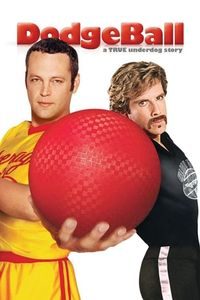
    (On DVD, August 2006) Oh my: this is a juvenile, frat-boy glorification comedy that never hesitates to go for the cheap gag and the gross sight. And yet, I pretty much loved it from beginning to end. Good supporting characters, inspired lunacy, some shamelessness and plenty of unpretentious attitude can carry you a long way, and so Dodgeball manages to suceed despite characters you would almost certainly hate in real life. The way that “dodgeball” is formalized with rules that would never make up a real sport and then hyped up as a Vegas sport is particularly endearing. The ending does fall apart, but that’s part of the fun: This film has one of the most outrageous good-guys-win-everything finale I can recall, but look closely at the screen and you can see the winking deus ex machina. There isn’t much more to say about the film though: Instantly accessibly, instantly forgettable. But it is funny enough.

  • The Descent (2005)

    The Descent (2005)

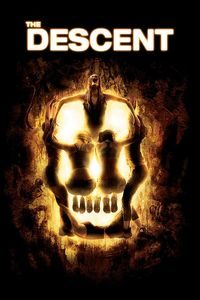
    (In theaters, August 2006) The advance hype of this film was frightful, so let us correct one misconception from the start: This is not one of the greatest horror films of all times. It is, on the other hand, a very decent entry in the genre, and that’s not bad considering the adolescent dross that usually gets released in theatres as “horror” nowadays. As far as premises go, writer/director Neil Marshall knows where to go: By locking up his feuding heroines in a cave along with a bunch of monsters, he gets claustrophobia, paranoia and terror all wrapped up in a neat package. People who are afraid of the dark should stay away: once the rocks fall, the monsters emerge and old feuds are uncovered, don’t bet on anyone making it to the end credits without severe damage. Alas, if the film may work as a thriller it’s somewhat limited in other aspects. While the script designates Shauna Macdonald as the recipient of our sympathies, my own affections lay firmly with can-do Asian cutie Natalie Jackson Mendoza, dividing the impact of the inevitable face-off between the two. I also suspect that I’ll be in a minority in shaking my head at the ecosystematic unlikeliness of the monsters and how their population is completely unsustainable in this given environment. Then there’s the growing repetitiveness of the last act: monsters, girls, death, repeat. Still, while these flaws may damage my enjoyment of the film, they don’t take away from the fact that Marshall has crafted a better-than-average horror film. The Descent may be completely humourless, but it’s earnest in its intent to do anything to scare its viewers. Some jump-scares are effective and others aren’t (much like the quick-cutting works in some instances and not in others). While The Descent won’t leave any lasting chills (for that, the North-American distributors may have considered keeping the original longer ending), it’s a respectable entry in the horror genre and not one of those made-for-retarded-teens films that can be dismissed even as they’re rolling. It certainly makes me curious about Marshall’s next effort.

  • Archangel, Robert Harris

    Arrow, 1998, 421 pages, C$10.99 mmpb, ISBN 0-09-928241-0

    Robert Harris’ early reputation was based on Fatherland and Enigma, two thrillers that delved deep into history for inspiration. Fatherland, of course, is the poster cover for accessible alternate history (Nazis triumphant! Fear the thought!) while Enigma used WW2-era Bletchley Park as a handy setting for a thriller. With Archangel, Robert Harris gets further away from WW2 by setting his story in the present, but don’t think for a minute that he has shrugged off historical research: While contemporary, Archangel pretty much revolves around the legacy of Joseph Stalin.

    The putative protagonist of the tale is one “Fluke” Kelso, a historian with credibility problems who, while passing through modern-day Moscow for a conference, finds himself the recipient of an unexpected barroom confession: Incredibly enough, a man tells Kelso about Stalin’s secret diaries and where they may be buried. As Kelso gulps down information that could lead to a significant historical discovery, the plot is set in motion. It’s hardly surprising to find out that other people are very, very interested in those diaries, and that their goals are dramatically opposed to academic research and publication.

    But things are seldom simple, especially in contemporary Moscow. In the hall of dark mirrors that is post-communist Russia, who’s being manipulated by who? In due time, Kelso find himself tracking down an man who has disappeared, running away from the state police along with two untrustworthy allies: a dangerously bitter woman and a journalist with an agenda of his own. Worse yet: what started out as a search for a historical document eventually becomes a confrontation with the ugly possibility of a resurgent Soviet empire.

    It won’t surprise anyone to find that Harris’ third novel is heavy on historical research, and a bit softer in the thriller department. Even casual Soviet history buffs will find much to contemplate here, as Harris is able to dig down deep in the murk of Soviet history to wrap up an entertaining historical mystery with grave contemporary implications. The desperate atmosphere of present-day Russia is well sketched, with plenty of evocative details and believable characters, some of whom taken from the pages of history.

    The more conventional thriller elements of the novel, unfortunately, aren’t so satisfying. Harris often lets his sense of detail and his research overpower the need for forward momentum, and Archangel leaves the reader with the impression of a short book padded with too many side tangents. The beginning takes its time to heat up, and the ending is particularly long in coming after the final secrets have all been exposed, with an extra-special character who seems clearly too far-fetched to be credible given the authenticity of the rest of the novel.

    More significantly, Harris is a bit too glib in supposing how his historical menace could become a future peril for all of Western Civilization: Politics have a way of never turning out how you would expect them, and it’s not as if modern history isn’t crammed with “sure-fire candidates” who ended crashing down with a whimper, especially if they’re not quite sane.

    Archangel also ends up on an abrupt ambiguity that doesn’t really matter one way or another, so low is our attachment to the characters. Harris’ novels are most notable for their Big Ideas rather than their talking-heads, and this one is no exception: Readers are more likely to raise their shoulders as the final shot goes off, sufficiently satisfied at the way the historical treasure box was unwrapped.

    Generally speaking, it’s a solid thriller –sufficiently interesting not to be forgotten the next day, but too plodding and generic to really make an impression. Harris doesn’t step all that far away from his area of expertise with this story, so his regular readers are unlikely to find themselves in unfamiliar territory. It’s probably a little bit more interesting than Enigma (time will tell), but still a distance away from Fatherland, which is likely to remain Harris’ best-known novel for quite a while. But who knows? Maybe Harris’ following book, Pompeii, will change everything…

  • Bon Cop, Bad Cop (2006)

    Bon Cop, Bad Cop (2006)

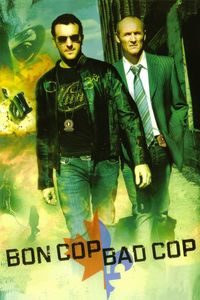
    (In theaters, August 2006) As a good little bilingual Canadian, I’ve been waiting for this film a long, looong time: A fully-bilingual crime comedy buddy-movie featuring a Québecois and an Ontarian, solving a case about a serial murderer going after those who ruined our national sport of hockey. Scripted and shot with fully naturalistic dialogues, Bon Cop, Bad Cop was distributed in Canada in two flavours: One has French subtitles and another has English ones, but bilingual moviegoers will lap up the dialogue without looking at the bottom of the screen as the film fluently switches back and forth, playing on stereotypes and promoting national unity with plenty of action. The film does miracles with a minuscule budget, but it’s the characters and the dialogue that makes the film more than the gunfights or exploding cars. There are tons of regional references throughout the film, from one-liners referencing October 1970 to inside jokes about recent hockey history. Don’t miss Rick Mercer playing Don Cherry, a jab at George W. “Arbusto” or how a character with accents in both languages is linked to former prime minister Jean Chretien. It’s hardly a perfect film, mind you: the plot mechanics don’t make sense, the film is predictable from start to finish and the clichés fly fast and low. More annoyingly, the film definitely lacks an epilogue, loud music often drowns out the sound during the cheaply-shot action scenes and there is a lack of tone consistency as the film goes from lighthearted cop comedy to gory serial killer thriller. But the film’s central conceit is fabulous enough that audiences (especially bilingual ones) are unlikely to care even if they notice: I saw the film in a sparsely-packed theatre, and the handful of viewers was collectively out-laughing many fully-crowded audiences I’ve heard. Bon Cop, Bad Cop takes the crowd-pleasing techniques of Quebec films and applies them to a broader framework: the result is well worth watching. Uncharacteristically enough for a Canadian-branded film, this one’s a crowd-wowing winner.

  • Le Battement d’ailes du papillon [Happenstance] (2000)

    Le Battement d’ailes du papillon [Happenstance] (2000)

    (On DVD, August 2006) I didn’t expect much from this film, but it does eventually manage to pull itself together, though right before falling apart again. In a way, that’s fitting for a film that’s all about randomness, chance and the impact of seemingly small actions. The original title of the film is a wink to Chaos Theory and “The Butterfly Effect”, and so the film is a succession of mini vignettes in which characters almost meet up, are separated by chance, see their innocuous actions hurt someone else or find themselves in impossible situations that are completely incomprehensible except for the all-seeing audience. It’s very, very scattered by design, but the various interactions between the characters can be fun to watch, with occasional moments of shallow philosophy exposed. (Gilbert Romain is particularly interesting in his brief scenes as “The Destiny Man”, practically standing in for the screenwriter.) Available in North American solely due to the presence of Audrey Tautou, this film inevitably evokes memories of Amelie De Montmartre. But there’s a world of difference between those two films: Amelie (beyond obviously benefiting from a far more accomplished sense of direction) succeeds where Happenstance doesn’t in tying all threads together and imposing an overarching sense over a tapestry of details. Here, a few plot threads get tied up while the others are just left to scatter: It simply leaves a feeling of incompleteness, of selective conclusion. While the film as a whole leaves a pleasant and fuzzy feeling, it seems to forget its own objectives right before ending.

  • Jennie, Douglas Preston

    Tor, 1994 (1997 reprint), 312 pages, C$8.99 mmpb, ISBN 0-812-56533-9

    This is definitely not the first novel you would expect from Douglas Preston. Now firmly established as a thriller writer (usually, but not always collaborating with Lincoln Child on yarns such as The Relic, The Ice Limit or The Cabinet of Curiosities), Preston can command a sizable audience and a regular spot on the bestseller lists: his readers can rely on his name for slick thrills and mass-market entertainment.

    But his first novel, published one year before the runaway success of The Relic, proves to be a very different book. Though it’s concerned about death, it’s hardly a thriller. Its form and execution is very different from the rest of Preston’s work.

    Taking the form of an oral history, Jennie starts by putting its readers in a frame of reference that may or may not be our real world. Though careful pseudo-historical references and self-insertion in the story as the researcher pulling together the accounts of several witnesses, Preston manages to create a reasonable doubt that the story he’s about to tell is historical truth.

    It begins in 1965, as an anthropologist goes to Africa and brings back a chimpanzee, the titular Jennie. Thanks to the circumstances of Jennie’s birth, the anthropologist decides to raise her as a member of his own family, applying his theories about primate intelligence to an authentic subject. As the book advances, we follow the family’s efforts in dealing with Jennie’s maturation, and the effects she has on the people surrounding her. People may not forget that Jennie isn’t completely human, but what if Jennie herself doesn’t realize it?

    The real intent of the novel, of course, is to tug at readers’ hearts and make them feel that the differences between animals and humans are far thinner than they can expect. You can probably fill in the blanks of the plot yourself, especially if you’re familiar some of the more sentimentalist fiction about primates. Yes, Jennie proves to be just as smart as her human siblings. Yes, some humans act in a cruel and despicable fashion. Yes, the tale ends on a very somber note. Few will be surprised to find that the Author’s Note at the end of the book has pages of contact coordinates for organizations dedicated to the protection of primates. I suppose that some readers will either find the “provocative questions about our relationship to, and treatment of, other species” (thanks, Library Journal) either trite or self-evident, depending on their own preexisting prejudices. Some of the story beats are repetitive or contrived (it’s a handy thing to have a minister as a neighbour when you want to discuss matters of death and faith), especially given how the tale progresses toward its inevitable ending.

    But if I’m less than enthusiastic about the novel’s overall dramatic arc, there’s no use denying that it’s effective, in large part due to the way it’s told. The fictional “oral history” of Jennie’s life allows Preston some room for literary games and showy prose. The characters of the story don’t speak the same way or reflect upon the events in quite the same manner. There’s a fun sense of triangulation in trying to piece together the “real” story from the different viewpoints of characters who can’t stand each other. Dr. Pamela Prentiss, the driven behaviourist who comes to act as a foil for the rest of the characters, is a particularly entertaining character to follow.

    While Jennie is based on numerous case studies (and, in a sense, could be viewed as a romanticized compendium of such experiments), it helps a lot that a certain “Douglas Preston” is, from the beginning “Note to the reader”, a character in his own book: a writer who tries to interview as many people as possible about Jennie, making significant efforts to track down and meet his subjects and (eventually) occasionally being shut off from any further contact. (“Turn that goddamn tape recorder off. I mean it. Now.” [P.290]) The sense of two stories mixing together is very satisfying, and adds another level of interest in the book.

    I may not personally understand the fascination with primates, but the book will find a natural audience with those who love stories featuring chimpanzees. And yet, while I’m obviously no fan of sappy “Aren’t those animals just like us humans? Aren’t us humans just like animal?” stories, Jennie still manages be a gripping read with a conclusion that is far more affecting that I would have thought from a description of the book alone. In that particular respect, at least, Jennie exhibits the qualities that would late make of Preston a best-selling authors. While Jennie is very different from his best-known thrillers, it’s more than worth a look for fans of good popular fiction: even if you know where it’s going, it’s a memorable ride.

  • Camouflage, Joe Haldeman

    Ace, 2004, 296 pages, C$36.00 hc, ISBN 0-441-01161-6

    That the 2006 “Best Novel” Nebula Award went to a relatively unknown novel rather than any of the deserving ones isn’t really a surprise. The SFWA’s Nebulas, after all, have long ceased to have any relationship to actual literary worth, instead boldly embracing a growing reputation as the leading industry back-scratching contest. Any relationship to what readers love to read, or what informed critics think is among the best SF/fantasy of the year, is purely coincidental.

    So if you haven’t read Joe Haldeman’s Camouflage, don’t feel as if you missed anything spectacular: At best, it’s a competent SF novel that doesn’t insult the intelligence of savvy readers. At worst, it’s just another brick in the Great Wall of the SF mid-list and perhaps a further proof of Haldeman’s hypnotizing powers over the rest of SFWA. It doesn’t really deserve any top award, but what are you going to do? The Nebulas, after all, can’t even be bothered to focus on any single calendar year, nor have a sensible nomination process.

    But if you do find a copy of Camouflage, perhaps at a remainder sale, have a look. You can do worse.

    It begins decently enough, with some guy telling another about a mysterious artifact buried underneath the Pacific Ocean. Raising it to the surface is no problem, but dealing with it once it’s over the ocean gets to be an issue since the object it many more time denser than even the outer reaches of the periodic table of elements. Various exotic engineering tricks are required to actually put it somewhere it can be studied, and once it’s in place, no one can figure out how to get any information about its composition. Diamond bits and industrial lasers don’t even leave a scratch, leaving the scientists curiously flustered even as media attention is focused on their efforts. Set in a relatively near future (2019), this section of Camouflage makes good use of Haldeman’s travels in Samoa and ends up being a very enjoyable hard-SF tale tending toward old-school hard engineering fiction. It’s told in a crisp no-nonsense fashion that side-steps the feeling of déjà-vu by not wasting our time.

    But as it turns out, it’s not even half of the novel’s story. No, Camouflage is really about one alien shape-shifter who, after spending various umpteenth years swimming around, finally comes aground in the early twentieth century to study those human creatures. Somewhat ignorant of social graces, it makes a number of mistakes (some of them fairly serious) before learning to cope with the rest of humanity. Its apprenticeship is long, fascinating and takes us forward ninety years as we figure out how the alien and the ship are linked. This section of the novel distinguishes itself by the way it snakes through nearly a century of history, and by the various details of a shape-shifter’s methods. There is a limpid logic to Haldeman’s writing in Camouflage that makes a lot more interesting that it ought to be, even when it side-steps into irrelevancy.

    Such as when it tips the scale even more by introducing a second shape-shifter, a creature of almost comical evil that has also managed to survive throughout all of human history. It, too, is very interested in the alien ship… and you can bet that it’s the sworn enemy of our first shape shifter. We follow this second shape-shifter’s progress through history is such condensed fashion that it’s easy to see Haldeman pull the wool over our eyes. Gee, do you possibly think that it could become someone who figures in the first plot thread of the novel?

    All three subplots eventually merge in the last few chapters, with a sudden and improbable romance that leads straight to a final confrontation and a conclusion that seems to say “that’s it, show’s over!” more than anything attempting a satisfying conclusion. At least it’s a relatively short book.

    Camouflage certainly doesn’t do anything to heighten my opinion of Haldeman’s recent production. It’s middle-list fodder, exactly the type of novel we think about when we gesture in the direction of “all of those SF books out there”. In some ways, its primary purpose in the field may be as a yardstick, to make the really good stuff look good and the really bad stuff look bad..

    And yet it’s written with a sure-footed assurance, plenty of crunchy details and interesting twists on the old shape-shifting idea. Looking at more information about Camouflage, I found that it actually won another award, walking away with half of the 2005 Tiptree Award. Given the treatment of shape-shifting romance in the novel, I can actually understand that. So amend that whole “doesn’t deserve any top award” crack with “(except the Tiptree)” and give me some time as I reflect upon the fact that I read and generally enjoyed a Tiptree-winning novel. Now that wasn’t something I expected.

  • Rainbows End, Vernor Vinge

    Tor, 2006, 364 pages, C$34.95 hc, ISBN 0-312-85684-9

    A lot of people were waiting for this book, with good reason: Over the years, Vernor Vinge has become a visionary with a new brand of future, a prophet for the Singularity. In the SF field, few will dispute his success: His last two novels both won the Hugo Award, and so did two of his novellas in 2002 (“Fast Times in Fairmont High”) and 2004 (“The Cookie Monster”). At this point in time, any new story by Vinge is an event. With Rainbows End, he doesn’t disappoint.

    While it shares common elements with “Fast Times in Fairmont High”, Rainbows End is a reworking of the earlier novella’s themes, using the same setting and characters, but digging much deeper in the details. (Readers already familiar with the earlier story may experience some disorientation as the two appear to take place in closely placed parallel universes.) The first chapter of Rainbows End is a little gem of pace-setting: In a few short paragraphs, the stakes are raised again and again: Someone out there has developed effective mind-control technology and so the European secret service hire a very shadowy entity called “Rabbit” to track down and eliminate the treat. There’s one small hitch, though: The guy ordering the hit is the same one who’s developing the technology… and “Rabbit” is definitely more than he appears to be.

    But as it turns out, this global framework is just there to allow Vinge to go back to Fairmont High School, and show us the wonders of his barely pre-Singularity future. The year, improbably enough, is just 2025 —but already everything is taking off. Some (but not all) debilitating diseases can be cured, high-school students can access manufacturing capabilities still beyond the reach of today’s governments, overlaid realities are far more popular than the un-augmented world, fine-grain wireless connectivity is everywhere and there just may be something artificial lurking in the channels of the global communication network…

    And yet, despite its considerable ambitions, Rainbows End is about a small group of characters. There’s Robert Gu, an unpleasant man rescued from the abyss of Alzheimer’s just in time to give us contemporary readers a taste of a future experiences for the first time. There’s Miri Gu, his grand-daughter, an ambitious teenager who’s about to get in deep trouble. There’s Juan Orozco, the prototype of a teenage nerd fully exploiting the resources at his disposition. Then there’s Alice and Bob Gu, (how fitting for a computer scientist to name two characters Alice and Bob… I kept expecting Eve to eavesdrop) just waiting to be involved in the plot as the military is called to the rescue…

    Many so-called SF novels try to give you a good dose of future shock, but Rainbows End actually delivers. For one thing, it’s set in a near-enough future that the tech on the ground often looks like better versions of current prototypes. For another, Vinge manages to cram an awe-inspiring density of ideas, concepts and eyeball kicks in a relatively slim but dense volume. I hope you’re up in your Google and Wikipedia skillz before attempting this book, because Vinge’s future is in large part a vision of massively collaborative computing: small entities, all contributing a tiny part to something far bigger than themselves. Computing capacity allows real-time virtual overlays through special contact lenses (I want my Epiphany OS!) and a substantial part of the job market seems to belong to people who can do stuff for others. Naturally, themes of identity become integral to the entire experience, as virtual presences can be shadowed, altered or even completely taken over.

    Reading Rainbows End taps onto the main vein of Science Fiction thrills. It’s like taking big gulps of ideas and experiencing the sugar rush of new concepts. Late in the novel, a military action takes on a radically new form that both trivializes a lot of the current vogue of military SF and momentarily gives us a glimpse into what true informational war may become. At a time where young punks like Cory Doctorow and Charles Stross are the living emblems of the new information-dense SF, it’s amusing to see Vinge (who’s near retirement age) being able to out-hip his younger colleagues with cutting-edge work.

    Even better: Vinge is smart enough to balance his universe with doses of humour and horror: For all the neat things that Vinge keeps on throwing in the air, his future is one that thrives on sink-or-swim competition, along with terrible new weapons and dumb ideas written large. One of the novel’s most darkly amusing scenes (for “hair-raising” values of amusing) is a take-off on destructive scanning techniques consisting in digitalizing a library by shredding its books and deep-scanning the resulting “shredda”. Yikes.

    Yet, for all my enthusiasm for Rainbows End (and make no mistake: I think it already belongs on the Hugo Awards ballot), it’s hardly a perfect novel. After the continuous shocks of the first half, the story seems to lose its way shortly after the midpoint, ultimately settling for a scattering of sub-plots that don’t always mesh harmoniously with one another. It also becomes apparent, as the novel settles to a conclusion, that far too many threads are left dangling: Indeed, Vinge has stated that a sequel in in the work. Much as I usually prefer singleton works, I really can’t wait to see what’s next. (On the other hand, this is the second almost-fabulous novel in a year, after David Marusek’s Counting Heads, to loses points for setting up an unannounced sequel.)

    Vinge is also known as a fairly hard-core techno-libertarian, and as a passport-carrying Canadian, I’m just bound to have problems with some of his basic assumptions. Vinge is far more bullish on free-market economics than I am: Like many libertarian ideas, his usually make abstraction that actual people are involved. In this context, there are a number of ideas in Rainbows End that I’d like to kick around in a context that allows for a touch more oversight and accountability.

    But debating ideas like this is a huge chunk of what’s fun and fresh with Rainbows End. Forget about most of the other books in the “Science Fiction” section: This is the one you’re looking for. It’s SF for this decade: a dangerous cocktail of fun and speculation, wrapped up in good style. Vernor Vinge is back, and the wait has been worth it.


  • Polder, Ed. Farah Mendlesohn

    Old Earth Books, 2006, 308 pages, US$40.00 hc, ISBN 978-1-882968-34-4

    It’s impossible to pick a name and say “there’s the best science-fiction writer of our generation”: there are too many good ones, too many styles, too many different approaches. But it is possible to say “John Clute is the best science-fiction critic of our generation”, because it’s true: no one else comes close. No one else has co-written a standard reference encyclopedia (twice!), churned out enough critical essays to fill three books, even redefined the common language of genre criticism. He is a literary singularity; I feel blessed for having met him a few times at conventions over the years. And there’s another measure of success for you: How many other critics have their own fans?

    With Polder, the time has come for the biggest fans of the Clutes (John and Judith) to come together and pay homage to the couple and their flat.

    I’m not terribly familiar with Judith Clute’s work, but I suspect that text-heavy Polder isn’t the best way to do so: a coffee-table book may be the best way to discuss a visual artist’s work. In my case, I even lack to vocabulary, so I won’t even try.

    Similarly, I’ve never been near 221B Camden High Street in London, so I can only shrug amiably at the reverent description of a flat crammed with bookshelves, art, a cat named Pepys and the Clutes themselves. Interestingly enough, Polder ends up presenting a number of stories and segments of SF novels where the flat figures prominently. Snippets of published works by M. John Harrison, Elizabeth Hand, Geoff Ryman or Kim Stanley Robinson are a testimony to the central location 221B Camden occupies for SF professionals passing by London.

    A few stories were written specially for this volume, all of them taking the form of light-hearted pieces with good roles for the Clutes. Brian Aldiss’ “An Audible Anagnorisis” is a fun mainstream piece that reminded me of Wodehouse, whereas Ian Watson’s “What actually Happened in Docklands” enlists John Clute in a fight against evil. But the award for the most amusing story surely goes to Sean McMullen’s “Electrisarian”, an anecdote that tells what happened when a certain Sean McMullen started repairing 221B’s telephone system…

    For those who want to learn more about the Clutes, a dozen of their friends got together to write warm and effusive portraits of the couple. Candas Jane Dorsey, Scott Bradfield, Neil Gaiman, Jack Womack, Ellen Datlow and Roz Kaveney offering fascinating recollections of their times with the Clutes. Kaveney’s piece is particularly interesting insofar as she describes the process of working on The Encyclopedia of Fantasy and even offers a version of how the word polder entered SF’s critical vocabulary.

    This of course, leads us to Polder‘s considerable value as one of the best work of SF criticism (even meta-criticism) published lately. This is, after all, a book at least a third concerned about a critic. It goes without saying that many other big-name SF critics grabbed Farah Mendlesohn’s invitation as an excuse to discuss their fine art. Clute’s own critical work often inspires them directly: Graham Sleight talks about First and Last SF while Edward James muses on Thinning. At other times, it’s Clute himself who’s the subject of attention: Rob Latham double-tracks on his assessment of Clute’s New Worlds criticism, Damien Roderick does a bit of historical contextualizing, Javier A. Martinez shares his love of the first edition of The Encyclopedia of Science Fiction (I could tell a similar tale about the Second Edition), Andrew M. Butler and Gary K Wolfe separately muse about Clute’s influence on the genre. And yet it’s Bruce Sterling who burns up the barn with his review of Clute’s Scores, a review that ends up as a springboard to a wider discussion of genre deficiencies. Just try to find a better all-star roster of SF critics in any other book this year.

    Alas, it’s a bit of a let-down to see so many problems with this labour of love: Despite Old Earth Books’ best intentions, the finished product is peppered with typos, missing punctuations and other problems. The endnotes present a particular issue: Not only are they all relegated at the end of the book when footnotes would have been far more accessible (or even, at a minimum, chapter-by-chapter endnotes), but an error at endnote 110 makes it so that the remaining 60 footnotes are two digits out-of-sequence. Knowing John Clute’s impeccably-organized mind, I suspect that this mistake will bother him far more than the content of the book.

    But content-wise, Polder achieves what it sets out to do: recognize people who deserve the acclaim. I’m a regular fanboy when it comes to Clute’s work, so there is no doubt that I will nominate this book for the Non-Fiction Hugo Awards next year: Polder may be for a very specific readership, but it hits all the right notes.

  • Chindi, Jack McDevitt

    Ace, 2002, 511 pages, C$10.99 mmpb, ISBN 0-441-01102-0

    The relationship between science-fiction and the unexplored frontier runs deep, perhaps all the way back to the origins of SF in pulp magazines, right alongside westerns. For many Americans, SF is synonymous with going “where no one has gone before”, replacing the old idea of a western frontier with another one: the universe as manifest destiny and Science Fiction as the only genre big enough to tell those stories. Conveniently enough, it’s also a type of story that needs no fancy variation: Go out there, explore, try to come back alive.

    As it happens, Jack McDevitt has made a mini-career out of those type of stories. Chindi is the third in a series that riffs off the basic exploration plot, vaguely inserted in a Science Fiction universe that contains no surprises to even old-school SF readers. Much like The Engines of God and Deepsix (and, to a non-negligible extent, Ancient Shores and Infinity Beach), Chindi places a bunch of characters in front of alien artifacts, gives them a ticking clock and watches what happens next. This time around, series heroine Priscilla “Hutch” Hutchins, re-introduced via a gallant ship rescue operation, is hired by a bunch of eccentric alien-chasers to investigate a strange phenomenon. In the established McDevitt tradition, this leads them to an alien artifact, then another and another… Meanwhile, one member of the group usually dies at every stop in the way and no one even thinks about turning back. It leads up to bigger and bigger artifacts, and maybe even to one of those elusive still-alive aliens…

    Of course, regular McDevitt readers already know what to expect. Mini adventures in an alien environment, unexplained alien mysteries that the author has no intention of tying together, gigantic forces counting down to total destruction and slasher-movie deaths slowly whittling down our cast of character. (Along with a curious lack of self-preservation sense from said characters, as they all agree to keep on going regardless of the mounting body bags.) And yes, that’s pretty much what happens.

    Unfortunately, there’s a lack of urgency to McDevitt’s style that makes it hard to care. Maybe I’m just getting more impatient with age, but despite the fun details, sense of exploration and clean-cut prose, I truly found it hard to get into the novel. See one adventure after another; guess which character is going to bite it. The last rescue sequence, while relatively original in the context of the series, takes almost a hundred pages of analysis and implementation. This is far too long at that point in the story, especially when the solution depends on a single line of dialogue that really stuck out earlier in the novel. Chindi grinds to a stop just as it should go flying. And as if that wasn’t enough, let’s just say that McDevitt has no more intention of wrapping up his enigmas than he did in previous novels. This presumably leads us to Omega, the next tome in the series.

    It’s truly an old-fashioned SF adventure, though I’m not using the expression in an entirely kind manner. Beyond the alien artifacts and the fact that she’s gallivanting around the galaxy in a spaceship, there isn’t much that’s different in Hutch world’s as compared to ours. There’s no sense of a fully lived-in future: Technology is comfortably familiar (except for the FTL drive), society seems to have stopped evolving and almost everyone in the cast is a boring shade of American. While the Hutch sequence is all about deep-space adventures, its decor seems a bit too hastily put-together to convince. What’s more, McDevitt’s straightforward writing style brings nothing new to the table either. See me use “old-fashioned” as in “this could have been written at any time over the past thirty years.”

    Of course, some people love that stuff. As entry-level material for neophyte SF readers, Chindi has the right attitude and nothing that a fan of Star Trek won’t understand. As a professional SF writer, McDevitt has enjoyed an almost unexplainable string of Nebula Award nominations —although it’s often hard to separate SFWA politics from literary value when it comes to the Nebula. I myself have enjoyed quite a number of McDevitt’s works (The Engines of God come to mind, not to mention the collection Standard Candles). But Chindi seems to be running over familiar ground once again, bringing nothing much in either style or content. Rather than recalling McDevitt as his best, it only shows McDevitt doing what he usually does, and that’s not quite enough to satisfy at a time where at least a dozen other SF writers are also turning out better material on a regular basis. I keep waiting for the McDevitt book that will reach above average and truly grab me, but I don’t see it coming. Maybe I should have a look at his latest short story collection.

  • Superman Returns (2006)

    Superman Returns (2006)

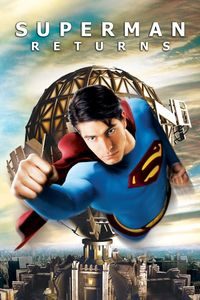
    (In theaters, July 2006) Far from successfully reinventing this particular superhero franchise, Superman Returns made me realize how much I loathe the character of Superman. It’s not the goody-goody two shoe routine that gets to me as much as the character’s complete lack of self-awareness and emotional maturity. He’s either a well-meaning twelve year old or a retarded thirty-year old: not, in any case, someone you would feel comfortable saddling with a son and the responsibility to save the world. And yet the film skirts all around this issue, going so far as to give Superman a number of creepy peeping scenes and romantic moments that are fit to cause more discomfort than endearment. There’s small comfort to be found in the film’s lavish visuals or envelope-pushing effects: Once the character is found worthless, the rest of the film soon follows. Kevin Spacey is easily the most enjoyable character, but his Lex Luthor is saddled with the lamest evil plan ever deemed fit to figure in a blockbuster. The less said about Kate Bosworth’s wimpy character the better: her performance recalls not Margot Kidder, but Katie Holmes’s similarly-ineffectual performance in Batman Begins. Worse: the dumb-as-dirt script can’t effectively maintain suspension of disbelief as is flies from one bit of silliness to the next, flagrantly ignoring how people actually react and how things actually work. For the first time in a long while, I kept being thrown off the film by its casual disregard for physics, journalism or even common sense. Not that it does better in terms of pacing or originality: It’s a good thing that Superman can lift heavy objects, because all of the problems he faces in this film can be solved through that particular talent. It all adds up to a dull and vaguely insulting film, one that actually takes away from the Superman mythos more than it adds to it: By skirting closer to the edge of reality, director Brian Singer invites greater scrutiny that the film can’t sustain. Give me an op-ed page, and it will be titled “The World didn’t need this Superman, and it sure doesn’t need another.” Oh well; everyone who was waiting for this summer’s big blockbuster failure can now stop looking.

  • The SEX Column… and Other Misprints, David Langford

    Cosmos, 1995, 243 pages, US$17.95 tpb, ISBN 1-930997-78-7

    Hail to the Langford.

    Not many regular columnists can be fooled into thinking that their work has any value beyond historical ephemera. Magazine pieces are written to be expended by the time the next issue comes out. Topics come and go, magazines appear and disappear and the only lasting impact of most columns is the check that allows the author to go out and eat something. Still, the effort in producing those expendable words is staggering: Next time you’re at a magazine stand, take a look at those million words and weep at their monthly disposal.

    But Langford is one of those columnists with enough skill and marketing appeal to be able to arrange for a collection of his columns. In this case, The SEX Column brings together no less than ten year’s worth of monthly columns for SFX magazine, or pretty much all that Langford wrote for SFX between 1995 and 2005. If you’re of the poorer disposition, rejoice in the knowledge that most, if not all, of this material is already available on Langford’s web site. But that’s not the point of this collection, which is about having a handy solar-powered package of wood pulp and ink.

    It makes a very nice package. Yes, a few columns are instantly dated, as if kept in argon as a time capsule of What Happened Back Then: This is particularly noticeable with obituaries, reviews or convention reports. But Langford is a canny fellow with enough experience with print deadlines to know that a slick magazine doesn’t allow too much immediacy, and so most of The SEX column works as a collection of short standalone essays on various subjects related to the science-fiction field.

    Promisingly enough, it starts off by wondering when The Last Dangerous Visions will finally be published. The rest of the SF-related material is just as good. “Sign Here” is a short tour of signatures sessions as seen by the authors. “On the Circuit” is one of many pieces mentioning convention horror stories. “Blurbismo” is about those mercenary one-liners.

    Of the strictly ephemeral material, the best may be the review of John Clute’s Look at the Evidence (Langford being one of the few reviewers not meta-gobsmacked at the thought of reviewing John Clute) and Keith Robert’s epitaph, this last piece being noteworthy largely because it’s one of those blisteringly honest texts that don’t stoop down to simple eulogies: “…he could be utterly impossible to work with.”

    The book is rarely better than when Langford walks down his amazing library to offer thematic essays on various subjects as brought up in Science-Fiction. Santa Claus in SF, Food in SF and even (yup) bad sex in SF. Prepared to be amazed at the obscure works, amusing concepts and strange juxtapositions. “This Title Was Different” is about books known under more than one title, “We Told You So” ticks off successful SF predictions, “The Case of the Red Planet” obviously deals with Mars novels while “Curse of the Typo” offers an amazing collection of embarrassing typographical errors. Don’t miss the “Choose your own column!” interactive piece.

    Of course, anyone who knows the name David Langford knows that humour is an important part of his enduring popularity, and so The SEX Column often turns into an excuse for short comedy routines. “Lepermage of Elfspasm” takes on silly fantasy novel titles while “Noises Off” deals with onomatopoeia. “Future Christmas” reads like an outtake from “Our Dumb Century II”.

    What more, it’s pure joy to see Langford unleash his scientific education and his literary erudition, sometimes on bad SF, sometimes on more deserving targets. “Would U kindly F O?” takes on UFOlogy: the title explains all.

    Langford sometimes ends up the subject of his own columns, whether it’s reporting back on various conventions (including strange and wonderful events at the first two Discworld cons), commenting upon electronic publishing through his own experience and sometimes even discussing his long, long, long string of Hugo Awards. There is, of course, a strangely compelling British feel to the book, written as it was by a Brit for Brit readers. Americans have taken a long time to warm up to Terry Pratchett’s work, and so reading about the raucous reception of his work overseas takes on an air of almost alternate reality.

    Cosmos books have been doing an awfully good job at publishing Langford’s back-catalogue, and The SEX Column is another winner. Yes, you can get most of the content on-line on Langford’s site. But wouldn’t you be better off with another half-inch of your bookshelves taken up by another of Langford’s excellent collections?

    (Hey, look, “So You want to be a Reviewer” offers tips for wannabe reviewers. Oh my…)