Month: April 2019

  • The Bishop’s Wife (1947)

    The Bishop’s Wife (1947)

    (On Cable TV, April 2019) There have been many charming Christmas movies, but The Bishop’s Wife has the undeniable advantage of featuring Cary Grant as an impossibly suave angel come down to Earth to resolve a bishop’s problems. Complications ensue when the bishop’s wife proves irresistible to him—although, this being a 1940s movie, it’s all handled tastefully. Grant couldn’t be better as the angel and completely steals the movie, whereas David Niven is good in the ungrateful role of the bishop (he was originally supposed to play the angel, but Grant was the better choice) and Loretta Young is luminous as the bishop’s wife. A few interesting special effects reaffirm that this isn’t a realistic Christmas movie. Easy to watch and imbued with a decent amount of Christmas spirit, The Bishop’s Wife is still worth a look today.

  • Peeping Tom (1960)

    Peeping Tom (1960)

    (In French, On Cable TV, April 2019) Some movie genres are older than we realize, and if you’re looking for early examples of slasher-horror movies, you’re going to have to go past 1970s Halloween or Black Christmas and land somewhere near the 1960 double-feature of Psycho and Peeping Tom. Daringly for its time and directed by respectable filmmaker Michael Powell, it’s about a serial murderer who (high-tech twist!) records his actions with a video camera. This is also an opportunity to play with some metatextual material about the nature of film and, as the title suggests, the audience as voyeurs as much as the killer protagonist. The atmosphere of the early-1960s London is also worth a look, anticipating the later British movies of the decade. Still, as much as the film does have a bit of material to chew upon, its very specific time also means that it has lost its lustre, and not very gracefully at that. It may have been transgressive and upsetting at the time—but it’s now, sixty years later, a bit too dumb and blunt to be taken seriously. Peeping Tom is interesting to horror enthusiasts, obviously, but otherwise not that gripping as a story.

  • Cannibal Holocaust (1980)

    Cannibal Holocaust (1980)

    (In French, On Cable TV, April 2019) I approached Cannibal Holocaust very reluctantly, acutely aware of its terrible reputation as a schlock gore horror film that actually kills animals on camera—I’m a staunch film preservationist and I’m jaded when it comes to horror, but if it takes deliberate animal death to make a film then I’m more than willing to let all copies of it vanish off a pier. It doesn’t take a long time to feel that Cannibal Holocaust is not worth the animal deaths that went into it: It’s a film that revels in gore, nihilism and voyeurism, getting its kick out of bathing everything in blood and death. The plot has something to do with American academics examining found footage from an expedition sent deep in the Amazon to study a cannibal tribe, and you can guess where it goes from there. There is some intriguing material here about the observers being corrupted by the nature of the terrible footage they’re seeing, but that idea is not really explored, nor is it the point of the film. The point of it is death and the gore, shown in as much detail as practical effects or ignorance of animal cruelty laws will allow. I’m not impressed by this entire film subgenre (regrettably, there are many similar movies) and Cannibal Holocaust does nothing to make me change my mind. It’s slightly better made than many others, director Ruggero Deodato is certainly not going for the easily dismissed quasi-comedy that some other similar films can evoke, and it’s definitely far more disturbing for including real animals being killed on camera. I’m a somewhat jaded horror viewer, but even I had to tap out and fast-forward through the animal cruelty sequences. Alas, this will probably mean that I will remember Cannibal Holocaust much longer than I should. (Fake the killing of a human and I’ll shrug, but kill a turtle for real and you’re my enemy for life.) And there’s something else: The film’s closing lines have something to do with the nature of evil … and then the camera pans up to show the now-destroyed Twin Towers.

  • The Natural (1984)

    The Natural (1984)

    (On Cable TV, April 2019) Much as baseball is the great American pastime, I’m starting to suspect that baseball movies are the great American cinematic comfort food. Americans understand the rules, they know the game inside-out, they are comfortable with the pacing and they will find the tiniest of evidence to prove that baseball is life and life is baseball. Or something like that. Watching The Natural isn’t quite as mystical as other baseball movies (Looking at you, Field of Dreams), but it’s still not quite realistic, not quite ordinary, not quite believable either. (A prologue with a bat being carved out of wood felled by a lightning strike at least establishes the tone early.)  What The Natural does have going for it is Robert Redford being effortlessly charming, and a roster of supporting actors that include Robert Duvall, Glenn Close, Kim Basinger, Barbara Hershey and Wilford Brimley. The big hook of the film has to do with our protagonist being felled by a bullet from a psychotic fan before becoming a star, and then coming back to the game a decade and a half later as a natural talent. There’s a mystery to it that proves less impressive than imagined, but the rest of director Barry Levinson’s film does run on rails all the way to a crucial win. What keeps the film interesting are those incidents approaching the supernatural that are littered around the main plot. By the time our protagonist hits a climactic pitch right into the stadium lights and creates fireworks, you’re either so solidly in the film’s distinctive logic that you’ll cheer, or roll your eyes one last time and say “That’s it, I’m done.”

  • Et Dieu … créa la femme [And God Created Woman] (1956)

    Et Dieu … créa la femme [And God Created Woman] (1956)

    (On Cable TV, April 2019) I’m not sure who first made the point or where it was done, but there are plenty of historical “movie superstars,” especially actresses known for their sex-appeal, that are not associated with any great movie. They have a substantial body of work (if you’ll pardon the expression), but they won’t turn up in a modern look at their era’s most fondly-remembered movies because little of what they did stands the test of time. They’re famous for being famous, rather than specific roles. Insofar as I can gather, Brigitte Bardot is one of these stars—lauded as a sex kitten, famous for her opposition to baby seal hunting (well, at least in Canada), but not exactly known for any high-profile memorable roles. Aside from Le Mépris, the only exception I can find is that she starred in Et Dieu … créa la femme. But in a feat of circular logic, Et Dieu … créa la femme is known nowadays only because it was Bardot’s international breakthrough role. It’s not much of an exaggeration to say that the film is a showcase for her because there’s so little else going on. A coastal small-town romantic drama, this is a film built around Bardot, with a character showcased for her beauty and lack of inhibition. Tame by today’s standard but provocative by French mid-1950s standards and positively scandalous for late Production Code-era America, it’s a film that still has the power to make viewers understand what the fuss about Bardot was about. There is a bit of charm in the way the seaside French town is portrayed, in Bardot’s character’s carefree behaviour and in the colourful cinematography. Otherwise, though, Et Dieu … créa la femme is Bardot’s film: the dramatic structure would be meaningless without her presence, and she manages to overcome her own limited acting talents through sheer magnetism. Which brings us back to the symbiotic loop: she’s now usually known for the film that’s known because of her. (Random, non-Bardot thought: Seeing this film’s seaside setting got me thinking about how many French films take place alongside the sea, and what’s the place of the coast in the French imagination. To be investigated.)

  • Critters (1986)

    Critters (1986)

    (In French, On Cable TV, April 2019) In the mid-1980s, you couldn’t swing a bag of popcorn without spilling some on high-concept horror movies that ended up spawning multiple sequels. As one such horror/Science Fiction hybrid, Critters starts out being a bit more ambitious than your usual creature feature, what with intergalactic bounty hunters hunting down tribbles carnivorous pests so that they don’t take over the world. But budgetary constraints quickly show up, as most of the action takes place in a Kansas farmhouse. While there are a few familiar names in the credits (Lin Shaye, Dee Wallace, M. Emmet Walsh), the most distinctive thing about Critters is its lack of distinction. If you’re looking for the median 1980s horror monster film with practical creature effects, this may be the one: not too depressing, not too funny, not too impressive but not too cheap either. The science fiction aspect does add a bit to it, but it’s a wonder as to why there were so many sequels. Oh well—you can do worse than watching the first one.

  • Super (2010)

    Super (2010)

    (On Cable TV, April 2019) While I’ll support any creator’s intent to deconstruct a genre, they should be aware that there are a few inherent dangers in doing so, including being so intent on the deconstruction that you forget about core narrative elements such as, well, character attachment, tonal unity or satisfying endings. With Super, writer-director James Gunn clearly takes aim at the superhero genre, turning in a horrifyingly serious look at what it would take for someone to become a superhero or a sidekick. Never mind the physical training—what kind of trauma would lead someone to take up a life of costumed vigilantism? The answer has nothing noble, and quite a bit of disturbing material. As a dark comedy that delights in shifting from comedy to horror in a few moments, Super includes gore, rape, realistically portrayed injuries, social awkwardness and merciless put-downs as part of its package. The result is not for the faint of heart, nor for uncritical superhero movie fans, nor anyone expecting a tidy ending, nor anyone who dislikes deconstructions of superheroic power fantasies. At least Rainn Wilson and Ellen Page are not too bad in the lead roles (although being saddled with “It’s all gooshy” as erotic dialogue can earn anyone sympathy points), with a nod to Kevin Bacon as a rather good villain, and a surprising ensemble of known actors in supporting roles. The similarities with Kick-Ass, also released in 2010, are not as interesting as those two movies appearing at that time as a signal of the subgenre’s evolution (Super is much harsher than Kick-Ass, which was already not a walk in the park). Now somewhat better known than in 2010 thanks to Gunn’s mega-success (directing, ironically enough, more superhero movies), Super nonetheless remains a half-success, not quite controlled enough to achieve its subversive aims without alienating a chunk of its audience along the way.

  • The Darkest Minds (2018)

    The Darkest Minds (2018)

    (On Cable TV, April 2019) Weren’t we done with dystopian Young Adult novel movie adaptations? Apparently not, but thankfully The Darkest Minds is so dull and generic that you will forget it before long, or at least mesh its generic plot details with other similar movies. Let’s see—here we have a group of virtuous teenagers facing off against an adult-led dystopia, so that’s familiar. (Well, there’s a twist to that, but it actually makes the film even dumber and less coherent.)  The psychic powers that the teenagers have are colour-coded for your convenience, meaning that they’re so rigidly defined that we’re to act surprised when they’re not. As usual for those products aimed at less-discerning teenagers, our group of protagonists goes on the run, fleeing the killer adults to join some kind of underground rebel group. There’s a love triangle, just in case you feared that this particular contrivance wouldn’t show up. The plot twists here aren’t as telegraphed as much as they are paraded around on the mistaken belief that this is the first movie we’ve even seen. Thankfully, the box-office receipts were so poor that we’ll never see a sequel. If the film has one meagre saving grace, it’s that it features the likable Amandla Stenberg, a welcome spot of protagonist diversity in a genre almost exclusively led by Caucasian boys and girls. It’s not much, but if you’re looking for one point of differentiation, there it is. It doesn’t make the rest of The Darkest Minds any better, though.

  • The Prodigies [La nuit des enfants rois] (2011)

    The Prodigies [La nuit des enfants rois] (2011)

    (In French, On TV, April 2019) I did not approach La nuit des enfants rois with the best of intentions—after all, I read the original Bernard Lenteric novel back in the mid-1990s and thought it was gratuitously depressing tripe even back then—which, considering that it’s about misunderstood nerds taking revenge at a time when I felt that I was a misunderstood nerd, was something that spoke for itself. To its disservice, the film does leave out some of the more ludicrous material of the novel, but doesn’t do much to fix the book’s basic shortcomings and adds a whole lot more new dumb stuff. Now feeling like a paean to misunderstood teenage psychopaths, The Prodigies takes delight in mistreating its teen geniuses until they get to become vicious criminals with thoughts of global destruction. Our protagonist isn’t much better, raising all sorts of questions about why the film actually exists. Worse yet: Director Antoine Charreyron’s The Prodigies is hyper-violent, except that it doesn’t have the maturity to justify this level of gore and violence. The way it revels in an extended rape sequence that becomes a driver for the film’s entire second half is a troubling indicator of the filmmaker’s lack of maturity. Executed as an animated film, it does attempt a bit of style, but the animation itself is amateurish to the point of nullifying any stylistic aspirations. To put it bluntly: the film is not stylish, it’s just cheap. Despite a few (very few) visually ambitious moments, The Prodigies is a chore to sit through—it’s immature yet violent in ways that amplify the bad mixture of the two, and it’s fundamentally ugly to watch most of the time.

  • Regression (2015)

    Regression (2015)

    (In French, On TV, April 2019) Any discussion of Regression will mean spoiling the ending, so prepare yourself or stop reading. There’s a huge paradox at the heart of the film: It’s bad most of the time, and its sharp improvement at the end comes at the expense of robbing the film of any satisfying narrative. Let me explain: Much of Regression is spent with a policeman (Ethan Hawke, solid) in 1990 small-town America, investigating the testimony of a young woman (Emma Watson, better than expected) who claims to have been sexually abused. So far, so conventional, except that the film becomes abruptly dumber once it leads us to claims of a satanic cult, regression hypnotherapy, sacrificed babies and small-town conspiracies. By the time our protagonist is maybe drugged and maybe raped and maybe stared at by members of the local satanic conspiracy, viewers can be forgiven if they give up all hopes of the film ever becoming anything more than a standard horror film of that type. At that point, Regression isn’t just being unoriginal both for its content and presentation—it revels in tired old clichés and discredited material (both hypnosis and satanic cults) that belonged in the 1990s. Fortunately, director Alejandro Amenabar has something up his sleeve, and it’s to spend the last five minutes of the film unbolting its own narrative and telling us that it was all lies, that satanic cults don’t exist and that regression hypnotherapy is a bunch of hooey. Having destroyed itself, Regression ends. What are we left to think? That it’s good that the ending got back to reality, or bad that whatever narrative structure was being built was pulled from underneath us? I’m still not sure. It may be possible for a film to redeem itself and yet leave us unsatisfied. But it’s not the ending: much of the film’s bulk is as uninteresting and generic as what it initially purports to be—there are more fundamental issues here than an ending designed to upset viewers. If it had been an interesting but ludicrous ride to a self-destructive ending, I wouldn’t have minded so much—but Regression makes the double mistake of being both (intentionally) stupid and (unintentionally) dull and the combination is deadly to the film’s enjoyment.

  • Fried Green Tomatoes (1991)

    Fried Green Tomatoes (1991)

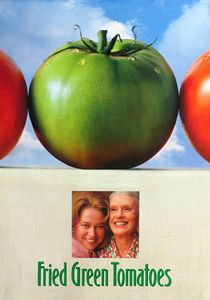
    (On Cable TV, April 2019) There’s a very different kind of rhythm to Fried Green Tomatoes that makes it remarkable. A mixture of southern atmosphere, women’s in-group language, not-so-tall tales spun with homely wisdom, and a few good actresses getting a chance to show what they can do. There’s a surprisingly dark bite to the stories being told here, with abuse, divorce, child death, righteous murder and even cannibalism being on the menu. But the way the script is structured and the film is directed by Jon Avnet make it all interesting to follow as we hop back and forth across four decades of history in an attempt to understand a character. Kathy Bates turns in a good performance as a woman rediscovering life thanks to another free-spirited friend—but this is really Jessica Tandy’s movie. Fried Green Tomatoes is a bit long at more than two hours and a quarter, but it’s not difficult to watch, and the southern atmosphere is often a delight.

  • Needful Things (1993)

    Needful Things (1993)

    (On TV, April 2019) The more I think about it, the more I realize that the way that Hollywood and I consume Stephen King’s novels has much in common: big binges every few years, between which King has the time to write an entire set of books that would put other authors’ entire bibliographies to shame. Now that King is very much back in vogue as inspiration for horror movies for the third time after peaks in the early 1980s and mid-1990s, it’s time for me to take a look at a film adaptation that was released during King’s second Hollywood binge and read during the first of mine. Needful Things is memorable in that it’s a thick book that uses most of its duration to make us comfortable with an entire small New England town—an ensemble cast of ordinary characters whose existence is upset (or terminated) by the arrival of a mysterious man who can find something special for you somewhere in his new shop. It’s a familiar setup—what if an entire town sold its soul to the Devil?—but in King’s hands it becomes a sweeping, comfortable novel with big ideas in a small context. The movie obviously doesn’t have the running time to do justice to the entire story, but it does manage to nicely condense the narrative in the time it has. The cast is cut down, the plotting is streamlined and if the immersion isn’t nearly as complete, the result is more effective than not. The big sweeping opening sequence begins the inglorious work of establishing the geography and the characters. It’s easy enough to watch, and quietly fascinating in the way the plot and director Fraser Clarke Heston gradually manage to work itself up to an explosive climax after setting half the town against each other by weaponizing small sins. Movies of this kind depend on their actors, and we have a capable lead trio in between the ever-dependable Ed Harris, a very nice Bonnie Bedelia, and a savvy performance by Max von Sydow, who manages to find an appropriate balance between the creepiness of his character and the innate campiness of the concept. In short, an unspectacular but effective adaptation that should please both King fans and casuals. Movie aside I have one semi-related complaint: Why do movie channels such as AMC, heavy on muting out bad language, even choose to broadcast movies with language to mute out? It’s really annoying and makes a mockery of the channel’s so-called cinephile orientation.

  • The American President (1995)

    The American President (1995)

    (In French, On TV, April 2019) At this point in American history, the idea of a likable, virtuous, law-abiding president is the stuff of comforting fantasy, so here’s The American President to remind us of what that was like. This rather charming romantic comedy takes on the premise of having a widowed president woo a lobbyist. Written by Aaron Sorkin, the film can certainly be seen as a dry run for The West Wing—voluble, clever, and idealistic at once. (Checking the film’s original English-language quotes, it’s obvious that the film loses something in translation.)  Even though other movies and shows have mined the same terrain since 1995, The American President still provides an interesting glimpse at the heart of a presidency, and doesn’t forget to tackle the more honest aspects of the power dynamics of a relationship between the president and a citizen. A great cast anchors Rob Reiner’s straightforward direction: While Michael Douglas gets to play the president opposite Annette Bening’s fiery lobbyist, the film can also count on Martin Sheen (I told you it was a West Wing dry run), Michael J. Fox and John Mahoney. The American President is a good movie, but the current political context makes it even better, with its romance being as idealistic as its political nature—presupposing a president of good moral character and a concerned effort to curb emission gasses. It is a bit disheartening to hear a film nearly twenty-five-year-old tackling things that really should have been done back then. But when it comes to escapism, Hollywood does it best.

  • The Petrified Forest (1936)

    The Petrified Forest (1936)

    (On Cable TV, April 2019) By 1936, Humphrey Bogart was a repertory player in the Warner Brothers stable inching toward leading-man status, and they were clearly trying a few things for him to see how he’d catch the audience’s attention. One of his early successes was The Petrified Forest, a thriller in which he plays a gangster evading a police chase, and taking hostage the patrons of a small desert diner. It’s clearly not meant to feature Bogart as a lead character—that would be Leslie Howard as a writer turned drifter who’s affected by the characters and events of the diner. As a semi-confined thriller, the film makes a good double-bill with Bogart’s latter Key Largo, but does make effective use of its desert atmosphere to crank the tension between its characters. Bogart, young and with a full head of hair, is convincing as the heavy (something that would clearly be noticed in later films) but the film isn’t quite a gangster picture. As the third act rolls in, it becomes closer to a contemplative meditation on life and death, as befits its theatrical origin. That’s when our intellectual protagonist is transformed into someone who discovers, perhaps too late, a reason to live. Great dialogue and great characters make this a potent 1930s film, although let’s be honest—most viewers will seek this out for Bogart first.

  • The Crow (1994)

    The Crow (1994)

    (In French, On Cable TV, April 2019) Considering that I started seriously watching movies in the mid-1990s, I long thought that I would be unable to see movies of that decade as “dated” beyond the usual technological markers—those are, after all, the films I watched as they were released, as a young ticket-buying adult. In many ways, I still have trouble thinking of the 1990s as a historical period the way I do for earlier decades. But then I come across movies like The Crow, which were intended as such stylish statements of their times that they become the go-to example of what everyone mean when they talk about 1990s movies. Young directors like Alex Proyas, who made his mark through music videos, were not exactly responsible or sophisticated in their use of digital special effects and quick-cut editing—that all leaves a mark. This is even worse in The Crow’s enthusiastic embrace of gothic tropes, both visual and thematic—it’s so goth that its climax takes place atop a cathedral. For Proyas, The Crow is a clear front-runner to Dark City’s nighttime urban landscapes: everything here is dark, grimy, littered—nobody in this alternate reality ever cleans up, and in fact it’s not clear if there’s ever a daytime. The very moody soundtrack, to make matters even more cliché, is exactly the kind of thing that was goth-defining at the time. It’s obvious why The Crow became a cult classic—it feels like the unbridled product of a goth imagination turned up to eleven, even killing off its star Brandon Lee in the process. Oh, it’s easy to become a bit sarcastic about the film, but it does feel heartfelt some of the time. The superhero avenging angel is offset at least once by a scene of welcome humanity and realism with a policeman. Lee’s performance is not bad—and you can see parallels here with Heath Ledger’s Joker. Plus, there’s Bai Ling as an evil character. Even the extremely dated atmosphere has become fantastical and stylish rather than simply old. I can’t say that I liked The Crow all that much, but it does find a place in the list of distinctive 1990s movies—you’re missing out on an emblematic film if you don’t see it.