Father of the Bride (1950)
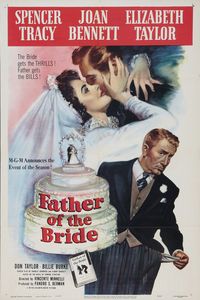
(On Cable TV, January 2020) There’s a reason why Father of the Bride remains a classic seventy years later, after a (rather good if far more histrionic) Steve Martin remake and many social upheavals that make the 1950 world of the film feel distant: It’s still sweet, humane and a terrific showcase for both Spencer Tracy and Elizabeth Taylor. Adapted from a then-bestselling novel, the story is simple to the point of being archetypical—Daddy’s favourite daughter is getting married, and that’s cause for emotional, financial and comic upheaval. Handled by director Vincente Minelli in a manner reminiscent of his other musicals, the film moves at a steady pace, starting with a quiet but very effective monologue that sets the frame for the rest of the film. Spencer is typically good as the harried everyman father pushed to his limits in organizing an extravagant upper-middle-class wedding, while Taylor here plays the cute ingenue without the sex-symbol mystique that would accompany many of her later roles. Father of the Bride was an Academy Awards favourite, earning nominations for best picture, screenplay and a nod to Tracy’s performance (most likely cinched by his bittersweet narration that wraps up the film). It almost goes without saying that the socio-economic context of the film is almost entirely alien at this point, with much of the film treating the protagonist’s patriarchal viewpoint as the default assumption, and multiplying rich-people’s-problems as a source of comedy. But is it really so outdated? For all of the intervening social upheavals, there’s still a solid core of drama (expressed as broadly-accessible comic sequences) in seeing a middle-aged man go through the realization that his daughter has become a woman and is leaving his orbit. Father of the Bride is not quite as time-bound as you may think—for all of its circa-1950 context, it still works quite well today.