Month: March 2020

  • La règle du jeu [The Rules of the Game] (1939)

    La règle du jeu [The Rules of the Game] (1939)

    (Criterion Streaming, March 2020) Not every classic hits the same, and so not only am I not overly impressed at La règle du jeu, I’m also not impressed with myself for not being impressed. While I’ll acknowledge that I will need to revisit this film at some point, my current impression is this: I can recognize the film’s thematic depth, but I see no reason to engage with it. It’s about a weekend get-together at a country estate, but it’s also about classism, a battle between the sexes, romantic jealousy and inaction in the face of growing fascism. Even better, writer-director Jean Renoir uses the film for some then-daring cinematic experiment, moving the camera in ways seldom seen at the time and using every single bit of artistic credit he had at the time. (Which may explain why the film was quickly banned by the Vichy administration and would only resurface in its complete version twenty-five years later.) Alas, I found La règle du jeu meandering, talky, a bit too long and not as focused as I would have liked. There’s a distinct possibility that I may not have been in the most appropriate mood to take it in, so let’s keep that in mind—I’ll try to have another look in a few years.

  • L’Atalante (1934)

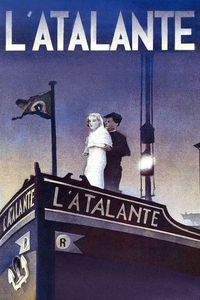
    L’Atalante (1934)

    (Criterion Streaming, March 2020) While I’m not and probably won’t ever be a big fan of L’Atalante, there are a few things about the film that are worth noting. The first, outside the film’s frame of reference, would be to acknowledge the very romantic idea of the film and its place in the regrettably short life of its writer-director Jean Vigo—After barely managing to complete its production, Vigo died at 29 years of age… shortly after seeing the film’s less-than impressive initial release. It would take another generation for L’Atalante to be regarded fondly as a fundamental piece of poetic realism and lionized by the French New Wave filmmakers. That’s a lot of history for what is rather a simple film, at least from a narrative standpoint: a couple marries, splits up and reunites—all set against the somewhat romantic world of French canal barges. But everything is about execution, and even twenty-first century audiences have to recognize Vigo’s stylistic flourishes in telling his story. There’s quite a bit to like here—including many very cute cats—but the test is whether it’s still interesting, and it is: the Poetic Realism movement has aged rather well, and L’Atalante can still comfortably fit next to a viewing of Pépé le Moko. It’s not hard to see how that specific style would come to influence American film noir, the French new Wave and other significant subgenres.

  • Howards End (1992)

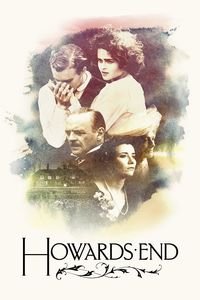
    Howards End (1992)

    (Netflix Streaming, March 2020) While it’s amusing to call Howards End “Stiff Upper Lip — The Movie,” it’s perhaps fairer to acknowledge that time has polished it into the apex of a very specific kind of British drama. In the thirty years of the Merchant-Ivory collaborations, this is probably their best film, the one that most embodies the atmosphere that the pair was aiming for—a time of repressed feelings, grand (but fading) rural estates, dimming aristocracy, class tension and family drama. It’s all wrapped up in a very neat bow here, with sumptuous cinematography and best-of-class actors. In-between Anthony Hopkins, Emma Thompson, a baby-faced Helena Bonham Carter, Vanessa Redgrave and others, this is a top-notch execution of a mood—the apogee of an entire genre. It’s a graceful reckoning with the end of an empire given life by some great characterization and even finer acting. It’s both wish-fulfillment and criticism of the wish at once. Is Howards End too long? Sure, but only in the moments you’re not completely smitten with it—otherwise, it’s not nearly long enough.

  • Shin seiki Evangelion Gekijô-ban: Air/Magokoro wo, kimi ni [The End of Evangelion] (1997)

    Shin seiki Evangelion Gekijô-ban: Air/Magokoro wo, kimi ni [The End of Evangelion] (1997)

    (Netflix Streaming, March 2020) I was a bit amazed to see The End of Evangelion occasionally pop up on the IMDB Top-250 list, and that amazement is likely to persist now that I’ve actually seen the movie. Not being all that familiar with the Evangelion series, it took me a few minutes and some extracurricular reading to get up to speed—not that there’s much to it: Earth is threatened, but it’s up to a few moody teenagers in robot suits to save the world. Whatever, anime, you do your thing. Considering that I would never be able to fully understand the film as a finale to the Neon Genesis Evangelion 24-episode anime series, I sat back and let it all wash over me. This, in the end, was the correct approach—trying to explain just what’s going on in The End of Evangelion is doomed to failure and would sound like insane gibberish even if I succeeded. The very short version is: it’s the final showdown, there’s a lot of barely understandable sights and sounds, and the entire thing hovers at the edge of symbolic unintelligibility. It’s violent, surreal, pompous, experimental, incoherent, apocalyptic, metaphysical and when you’re dealing with those qualifiers in rapid succession, who really cares about understanding the plot? Writer-director Hideaki Anno is a madman, but I’m happy he wasn’t stopped: The End of Evangelion is actually rather impressive in its own way—and if you’re going to justify including it as an occasional visitor to the IMDB Top-250, it might as well because it’s the most anime-esque of all anime—it’s difficult to imagine anyone ever doing something like this ever again. Would I recommend it? I have no clue.

  • Smilin’ Through (1932)

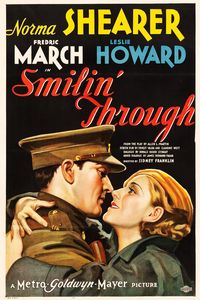
    Smilin’ Through (1932)

    (On Cable TV, March 2020) If there’s anything unusual about Smilin’ Through, it’s its use of the supernatural as a framing plot device, as both the beginning and end of the story doe depend on a ghostly presence to make sense. (Which was far from the norm at the time.) In-between, we get Norma Shearer and Fredric March plays pairs of characters separated by a generation, and the more usual melodrama of star-crossed lovers trying to get together and failing until the ghosts interfere. Smilin’ Through is fine for an early-sound-era romantic drama: there’s little new here aside from the ghosts, and the film is arguably more interesting when juxtaposed with its earlier 1922 silent film and the later 1941 version, whose details are updated from the first to the second World War. (Although that 1941 version does have Jeanette MacDonald, so you know there’s going to be some high-pitched singing.) Technical credentials are adequate for the time, and since both March and Shearer were top stars, there’s enough care invested in Smilin’ Through’s production to make it worthwhile if the premise appeals to you.

  • Children of the Corn (1984)

    Children of the Corn (1984)

    (On Cable TV, March 2020) Blending some folk horror with “kids are evil” old narrative chestnuts, Children of the Corn ends up being somewhat of a mixed bag. The premise, not uninteresting, has a couple accidentally stopping in a small town where all the adults have been killed by children in a pagan crop-saving ritual. The usual shenanigans follow, with the adult protagonists being hounded by the killer kids and fighting back. It’s all executed in standard 1980s-horror-movie fashion, which may (or not) strike a chord with those who like horror films of the era. It does have its assets: It’s impossible not to like 1984-vintage Linda Hamilton, obviously, but the film around her isn’t quite so interesting. Those who know Children of the Corn’s production history will tell you all about how Stephen King wrote a screenplay adapting his own story, only for the screenplay to be thrown in the garbage by the film’s producers, who then went on to do their own thing with the premise. As such, there’s no attempt at cinematic excellence or respectability here: it’s a straight-up genre exercise, made to make a buck with the era’s undiscerning theatrical audiences. There have been many sequels (8) and remakes (2) to Children of the Corn, almost all of them intended for the home video or streaming market—not that the sins of the children should be inflicted upon the forbears, except as a hint toward how compelling the premise could be for other filmmakers.

  • Singularity (2017)

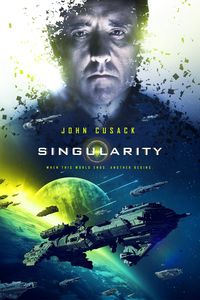
    Singularity (2017)

    (On Cable TV, March 2020) Someone should tell Singularity’s writer-director Robert Kouba some harsh truths: Big ideas, adequate special effects and one headlining star do not ensure a good science fiction film. Especially when the star is John Cusack, who’s been sinking deeper and deeper in the undistinguished morass of straight-to-streaming far of the past decade. Not when the film is blandly executed with trite dialogue, implausible worldbuilding, awkward staging and extremely familiar tropes. A look at the film’s production history is instructive, as Singularity was initially shot in 2013, and then retooled with a Cusack-starring framing device years later—almost certainly an attempt to salvage existing footage into a sellable property. The stitches certainly show, with the Cusack AI-introducing segments being slightly more interesting than the somewhat humdrum central post-apocalyptic quest narrative of the bulk of the film. Oh well: exactly no one will be surprised to learn of a low-budget Cusack film being terrible nor of a low-budget film whose high concept is badly executed. Still, I wonder — What happened here?

  • The Omen (2006)

    The Omen (2006)

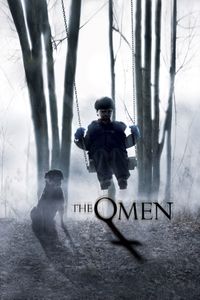
    (In French, On Cable TV, March 2020) Exactly no one will be surprised by this remake of The Omen, and it almost seems by design—More akin to a theatrical revival than a new movie, this update changes very little to the 1976 script (to the point where original screenwriter David Seltzer got the sole writing credit respite a few rewrites without his input!) and essentially updates the actors, cinematography, direction and setting to 2006 standards. As a result, it does feel slicker than the original (the dog attack sequence isn’t quite so ridiculous, for one thing) but loses almost all of its authenticity… if that’s the right word. Not that I’m a big fan of the original—which may account for my not-pleased-nor-displeased disposition toward this remake. It’s almost interesting (like the 1998 Psycho remake) to see essentially the same script given a new coat of paint and taken out for a spin. If nothing else, a double bill of both the original and the remake, while tedious, would be instructive as to how filmmaking evolved in three decades even as the themes of the original have held up. Going back to the theatrical revival analogy, well—why not? For director John Moore, isn’t it better to redo what seemed to work well in the first place than to take chances with modifications that don’t pan out? Despite my lack of affection for the original, it’s rather neat to see Julia Stiles, Liev Schreiber and Mia Farrow step into these well-established roles for a film. It’s not that good, but then again: The Omen’s over-the-top histrionics can be reasonably entertaining, and if the remake doesn’t bring anything new, maybe it does have familiarity to its credit—although by 2020, with immense streaming libraries that can include the original, it remains to see whether there’s a reason for 2006’s The Omen to exist. Aside from, let’s admit it, the rather amazing “2006-06-06” release date.

  • Pygmalion (1938)

    Pygmalion (1938)

    (On Cable TV, March 2020) Anyone with some awareness of the much-better-known film My Fair Lady will find themselves in familiar territory, narrative-wise, with Pygmalion. Adapted from George Bernard Shaw’s theatrical urtext of “lower-class person being successfully groomed to high-class,” this film codifies the trope that would then be reused in many imitators, including the My Fair Lady musical. As such, Pygmalion can feel laborious to modern viewers, as it runs through predictable plot developments and feels almost identical (minus the songs) to the later musical comedy. It’s still serviceable, however: the quality of Shaw’s dialogue remains, and the breezy comic style does help distinguish this film from many other literary adaptations of the 1930s. Still, Pygmalion does pale in comparison to its inheritors and imitators—and I say this as someone with no particular fondness for My Fair Lady.

  • The First Wives Club (1996)

    The First Wives Club (1996)

    (On Cable TV, March 2020) I read nearly everything by author Olivia Goldsmith before her life was cut short by complications following plastic surgery (an irony for the ages, considering that her novels were all about middle-aged women becoming comfortable with their own aging), and The First Wives Club was not only her first, but perhaps her most representative novel as well. Here we have three “first wives” teaming up to take out their ex-husbands after many transgressions. The adaptation is a rare opportunity for middle-aged actresses to have great memorable roles, and much of the fun of the film consists in seeing Bette Midler, Goldie Hawn and Diane Keaton tear up the scenery as they wreak revenge. The lead trio is complemented by an impressive supporting cast of known actors — some of them before they became famous, such as Sarah Jessica Parker. The First Wives Club is not a subtle film, and the social commentary can be blunt, but it’s part of its charm that none of the ex-husbands is anything but irremediably evil and that the heroines exert nothing but righteous retribution for a litany of sins. It’s actually fun in its own way, even if the film is intended for middle-aged women.

  • Anna and the Apocalypse (2017)

    Anna and the Apocalypse (2017)

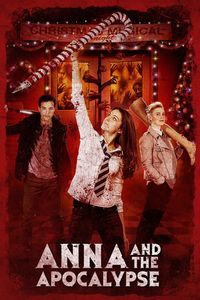
    (Netflix Streaming, March 2020) I liked Anna and the Apocalypse, but it’s a shame I couldn’t like it more. A blend of zombie film, senior high school drama, Christmas setting and musical comedy, this is a film that clearly operates in its own specific reality, with gore vying with songs as highlights. We’re clearly so far along the rise and fall of zombie movies by now that it’s a wonder there haven’t been more zombie musicals until now, and this one does nicely, never compromising on either the musical or the horror halves of the result. Ella Hunt is not bad as the titular Anna, although she regularly gets the show stolen from her during musical numbers—Marli Siu delivers a blistering take on saucy Christmas songs with “It’s That Time of Year,” while Ben Wiggins has a strong showing during “Soldier at War.” As a fan of classic Hollywood musicals, however, I’m not quite as happy with Anna and the Apocalypse as I should be, and I suspect that this has a lot to do with the bleak ending. I can’t say I wasn’t forewarned — “Hollywood Ending” is all about not expecting the best. But even so, the final body count is too high, and made even worse by the school’s headmaster being a cartoonish antagonist that could have been removed without much alteration to the rest of the story. Zombies are terrible enough—why throw in a human antagonist? The ending barely showcases any hope, and that seems like a miscalculation even for a horror musical. Still, Anna and the Apocalypse is worth a look, especially for horror crowds looking for something just distinctive enough to be interesting.

  • The Swarm (1978)

    The Swarm (1978)

    (On Cable TV, March 2020) Killer-bee movies were a surprisingly robust trend in the late 1970s, with at least three of them on the record—clearly a case of Hollywood taking a new striking idea and then beating it into pulp. None of the killer bee movies are acknowledged as being any good, but big-budget The Swarm actively pushes into ridiculousness at times. Masterminded by master-of-disaster producer-director Irwin Allen, The Swarm follows the then-much-anticipated deadly bees as they make their way north to Texas, and proceed to outwit all humans. To be fair, and this is part of the film’s unique “charm,” the human characters are all singularly stupid here—up to and including panicking hard enough to (somehow) a blow up a nuclear power plant. Who needs killer bees when kids think it’s a good idea to set bees on fire, when train drivers cause derailments at the slightest sign of panic, when military officers think it’s a good idea to torch Houston? In keeping with other 1970s disaster movies, the cast is a remarkable mixture of new faces like Michael Caine (struggling helplessly against the material), and Classic Hollywood veterans, such as José Ferrer, Slim Pickens, Henry Fonda, Fred MacMurray, Richard Chamberlain and Olivia de Havilland. Such an undignified mark on their resumés… although they, too, must have hoped that the film would be as successful as Allen’s previous disaster movies. Alas, it wasn’t so: Audiences were indifferent to The Swarm, and critics were savage in their appreciation — although the film has since gained a bit of a cult status due to its risible nature. (It was, in many ways, the end of Allen’s career: he never as big of a budget nor recaptured the popular imagination after that.) The Swarm may be a bad movie, but it does remain quite a bit of fun to watch—you can’t help but blink at the inanity on screen and wonder how it got made with such expansive means. It doesn’t end once the credits roll: Just as you start to relax, thinking that you’re over the worst of it, the film hits you with the dumbest, most offensive disclaimer imaginable under the context: “The African killer bee portrayed in this film bears absolutely no relationship to the industrious, hardworking American honey bee to which we are indebted for pollinating vital crops that feed our nation.” Ooof! I watched the film with a friend, and at the end of it said, “I’m glad you were with me through this, because later I will be able to ask you if this really happened.”

  • They Were Expendable (1945)

    They Were Expendable (1945)

    (On Cable TV, March 2020) Hollywood’s World War II years were thick with propaganda films. It seems as if every conceivable part of the US armed forces had a movie or two made about them, usually showing the American soldiers as good people fighting the good fight on behalf of the good people at home. Most of them do have some intrinsic interest for military buffs—even sanitized and simplified for mainstream audiences, these movies usually delight in showing us the way the armed forces operated, and many feature historical footage of real military training or operations. They Were Expendables squarely fits in this category: it’s a look at the introduction of PT boats in the Pacific theatre, featuring John Wayne and Robert Montgomery as clashing officers with different views on the usefulness of those ships—Montgomery as a true believer in the capabilities, while Wayne is cast as the voice of skepticism at the sight of those light, fast boats. The special effects are not bad for the time, as they blend studio footage with what was shot in Florida (a credible stand-in for the Philippines, where the story takes place). While They Were Expendable does have its share of battle scenes, perhaps the most interesting material happens at the PT boat base in repairing and maintaining the ships. Director John Ford seemed to enjoy this movie because the entire film is detailed, credible and enjoyable to follow. Its weakest part, unfortunately, is John Wayne—the film seems to spend far too much time deferring to him, giving him the spotlight and a love interest. (Hilariously enough, the credit sequence is studded with military acronym to represent the service record of the director, actors and crew… except for John Wayne, who never served in the armed forces and so has nothing but his name on-screen.) It’s really interesting that They Were Expendable manages to transform a rout (at the time of the story conception in 1942, the Americans had retreated from the Philippines, vowing to return) into a triumphant film… but this is neither the first nor the last Hollywood production to pull off such a trick. Still, this is a film that still holds some interest today. Thanks to future president John F. Kennedy’s service, there would be other PT boat movies (most notably PT-109), but none with as much credibility in showing the way men dealt with those new ships—part of it has to do with how They Were Expendable takes a break from the battle to talk about operational issues.