Month: March 2020

  • Gambit (1966)

    Gambit (1966)

    (On TV, March 2020) Part of my curiosity about Gambit was comparing it with the little-seen, somewhat-dismissed 2012 Coen Brothers remake. As it turns out…, those might as well be two different films. There are a few decades’ worth of filmmaking differences between the two, obviously, but also a complete change of setting (the remake takes place in England—the original in Hong Kong) and, frankly, almost the entire plot as I remember it. So, anyone who thinks that seeing the remake is good enough will get plenty of surprises with this original. The opening half-hour of the film is immediately interesting, as a caper unfolds… and then the rest of the film doubles back on the opening act to extend and subvert it. Michael Caine is up to his very high 1960s standards here (albeit a bit more clownish than usual), while Shirley MacLaine, never my favourite actress, is surprisingly entertaining. There are enough twists and turns here to make Gambit a pleasant heist romantic comedy, and one with a great period atmosphere (admittedly bordering on orientalism) by twenty-first century standards. It’s well worth seeing, even by the cinephiles who are familiar with the remake… because it’s really not the same film at all.

  • Les Misérables (1935)

    Les Misérables (1935)

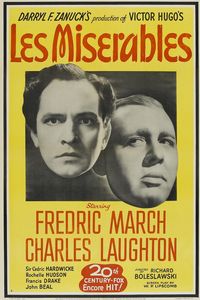
    (On Cable TV, March 2020) A few reasons explain why Hollywood was churning out so many adaptations of classic works of literature in the 1930s. For one thing, it suddenly could—the arrival of sound meant that dialogue could be used without interrupting the flow of the film with title cards. For another, keep in mind that the movie industry had been born out of vaguely disreputable origins by moguls marginalized from the more respectable sectors of American industry—as a result, they were eager for cultural recognition as purveyors of fine arts, and adapting classic novels was a shortcut to that. Thirdly, such films were great showcases for the many disciplines of studio cinema—set-building, costumes, makeup and classical actors. Fourthly, but not lastly, such films had a built-in audience: the classics were part of the curriculum, audiences could recognize familiar titles and Hollywood made money. Considering all of the shortcuts that were often taken at the time (simplification of plotting, if not outright amputation; iffy special effects; acting taken straight from the stage), it’s a wonder that many of them turned out to be quite good, even to today’s audiences. And that finally takes us to the 1935 version of Victor Hugo’s Les Misérables, which somehow manages to cut down the massive original novel into something adequate within 103 minutes, featuring great production values and able actors like Fredric March and Charles Laughton in lead roles. While this is in no way a faithful adaptation, it’s a well-executed costume drama for the masses, and part of the film’s fun for those familiar with the Hugo novel are spotting the ways in which the story was cut to fit. While purists will howl, the result is rather entertaining—even today.

  • Lust for Life (1956)

    Lust for Life (1956)

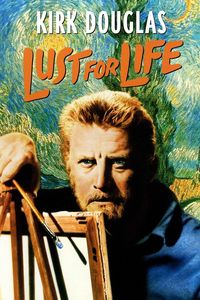
    (On Cable TV, March 2020) Kirk Douglas is quite a revelation in Lust for Life, surprisingly good at playing Vincent van Vogh as a tortured-artist archetype. (And if that’s not enough, you also have Anthony Quinn playing Paul Gaugin, because why not?) His red hair and beard are as striking in Technicolor as the artist’s vivid paintings, even if Douglas’ energetic performance is apparently not quite the right fit for the reserved painter. But let’s be clear—this is a Classic Hollywood biopic movie made in the 1950s by Vincente Minelli—there’s no way it would be melancholic, realistic or even accurate. This is l’artiste as presented to the moviegoing masses as a big weirdo, and it’s enjoyable even if we suspect that’s it’s complete bunk. Production values are high, the acting duet between Douglas and Quinn is quite good, and the paintings are given centre stage, so that’s that. If you’re particularly concerned about authenticity, there are many other Van Gogh movies out there—this one is best taken as an opinionated take on familiar material, with the gloss of a mid-1950s studio production.

  • Yesterday (2019)

    Yesterday (2019)

    (On Cable TV, March 2020) There are plenty of reasons why I wasn’t expecting to enjoy Yesterday as much as it did. After decades of baby-boomer cultural control, I’m slowly getting to the overdose point of boomer nostalgia, and you can’t really get any further on that path than a film that imagines what a disaster it would have been had the Beatles never existed. Both writer Richard Curtis and director Danny Boyle were born in 1956—and boy does the film make more sense when you remember that. It doesn’t help that major movie studios are currently churning out pop-music biopics one after the other, often writing them along the same template. Fortunately, Yesterday does exceed low expectations: Having Himesh Patel is the lead role certainly helps, as he brings his charisma to the part of a struggling musician who, overnight, finds himself to be the only person on Earth able to remember the Beatles. (Don’t think too hard about that premise—there’s a big electrical storm, head trauma and then we’re in a parallel Beatles-less universe. This isn’t supposed to be rigorous science fiction.) The comedy of the film revolves around the protagonist recreating Beatles tunes from his own memories (to mixed success in some cases), or whipping out the songs in various contexts and nearly everyone else falling to their knees in disbelief. Affirmed rather heavily is the idea that Beatles songs are so good that they impose themselves out of context, which I find to be rather self-serving in a film built entirely on pattern recognition. (No, Yesterday is absolutely not interested in exploring how much popular success is blind luck in capturing the cultural zeitgeist and then building upon that—although this was reportedly part of the original screenplay later reworked by Curtis.) There’s a perfunctory romance, a not-too-bad supporting role for Ed Sheeran and a pat but somewhat satisfying conclusion. In the end, Yesterday is less objectionable than many of the jukebox movies we’ve seen lately, a bit wimpy for shying away from further exploring the potential of its premise (the trailer goes farther than the film does), and yet rather successful in its execution. It doesn’t have much to say about its own central idea, though—playing it safe in an almost pathological fashion.

  • Life Like (2019)

    Life Like (2019)

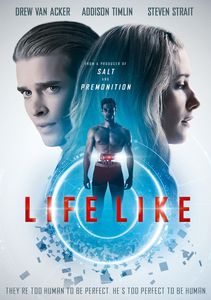
    (On Cable TV, March 2020) Every so often, a low-budget science fiction film just gets stuck in my craw. Most of the time, it’s because the filmmakers involved don’t understand the subtleties of Science Fiction as well as your average SF prose writer, and think that the genre is just an excuse to say anything without rigour. (The contrary is true—since SF has anything-goes potential, it has to be more rigorous in order to get people to accept its deliberate deviations from reality.) That’s how we end up at the confounding, somewhat obnoxious Life Like—A Science Fiction thriller that actually doesn’t have the guts to remain Science Fiction, but boldly reinvents obvious ideas while it still pretends to be. (Unlike the film, I won’t try to deceive you: Spoilers are coming… so prepare yourself.) From the first moments, it’s obvious that writer-director Josh Janowicz’s film is going to be ham-fisted and detestable, but the true magnitude of it only becomes apparent later. The characters are unlikable from the get-go (what with the female lead firing servants without consulting her husband, but then interrupting him at work with substantial entitlement) and the plot only gets more vexing when this ultra-rich couple gets themselves an android as a servant. The script barely makes sense at this point, but just wait—it’s the good old story of a boy and a girl getting an android, and then getting into all sorts of psychosexual shenanigans. If you’re thinking “ménage à trois,” congratulations—you’re smarter than the script’s third act, which (after making a fuss about how androids are better than humans) finally reveals that the android… is really a human? Wait, what? The film’s clunkiness implodes on itself at this point: why should we care about such a terrible film so ill-conceived from the get-go? It’s not a third-act twist—it’s nonsense that doesn’t even fit with the thematic concerns so badly articulated in the film’s first two acts. Life Like, ironically enough, is fake from beginning to end—in conception, in characterization, in execution, in themes, in plot, in progression. The third act becomes a thriller that barely resolves anything nor builds upon earlier themes of slavery, psychosexual desire and misguided religious symbolism. It’s so terrible, it would have been vastly improved had it been made as a pornographic film.

  • The Lodger (1926)

    The Lodger (1926)

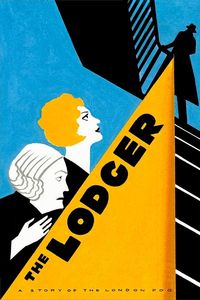
    (On Cable TV, March 2020) Director Alfred Hitchcock had a very long career, and it’s movies like The Lodger, his third feature film and arguably his first suspense movie, that drive the point home. Produced at the height of the silent movie era, it’s far closer to the ideal we have of silent movies than Hitchcockian ones, with the title cards, broad overacting, static cameras and tepid simplistic plots we associate with the era. It is, as a result, far more interesting to put in context than as an actual movie by itself—although I’ve seen far worse from the era. For Hitchcock historians, The Lodger does have its fair share of attraction—it clearly heralds the director’s favourite motifs of an innocent man at the wrong time, echoing Suspicion and The Wrong Man later on. (Although the perspective is far closer to the first film in at least entertaining some ambiguity as to the alignment of the protagonist.) Compared to other silent films, there is some panache in the way Hitchcock leads his film even at this early juncture in his career. Considering all this, The Lodger is best suited for Hitchcock or silent-era completionists.

  • Tequila Sunrise (1988)

    Tequila Sunrise (1988)

    (In French, On TV, March 2020) Considering the star-power on display in Tequila Sunrise, I was expecting quite a bit more than an overly convoluted love triangle between law, crime and a pretty woman. Writer-director Robert Towne has a history of complex plotting, of course, but penning Chinatown isn’t quite the same as the overcooked, overlong disappointment that we have here. Paradoxically, the film would have been better (or at least closer to expectations) had it not featured Mel Gibson, Kurt Russell and Michelle Pfeiffer in the main roles—their natural charisma is such that we expect a lot more from this trio than the somewhat humdrum drama that follows. (It’s technically a thriller, but there’s clearly more of an emphasis here on romantic drama rather than suspense or action.) Still, anyone will have to admit that the film occasionally has a few strong moments, and fully leans into a wonderful 1980s California noir kind of aesthetics. The plotting is complex enough to be engaging, and the re-use of noir archetypes is fun if you’re familiar with the tropes. Tequila Sunrise remains a disappointment, but at least it’s a good-looking one.

    (On Cable TV, August 2021) If I had more time and intelligence, I would probably try to poke at the notion of performative cinema – if that’s the right word for it: Movies that don’t relate to the real world as much as they take bits and pieces from other movies and then try to perform those bits as maximally as possible. Melodrama of cinema, perhaps? Suffice to say that calling Tequila Sunrise as neo-noir is putting things mildly: it lifts and tweaks and reuses entire swathes of film noir, relying on big-name actors and glossy cinematography to paper over some glaring plot issues. Prime-era Mel Gibson and Kurt Russel play old school friends who are now on opposite sides of the law, with the cop being more devious than the criminal trying to go straight. In-between them is Michelle Pfeiffer as nightclub, er, restaurant owner playing both men’s romantic affections. And then there’s a greater-scope villain hovering over everything in a way to make the cop justified and the ex-criminal more likable. Set against golden-hued (i.e.: smoggy) Los Angeles, it’s often beautiful to look at but close to nonsensical once you start taking a look at the details. Fortunately, the film makes up in charisma what it lacks in plausibility: by the time a terrific Raul Julia steps into the movie, his garrulous performance more than excuses the plotting problems that come with him. Tequila Sunrise may not make much sense, but it’s very entertaining and a truly fascinating piece of second-order cinema taking its cues from other movies. It makes perfect sense in a neo-noir retrospective – with the caveat that it may lead to an appreciation of the film largely tinged with irony and references to older cinema.

  • Get Carter (1971)

    Get Carter (1971)

    (On Cable TV, March 2020) Lean, gritty and very mean, Get Carter pushed the British gangster film into neo-noir, offered a career-high Michael Caine showcase and launched writer-director Mike Hodges’s career… and spawned quite a few imitators in the following decades. Caine stars as a driven mobster, rampaging through the Newscastle underground to avenge the murder of his brother. As befit an early 1970s crime film, Get Carter gleefully unshackles itself from the restraints of earlier cinema to deliver a still-unpleasant crime tale filled with rough violence, anti-heroic characters and troubling questions. Even the bleak ending hardly offers any comfort for the viewers. But what was considered almost insupportably nihilist at the time had aged nicely into a harsh neo-noir, considerably bolstered by Caine’s tough performance. Hodges’ style here is not that different from the British kitchen-sink dramas of the neo-realistic era—everything is gritty and grimy, decidedly unglamorous all the way to a coal-stained ending. It’s not an exaggeration to say that Get Carter is now a classic British film of its era. Twice (horribly) remade, Get Carter had more influence in inspiring other British directors to tackle crime-themed thrillers—but arguably so much so that anyone going back to the original may find themselves wondering what it’s all about, so often has it been copied and remixed.

  • The Great Rupert (1950)

    The Great Rupert (1950)

    (On TV, March 2020) Look at that — The Great Rupert is almost a movie made for me! Jimmy Durante and a pet squirrel rendered to life thanks to George Pal’s special-effects work! Admittedly a family film made to wow Christmastime audiences, The Great Rupert is rather cute and harmless. The plot has a hyper-intelligent squirrel helping out an impoverished family by redistributing a cache of money stashed by a miserly neighbour. Part of the film’s attraction is Pal’s animation work—this was his first film as a producer, right before Destination Moon made him the first Science Fiction/Fantasy film mogul. The stop-motion special effects are charmingly quaint by now, and there’s Durante’s distinctive comic styling (even if subdued and scarce) to bring a touch of further interest to the rest. Now in the public domain, it’s not difficult to find a copy of the film to stream—although getting a high-quality one may require more work. The Great Rupert is not that good of a movie, but it does have a few distinctions going for it—I mean, there aren’t that many movies featuring squirrels as main characters.

  • Party Girl (1958)

    Party Girl (1958)

    (On Cable TV, March 2020) There’s a truly fascinating mix of ingredients in Party Girl: Cyd Charisse with a meaty dramatic role (her last contract role for MGM—indeed, one of the last contract roles in the entire studio system), director Nicholas Ray bringing his usual set of skills to a rather conventional story; Lee J. Cobb as another mobster; and Robert Taylor in a noticeably more dramatic role than usual. Some musical numbers, a few Prohibition-era plot points inspired by real life, expensive colour cinematography, expansive sets, and a plotline that gleefully mixes organized crime, barely-repressed prostitution, crooked lawyers and nightclub showbiz. By all rights, this should be quite a movie—alas, Party Girl merely settles for being just fine. It’s certainly watchable, and Charisse gets one of her last big-budget roles here—but most of the time, it fails to meet expectations as more than a standard mob-nightclub riff. Ray’s direction is competent, but fans of his deeper films may find something missing here. Maybe there’s too much going on; maybe it’s just not made of strong-enough writing. Maybe the actors were just a bit past their prime—no matter why, Party Girl is entertaining without being as memorable as it should be.

    (On Cable TV, June 2021) Frankly, I expected more of a gangster musical comedy featuring Cyd Charisse, director Nicholas Ray and a plot that brings together a fusion of chorus girls dance sequence and mobster drama. But Party Girl does not feel quite like a musical (too few musical sequences), nor quite a noir (there’s a happy ending), not quite a romance (not showing much heat between lead Robert Taylor and the notoriously restrained Charisse) and not quite a comedy (viz the criminal element not played for laughs). It is occasionally well directed and photographed in impressive colour, but somehow the elements don’t quite mix well. There’s probably an issue in Party Girl coming from the late-1950s, at a time of creative exhaustion by the studios (as per the film’s rote musical sequence, aware that the musical was fading away but not quite knowing what to do instead) but also an increasingly unworkable production code that couldn’t allow filmmakers to go where the story needed to go creatively. It’s certainly watchable, but also disappointing in the way it doesn’t fully use the material at its disposal. In many ways, Party Girl is more interesting as a last gasp of the MGM studio system (this was Charisse’s last film under contract and the next-to-last film for Taylor’s contract – they were the last two stars in the MGM firmament) than by itself.

  • Dark Star (1974)

    Dark Star (1974)

    (Criterion Streaming, March 2020) Ugh. It’s with no pleasure whatsoever that I emerge from Dark Star reporting no pleasure whatsoever. Sure, I know it’s a classic reference in SF film history—writer-director John Carpenter’s debut, an oddball humorous critique of spaceship movies before spaceship movies became mainstream, and a definite cult classic considering its absurd black humour and downbeat ending. But when one says “cult classic,” one must hear “not for everyone” or perhaps “best suited to a specific time”—Dark Star, in its low-budget technical roughness and coarse execution only one step beyond a student film, is perhaps more remarkable now for what it inspired than for what it is. The links to Alien are obvious thanks to the working-class shipboard atmosphere and co-writer Dan O’Bannon’s signature on both scripts. But influence is not always correlated to original quality—sometimes, something is striking because it’s new, and then the newness fades as copies pullulate. Sure, I’m glad to strike off Dark Star from the list of landmark SF movies I hadn’t yet seen—but I’m done with it. And I can’t even blame the technical roughness of the copy I watched, since it came straight from best-in-class Criterion.

  • Harlem Nights (1989)

    Harlem Nights (1989)

    (On TV, March 2020) Much maligned upon release as a vanity project for Eddie Murphy to become a writer-director, Harlem Nights is far from being an unimpeachable film… but it does have a few strengths. The recreation of 1930s Harlem as a playground for Murphy and co-star Richard Pryor has its good moments, and you simply can’t deny the interplay between both stars. There’s something to be said for Murphy having the clout to tell an expensive historical black-themed story at a time when such projects were rare, and you can see in Harlem Nights the bare bones of a much stronger project. But the entire thing generally deflates in-between the highlights. Part of the problem is Murphy falling back on familiar crutches the moment the project starts threatening to become too big for him—the braying laugh, the cheap jokes, the stand-up-inspired dialogue. It prevents Harlem Nights from becoming its own creation—a co-writer (or another director) would have done this film a world of good. Still, don’t believe those who maintain, long after the need to keep Murphy’s then-rampaging ego in check, that the film is ridiculous or worthless. It’s disappointing and evocative of a much better movie, for sure, but it’s still worth a look if you’re a fan of either stars, many of the surprisingly impressive supporting actors, or the trajectory of black cinema in the 1980s.

  • The Ipcress File (1965)

    The Ipcress File (1965)

    (On TV, March 2020) The 1960s were a golden age of sorts for spy movies, obviously buoyed by the runaway success of the James Bond franchise in the early years of the decade—but while a lot of the straight James Bond imitators were quickly forgotten by time, what gets remembered are those bandwagoners that tried something slightly different. The Ipcress File, in retrospect, has a lot of enviable pedigree—Adapted from a novel by Len Deighton, who later became a reliable bestseller, it also stars a young Michael Caine—and I don’t need to tell you about Caine’s later career. The links to the James Bond movies were closer than most, in that many crewmembers and producers had some involvement in early Bond instalments. But what The Ipcress File does rather well is taken an approach markedly less entertainment-driven than Bond—a sordid tale of brainwashing, glum atmosphere, accidental friendly fire, overwhelming paperwork, an unreliable protagonist and less-than-benevolent hierarchical superiors. Still, the filmmakers aren’t going for audience alienation: If The Ipcress File is still well worth a watch today, half of it is due to Caine’s pure coolness behind square black glasses—a mixture of droll bon mots, assured physicality and his undeniable star quality. It’s markedly murkier in theme and tone than the Bond films and, as such, stands quite well on its own. Now, what’s this about sequels?

  • Rabid (1977)

    Rabid (1977)

    (On Cable TV, March 2020) Considering that the current international headlines are all about a global pandemic, watching writer-director David Cronenberg’s Rabid isn’t so much mindless fun right now. This being said, even if Rabid is definitely about a zombie epidemic going out of control, the ongoing coronavirus pandemic is unlikely to attain the wild body-horror madness of Cronenberg’s take on a (now) well-worn trope—by the time the heroine (played by porn star Marilyn Chambers) has a phallic appendage growing out of her armpit and motivating her to feed on human blood, well, I feel confident that we’re some way away from even the most horrible reality. What I liked most about the film, however, wasn’t its horror aspect as much as setting and atmosphere—loudly and proudly taking place in late-1970s Montréal, it features eye-catching details of the era and a fun “feels like my childhood” quality to an otherwise humdrum story. But unless you were born within three years and two hundred kilometres from Rabid’s production, I can’t quite promise the same kind of inherent interest. Otherwise, it’s an early Cronenberg, tackling a now-overexposed topic and doing it in a typically Cronenbergian way—which either counts as an advantage or a distraction.

  • McQ (1974)

    McQ (1974)

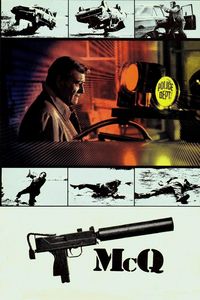
    (On Cable TV, March 2020) John Wayne doing Dirty Harry is pretty much the unholy union of two heave-inducing flavours in one detestable package. The creepy uncle of Classic Hollywood taking on the vigilante fantasies of New Hollywood is far from being the most compelling premise. And Wayne does show up in McQ as an old and bloated cop, shooting corrupt policemen as part of a sombre drug conspiracy. Since the entire film rests on his shoulders, it’s nearly a miracle if it eventually settles for being an average and forgettable affair—a middle-of-the-road neo-noir with local Seattle colour, redolent with 1970s atmosphere but dragged down by a wholly inappropriate lead actor. He’s old, he looks stupid by making dumb cracks about “women’s lib” and is generally treated with undeserved reverence by director John Sturges. But hey—Wayne was a relic of a past era by 1974, and certainly feels like it here too: no fancy car nor big gun can compensate for this 65-year-old having trouble with even the most elementary of action hero business. McQ is certainly distinctive, though—After seeing young upstarts Eastwood and McQueen having their own action movie thunder, old Wayne wanted his, and the result speaks for itself as an indulgence.