The Jazz Singer (1927)
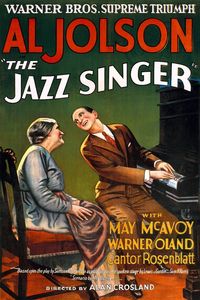
(On Cable TV, April 2020) So… just so that we’re clear—the first sort-of-not-silent film is one that stars a white guy who made an entire career out of blackface? That’s the legacy we’re talking about? Birth of a Nation as the first film shown at the White House, and the first talkie as a showcase for black cultural appropriation? All right then. No, The Jazz Singer is not the first full talking film—it was designed as a silent film, then rushed through then-experimental sound production segments in order to wow audiences, but it’s not the first full sound film, as it’s largely silent-ish with only a few songs and talking sequences (“Wait a minute, wait a minute, you ain’t heard nothin’ yet!”) making up maybe a quarter of the film. Much of the dull narrative is narrated through title cards, and focuses on a protagonist torn between his strict Jewish father and a career in showbiz. While there’s nothing wrong with that premise, it’s just that… well… the film’s headliner is Al Jolson, who became famous for doing blackface. A lot of undeniable, unsubtle blackface. What softens the blow, slightly, is that blackface in this narrative stands for something a bit more than racist jokes and appropriation; it’s the protagonist (Jewish and so different from the mainstream, if that helps) distancing himself from himself, and paradoxically affirming whiteness by exaggerating blackness. In other words: It’s not quite so simple by the standards of 1927, although you can take a shortcut to problematic in 2020. Of course, such cultural analyses are wasted in talking about the film that launched the talkies—it wasn’t so much the technology as the public’s enthusiastic approval of the technology that sealed the fate of silent films. Within a mere three years, the vast majority of Hollywood switched to sound films and never looked back. (Incidentally, it made Warner Brothers go from near-bankruptcy to a major studio.) It probably would have happened without Al Jolson and The Jazz Singer, but the more you dig into the film and what it meant to the Warner Brothers, the more you understand why it was a near-perfect launching pad for talkies. Still: it’s now of historical interest only.