The Wife (2017)
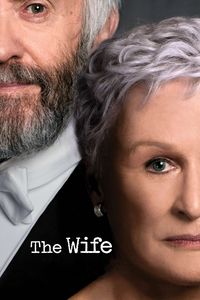
(On Cable TV, June 2020) It’s about time that I admit that for all of my so-called progressive sympathies, there’s always going to be a core of reactionary (I’d argue contrarian) impulse somewhere in my system. At its worst, The Wife toys directly with that core, although I’m not sure how much of my reaction is about the movie, and how much of it is due to the acclaim it got as a Grand Statement. But let us summarize: a 90-minute-long extension of the old “behind any great man there’s a great woman” saw, The Wife stars Glenn Close as the long-suffering wife of a celebrated American writer who learns that he’s just won the Nobel prize for literature. The trip to Stockholm proves more dramatic than expected once the façade is stripped away: It turns out that he’s a serial philanderer and that she’s been writing most of the books. I am, going back to my contrarian core, getting a bit tired of the wave of works going out of their way to bash achievements from white men by revealing (egad) how the achievements were, really all about some oppressed minority doing all the work. At this point, it feels like clichés and lazy storytelling, and so the most interesting bits of The Wife don’t simply show her doing the work, but hint at a complex relationship in which husband and wife both have something that only the other can fulfill despite there being only one name on the cover. An exploration of that would have been a bit more nuanced and interesting than the rather trite ending that follows. Still, despite my contrarian knee-jerk reaction, I did like the film a lot—Close is quite good in the lead role (she did get an Oscar nomination out of it) and Jonathan Pryce does play the crusty old veteran writer with some panache. What’s more, Christian Slater has a plump supporting role. I am a sucker for movies about writers, and this one does have some fun with that conceit, even though most sequences about women’s writers do feel on the nose. I would have liked The Wife more if it had just gone off its high horse and started poking and the complexities of its own premise. But that would have led to a far less message-driven movie, right?