Amityville II: The Possession (1982)
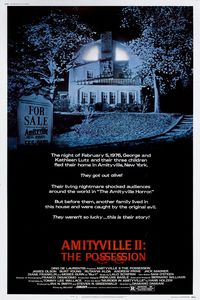
(On TV, October 2020) There are two movies in Amityville II: The Possession and neither one of them is particularly good. Aping the first film but dispensing with the fiction that it’s adapted from real events, this sequel has us returning to the iconic house alongside a family just moving in. But there are darker forces at play, and the first half of the film is just the house messing around the family with special effects gratuitously thrown in without much coherence. When the house is done showing off, it moves to the more serious business of possessing the family in order to get them to argue, hit each other or have siblings have sex together. But don’t get your hopes up for anything interesting: this part of Amityville II plays likes a humourless copy of Poltergeist having forgotten all about narrative coherency or moment-to-moment entertainment. By the time that our possessed young man finally does what the house wants it to do, the film shifts in its second form by shifting the focus on a Catholic priest intent on exorcising the demon inside the younger man and purging the house of its satanic influences. Alas, Amityville II is far less interesting than it sounds as it throws Poltergeist overboard and sets its target on stealing as many things as it can from The Exorcist. Except, again, without any clue as to why those movies worked. The result is so incredibly familiar to the point of being contemptible for not even doing a good job of hiding its influences. None of the actors do particularly well (although Burt Young has one of his few roles as a villain) and while some of the special effects are decent, they’re wasted in a film that doesn’t know what to do with them. Even then, I think I like this sequel slightly better than the first Amityville because it’s a bit livelier and does not even try to claim that it’s based on a true story. But it’s a fine line and I’m not exactly claiming that the improved result is anywhere near good. Reading about Amityville II’s production makes it clear that this was a quick cash-in with little production time—no wonder about the results.