Moby Dick (1956)
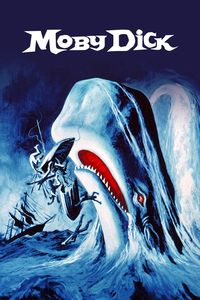
(On TV, October 2020) Considering the central place of Herman Melville’s Moby Dick in the American literary canon, any film adaptation would be an ambitious undertaking, roughly akin to Captain Ahab’s maniacal quest for the Great White Whale that maimed him. It’s hard to imagine a better director for that gigantic endeavour than a middle-aged John Huston, considering the ways his directorial style has been described. In some ways, this adaptation is quite good: With novelist-screenwriter Ray Bradbury cracking the case of adapting a very long book into a movie, the script is not bad. Some very good production means (for a mid-1950s movie) have gone into recreating the world of a whaling ship and the gigantic animal they intend to fight. Where Moby Dick doesn’t do as well is in a small but crucial detail—casting. Specifically, the casting of Gregory Peck as Captain Ahab—look, no one ever dislikes Peck, but he is far too well-mannered to be an effective Ahab. You want someone able to spittle around their grandiose rants, with crazy eyes and stabby hands. In other words: Not Peck. It’s not that he’s bad, it’s just that he’s not close enough to the ideal version of the character. This is driven even deeper with the knowledge that John Huston was right there, behind the camera rather than in front of it. Or that Orson Welles shows up briefly for a cameo but not as Ahab. Too bad—with a fresh coat of CGI paint and another lead actor, this Moby Dick could be much, much better.