Month: November 2020

  • Nitro Rush (2016)

    Nitro Rush (2016)

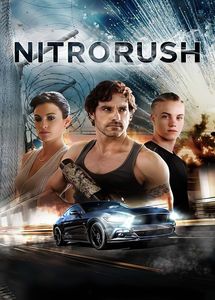
    (In French, On TV, November 2020) I wasn’t all that fond of the first Nitro film—despite good technical production values and the ambition to deliver something akin to the Fast and Furious series in a French-Canadian context, the film erred by going ludicrously melodramatic and not quite understanding the balance between pathos and action. The sequel isn’t quite as atonal, but it still suffers from many of the issues of the original. Guillaume Lemay-Thivierge is back in action as a man with a substantial potential for violence, escaping from prison to go rescue his now-grown son from the influence of a crime gang selling fatal drugs. There’s a little bit more to this, however—As the script dumbly chooses to conceal (despite it being obvious from the start), he’s really working to infiltrate the gang. Nitro Rush is far better once it gets down to the nitty-gritty of its action sequences, swapping the urban jungle of Montréal for the rural backwoods of Québec as the characters try to sneak into a synthetic drug lab in the middle of nowhere. A car testing sequence is awkwardly inserted in the middle of the film to remind us that the first film was heavily in nitro-powered racing, but otherwise the pickup truck is the vehicle of choice here (including a rather good shot in which a pickup races to turn on a rural road). Technical credentials are unusually good for a French-Canadian film: slick direction and capable cinematography do much to paper over the dubious choices made in the script, which pits criminals against criminals and relies on protagonist-centred morality as a substitute for actual moral values. As a film, Nitro Rush is watchable—not quite so irritating as its predecessor, but not quite as ambitious on the action either. Lemay-Thivierge is not bad, but even the conclusion’s promise of further adventures is not really enticing considering that the series has been a half-misfire so far.

  • La morte negli occhi del gatto [Seven Deaths in the Cat’s Eye] (1973)

    La morte negli occhi del gatto [Seven Deaths in the Cat’s Eye] (1973)

    (In French, On TV, November 2020) Giallo goes gothic (as if it wasn’t already) in Seven Deaths in the Cat’s Eye, a serial murder mystery heading for a castle in the Scottish Highlands and its fog-shrouded surroundings. The castle, handily enough, comes with a sinister backstory, hidden passages, a dungeon and an ominous ginger-haired cat that conveniently witnesses every murder that takes place over the film’s running time. (It’s what you should expect from the film’s title!) Stylish, but in a way that’s a bit different from the usual urban giallo excesses, Seven Deaths in the Cat’s Eye feels more interesting than many of its contemporaries… and compares relatively well to newer films in the same vein. The international cast is intriguing and even stars noted French singer Serge Gainsbourg, no doubt because of having his longtime companion Jane Birkin in the lead role. Technically, the film is rough around the edges (something magnified, I suspect, by the muddy dubbed version I’ve seen) and the reliance on atmosphere means that the plot doesn’t seem to move forward until the very end. Still, I expected worse and got something a bit more attuned to my own haunted-house tastes than the usual giallo genre that this film belongs to. Not a bad result for an impulse watch.

  • Hana-bi [Fireworks] (1997)

    Hana-bi [Fireworks] (1997)

    (On Cable TV, November 2020) There’s a stoic restraint to Fireworks that clearly helps make it a critical favourite—an overstuffed tale of a policeman turning to crime as his life implodes, it could have been executed with emotional histrionics, but deliberately chooses to go the other way and understate things until the somewhat grim end. In cinema history, commentators have noted that this choice was all the more surprising given that it was the film that helped writer-director Takeshi Kitano move away from his previous persona as comedian “Beat Takeshi” to a more serious filmmaking reputation. While Kitano denied the conscious influence, Fireworks certainly bring to mind the austere French school of cinema, along the lines of Melville and Bresson. It’s deliberate… and it won’t work for all audiences. At times, Fireworks seems intent on frustrating those used to a more conventional style: it obfuscates the timeline, skips over action beats and downplays everything until we’re left with a contemplative take on dramatic events. It does succeed at its ambitions, but those may not be the ones that viewers would expect—there’s a particularly perverse irony in how you could take the film’s plot summary, give it to another director, and end up with an action-packed crime movie. But that’s not the film that Fireworks tries to be.

  • The Wind and the Lion (1975)

    The Wind and the Lion (1975)

    (On Cable TV, November 2020) A tale of a president and an outlaw, The Wind and the Lion is unconventional—an adventure story about the rescue of a western woman from the Moroccan rebel who kidnapped her, but also a character portrait of that cultured rebel (played by Sean Connery) but also, half a world away, of Teddy Roosevelt in his eccentric glory, as the kidnapping hopes to upset geopolitics. Clearly a passion project from writer-director John Milius, this adaptation of the 1904 Perdicaris affair is deeply unconventional and, at times, a bit messy. My interest varied from scene to scene—while Connery is his usual compelling self, his storyline is often far too lengthy to be wholly interesting. Meanwhile, I couldn’t get enough of Brian Keith’s brilliantly oddball Theodore Roosevelt as he lives and reacts to the developing situation: much of his behaviour is of public records, but it’s fun to see it portrayed on-screen. The reconstitution benefits from a decent budget, and the film does have a few marquee sequences—perhaps most interesting being a scene in which troops march down the streets of Tangiers and intervene in the conflict in a rather surprising fashion. Still, the result feels quite uneven, with high highs and dull lows. The Wind and the Lion is more interesting than usual, but not necessarily successful.

  • Jessabelle (2014)

    Jessabelle (2014)

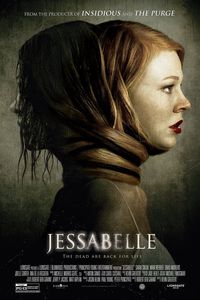
    (On Cable TV, November 2020) There’s clearly something about the bayous of Louisiana that attracts horror filmmakers, and it’s easy to understand why: any place with trees and no ground seems innately spooky to anyone not used to it. Trotting ground similar to The Skeleton Key, Jessabelle also heads to the bayou and a twisted story of possession from the grave, with anyone’s identities not safe from change. Sarah Snook stars as a young disabled woman who discovers spookier and spookier evidence of past supernatural shenanigans as she moves into her estranged father’s house. Jessabelle is not a particularly sophisticated horror film, but it does keep trying. Taking advantage of its Louisiana atmosphere (including some swimming in the bayou), it also goes for ominous videotapes, twisted family histories and disability-specific scares. Snook is up to her usual standards here, often outshining the ordinary material. Jessabelle could have been better, but it does have its high points, and it ends on a somewhat intense note that forgives a lot of preceding silliness.

  • Kong tian lie [Sky Hunter] (2017)

    Kong tian lie [Sky Hunter] (2017)

    (On TV, November 2020) If the United States can have their proudly blunt Top Gun, we’d be churlish to deny China the fun of having its own Sky Hunter. The story ought to feel familiar, what with three pilot friends being brought in (or not) to the Chinese Air Force’s elite “Sky Hunter” unit, and being at the right place once terrorists from a fictional nation take Chinese hostages. The script is a big messy piece of nonsense (who knew that flying helicopters and fighters was a similar skillset?), but it’s put together competently, and believability is not quite as crucial once we see the footage. For western viewers, there’s some weirdness in seeing “enemy” planes being flown by the heroes—The J-11 (very similar to the Russian Sukhoi Su-27) is prominently featured, as are the J-20 latest-generation stealth fighter and Y-20 airlifter. Things quickly head into fantasy land once it gets into the nitty-gritty of its geopolitical tensions, with most villains speaking English even as they play stereotypical terrorists. (This being said, the film isn’t quite as anti-American as you’d think—the inevitable establishing scene between our hero pilots and the intruding American reconnaissance plan is handled with some humour, and one notes that the film features music by Hans Zimmer and shot some material in the United States.) Actress Fan Bingbing may be most recognizable to American audiences given her supporting roles in a few Hollywood movies. The special effects are better than average for Chinese movies, where quantity often takes over quality—and it does lead to a few visually interesting scenes, especially in establishing the film’s framing device. Production values are clearly high, and while the film clearly wants to make China’s military irresistibly cool (whoever designed that star-fox unit logo deserves a raise!), it clearly borrows from the Hollywood box of tricks to achieve its objectives. Sky Hunter, despite a familiar plot, certainly ends up being an interesting viewing experience: It portrays a non-American air force with a great deal of sympathy and competence, and transposes the experience of cheering for heroes onto a different framework. It’s better executed and more engaging than many other Chinese films, and fun enough to watch on its own terms.

  • 2 Lava 2 Lantula! (2016)

    2 Lava 2 Lantula! (2016)

    (In French, On TV, November 2020) It’s a good thing that I was expecting so little of 2 Lava 2 Lantula!—my expectation being somewhere underneath the sub-basement floor, I managed to be slightly surprised by the results. Oh, it’s nowhere near a good movie—the dialogue is terrible and the production values are abysmal. The story (lava tarantulas invade Miami!) has a grandiose panache that is constantly sabotaged by the bargain-bin special effects that don’t even aspire to half-plausibility. A somewhat heavyset Steve Gutenberg returns to headline this sequel to Lavalantula as a veteran actor in low-budget film who has to rescue his adopted daughter from the volcanic arachnoid menace. It all scales up to a building-sized lavalantula threatening downtown Miami, but they clearly didn’t save their SFX budget for the finale either. It’s awful, but at least it has some kind of energy running through it: This Syfy production is equal to the repellent reputation of its house brand, but the script somehow shoehorns a half-dozen references to much better movies, explicitly jokes about low-budget film limitations and seems more willing than most of its contemporaries in going as crazy as its last cent of budget will allow. It’s clearly not refined cinema, but it works better than you’d expect even from a film aping the lessons of the first Sharknado. I’m not recommending it, but I’m here to testify that you won’t hate yourself as much as you’d expect if you do sit through it.

  • Solomon and Sheba (1959)

    Solomon and Sheba (1959)

    (On TV, November 2020) A film can do everything according to the rules and still fall flat, and that’s the way I feel about King Vidor’s Solomon and Sheba, a historical epic that clearly plays by all of the rules of 1950s epic movies yet fails to make a strong impression. Oh, it does have its qualities—Yul Brynner with hair (as Solomon), George Sanders in a minor role, and the incomparably named Gina Lollobrigida (as the queen of Sheba), huge armies clashing in the desert, and a scene with the well-known judgment of Solomon, and the rest of what audiences expected from movie epics over what they could see on household TVs. But compared to other epics, Solomon and Sheba feels somewhat generic—compressing decades of filmmaking in one all-available present, this film appears without much distinction nor grandeur beyond Brynner playing a king. Things get somewhat more interesting once you start reading about the film’s production—the newness of shooting a historical epic in Spain (rather than the more common choice of Italy at the time) pales in comparison to the behind-the-scenes drama that surrounded Tyrone Power‘s sudden death two-third of the way through, and his replacement by Brynner. Very little (if any) of this backstage turmoil shows up on the screen, though, and the result, unfortunately enough, is Yet Another Epic rather than something distinctive in its own right.

  • Bardelys the Magnificent (1926)

    Bardelys the Magnificent (1926)

    (On Cable TV, November 2020) There are two movies melded into one in Bardelys the Magnificent—first, a rather amusing depiction of an incorrigible cad of a marquis with well-practised methods to seduce as many women as he can lay eyes on. It’s not a bad introduction at all, and it feels more amusing than many other silent movies. But as one of the Marquis’ romances turns serious, so does the plot—and then the film moves into its second gear as a pure swashbuckler, complete with sword-fighting and rope-swinging. There have been many other better swashbucklers in Hollywood history, but Bardelys the Magnificent does have its slight charms—I’m not claiming it as essential, though, and it’s perhaps most appropriate for those with some liking for the form and a substantial tolerance for the limitations of silent cinema.

  • Here Come the Waves (1944)

    Here Come the Waves (1944)

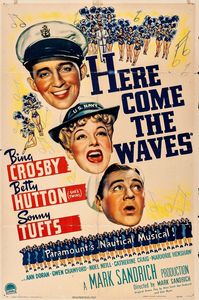
    (Second Viewing, On Cable TV, November 2020) The advantage of a film having, say, Bing Crosby as a headliner is that it can coast on his charm for a long time. Fortunately, Here Come the Waves does have a bit more than that in its assets, including a spirited double performance from Betty Hutton as twin sisters crushing hard on a crooner (Bing, obviously). As with many wartime movies, it’s meant to showcase a very specific section of the military service—in this case, the Navy Women Accepted for Volunteer Emergency Service (WAVES)—along with a big helping of musical numbers. The standout song here is probably “Ac-Cent-Tchu-Ate the Positive,” which, alas, is performed in blackface. That blemish aside, Here Come the Waves is an innocuous, almost unremarkable WW2 musical. There isn’t anything memorable about the result even despite the easy charm of Crosby or the way Hutton acquits herself well in two roles with a fair amount of interaction. It doesn’t do much to impress, but it’s watchable enough, with a few good jokes and musical numbers. Anyone compiling a list of which branches of the US military forces were covered by which WW2 film (it’s a long list) should make a note of Here Come the Waves even if it’s not exactly a very realistic portrayal.

  • Across 110th Street (1972)

    Across 110th Street (1972)

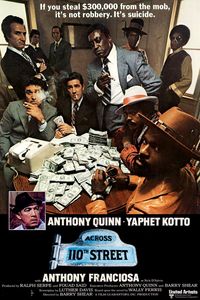
    (On Cable TV, November 2020) If you’re looking for a dark and grimy 1970s crime drama, Across 110th Street is a better choice than you’d expect. While it doesn’t have the gravitas of contemporary New York City thrillers such as Serpico or Death Wish, it’s considerably lighter on its feet, and its matter-of-fact trashiness is more a reflection of the times and place than a lack of ambition. Largely shot on location in Harlem (which wasn’t just a marketing coup, but somewhat risky at the time), this is a story about criminals hitting an organized crime cash drop, and the police trying to catch the murderers before the retaliation begins. The racial element is an integral part of the story, with a racist veteran cop (Anthony Quinn) paired with a younger black policeman (Yaphet Kotto) in order to get anywhere during the investigation. By modern standards, Across 110th Street is not that good of a movie—many familiar elements, unimpressive action sequences, a hackneyed message on racial reconciliation… nothing we haven’t seen elsewhere. But it does have a remarkably effective period feel, starting with its opening theme song, and it moves with a somewhat impressive pacing. Halfway in (or out) of the blaxploitation movement, it’s a bit more upbeat than most urban crime dramas of the time, and not quite restrained by the intentional aesthetic limitations of exploitation films. As a result, it has aged beautifully as a period piece, clearly of 1972 but enjoyable at other times.

  • Baby Face (1933)

    Baby Face (1933)

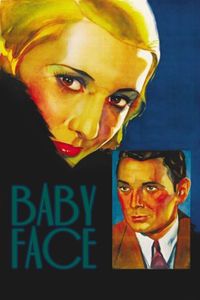
    (On Cable TV, November 2020) Every time I think I’ve seen enough of the Pre-Code era, TCM unearths another example of the period from its archives and I’m left agog at how good 1930–1934 movies could be. To be fair, Baby Face is an exemplary example of the form (“The Citizen Kane of Pre-Code movies,” as it’s been memorably called), with Barbara Stanwyck playing a young woman who uses sex to climb up the social ladder. Through a series of seductions and some incredible chutzpah whenever danger threatens to bring her down, she spends the film going from success to success. There are clear plot similarities here with Red-Headed Woman, as Warner Brother was trying to outdo MGM in the salaciousness department. But Baby Face still has the power to astonish by its very direct references to the lead characters’ carnality and her utter amorality—it’s no wonder that it’s often mentioned as one of the dozens of movies that specifically caused the Hays Code to be imposed on Hollywood in 1934-35. Now that it has been unearthed from the archives (and even included in the National Film Registry!), it’s a welcome reminder that the “innocent” Hollywood of 1935-60ish was an imposed fabrication rather than a representation of people who didn’t know any better. Stanwyck is remarkable here, although, as usual, her role is strikingly different from any of the other movies she’s known for: he managed to evade pigeonholing, at the expense of developing a consistent screen persona like so many of her contemporaries. Elsewhere in the cast, a young John Wayne shows up as one of the seduced men. I was really enjoying most of the film until the ending—after so much status-seeking depravity, it seems a bit cheap to have the protagonist see the errors of her ways at the very end. But that may be asking a bit too much for even a Pre-Code film: a completely amoral ending that respected the character would have been going too far. Still, the rest of Baby Face is definitely worth a look: Pre-Code Hollywood is special.

  • Yoidore tenshi [Drunken Angel] (1948)

    Yoidore tenshi [Drunken Angel] (1948)

    (On Cable TV, November 2020) As heretical as it may sound, I usually like Akira Kurosawa’s films better when they are set in contemporary times. As much as everyone likes Seven Samurais, Rashomon and Yojimbo, I feel closer to Ikiru and High and Low. Drunken Angel, however, is a bit of a mixed bag. Often hailed as one of the first Yakuza movies, it presents a downtrodden, alcoholic doctor working near an urban swamp who eventually gets involved with a figure in the local organized crime scene. It is the first film to pair up Kurosawa with frequent collaborator Toshiro Mifune, as the later plays the small-time hoodlum who seeks treatment from a doctor who won’t ask too many questions. There’s some ambiguity as to who is the protagonist of the story: While much of the film is told from the doctor’s point of view, the hoodlum arguably has the clearest dramatic journey. Filmed in black-and-white in downtrodden areas, Drunken Angel offers a portrait of postwar Japan (somewhat sanitized by the occupying American authorities) dominated by a stagnant body of water, alcohol, crime and tuberculosis. It’s watchable, although clearly a lesser (or rather: earlier) Kurosawa work. Mifune is already up to his usual standards, but Takashi Shimura is more impressive as a doctor who knows that he’s taken a wrong turn somewhere, and hopes to atone by saving one person at a time. The result is far from the pyrotechnics or emotional impact of Kurosawa’s best, but it does make for watchable enough viewing if you’re in the mood for a quieter experience.

  • Wild in the Streets (1968)

    Wild in the Streets (1968)

    (On Cable TV, November 2020) You can often learn more about an era by looking at its middle-grade genre movies than its masterpieces: the id is closer to the surface, and the lack of even trying for timeless relevance can ground the work into the obsessions of the moments. So it is that American Pictures International’s B-grade Wild in the Streets spins one simple but mind-boggling statistic—that in the late 1960s, “52% of the US population was under 25”—into a wild satirical comedy in which a lowering of the voting age leads to the youth taking power. [Note: According to the data I could find, the share of the under-25 as a percentage of the total US population peaked at 45.8 in 1967, with the median age of the US population at an all-time low in 1970 at 28.1 years—in other words, take the film’s central statistic with a grain of salt.] It’s a film that starts out crazy with a capsule demonstration of a rotten family situation, and then wilder and wilder until the end. Clearly made to court the youth audiences, Wild in the Streets is unabashedly crammed with musical numbers, teenage heartthrobs and pointed barbs at older people: Christopher Jones is compelling in the lead role of a teenage rock superstar turned president of the United States, Shelley Winters is thoroughly detestable as the protagonist’s abusive mother, while Hal Holbrook is a likable actor in an ingrate role as a politician (also abusive toward his kids) who gets swept by the youth wave—and Richard Pryor has a small role as a teenage activist! Music is a big part of the film, and for good reason — “14 or Fight” is insanely catchy, far more than the film’s lead anthem “The Shape of Things to Come.” Given the film’s outright satirical aims, it’s no surprise if it ends up taking a real issue (the drive to lower the voting age to 18 across the United States during the late-1960s) and pushing it to extremes. You’re really not supposed to take it seriously: By the film’s last third, anyone over 30 is pushed in mandatory retirement, and sent to re-education camps where they are kept docile with a permanent done of LSD. And then the pre-teen set takes aim at the “older” teenagers… but I’ve said too much. In reflecting a funhouse version of the youth movement that peaked in the alte-1960s, Wild in the Streets does remind us of the incredible demographic forces that were such a strong engine for change in the Sixties—something often buried deep under the headlines and news clips of the era. It does have a good sense of humour about itself (as the coda suggests, the teenagers aren’t getting away with anything here), a really good energy (as per its Academy Award nomination for Best Editing) and enough craziness to make the satire worthwhile. It’s surprisingly fun and teaches us quite a bit about 1968 without the dourness of the then-emerging New Hollywood.

  • Design Canada (2018)

    Design Canada (2018)

    (On TV, November 2020) Considering that you’re reading this review on a web site with its own custom logo and maple leaf in the image header, it won’t be a surprise to learn that I’m an unusually good audience for a movie that specifically examines icons of Canadian design. Design Canada gets a bit blurry around the edges, but it’s a documentary that looks at famous Canadian logos from the Canadian Flag to the Canada Wordmark used by the federal government. With interviews with the designers themselves and peeks at their archives, we get to understand how Canada’s best-known iconography was put together, its meanings and its effectiveness. We get a good look at the making of the CN, Expo67, Canada 1967, CBC and Roots logos. The influence of the Swiss school is clearly explained (with the Roots design philosophy offered as a counter-example—and significantly enough, it’s the only design identity spearheaded by a woman), with plenty of examples offered regarding the advantage of clean crisp logos. There’s quite a bit of discussion about how these logos contributed to the post-1967 sense of Canadian identity: One striking idea being that rather than try to present facets of the Canadian population (through a British union jack, French lily and First Nations leaf), the single-leaf flag promoted a sense of a unique identity in which everyone could see themselves. There’s even a discussion about how corporate identities sometimes get redesigned, often to go back to the original. (The original CBC logo designer is asked about the famous simplified redesign, and his answer is not complimentary.) Design Canada does lose itself at times—rather than maintain the focus on its strengths, it sometimes goes on tangents whose value is only revealed very late, if at all. But the result is nothing short of enthralling for design geeks such as I am—a clear, cogent overview of the symbols that unite a nation and the people who came up with them. I couldn’t stop watching it—and along the way, I learned more about things I thought I knew well.