Month: November 2020

  • Dolittle (2020)

    Dolittle (2020)

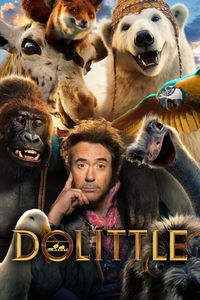
    (On Cable TV, November 2020) You can watch up to a few minutes’ worth of Dolittle without feeling that anything is wrong, but then, at semi-regular intervals comes the Dumb Thing. That Dumb Thing can take many forms, whether it’s a bit of amateurish staging, a flow of very contemporary slang uttered by talking animals (and I’m not merely talking modern slang in a Victorian context—I mean 2010s slang) or dubious comic ideas, such as performing a two-fisted colonoscopy on a dragon. Yeah… Considering that this is the third disappointing Dolittle film in three generations, it’s quite possible that there’s a curse of some sort on the property—or that, in attracting actors with a healthy ego in the lead role, the projects doom themselves from inception. If forced to choose, I’ll still pick this one as the best of the three—from a contemporary perspective, it’s not as plasticky or atonal as the 1967 Rex Harrison one. Nor is it as aggressively stupid as the 2001 Eddie Murphy version. On the other hand, its imagination seems severely stunted compared to the fantastic creatures of the Harrison version, and it’s not as clearly made for kids as was the Murphy version. But it has top-notch special effects for the animals, and a rather likable Robert Downey Jr. playing a variation on the ultracompetent overconfident persona that his current career phase has focused upon. Still, the succession of Dumb Things grates quite a bit, especially when they’re coupled with clear signs that the film was directed by committee and most likely redone in post-production: Much of the live-action dialogue is uttered without seeing the actors’ faces, the editing is unusually herky-jerky (often compressing what feels like minutes of action in a few dozen seconds), and the directing often doesn’t have crucial connective tissue: It makes for a very strange, subliminally upsetting viewing when the film can’t even achieve narrative fluency despite what looks like a very, very expensive production. Most of those suspicions are confirmed by rumours, then documented articles about the film’s unusually troubled production history (shades of the 1960s version right there!), including as many as three well-known directors involved in principal photography and extensive reshoots. We’ll probably know more about the film in a decade or two, but, in the meantime, we can probably tip a hat to the heroic efforts of those involved in Dolittle’s post-production odyssey, considering that they managed to turn out something that, for entire minutes at a time, feels watchable. Well, aside for the two dozen Dumb Things.

  • The Rare Breed (1966)

    The Rare Breed (1966)

    (On Cable TV, November 2020) It takes some audacity to even think about making a western about livestock, but that’s what The Rare Breed goes for. James Stewart here plays an adventurer hired to ensure the safety of a lovely widow (Maureen O’Hara in her red-headed glory) as she brings a prized British heifer out west for breeding purposes. There are a few complications, including a lustful rancher, competing clans, budding romance and intergenerational tensions. It all culminates in a happy ending tempered with a little bit of sadness. Steward here has a tough outdoorsman role more akin to his many 1950s westerns, albeit tempered by age and a slightly softer attitude toward women and cattle: If you’re lived this long without seeing Stewart carry a calf in his arms, then this is the film for you. The focus on cattle warms my former farmhand’s heart, and still feels unusual for the western genre, despite cattle being such an important part of the wild west. (But cattle don’t carry guns, so that doesn’t make them as interesting to filmmakers.) Otherwise, I’m somewhat muted in my appreciation for The Rare Breed—I like Stewart, the bull, the ending and O’Hara, but the rest of the film feels a bit inert to me compared to the high points. Ah well—at least it concludes with cute calves galloping around.

  • Carmen Jones (1954)

    Carmen Jones (1954)

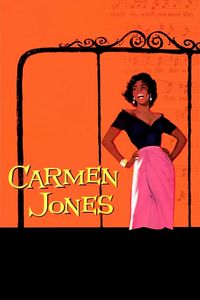
    (On Cable TV, November 2020) A recent refresher about Dorothy Dandridge’s rather sad biography made it essential to view her career peak Carmen Jones. Despite a long history of systemic racism, Hollywood has, from time to time, made features with all-black casting. Carmen Jones is one of them, and it’s unsurprising that it would come from noted iconoclast Otto Preminger. Adapting the classic Bizet opera (perhaps the only opera featuring two numbers that regular people can hum) to the WW2-era was already something, but setting it in an all-black cast was the kind of decision to make people stand up and notice. The result has aged remarkably well as a period piece: It helps that the film opens with a scorcher of a number in “Carmen” as Dandridge vamps her way across a mess hall and takes aim at the lead male character, setting in motion the tragic events that follow. Dandridge fans know that Preminger’s interest in Dandridge was far from purely professional, and that may have helped in elevating her terrific lead performance in Carmen Jones: she looks nothing less than fantastic here even if her voice is dubbed, playing a femme fatale in a non-noir context. (That said, the film noir comparisons may not be all that far off: The entire story is a tragic cautionary tale about fate destroying you, with the hero experiencing a downward spiral eventually bringing him to that beloved noir common ground of a boxing hall.) The other big hummable number is the classic “toreador song,” here called “Stan’ Up an’ Fight” and led with gusto by Husky Miller. Dandridge often overshadows her co-star Harry Belafonte, but he’s equally impressive as the protagonist led to perdition—although, once again, the very idea of him being dubbed over is amazing to modern viewers used to his long musical career. It’s not a perfect film—what’s the progressive appeal of an all-black cast if they’re portrayed as “shameless vixens” and weak men destroyed by lust? Still, I’d rather have a Hollywood with Carmen Jones in its archives than without—considering that we’re still dealing with representativeness issues today, any tiny step forward is not to be discounted from today’s perch. From a more conventional perspective, I’m not a big fan of much of Carmen Jones: many numbers drag, and the film is not equally interesting. But Dandridge is terrific and so is Belafonte—and the big numbers are delightful.

  • Follow the Fleet (1936)

    Follow the Fleet (1936)

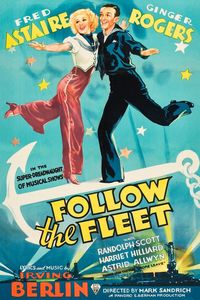
    (On Cable TV, November 2020) I’m watching Fred Astaire films in rough decreasing order of acknowledged importance, and it’s not a bad approach—his persona is best defined by his most popular films, and once you start plumbing into the lesser-remembers ones, you can hit some weird variations on his usual characters. I’m not going to forget a drunken Astaire smashing a bar in The Sky’s The Limit, but there’s something almost equally strange in seeing him play what’s supposed to be a rough-hewn Navy sailor in Follow the Fleet: Astaire’s persona was pure ballroom, not boiler room (although, yes, I also remember that scene in Shall We Dance), and it’s a very curious choice to structure a film (a peacetime film, no less!) around him being a swabbie at the service of Uncle Sam. Somehow, Ginger Rogers makes her way into the plot as a gifted hostess employed in a San Francisco ballroom -at least until Astaire barges in and gets her fired. There’s a B-romance as well, but we’re here for Astaire and Rogers and, fortunately, Follow the Fleet delivers on the dance front: There’s a ballroom duet sequence early in the film to reassure us that they’ve still got it. Later on, the action moves to ship decks in time for an Astaire solo tap number with sailors surrounding him. The third act has the big guns: A piano solo from Astaire, a deliciously funny duet (“I’m Putting All My Eggs in One Basket”) in which Astaire and Rogers intentionally dance out of step and then—as a big finale—an anthology-worthy return to pure class in “Let’s Face the Music in Dance” where we once again have a glamorous version of the duo doing their best in front of a very stylized art-deco backdrop. Nonetheless, Follow the Fleet isn’t quite better than the sum of its parts: while there are some great moments, the film as a whole seems less funny, less tight (at 110 minutes, many of them dedicated to a lacklustre narrative) and less purely enjoyable than other 1930s films featuring the duo. I still liked it based on its individual numbers, but I also liked their other films of the decade better—most notably Top Hat, The Gay Divorcee, Swing Time and Shall We Dance. But even a substandard Astaire still has moves impossible to duplicate by anyone but Astaire: let’s treasure what we’ve got.

  • El ángel exterminador [The Exterminating Angel] (1962)

    El ángel exterminador [The Exterminating Angel] (1962)

    (On Cable TV, November 2020) Much as I go back-and-forth on Luis Bunuel’s movies, I went back-and-forth on The Exterminating Angel throughout its duration. After a mystifying introduction to the characters, the premise reveals itself: our dozen high-society characters are suddenly unable to leave the living room of the mansion in which they’ve gathered. Why they can’t leave is unimportant, which is completely in-keeping with the kind of surrealism that Bunuel practised, but somewhat at odds with contemporary audiences more used to a genre explanation, as perfunctory as it is. (I sometimes think that the best thing that genre literature brought to the world was a way to anchor metaphors into some kind of rationality, even in fantasy fiction. Zombies may be a great way to discuss the mindless conformity of the modern world, but they are also interesting in their own right as mortal threats, and it’s that duality of genre fiction that makes it both accessible and profound depending on the level sought by creator and audience.) Knowing that The Exterminating Angel will never explain its situation, the film is free to go through the motions of its plot, as its subjects are in extended captivity: the lies, the loathing, the contempt, the violence—as mayhem plays out in a gilded living room, it’s obvious that this is meant to have deeper levels of interpretation. If you’re not interested in playing Bunuel’s’ game, however, the film is only intermittently interesting. By the time it concludes with the ill-justified freeing of its characters, it’s both interesting and not interesting at the same time: in the nebulous fog of surrealism, something happened but it seems ripe to be swept under the rug with few repercussions nor any reason to care. The premise of The Exterminating Angel has been reused many times in many other places, but the original could use a bit of tightening up as well.

  • Fashions of 1934 (1934)

    Fashions of 1934 (1934)

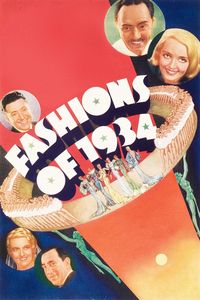
    (On Cable TV, November 2020) This may sound a bit sad to those who don’t like movies (although what’s the point in caring what these people say?) but one of the greatest things about having an encyclopedic knowledge of film and favourite actors is that you can sit down to watch a film without any idea of who’s in it, and be pleasantly surprised at who appears on screen, almost as if they were friends or something. (Look up Dunbar’s number and wonder at how many of those 150 spots are taken up by actors’ personas.) So it is that I sat down to watch Fashions of 1934 without any expectations other than this was going to be one of those solid 1930s musicals. But then William Powell and Bette Davis both walk on-screen, and you know you’re going to have a better time than expected. Now, let’s not go overboard: Fashions of 1934 is, at best, a representative film of its genre and era. It’s decently funny at times, does showcase contemporary fashions, moves briskly at 78 minutes and throws in a few kaleidoscopic dance numbers from Busby Berkeley. The musical numbers are spectacular (with a special mention to the bit in which dancers with feather fans transform themselves into a gigantic flower and then seamlessly changing into a maiden emerging from a foamy sea), the dialogue can be quite amusing and Powell is up to his usual standards. The Pre-Code nature of the film is best seen in the saucy jokes and the scantily clad dancers (oh, and mention of pornographic pictures for sale on the streets of Paris)—those would disappear months later with the imposition of the Hays Code. When you throw in all of those elements, the one thing that strikes out is Davis herself—Fashions of 1934 was so early in her career that it features a misguided attempt to make her a blonde-haired sexpot: her vivaciousness shines through what little dialogue she has, but even the film seems to forget about her for minutes at a time. The script is a bit scattershot, and it’s clear that it’s far too focused on its musical numbers—especially in its last third—to allow Powell or Davis to develop their screen persona. Still, it’s an enjoyable watch: not an essential example of its era, but a look at what Warnes Studios could do in the musical genre as a matter of everyday business. Powell and Davis are just icing on the cake even if they’re not used to their fullest extent.

  • Chain Lightning (1950)

    Chain Lightning (1950)

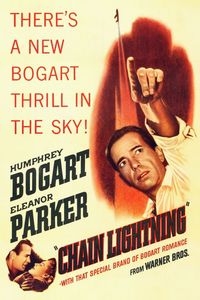
    (On Cable TV, November 2020) I have often written that the Science Fiction genre offers surprisingly few rewards to its creators for being right about the future: if you somehow happened to predict the future with 100% accuracy, it would feel like history and thus be completely unremarkable to those encountering the speculations years later. 1950’s Chain Lightning is a work of engineering fiction more than science fiction, but it still managed to be somewhat accurate in predicting the following decade of development in aeronautics… something that goes completely unremarked by modern viewers. In watching the result, we twenty-first century viewers are more likely to completely ignore the triumphant spirit of fast-paced jet development and instead focus on Humphrey Bogart playing a test pilot living at the very edge of human capabilities. A contemporary take on The Right Stuff’s first act, Chain Lightning remains interesting, either by its focus on the growing mystique of test pilot, or in seeing Bogart somehow try to fit his streetwise tough guy’s persona to the confines of an airplane cockpit. I don’t quite think he pulls off the trick, and much of the problem goes to a very technically minded script that chooses to focus on technology rather than make use of an actor like Bogart in character interactions. I am conflicted: I like techno-thrillers and actively relish long passages of exposition, but then again, the number of movies that Bogart did is limited and seeing him misused in a feature that can’t be bothered to take advantage of his strengths is really disappointing. Nonetheless, Chain Lightning is not a bad watch for fans of aviation movies… and having even a substandard Bogart is still better than no Bogart at all.

  • Teen Wolf Too (1987)

    Teen Wolf Too (1987)

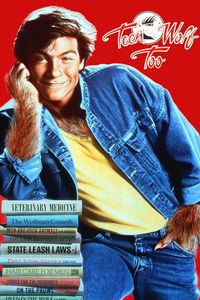
    (On TV, November 2020) I’d like to be harsh on Teen Wolf Too and point out that it’s a bargain sequel that barely puts in the effort to riff on its predecessor’s legacy, but there’s something to it that, even in retreading the original Teen Wolf, still feels charming and somewhat novel. The Big Idea of the original film—that you would transform into a werewolf and still be popular with your friends and social group—is still somewhat heartwarming, and doesn’t feel overused. The slight tweaks meant to accommodate the sequel—the lead character of the first film replaced by his cousin, heading to college rather than high school, and using the manly sport of boxing rather than simply basketball—are somewhat meaningless. What’s perhaps more interesting is in the middle portion of the film: Never mind the over-explaining introduction or the somewhat boring climax taking place in a boxing ring, the middle shows our protagonist discovering that he’s got the lycanthropic trait, enjoying it a little bit too much, and then reigning it in under the influence of another hidden lycanthrope played by Kim Darby. (A much better film could have followed this subplot, but this one doesn’t.) It’s a familiar act, but executed with sufficient energy. You can also see the film as an early starring turn by an almost unrecognizably young Jason Bateman. Teen Wolf Too is not that good of a film, but the spirit of the original remains quirky enough to be likable in small doses.

  • Destination Murder (1950)

    Destination Murder (1950)

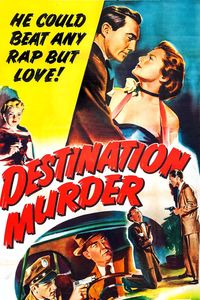
    (On Cable TV, November 2020) Sometimes, you don’t need polish, coherence or high production values to have a good time: Destination Murder is, by most standards, a substandard film: it has dollar-store production values, a script that barely makes sense, quirks of dialogue that are more endearing than effective (“Armitage!”), and a density of plotting that makes its 72 minutes feel somewhat longer. But as a film noir… it holds its own. Cheaply made by B-movie specialist Edward L. Cahn, Destination Murder can rely on a fast-paced script and actors who do what they’re expected from beginning to end. The story, at it is, has to do with a young woman going undercover in a club in order to investigate her father’s murder. Who her father was and what he did to get killed should warrant some attention but doesn’t—we’re off to the investigation and as bits and pieces of another noir movie seem to intrude (including a blonde femme fatale who gets taken out of the plot far too soon), Destination Murder races to a conclusion without bothering to make sure that it didn’t take disqualifying shortcuts. It’s incoherent, bewildering and quite a bit wild… which, in some ways, reflects the down-and-dirty ethos of the film noir, interested in thrills and not really in explanations. Destination Murder is not the kind of polished experience but it has a certain charm of its own. Just make sure this is what you’re looking for.

  • Arcade (1993)

    Arcade (1993)

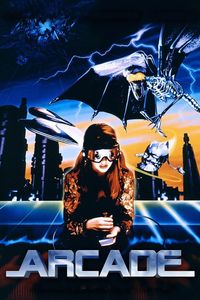
    (In French, On Cable TV, November 2020) There’s no doubt that Arcade is a terrible film, and I find myself hesitant to cut it any slack for being a film about immersive videogames that came out at the dawn of the CGI era. It’s clearly terrible-looking—anyone who was around back in 1993 will instantly recognize the low-end awkward CGI that is meant to be the showcase of the film, as our teenage heroes immerse themselves in a form of virtual reality. (This being said, the CGI was not bad for the time and budget.) Other than Megan Ward and Seth Green in small roles, John de Lancie is the only recognizable name here as a scientist who realizes that his creation has taken a life of its own thanks to some terrible decisions. (Note to self and anyone else: using an abused dead boy’s brain cells in your AI development is really just asking for trouble.) But even if you’re feeling generous on the special effects, the rest of the film is not particularly good—while the script is an early piece of juvenilia from David S. Goyer (who would go on to write much, much better material), it’s directed by infamous B-movie mogul Albert Pyun, so the results are roughly what we’d expect. There are no surprises, no scares and no big ideas in Arcade, even accounting for a 1993 production date: even if some of this material might have felt fresh during the first year of Wired magazine, it’s all hopelessly trite now, and more of a period piece than something worth watching for itself.

  • Broken Arrow (1950)

    Broken Arrow (1950)

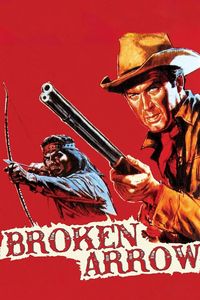
    (On TV, November 2020) There are movies that play well both on a surface and a metatextual level, and The Rare Breed feels like one of them if you’ve been paying attention to the history of the representation of Native American culture in Hollywood. I don’t have the knowledge to say for sure that Broken Arrow was the first film to portray a reconciliation between white settlers and Native Americans. But in the grand sweep of the western genre, it feels like a front-runner to the changing attitudes toward Native Americans during the 1950s and even more so the 1960s—often used by Classic Hollywood as caricatural villains and nothing more, it took a long time for Native Americans to establish themselves as real characters. With Broken Arrow, Hollywood takes a big step toward better representation. Here we have the all-American everyman James Stewart playing the part of a man seeking peace with Cochise—first, by learning the language, then by negotiating a carefully worded agreement to leave the mail carriers alone. It’s not a painless process for him—white people regard him with suspicion, as do most of the Native Americans. Romance blooms, and tragedy strikes—this is a dramatic western, after all, and great sacrifice make for great drama. Still, the film feels like a tentative reconciliation by itself: it would take many more decades before getting to a sufficiently accurate depiction of Native Americans in westerns (some say we’re not even there yet) but intermediate steps are important. Broken Arrow still stars a white actor as Cochise (although Geronimo is portrayed by a Mohawk actor) and fictionalizes quite a bit of material, but the Native American characters are developed; they speak in conversational English (as highlighted by the film’s opening narration) and are seen as people with valid grievances. As a result, it’s a film that has aged far better than contemporary knee-jerk depictions of Natives as pure antagonists that still filled up most of the pre-1950s westerns.

  • You’re Soaking in It (2017)

    You’re Soaking in It (2017)

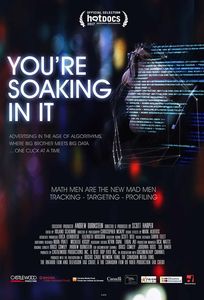
    (On TV, November 2020) There’s something deeply ironic and maybe even surreal in watching a documentary about the state-of-the-art in advertising on TV, and it being interrupted by low-end commercials. The cheap come-ons look almost laughable compared to the insidious techniques described in You’re Soaking in It. Making copious references to Mad Men and the early era of mass advertising, this is a documentary that sums up a lot of scattered thinking about the modern approach to selling things. As the world has moved away from monolithic audiences and gathering spaces, so has advertising—in one of the best sequences of the documentary, we’re told how advertising on the web now targets you and only you, running auctions to determine which advertisement will earn a spot in the commercial spot of the page you’re requesting. “Mad men have been replaced by math men,” says the film. But advertising can take even more diffuse forms as well, and one of the film’s most uncomfortable moments comes when it chats with a YouTuber who seems oblivious to the way her “authentic” channel has been coopted like a cheap billboard. I don’t think there’s anything in You’re Soaking in It that isn’t already well known or well discussed—if you’ve been paying attention. But there’s considerable value in it being brought together in a coherent whole, and a consideration of the various side issues that come with it. (I wish that writer-director Scott Harper would have highlighted that one of the weaknesses of all-pervasive advertisement infrastructure is that it is unusually weak to being blocked—but we do get discussion of the infrastructure and discussion of the blocking, so that’s not bad.) There is even a sobering climax to the film in which the advertisers themselves ponder if what they’re doing is really working: despite an incredibly sophisticated arms race between individuals and those trying to chip away at that individuality by convincing them to take specific actions, such as buying products or voting for an individual, individuals are becoming more sophisticated as well, and able to resist yesterday’s come-on even as tomorrow’s pitches are being developed. Documentaries such as You’re Soaking in It are a welcome addition to that awareness and capacity to resist.

  • Stripped to Kill (1987)

    Stripped to Kill (1987)

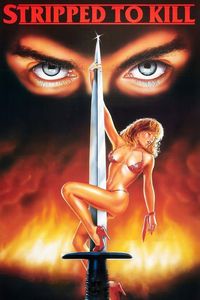
    (In French, On Cable TV, November 2020) It makes perfect sense that Roger Corman’s name is listed as executive producer to Stripped to Kill: After all, there hasn’t been a single exploitation angle that Corman hasn’t liked, and setting a crime thriller inside a strip club seems like a perfect idea. (Strip-club culture would later explode into the mainstream, but it was still something transgressive in 1987.) The plot summary is simple, silly but clever, as a policewoman infiltrates a strip club to catch a serial killer. There’s quite a bit of nudity (most of it dull) and a number of serial killings (also dull), hitting most of the essential high points of a sexploitation film. Alas, there isn’t much here to care about: the serial killer’s identity is crazy in the kind of over-the-top way that 1980s slashers settled into, and there isn’t much to the lead performances by Kay Lenz and Greg Evigan. Katt Shea’s direction (in her first film) is fine—as much of Stripped to Kill can be summarized as such. It’s gory but not overly so, filled with nudity but not crossing the line into harder material, and with a story just good enough to keep going but not to leave any lasting impression. In other words, it could have been much worse and isn’t—not high praise, but sufficient for a film that was designed to titillate more than anything else.

  • Men Are Such Fools (1938)

    Men Are Such Fools (1938)

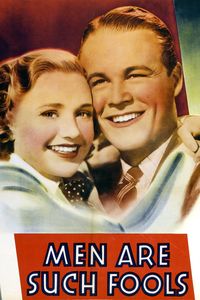
    (On Cable TV, November 2020) One of the ways a screenwriter can sabotage a script is in unintentionally make their lead character wholly unlikable. Oh, there are plenty of opportunities for anti-heroes, magnificent cads and tortured protagonists… but since the point is a lighthearted romantic comedy, you should make sure that the heroine is, at least, likable—otherwise, many viewers will just wonder why the bother. Such is nearly the case in Men Are Such Fools, a story meant to show the corporate and romantic success of a plucky girl played by Priscilla Lane. Except that the pluckiness gets overdone: after leaving her husband to strike out on her own for suspiciously thin reasons (further evidence of a script being manipulated toward an ending, rather than evolving organically), we’re left to wonder why he even bothers chasing after her. An ending that rewards this pursuit doesn’t leave a triumphant taste, largely because (to reiterate the point), the heroine is simply too unlikable to be considered a goal. This being said, any Humphrey Bogart fan should miss this one: Here Bogart seems unusually ill at ease playing an executive cad, hitting upon the heroine in an office environment when he has no business doing so, and being almost entirely characterized by those actions. I also enjoyed some of the dialogue, although not really the story it’s in service to. Men Are Such Fool has maybe half of what it needs to succeed on its own as a romantic comedy, but it mishandles those elements so blatantly that it ends up backfiring upon itself.

  • Les palmes de M. Schutz (1997)

    Les palmes de M. Schutz (1997)

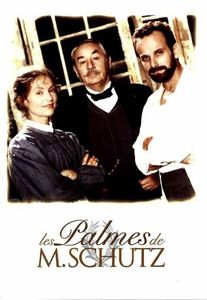
    (On TV, November 2020) Unfairly enough, I couldn’t help but compare Les palmes de M. Schutz to 1943’s Hollywood biography Marie Curie with Greer Garson. The comparison isn’t without cause, considering that both are films about the discovery of radium by Marie Curie and her husband Pierre. Curiously enough, I don’t have a clear favourite: the 1943 film is reasonably exact despite having been made in the 1940s, whereas this newest French offering is less faithful to fact, but often funnier, more dramatically diverse, and benefits from switching its focus from the Curies to their academic sponsor, the titular Mr. Schutz. On top of the Curies’ scientific quest (adequately vulgarized through a supporting character), there’s Schutz’s thirst for recognition, even as his own scientific skills are slight—there’s a curiously sympathetic side to his efforts at recognizing, fostering and sheltering talent here that would warm any middle manager’s heart. It does help that none other than Phillipe Noiret plays Schutz, bringing considerable warmth and sympathy to the character. Otherwise, Les palmes de M. Schutz is a very likable film—it’s filled with gentle humour, covers a lot of ground both scientific and personal, and actually gives anyone the impression that they’ve learned a lesson or two about the history of radium. It’s worth a look if science on-screen is the kind of thing that interests you.