Month: November 2020

  • Top Secret Affair (1957)

    Top Secret Affair (1957)

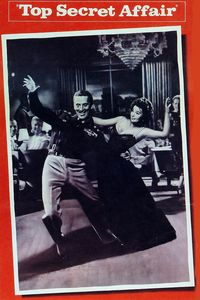
    (On Cable TV, November 2020) You can often best see the star quality of lead actors in their most mediocre films, and while Kirk Douglas was known for being an incredible leading man, Top Secret Affair will demonstrate it to you as well as his turn in masterpieces like that year’s Paths of Glory. Clearly cast as a superstar, Douglas here plays an American general targeted by a media mogul played by Susan Hayward. She wants to take him down through her outlets, but she hasn’t counted on him being a near-perfect human being, smart and athletic and incorruptible. There’s a lot of fun to be had in seeing Douglas play a character that measures up to his square jaw and impeccable frame—the film feels like a misogynistic throwback, but it does have quite a bit of charm and grace at how it goes about it, and even the way it half-canonizes its military character is a bit of a breather after so many villainous high-ranking officers elsewhere in later Hollywood history. I’m not going to try to convince anyone that Top Secret Affair is a particularly good movie, but it’s an easy watch, and it has its shares of smiles along the way. Plus, you get to see what Douglas was able to do in a movie where he clearly outshines everyone else… including his co-star. Amazingly enough, the film was originally intended to star Bogart and Bacall — that would have been quite a different film.

  • Spoorloos [The Vanishing] (1988)

    Spoorloos [The Vanishing] (1988)

    (On Cable TV, November 2020) I really, truly dislike movies that give me the impression of having wasted my time, and there are few surer paths to that feeling than a nihilistic script that seems to delight into the worst of what humanity has to offer. The Vanishing is an ugly, pointless, disturbing film. It’s a procedural psychopathic killing film, one that uses an unusual structure to overexplain the details of a heinous murder, and doesn’t spare the protagonist trying to understand how his girlfriend could vanish in plain daylight. The premise has a couple of tourists stopping at a French rest stop and the woman being kidnapped. When the film picks up three years later, her boyfriend has been nearly driven mad by the lack of answers—and then the killer toys with him. Thanks to flashbacks, we spend a lot of time with the psychopathic antagonist, seeing his exemplary family life and deliberate preparations for the act. Much of the film’s third act is a lengthy discussion between the protagonist and antagonist, but you won’t like where it’s headed, with curiosity killing the cat in a particularly brutal fashion. This is a film that aims to make you feel unsettled and it succeeds—perhaps too well, because by the end of it I was actively disliking the film and vowing never ever to see it again or recommend that others do so. Every so often, there are movies that remind me that it’s fine not to be an overly jaded cynic—that’s it’s perfectly fine to hate a film for its bleakness, for having no further idea on its mind that “evil exists.” I will take any bland happy ending over where The Vanishing ends up.

  • Body Melt (1993)

    Body Melt (1993)

    (In French, On Cable TV, November 2020) I was unable to find an artistic intention in Body Melt other than “using practical effects to make bodies explode in increasingly gruesome ways,” and that’s fine—there’s a place for plotless splatterpunk horror, I suppose, even though I would like it to be as far from me as possible. What does help make it all palatable is the strong undercurrent of comedy running through the film: rather than go for a dark nihilistic tone, Body Melt is supposed to be funny (for very subjective values of funny) in the vignettes it showcases, with the grotesque effects adding another layer of unreality. The excuse for all of the body explosions is something about new health supplements being tested on a neighbourhood, but that’s about it for plot: much of the film is a series of sketches in which the characters take vitamins and then explode (or melt, or grow appendages) in various creative ways. There’s nudity. There’s more gore than you can possibly imagine. Coming from Australia, it does feel somewhat similar to the wave of super-gory horror coming out of New Zealand at the time, or even the Ozploistation movement from the previous decade. It clearly qualifies as a melt movie (a subgenre of horror about which I was blissfully unaware until a few weeks ago thanks to Street Trash), and that makes any recommendation subject to an asteroid-sized asterisk—it’s certainly an experience, but it’s not that much of a good horror film—even in the subgenre, Braindead is clearly superior.

  • Mexican Spitfire Out West (1940)

    Mexican Spitfire Out West (1940)

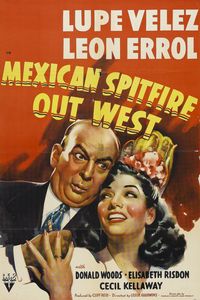
    (On Cable TV, November 2020) I concluded my review of Mexican Spitfire by stating that there was a definite danger in seeing too many of that series’ entries in too-close proximity, and I was right—watching Mexican Spitfire Out West barely two weeks later simply laid bare how similar the films of the series felt. At some point, films of a too-consistent series can feel like episodes of a TV show, and this third-of-eight Lupe Velez vehicle is pretty much a rerun of Mexican Spitfire, with dual roles being overused, Velez’s temper tantrums being more irritating than amusing (at this point, you have to wonder why the husband doesn’t simply grant the divorce she’s asking for, and walk away to a more peaceful life) and there’s very little variations from the previous film’s antics in structure or individual jokes. Despite the series heading out to Reno, it still feels as if just changing the previous film’s Mexico for another western locale. (A later instalment, taking the Mexican Spitfire at Sea, would at least have the advantage of a very different environment.) It’s still decently amusing if you’re in for Leon Errol’s dual-role shtick or if you happen to like Velez’s stereotypical fiery Latina persona, but my advice still stands—space those viewings by more than a few weeks.

  • Speak Easily (1932)

    Speak Easily (1932)

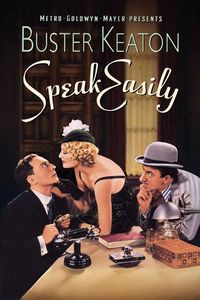
    (On Cable TV, November 2020) The more I see of Buster Keaton’s MGM movies, the more I understand why generations of critics haven’t been so kind to them. It’s not as if he’s not funny—you can reliably count on Keaton to get laughs in a split second (such as when he frantically tries to stuff a coat hanger in a suitcase—a split-second gag in a busy scene, and all the more effective for it), through facial expressions or simple physical gestures in the middle of otherwise ordinary sequences. But there’s a feeling, especially in Speak Easily, that he was being forced into a comedy straightjacket that really constrained what he was capable of doing. Much of the initial lack of sparks from Speak Easily comes from the premise—playing a sheltered academic doesn’t quite get Keaton to the kind of comedy that he understood best, and it takes much of the film to get to the point where we get the classic Keaton anarchistic physical comedy… even if Jimmy Durante is there to help shoulder the comic load. Keaton’s passage to the sound era was easier than most—his voice is pleasant and he could deal with dialogue decently enough, but the spark of silent movie years was gone. It doesn’t help that he seems to be playing a character of an ingrate age—his silent films as a young man are very funny and I really enjoyed his cantankerous persona in the last decade of his career, but here he seems in an awkward stage ill-fitting his persona. I still liked Speak Easily—the look at the tribulations of a travelling troupe of comedians is something that I always find interesting—but it really is a shadow of Keaton’s best work.

  • Night Flight (1933)

    Night Flight (1933)

    (On Cable TV, November 2020) The most interesting things about Night Flight are all about the movie than in the movie itself. Taken at face value, it’s a decent-enough adventure film about the heroic age of aviation in South America, featuring efforts by a company led by an American to establish trade routes through the treacherous Andes, especially when life-saving medication is involved. The technical quality of the film is rough by contemporary standards, reflecting Pre-Code era films’ limited ability to portray complex adventure stories. It’s interesting, and the cast (John Barrymore, Clark Gable, Lionel Barrymore, Myrna Loy and Helen Hayes) is amazing enough… but it’s hard to watch it without pining for Only Angel Have Wings, a very similar 1939 film with much better direction, script and production values. It’s when you start digging into the film’s production history that the most fascinating aspects of the film appear: Based on an Antoine de Saint-Exupéry novel, the author did not like the film and, through contractual shenanigans, had MGM take the film out of circulation in 1942… until 2011, when Warner Bros struck a deal with Saint-Exupéry’s estate to have the film shown again. That’s kind of amazing in itself—that a somewhat popular film starring well-known actors could disappear for nearly seventy years and become available once more to twenty-first century cinephiles, while their parents and grandparents would not have been able to see the film. The movie itself may not warrant that much devotion, but as an illustration of how contemporary film buffs have it much better than any previous generation of movie fans, it’s almost unparalleled.

  • The Dark Horse (1932)

    The Dark Horse (1932)

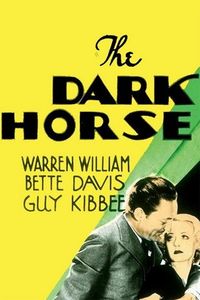
    (On Cable TV, November 2020) As I sat down to watch The Dark Horse, a Pre-Code political comedy featuring a simpleton being groomed for high office, the United States is experiencing the last drawn-out spasm of an incompetent federal administration led by another kind of simpleton. My tolerance for fictive portraits of such people put in position of power is at an all-time low considering the excess mortality rates south of the border during a worldwide pandemic, and I wasn’t sure I was going to like the result all that much. Happily, the film often exceeded my expectations. It certainly helps that the candidate at the heart of The Dark Horse is an amiable, harmless kind of simpleton—not the kind of person you’d want as a governor, but not the kind of spiteful, destructive idiot found in reality. It also helps that the dull character is not at the centre of the film: that honour would go to a sharp politician operative dealing with grooming his charge, while also managing his ex-wife and new flame during the election period. Bette Davis co-stars as his would-be second wife, but it’s Warren Williams who grabs most of the spotlight as a genius-level political operative. Some of the script is a bit blunt and repetitive, but there are a handful of very funny moments, and a third act that keeps escalating out of control even from the protagonist’s capable mind. You can see in The Dark Horse the somewhat freewheeling attitude toward marriage and divorce that characterized many 1930s romantic comedies (something that would ironically grow even bolder after the imposition of the Code), but you will especially recognize the timeless nature of political campaigns, even despite very different tools at the disposal of campaigns. The Dark Horse thus finds a place in the very, very long list of American movies about American politics, often being far more idealistic than reality, even despite their comic cynicism.

  • The French Line (1953)

    The French Line (1953)

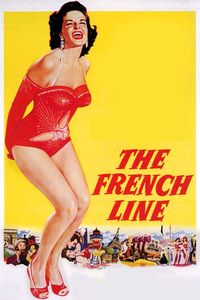
    (On Cable TV, November 2020) There have always been Hollywood star vehicles designed to feature specific actresses’ ample assets, but The French Line’s dedication to showcasing the great Jane Russell is exceptional by any standards. Produced by Howard Hugues, this is a film that explicitly set out to capitalize on Russell’s considerable sex appeal. Not only is it a film that revolves around her character, not only is it a film that shows her off in surprisingly skimpy outfits during dance numbers, this is a movie that was shot in 3D mainly to show off her curves to a thirsty public. (“J.R. in 3D—Need we say more?” bluntly goes the poster.) Legend goes that Hugues had a very personal interest in Russell, and designed many of the film’s outfits. He arguably overstepped—the film was judged so salacious that it was refused a production code seal of approval, earned scathing ratings from the era’s moral guardians, was banned from a few cities/countries and had to have an entire musical number trimmed before being shown in other territories. Today, of course, it’s quite tame—you can see more revealing numbers in PG-13 films. And once absent the titillation element, The French Line becomes another ordinary musical, once whose similarities to the previous year’s Gentlemen Prefer Blondes become a handicap more than a selling point. Oh, it’s watchable enough: Jane Russell became a sex-symbol for good reasons, and they go far beyond skimpy outfits. She gets a few good numbers as a Texan oil magnate looking for love at sea and abroad—While the infamous final number “Looking for Trouble” gets most of the attention, I really enjoyed “Any Gal from Texas.” The tone is amiable, and there’s enough going on around the edges of the supporting characters to be interesting: Mary McCarthy looks good, and Arthur Hunnicutt gets his fair share of smiles thanks to a grander-than-life Texan character. Still, there’s no denying that The French Line is about Jane Russell and little else: it’s her film, curves and all.

  • Executive Action (1973)

    Executive Action (1973)

    (On Cable TV, November 2020) As far as JFK assassination conspiracy fantasies go, nearly everyone remembers Oliver Stone’s bravura 1991 masterpiece JFK, but 1973’s Executive Action has faded from memory. I’m not necessarily saddened by that—As I’m editing this review in early 2021, the United States is experiencing an alarming tribal epistemology crisis, with truth taking a distant second place to political affiliations. (And lest you think that I’m making a “both sides” argument, let me set you straight: The right wing’s acceptance of nonsensical conspiracy theories has little equivalency on the other side of the aisle.) The result is thousands of excess mortalities in a national pandemic, an attempted political coup (incompetent because fantasy-based, but a coup nonetheless), a disturbing dismissal of norms and significant damage to American institutions. So, you may excuse me if my tolerance is nonexistent for such intentional blurring between fact and fantasy for political gains. At another time, I probably would have enjoyed screenwriter Dalton Trumbo’s skillful blend of fact and fiction, describing a shadowy cabal planning the assassination of JFK and subsequent coverup: the film is a masterclass in dramatization of a wild conspiracy theory, playing on universal fears and prejudice to tell all about men in control rather than a lone nut sending everything in chaos. From the opening narrative scroll to the final error-filled one, Executive Action is about sowing doubt, blocking objections and suspending disbelief. It can rely on strong actors such as Burt Lancaster and Robert Ryan, a sober execution and a surprisingly modern kaleidoscopic approach to its subject. In other words, it’s quite intriguing from a technical perspective and in its execution. But I simply cannot, right now, bring myself to feel any sympathy for its goals. I’ve had it up to there with conspiracy fiction now that I see it blend in the real world with people unable to make the difference between truth and politically motivated manipulation. Maybe I would have been more sympathetic five years ago. Hopefully, I will be able to be in five years.

  • The Passionate Plumber (1932)

    The Passionate Plumber (1932)

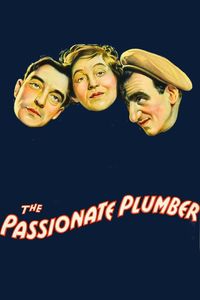
    (On Cable TV, November 2020) Buster Keaton heads to France in The Passionate Plumber, one of the less-than-impressive movies he did at MGM in the sound film phase of his career. This period is not usually well regarded by film critics, and the step down from his silent era movies is clear. Most of the blame for Keaton’s decline during these years is usually attributed to studio interference—Keaton couldn’t get as much creative freedom working in the MGM system, and his comic setpieces are clearly less ambitious. This being said, you could still see remnants of Keaton’s creative genius even in the MGM films, and The Passionate Plumber does have its shares of flashes.  Taking place in France (but suffering from near-unintelligible French dialogue), the film takes longer than expected to accumulate the comic elements of its climax: Keaton plays an American inventor who runs into another American played by none other than Jimmy Durante, and you can see the film split the comedy between the two: Durante gets the verbal material, whereas Keaton gets the physical—and most of the time, it works: Even in throwaway gestures, Keaton remains supremely gifted in getting laughs out of nothing (including repeatedly slapping people with a glove)… and that’s not even getting into the bigger set-pieces of the film. There’s a really good shot in which he is pursued by a crowd of men going up a staircase, and it somehow resolves by him reversing course and running away downstairs. It’s in those moments that you can still recognize the silent-era Keaton, despite the heavier demands of the inconsequential plot and the lack of opportunity for him to guide the entire film’s comic choreography. I still liked The Passionate Plumber—it’s got its moments despite not being up to Keaton’s silent films. But it’s one of the movies where you most clearly see the missed opportunities in Keaton’s MGM years.

  • Kiss Me Deadly (1955)

    Kiss Me Deadly (1955)

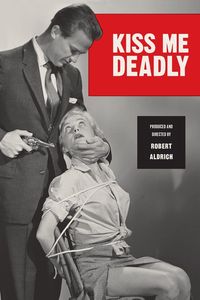
    (On Cable TV, November 2020) If you stopped watching Kiss Me Deadly twenty minutes before the end, you’d probably be forgiven for thinking about the film as a well-done example of the muscular hard-boiled detective, and nothing more. Aside from the occasional odd mention of scientists being involved in the nebulous plot uncovered by our protagonist, little would prepare you for the right turn taken by the film minutes before the end, as the anxieties of the nuclear age crash dead into the foundations of film noir. Ralph Meeker plays legendary private detective character Mike Hammer with relish, especially as he slaps, punches, maims or otherwise brutalizes a long string of uncooperative witnesses. The story gets going with a chance meeting with a woman escaped from an asylum (played by no less than Cloris Leachman), but before long we’re zigzagging throughout mid-1950s low-rent Los Angeles in search of clues, revelations and occasional clashes with villains. One highlight is a lengthy shot set in a boxing ring, highlighting the film’s noir credentials. This being said, Kiss Me Deadly is late-period classic noir, right before it evolved into self-aware neo-noir: it’s very much playing according to specific aesthetics, and that’s probably why it felt empowered to take a radical turn into techno-thriller territory by the end of the third act. It’s an explosive choice, and one that does much to distinguish the film from many similar other films. Other than that, we can also see other examples of technology creeping into the traditionally conservative setting of film noir: Hammer has a reel-based wall-mounted telephone answering machine in his apartment, for instance, and you can almost feel the coming rush of the sexual revolution in the relationship he has with his secretary. You can read a lot of thematic richness in the film’s final minutes, and one wonders how much of the ending of the first Indiana Jones film comes from some of the most striking images from the penultimate sequence. Kiss Me Deadly is one of the most intriguing films to come out of the classic noir era, but you really have to watch it until the end to understand why.

  • All Joking Aside (2020)

    All Joking Aside (2020)

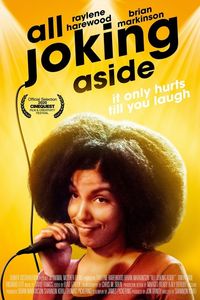
    (On Cable TV, November 2020) Considering my fascination for stand-up comedy, I’m probably going to see every single film about stand-up comedians sooner or later. While All Joking Aside often feels similar to Standing Up, Falling Down in studying a close mentor relationship between aspiring and experienced stand-up comedians, it quickly becomes its own film. Raylene Harewood makes for an incredibly appealing heroine as a young woman with family issues, health concerns and a drive to become a stand-up comedian in a notoriously unforgiving field. Brian Markinson is her foil as a bitter washed-up veteran who wasted his potential and lost his own family along the way—they meet when he heckles her during her first open mic and it’s a long way to building the intergenerational friendship that the film eventually relies upon. You can make a case that All Joking Aside plays it too safe—but I don’t think that you can fault the film for it. It’s meant as a moderately realistic take on stand-up comedy apprenticeship, and I appreciate that it doesn’t take too many wild leaps of absurdity or aggression along the way. Like many other films about stand-up comedy, it’s not all that funny when it’s not taking place on a stage: it focuses a lot on the pains and trials of the comedians in between the punchlines. The result is amiable enough—Harewood is a promising actress, and Markinson does credibly step into the shoes of a once-legendary comedian. It makes for a nice package—familiar, for sure, well telegraphed in its plot beats but likable all the way through.

  • Spinster (2019)

    Spinster (2019)

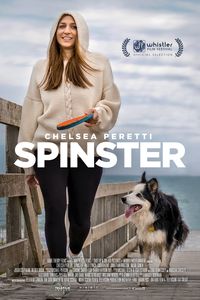
    (On Cable TV, November 2019) It takes a while to get used to Spinster’s specific brand of melancholic humour –a romantic comedy that explores the virtues of staying single and aging gracefully despite all the encouragement to the contrary. Chelsea Peretti plays a Halifax-based caterer who, at 39, discovers herself single and unsatisfied with her life, but not necessarily eager to jump back into another relationship. Thanks to a cast of strong supporting characters, Spinster spends a year in her life as she puts it back together, but not necessarily with a significant other. The awkwardness of the comedy means that it’s lighthearted but seldom funny—the down-to-earth cinematography also reinforces the low-stake, low-intensity nature of the script. Peretti does well in the lead role, carrying the film on her shoulders with some aplomb as soon as we get used to the specific rhythm of the film. There isn’t much to the film that screams about it being from the East Coast until the very end—for a while, I thought it was set in Toronto through sheer inertia of believing every English-Canadian film is set in Toronto. Still, it’s an amiable film, more of a journey of self-reconstruction than anything more conventional.

  • Working Man (2019)

    Working Man (2019)

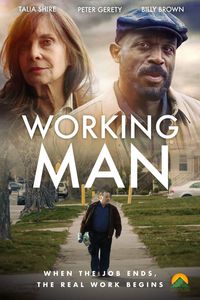
    (On Cable TV, November 2020) There’s a difference between interest and entertainment (or even satisfaction), and watching Working Man is a clear illustration of that. Before working hard at dismantling fairytales, this is a film that starts in very low-key fashion, as a blue-collar worker shrugs off being laid off by still going to his closed-down factory every day, cleaning up the place until a colleague with the required audacity manages to get the power back on. Before long, this colleague has put back the old crew together, telling them that if they can power through the rest of the inventory, they can sell their stock and attract investors. So far so good—despite the resolutely gritty and low-energy tone, it’s the kind of film we’ve often seen already, a feel-good myth for a society in its post-industrial phase. It’s immensely forgettable, and then comes the third act: the idea that some things are too good to be true, and that the Pied Piper leading the march can be delusional. That’s when Working Man becomes more interesting than entertaining: in-keeping with the naturalistic cinematography and soft-spoken characters, the film gets a bad case of fantasy dismantlement in which everyone learns a lesson and nobody gets the triumphant ending that they want. It’s a gutsy choice, and it does bring to mind older movies à la Norma Rae, embracing blue-collar labour activism, unflashy lives and serious character drama. It’s fortunate to be able to depend on some key actors—Peter Gerety plays an impassive protagonist, but he gets the right notes. Billy Brown has a trickier character whose likable bluster becomes something much darker later on, and anyone wondering what Talia Shire has been up to should have a look at her solid supporting performance here. Working Man is not spectacular, intentionally irritating and very much a throwback to 1970s cinema. It’s interesting… but don’t expect to like it very much.

  • Wendy (2020)

    Wendy (2020)

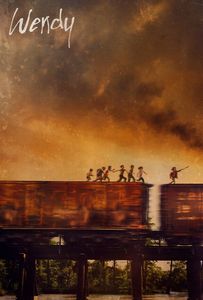
    (On Cable TV, November 2020) In retrospect, I should have just stopped watching Wendy after five minutes, so quickly does the film establish its tone and technique in a way that I fundamentally dislike. I’m not against the central concept of the film—reimagining Peter Pan in a gritty semi-realistic contemporary take halfway between magical realism and low-budget filmmaking. Writer-director Benh Zeitlin impressed many with his debut feature Beasts of the Southern Wild, and you can see the similarities here. Alas, the way Wendy is handled immediately rubbed me wrong, with languid pacing, twee-ethereal music, an irritating lack of medium shots and insistent innocence-of-childhood themes that quickly grate. I don’t like the original Peter Pan story all that much, so it could have gone either way—I have no attachment to the original story and would have enjoyed a different take, or it could have stuck too closely to the worst aspects of the original story. Unfortunately, while there’s some interest in seeing how the film recreates the familiar elements of J.M. Barrie’s story, it does stick to the aspects of it that annoyed me the most, almost going the Lord of the Flies route as it describes kids without adult supervision. Add to that the dirty handheld cinematography and I was clawing for the exits long before the film concluded (which, thanks to the interminable pacing, takes forever). It happens—most movies aren’t made for everyone, and it can happen that it strikes you wrong. Still, I did not enjoy my time with Wendy, and I’m going to be happy not every seeing it again.