The Joy Luck Club (1993)
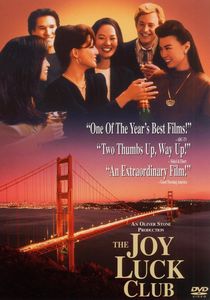
(On Cable TV, December 2020) Even more than twenty-five years later, The Joy Luck Club remains a singular reference in American cinema. There simply aren’t that many (or any) Hollywood-affiliated films with large casts of Asian-American performers, let alone an ensemble of eight Asian-American actresses. But that’s what was needed to adapt Amy Tan’s sprawling novel of family relationships, generational continuity and cultural resilience. It’s all the more remarkable in that this is not blockbuster four-quadrant filmmaking: this is what was formerly known as “a woman’s picture” and, in modern parlance, a “literate character-driven drama for a specific demographic.” Spanning five decades, the story intersects four distinct strands during 132 minutes, and that is a lot of drama to go around. A lot of it is very accessible despite the affirmed Chinese-American context – the mother-daughter relationship material feels universal and so do many of the issues faced by the characters. And yet, as admirable as it is, it’s not perfect: Being largely focused on female characters and their problems, the film often portrays men as caricatures of evil personified, with no depth or redemption. But maybe the problem is to try to make The Joy Luck Club an exemplar of Chinese-American film representation rather than the very specific story it meant to tell. But that’s almost inevitable when a film becomes a beacon of representativeness in an otherwise barren wasteland – it was a long, long time between 1961’s Flower Drum Song, this 1993 film and 2018’s Crazy Rich Asians.