Black Robe (1991)
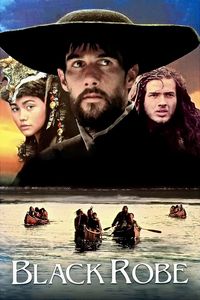
(On Cable TV, January 2021) On paper, Black Robe sounds like the literalization of my high school years’ driest history lessons—a throwback to 1634 Nouvelle France, as a newly arrived Jesuit missionary goes beyond the rudimentary settlements to establish a mission deep in native territory. The tale is violent, raw and ultimately futile. But I’m far more receptive to interpretations of history now than I was as a teenager, and Black Robe now looks quite intriguing through its splendid re-creation of Canada’s early days. The nature cinematography is terrific: the film starts in bright colourful fall, with the maple trees turning red everywhere the camera can see. Then it’s a steady slide into winter, just to remind us of the modern comforts we take for granted. While Black Robe is not above historical inaccuracies, it’s comparatively authentic and more sympathetic to the native viewpoint than many other films set in similar (or even later) periods. The recreation of period settlements can be astonishing at times, and the time-capsule aspect of the film alone is worth the effort of going through the downbeat narrative. Director Bruce Beresford, working from a script by Brian Moore adapting his own novel, executes the material with skill. I now realize with some amusement that Black Robe came out in the middle of my high-school years, meaning that there’s an alternate universe out there in which I may have seen this film as part of high school history classes. I probably would not have been as good a public back then than I am now.