The Harvey Girls (1946)
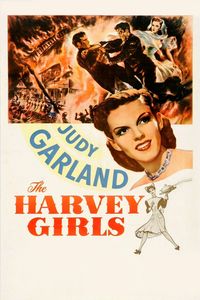
(On Cable TV, January 2021) I’m overdosing on Broadway musical comedies at the moment, so any musical comedy that heads out in a different direction is good news to me right now, and The Harvey Girls does offer a noticeable change of scenery—heading out west on a train, with a small crew of young girls ready to start working at the frontier Harvey House. Following the tangents of classic Hollywood movies is often as much fun as watching the movies themselves, and that’s how I ended up reading about the Harvey Houses (whose openings, as railway lines were extended throughout the 1880s, marked the arrival of modern comforts in the west) and the Harvey Girls (who often found husbands in frontier towns, further contributing to colonization). But little of that knowledge is essential to enjoying the song and dance numbers of the film. Judy Garland stars as a young woman seeking an engagement to a pen pal, with some support from notables such as Angela Lansbury (playing a dancehall madam), Cyd Charisse (in her first speaking role) and my own favourite Virginia O’Brien in what is best called a featured half-role. (The arc involving her character was cut midway through during the very long shooting due to her advancing pregnancy—but she gets “The Wild, Wild West,” a rather wonderful comic scene in which she sings in time with some blacksmithing and horse comfort.) If you’ve been waiting for a film in which Garland, Charisse and O’Brien share a musical number—here it is, to the tune of “It’s a Great Big World” (even though Charisse is dubbed). The film’s biggest number is probably “On the Atchison, Topeka and the Santa Fe” (which ended up being a national hit song), with an honourable mention to Ray Bolger’s energetic tap-dancing during “Swing Your Partner Round and Round.” The combination of favourite actors, memorable numbers and a more original than usual setting makes The Harvey Girl at least a second-tier musical and a solid hit for MGM’s Freed unit. It’s decently funny, historically interesting (as per my extracurricular reading), and romantic enough to wrap things up when the comic numbers end. I wonder what kind of career O’Brien would have had if she had been able to complete her character arc here—The Harvey Girls came toward the end of her brief filmography, with only a few more roles (including the female lead in the following year’s Merton of the Movies) before the end of her MGM contract and disappearance from the big screen.