Ziegfeld Girl (1941)
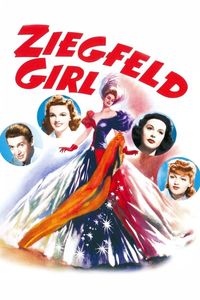
(On Cable TV, February 2021) In some ways, you can see Ziegfeld Girl as the second of an informal trilogy of MGM movies about Florenz Ziegfeld Jr. —or more specifically the Ziegfeld Follies revue productions that he created for Broadway. Their appeal could be summed up in a word: Girls. 1945’s Ziegfeld Follies was MGM’s attempt to re-create his shows with lavish means and the biggest stars in the business. Before that, 1936’s Academy-Award-winning biopic The Great Ziegfeld showed us the man’s life, and produced some of the most stunning musical numbers of 1930s American cinema along the way. Some of those set-pieces are reused in 1941’s Ziegfeld Girls, which foregoes the man himself to focus on the fictional story of three girls who become part of the show. That, in itself, would be a decent-enough backstage musical, but that’s before taking a look at the cast. Not only do you have James Stewart playing a vaguely disreputable truck driver getting annoyed at his girlfriend’s greater fame (a role somewhat less sympathetic than usual for Stewart, who doesn’t sing a line), you also have the girls themselves being played by none other than Judy Garland, Hedy Lamarr and Lana Turner — a ridiculously stacked cast, if you’ll pardon the expression. Garland is at her youthful best here, not yet showing the strains of studio life — her “Minnie From Trinidad” is the film’s standout number, as long as you put aside the unfortunate cultural issue of having her perform as a darker-skinned girl. Lamarr and Turner don’t sing, but their roles as still good showcases, and the combined impact of all three is not bad — and I’m saying this a someone who’s usually indifferent to Turner and often unimpressed with Garland. Ziegfeld Girl doesn’t manage to be a great musical, but it does have enough running for it to distinguish itself from the crowded arena of Broadway backstage musicals. Reusing some of the lavish numbers from The Great Ziegfeld must have been great for MGM’s bottom line, and it does add visual impact (as well as the gravitas associated with the earlier prestige production) to Ziegfeld Girl. It’s a nice-enough film, although I suspect that some modern viewers (as I nearly did) may run the risk of thinking they’ve seen it already due to its title being very similar to the two other films in MGM’s informal trilogy.