D.O.A. (1949)
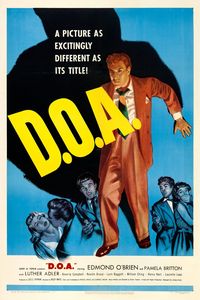
(On Cable TV, March 2021) The premise of D.O.A. remains a classic — a man walks into a police station (a long shot unexplainably framed by rows of doors as he makes his way to the end of a corridor) in order to report a murder: his own. That the rest of the film cannot measure up to that premise is almost a given, but the ride to the foregone conclusion is not bad. As a small-town accountant vacationing in San Francisco must unravel the clues that led to his fatal (and ongoing) poisoning, we’re thrown into a sordid classic film noir universe of gangsters, affairs, merciless death and urban underworld. It’s all quite comfy yet unusually involving—the elements are familiar, but the added element of the protagonist’s incoming death adds a nice sheen of existential suspense to the entire film—the irony being that our hero spends his last week living life more fully than ever before. Otherwise, it’s the logical conclusion of a classic film noir trope — the innocent man doomed for no other reason than having been involved in the wrong thing at the wrong time. That D.O.A. is a minor film noir classic is all the more remarkable in that, save for lead Edmond O’Brien (who turns in quite a good performance), the film sports few recognizable names among cast or crew — it’s a genre success without the trappings of Hollywood filmography completionism. Still, there’s plenty to like here: Pamela Britton provides a sounding board to the protagonist, while Laurette Luez is captivating as a supporting character. The glimpses at San Francisco (or rather — Los Angeles playing SF) are an intriguing throwback to the time’s urban atmosphere, and the ticking-clock component of the narrative has seldom been so strongly felt. Accidentally placed in the public domain, D.O.A. can be viewed even from its Wikipedia page. Now I’m curious to see if I can get my hands on the 1988 remake… because nothing spells high-concept like Hollywood being willing to re-do it again forty years later.