Won’t You Be My Neighbor? (2018)
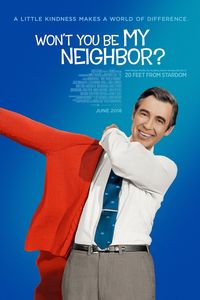
(On TV, April 2021) I was very, very late in understanding the accomplishments of Fred Rogers as a kid’s TV host. Much of it is due to the fact that I didn’t speak much English when I was in Mr. Rogers’ target audience. Obviously, I became aware of his saintlike reputation over the years, but it wasn’t until a year or two ago that I actually watched a rerun of the show and was astonished at how… calm and gentle it was. I happened to catch the Tom Hanks biopic a few months ago, but it’s only now that I sat down to watch the documentary Won’t You Be My Neighbor?, exploring Roger’s life, accomplishments, and entire philosophy. Using interviews, show footage and some animated segments featuring Daniel Tiger (explicitly presented as an alter ego for Rogers), this is a documentary that starts from the same question as the Hanks docufiction: Was Mr. Rogers for real? Was he as benevolent and kind-hearted as his reputation made him out to be? As the documentary eventually points out, this seems to be difficult for people to accept — we’d rather believe that he was a Navy SEAL who swore off killing than accept that such a genuinely nice person could exist, incidentally suggesting that we are not as nice as we could be. One of the most intriguing aspects of the film is how it tracks the strong association between Rogers’ approach and his own faith—an ordained minister, Rogers sometimes referred to his show as a ministry, and it’s not rare for the documentary to use spiritual or religious language in describing his actions—anyone calling him a saint, for instance, because the modern vernacular does not have other words descriptive enough. Won’t You Be My Neighbor? does fully engage with the notions of absolute goodness, and as time goes by, I suspect that its 2018 release date will weigh more and more heavily as a reminder of where it came from, two years into a nakedly malevolent American presidency that had viewers struggling to accept how someone without moral qualities could be voted into the highest office of the land. In this light, the example of Mr. Rogers becomes essential. Rogers was kind because he operated from a set of core principles: respect the child, protect the child and be honest with the child. Some of the show footage is gobsmacking in its forthrightness — who would now even dare discuss political assassinations on a kid’s show? What makes a lot of adults very uncomfortable, however, is when Rogers used this same basic honesty on adults — essentially treating adults the way he’d like kids to be treated, and the effect was usually disarming (even against prickly US senators). Won’t You Be My Neighbor? does poke and prod at the legend, but the worst it can find about Rogers is a childhood of being bullied, a bit of dissociation with his puppets, and an increasing righteousness as he became older — not exactly anything embarrassing, nor out-of-character for his public persona. Asked if Mr. Rogers was the real thing, all interviewers agreed that he was. Clips of people criticizing Rogers without even understanding what he was trying to do reflect badly on the criticizers (and may induce some outrage in viewers). But where Won’t You Be My Neighbor? further distinguishes itself from other standard biopics is in its willingness to try using some of Mr. Rogers’ humanity on its interviewees and audience: the film ends on an incredibly poignant note as, in countering despair about the lack of kindness, interviewees are asked to spend one silent minute thinking about kind people who helped them become who they are. Tears well up, the silence holds and the sequence ends with many interviewees thanking director Morgan Neville for the moment. It’s an incredible finish to an exceptional film about an extraordinary man. Yes, Mr. Rogers was exactly who he appeared to be. Yes, he was better than most of us. Yes, we can do better in aspiring to be like him.