Une femme mariée: Suite de fragments d’un film tourné en 1964 [A Married woman] (1964)
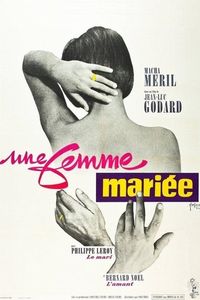
(On TV, July 2021) I’ve mentioned this a few times, but it still amazes me how often the French nouvelle vague can feel like a parody of itself. Ask any North American cinephile about their worst preconception of French cinema, and they’ll almost immediately reach for the clichés of a black-and-white dialogue fest in which the characters keep talking about life, love and sex. But many nouvelle vague films did correspond almost exactly to this cliché, and Une femme mariée is certainly one of them. The very slight plot has a married woman finally breaking off her affair with another man. But narrative is the least of writer-director Jean-Luc Godard’s concerns here — much of the film is a very typical blend of flat voiceovers, extended riffs, intertitles, semi-related images and conversations about various topics with a slight philosophical bent. I’m relatively lucky in that, while I don’t exactly hate that kind of filmmaking, I can listen to it without too much trouble. (I’m also understanding it in the original French, which helps — the translated subtitles, as competent as they are, flatten some of the dialogue.) On the other hand, there isn’t much left once the film ends — it’s 94 solid minutes of meandering dialogue without much of a narrative point, and I suppose I’ll get to enjoy the film all over again if ever I get to see it again. Behind the scenes, there’s some interest in how the film was produced (in less than three months to meet a deadline) or the controversy that it attracted, even in France, for its then-racy dialogue and character behaviour. Still, Une femme mariée doesn’t do much to change my opinion of Godard or la nouvelle vague in general — it’s very much the kind of film that makes people wary of them both.