Manufactured Landscapes (2006)
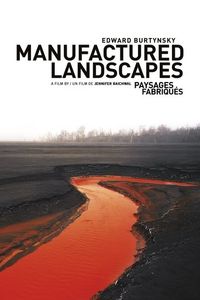
(On Cable TV, September 2021) As much as I liked watching Manufactured Landscapes, its impact is blunted by two unfortunate factors outside the film, both of them tied to its very nature. As a documentary attempting to show the amazing changes taking place in China over the past few decades, it’s clearly going for big images and even more mind-boggling concepts. Based on the photography of Edward Burtynsky, it’s a film that takes a look at waste reclamation, massive engineering projects, vast manufacturing plants and the amazing growth of Chinese cities. It goes back and forth between impressive footage shot on location, and excerpts of Burtynsky’s public speaking providing context. The story being told here, on its more factual level, is how China was able to use its vast population and a steady influx of waste from the West to build itself up into a superpower — and the environmental consequences of such a shift. Electronics discarded by affluent Americans are here reclaimed for metal in the most primitive means imaginable; factories turn repetitious assembly lines into works of art; nature is beaten down in submission. So far so interesting — but Manufactured Landscapes is now fifteen years old, and it has aged visibly in at least two areas. Notionally, the idea of China’s resurgence is not nearly as fresh today as it was back in 2006 — China is now comfortably a superpower, no longer interested in Western recycling, and its weight over global affairs is now a household discussion topic. (Well, at least in my household.) More significantly, however, is how the film has aged visually. Shot on Super-16mm instead of higher-resolution film or the current state of digital, it now looks underwhelming and washed-out. The substance of the images is good, but the film can’t compare to more expressionist films covering similar ground such as Samara. It’s certainly not uninteresting, but you can feel the film becoming a period piece. Fortunately, Manufactured Landscapes was not the last word from Burtynsky or director Jennifer Baichwal — two more similar films have followed since then, and I’ll be having a look at those next. (CanCon requirements being what they are, they all play on heavy rotation on Canadian TV channels.)