The Marijuana Conspiracy (2020)
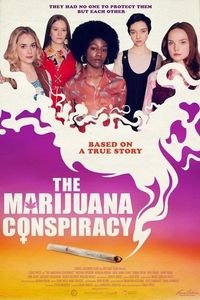
(On Cable TV, September 2021) Contemporary filmmakers making period films inevitably end up imposing contemporary moral values and judgment over history. An explicit aspect of The Marijuana Conspiracy, for instance, is that it could only have been made in a post-pot-legalization Canada. Set in the early 1970s, it focuses on four women recruited in an unusually elaborate experiment to assess the impact of cannabis. Undertaken on behalf of the Ontario government contemplating a possible legalization of marijuana by Trudeau père (the joke, repeated three times, being that Trudeau fils is the one who achieved legalization forty-some years later), the study locks up its subjects for three months in perfectly controlled conditions, and measures the productivity of the cannabis group against the non-cannabis group. As befit a post-legalization film, it’s hardly any surprise if moderate use of cannabis is hailed as an overall good thing (the coughing and bad health effect only happen when those mad scientists increase the dosage). But The Marijuana Conspiracy goes further and, alas, in some far more familiar places. It’s hardly a surprise when the black character details a history of racial discrimination, nor when the gay character must deal with prejudices from a colleague — it’s in those moments where the film, rather than expand its social progressivism, feels as if it gets stuck in overly predictable material meant to show how far more enlightened today’s audiences (or is it filmmakers?) present themselves. The entire film also leads to an overdone conclusion in which the “conspiracy” ends up being the absence of any result from the study, leaving its participants wondering what happened and why. The epilogue, at least, reassures us that the flagrant lack of ethics in designing the research experiment has since been reined in by a code. Still, the result feels surprisingly scattered, going in one direction or another without much cohesion — it feels bloated with condescending tangents even at slightly more than two hours. Writer-director-producer Craig Pryce does get a few things right — the visual period detail is evocative without being overdone, the actresses are quite good, and there’s an intriguing story at the heart of the film. But the execution definitely could have been better at most levels, from trite dialogue to slack pacing to overstuffed script. Less preachiness could have improved things, or at least made the film a bit less self-satisfied in its own righteousness.