Tea for Two (1950)
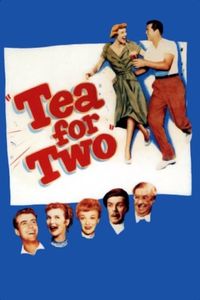
(On Cable TV, October 2021) Let’s face it: most classic musicals have a touch of the absurd in them—it comes with a genre in which people burst into song, dance and a full-blown orchestral accompaniment. But some kinds of absurdities are easier to take than most, and it’s often the smallest stuff that does you in: When the heroine of Tea for Two accepts a condition to answer “no” to every question and then proceeds to clearly self-sabotage every opportunity she gets, that’s somehow even harder to accept that the song-and-dance. Even as a comic premise, it’s not all that funny: there’s far more amusing stuff going around the edges of the main plot. For instance, the picture noticeably grows brighter the moment S. Z. Sakall walks on-screen, with bonhomie and exasperation. As the lead, Doris Day (in her first leading role and first dancing role) is okay—maybe slightly bland, but still able to carry the film. The songs are sometimes fun but not specifically memorable, while the dancing numbers are fine—the highlight is a bit of staircase tap-dancing from Gordon MacRae. Tea for Two is in the honest average of 1950s musicals: not exceptional, not terrible, perhaps slightly more forgettable than it should but still an acceptably good time.