Father’s Little Dividend (1951)
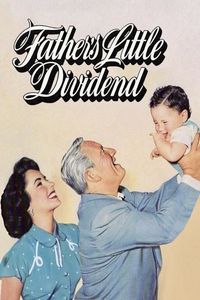
(On TV, January 2020) If you’re still annoyed at how Steve Martin (or rather Nancy Meyers) screwed up 1995’s Father of the Bride Part II, I’ve got mixed news for you. For one thing, Martin and Meyer weren’t completely making it up by themselves—the sequel was also a remake of 1951’s Father’s Little Divided, with the main plot (the father of the bride becomes a grandfather; angst ensues) inevitably making up the main arc of the follow-up. The good news is that the 1951 film wisely stopped there—there wasn’t a ludicrous subplot about the wife of the father of the bride becoming pregnant at 49, and that’s for the better. Focusing on the original does highlight how much the remake mishandled fundamental elements. Here, the essence of the film remains a universal experience—how do men go through the perception shift of thinking of themselves as grandfathers? Once again, Spencer Tracy makes for the perfect everyman going through a universally relatable scenario. Meanwhile, Elizabeth Taylor is cute but slightly wasted in the role of a young expectant mother—the focus, unfortunately, is squarely on her father without much interest in what she’s going through. While generally likable and still resonant, the film doesn’t equal its predecessor and highlights how values have shifted in the decades since then—the last set-piece of the film before its happy ending (grandpa losing a baby due to inattentiveness) is now nothing short of hair-raising, and that may stop some viewers from embracing the result entirely. (Still, that scene is notable for one interesting constant—Grandpa doesn’t become grandpa at his grandson’s birth, but later on once his self-image catches up to the events.) Still, the film survives this plotting bump thanks to Tracy’s always-sympathetic performance and some warm direction from Vincente Minelli. It may not be enough to smooth over the 1950s attitudes so prevalent here—there’s a lot of “well, accounting for the times…” required to get to the universality of the film. Still, my bold theory is that the 1951 film is still more relatable than the frantic 1995 remake that didn’t trust itself to tell a simple story without making it a frantic two-ring circus. If you’re going to make a film about a rite of passage for older men, why not focus on that? One final piece of trivia that may escape modern viewers: Father’s Little Dividend was released less than a year after Father of the Bride: a breakneck production pace that may explain why this sequel doesn’t quite rise to the level of the first film despite a good attempt.