Mon Oncle Antoine [My uncle Antoine] (1971)
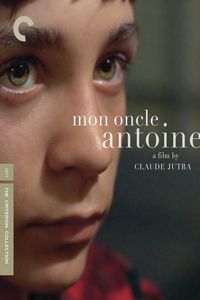
(In French, On Cable TV, March 2020) I don’t expect that most readers of this review will be as taken with Mon Oncle Antoine as French-Canadian viewers like myself are liable to be. From a purely objective perspective, this is a rouuuugh film. The fuzzy quality of the TV-ratio images is disappointing, the editing is slack, the shot-to-shot visual continuity isn’t always smooth, the acting isn’t always strong and that’s not even getting into the griminess of the visuals. A lot of this should be excused, as writer-director Claude Jutra was pioneering Québec-based location filmmaking at that time, and had to laboriously reinvent what was smooth filmmaking elsewhere. But it’s also true that Mon Oncle Antoine is not aiming for populist entertainment: it’s a conscious slice-of-life throwback to the Duplessis years as kitchen-table character drama set in a remote rural location. I can rattle off half a dozen French-Canadian historical films that are slicker, richer and more evocative of Québec’s history than this one—but Mon Oncle Antoine was there first. It’s absolutely not glorious in intent: Rather than take place on farms, in forests or in snowy rural Québec, it’s stuck in a dusty mining town, revolves around a dead body and embodies the quiet despair of ordinary people prevented from achieving even modest ambitions. Even the title character can’t stand his own life, which runs counter to a lot of rural mythologizing present in Québec filmmaking. It is, in other words, a slog to get through. But there’s a difference between what the film is and what it represents. Somehow hailed as a classic of Canadian cinema in multiple polls, it made a mark over at least a generation of filmmakers. That may be changing, though—Jutra himself was almost instantly disgraced in 2016 when his actions as a pederast came to light and led to the mass renaming of nearly everything bearing his name (including some of Canada’s most prestigious movie awards). Lately, probably due to Jutra’s erasure, the film itself hasn’t been as widely hailed—at the benefit of some of the other films I could rattle off. Which leaves me with something of a quandary when it comes to Mon Oncle Antoine. On one side, I’m not terribly impressed by the film itself and what it’s saying. On the other, well, what the film shows is very similar to the world in which my grandparents and parents lived—I can recognize the shabby rural houses, the colourful joual expressions and the utter lack of grandeur in the movie’s depiction of rural Québec. French-Canadian pride won’t let anyone else call this a terrible film—unless you’re going to come up with better alternatives.