Jean de Florette (1986)
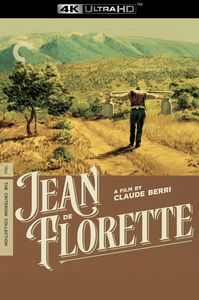
(On TV, January 2021) If you want to talk about the big guns of 1980s French cinema, Jean de Florette imposes itself as a must-see: As the first half of a massive project (along with sequel Manon des sources) going back to early-20th-century Provence as a backdrop to a melodramatic tale of deception and revenge, it features lush cinematography, big stars and the approval of the French establishment. Adapted from a book written by no less than Académie Française member Marcel Pagnol, it seemingly spares no expenses going back in time to a small village where water is a scarce commodity. Gérard Depardieu stars as a family man coming back to his deceased mother’s farm with big plans to raise rabbits. But that plan depends on having access to water, and as luck would have it, the locals have other plans: Distrustful of the educated, optimistic outsider, two of them conspire to hide an invaluable spring on his farm. The legendary Yves Montand capstones an illustrious career as the antagonist, with some able assistance from Daniel Auteuil as a co-conspirator. Spending two hours watching a likable protagonist’s plans being thwarted by the small-mindedness of rural locals may not be anyone’s idea of a good time, but there’s a compelling quality to the narrative; the pacing is faster than you’d expect and the film is meant to be seen as the depressing Part One of a larger work preparing for the release offered by Manon des sources. Depardieu, Montand and Auteuil each provide exceptional performances in their own way, and the setting provides the rest. Shot in a yellow/green palette punctuated by brown, it’s often a spectacular film even when abstracting the narrative. Historically, the film fits in a national strategy of exploring France’s past through movies, and it’s hard to imagine a better depiction of that time and place. (Even if, to French-Canadian ears, the accents often play as a caricature of a certain kind of Frenchman—Montand is particularly ripe for imitation.) I was honestly surprised by Jean de Florette—I watched it out of obligation, and ended up enjoying it. (But I’m writing this after the far more engaging Manon des sources, so keep the necessity of watching both in mind.)