Aparajito (1956)
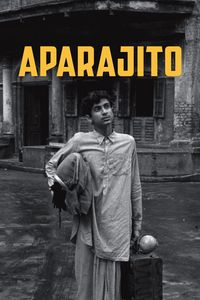
(On Cable TV, May 2021) It’s essential for any self-respecting film fan to explore the world of cinema as thoroughly as possible. Old, new, local, international, lauded and reviled — part of the point of those “1000 Essential Movies” lists is to expose viewers to a wide sample of cinema as a proof of what the medium can achieve, but also help them find out their favourite genres and periods. At the same time, I don’t expect everyone to like everything. Once you’ve gone through your list of essentials, as limited or expansive as it can be, it’s perfectly acceptable to declare a sub-genre of film not to your liking. As I have trekked through world cinema, I have reliably found that, no matter the country or the era, the one thing I can’t stand is neorealism. (The only borderline exceptions are when neorealism is culturally close to me. I’ll tolerate French-Canadian neorealism and give a passing grade to Francophone or Anglophone neorealism, but anything farther than that is usually asking too much.) As a result, well, I did not have a good time with Satyajit Ray’s Aparajito, which returns to 1920s India to continue the story launched by Pather Panchali (another film I didn’t particularly like). The drama gets more intense by the third act of the film, as the lead character loses an important relative and his reaction is not necessarily one we expect. None of my tepid reaction of the film should be misconstrued as a dismissal of Aparajito (and its associated trilogy) as a piece of world cinema — I can appreciate the incredible documentary aspect of chronicling Indian life even from the mid-1950s and how Ray helped Indian cinema become more than the razzle-dazzle of its dominant masala tone. But every critic eventually learns the distinction between importance, quality, art and, on the other side, a personal appreciation of the result. I may respect Aparajito, but I don’t have to like it.