The New Corporation: The Unfortunately Necessary Sequel (2020)
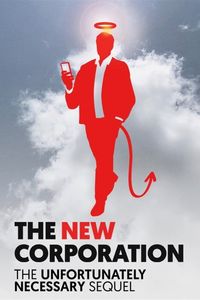
(On Cable TV, May 2021) Il waited a surprisingly long time between recording The New Corporation: The Unfortunately Necessary Sequel on my DVR and actually watching it. The original 2003 documentary The Corporation was good enough to stick in mind even after a few years, and I knew I had to be in the right mood for another meaty denunciation of the evils of unbridled capitalism. In the right frame of mind, however, this unfortunately necessary sequel delivers: There’s still a lot to say about the amorality of corporations and, now, the ways in which they attempt to masquerade their true nature. It’s probably important to note, for those slower-yet-delusional students in the back, that The New Corporation does not necessarily advocate for an end to capitalism and a forceful conversion of all corporations to cooperatives: it criticizes uncontrolled capitalism and corporations, which unfortunately seems far too common in today’s world. Left to its own devices, repeat writers-director Joel Bakan and Jennifer Abbott, the corporation will act in its own interests: it’s only through government regulation that we can ensure effective restraint and progress. That’s hardly a novel or unreasonable thesis — as we have seen time and time again the demonstration of such corporate excesses. But that’s repeating what the original film had to say. This sequel takes a look at the last seventeen years and focuses on a few growing tendencies as specifically troublesome. Social washing is the first of their targets, as corporations spend a lot of money and effort to convince citizens that they are responsible, moral actors when they clearly are not. A second target is the private sector’s takeover (presented as virtuous) of public functions, often schematizing public good as another revenue stream that can be delivered without understanding the reasons behind that service. (The demonstration of education being reduced to following a flowchart was… troubling.) Alas, The New Corporation does get more scattershot as it goes on, identifying the COVID crisis as yet another means through which corporate influence grows. It ends, as most fire-alarm documentaries should, with a glimmer of hope — evidence of political power pushing back, not solely as evanescent populist movements but as durable power. (As the film points out, these progressive reformers get re-elected.) In many ways, this sequel doesn’t have the impact of the first film — absent the corporation-as-psychiatric-patient gimmick of the original, it feels less focused and I suspect the pandemic threw a wrench in the filmmakers’ original plans. On the other hand, the absence of an easy metaphor ends up making the film more credible, because you’re not distracted by a facile analogy. I’m happy that a follow-up exists, not for the evils it shows and the dispiriting trends it announces, but because it means we still have watchdogs to warn us. Of course, the unescapable irony is that the filmmakers had to partner with some of Canada’s biggest and least trustworthy corporations to do so… but if it can make you feel better, you can refer to the first film and Michael Moore’s wry observation that capitalists will sell you the rope they can be hung with.