Mr. Sardonicus (1961)
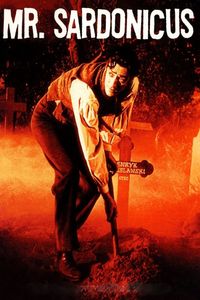
(On TV, June 2021) Coming toward the middle of writer-director-producer William Castle’s better-known period as a horror film tycoon, Mr. Sardonicus is not usually recognized as one of his most famous films. But you can clearly recognize his huckster’s imprint on the material, from the film’s gimmick to his introduction to his gradual walking away from a familiar opening to something a bit weirder. Watching Castle in full frame introducing his own film, I suddenly started wondering how much inspiration he derived from Alfred Hitchcock as acknowledged auteur of his films — was he trying to make himself the trademark of his own films, spurred by Hitchcock’s own celebrity? No matter why — here he is setting the tone of the film, relishing the bloodthirstiness of his audience and clearly playing to those identifying with the macabre dark humour of the horror genre. The opening moments of the film have an over-familiar tone to them, aping Stoker’s Dracula as a young English doctor travels to mysterious rural East Europe and sets out to investigate a mysterious summons. But this isn’t about a vampire — it’s about a baron left disfigured in a horrible rictus after profaning his father’s grave. The supernatural is absent, leaving psychological foreboding in its stead. While the extended flashback is clunky in extending the film’s thin plot to a commercially viable length, Mr. Sardonicus does score a good shock in its revelation of the baron’s horrifying face — and preserves its effect by having the character wear a mask for most of the film. The film’s gimmick comes toward the end, as audiences are asked to “vote” on whether the grave-robber deserves further punishment: Castle comes back on screen as the film’s host, explains how to vote and pretends to count the votes while making comments to the theatrical audience. The outcome is predictably rigged in favour of more horror and punishment: After Castle commends his audience for its deviancy from the norm, how could it be otherwise? (Film historians agree that an alternate merciful ending was never filmed.) As a horror film, Mr. Sardonicus is a curious thing — clearly patterned early on after Dracula, but swerving at the end of the first act, hobbled by an extended flashback that doesn’t do much to crank up the tension, then going into psychological drama territory for much of the third act. The ending gimmick does add interest, but it’s not in service of the film’s narrative — it’s another piece of evidence of Castle’s showman instincts and the fourth-wall-breaking lengths to which he could go to play with an audience expecting such antics. I liked it well enough, but then again, I’m more curious about Castle’s gimmicks and persona-grooming than the films themselves. At least Mr. Sardonicus holds attention — not always consistently nor all that well, but even more so than many comparable films.