La chinoise [The Chinese] (1967)
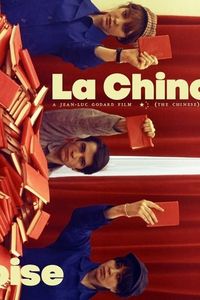
(On TV, July 2021) When I say that La chinoise reeks of the sixties, I’m being literal. I’m not paying a compliment to its atmosphere — I mean that thanks to its naturalistic portrayal of left-wing revolutionaries, you can actually imagine what they smelled like: a mixture of body odour, cigarettes and unrealistic expectations. Much of the film’s first section consists in having characters lecture the audience about the coming Marxist revolution, the evils of American foreign policy and what the Chinese are up to. It’s not quite as tedious as it sounds thanks to Godard’s hyperactive editing illustrating the monologues with jump cuts, skits, stock illustration and one rather catchy novelty song. Many scholars agree that La chinoise is when writer-director Jean-Luc Godard shifted gears from a semi-traditional form of filmmaking to a more politically charged career path. It also illustrated the preoccupations of the French left-wing just as the protests of May 1968 got underway, marking an unerring flair for current events. So, there’s some documentary value in having Godard chronicle (albeit not as a disinterested observer) the mood of the time and the tenor of the discourse. Of course, there’s a limit to how much of it is tolerable — the first section of the film is so basic in its filmmaking that it’s not hard to recall amateur YouTube video showing more talent in putting something similar together. The real film begins a bit later, as the characters (having spoken enough to the audience) get to speak to each other and carry bloodthirsty measures. Saying that I hated the characters by the end of the film would be incorrect, as I started loathing them well before then. What saves La chinoise from pure disgust (especially at the part where violence is proposed) is a thin veneer of humour that carries throughout — it’s not much, but at least it’s something. But as a deterrent against replicating the excesses of the French far left of the 1960s, it’s hard to think of a better example than La chinoise.