The Social Dilemma (2020)
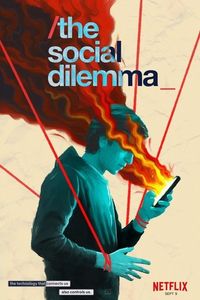
(Netflix Streaming, August 2021) I actually agree with a version of the thesis espoused by director Jeff Orlowski’s The Social Dilemma: social media is not good for you, not good for your friends and family, and not good for civil society either. It exploits basic human desires to the profit of those without any noble instinct and it’s willfully manipulated to engage you at an unhealthy level. I’d need to qualify those statements with some nuance (for instance, I’m not advocating for the end of social media — properly used, it’s not necessarily evil), but you can certainly classify me as a social media skeptic. I practise what I preach: I’m on read-only mode on Reddit, I briefly check Facebook every two months or so when friends or family remind me, and my Twitter account is a mere one-joke placeholder in case I need it. I will support anyone questioning social media — such challenges are an essential part of how society regards innovations, and ultimately help forge not only a legislative framework, but a social contract that addresses the excesses. On the other hand, I really wish the filmmakers behind The Social Dilemma had done a better job. Not necessarily in substance, but in those weird extrusions that distract from the substance. A hard-hitting critical contemplation of social media illustrated by interviews with former remorseful employees, this is a film that cleanly exposes how social media uses clever algorithms, unimaginably all-encompassing data collection and an amoral approach to produce something new and uniquely suited to manipulation. The point is money, as always, and money only comes from engagement, whether it’s frequent (as in: scroll every time you’re bored) or acute (as in: get mad, post more). The interviews are generally solid, although some material definitely should have been trimmed: In reaching for spurious parallels, one interviewee confidently asserts that nobody objected to bicycles, which is such a ridiculous statement that it’s debunkable within seconds. All innovations get pushback, but that pushback is how we master those innovations — alas, very few people interviewed in the film have any kind of historical awareness, which is telling in itself. The Social Dilemma, however, loses the most points when it takes off from facts and opinions and starts dramatizing them: in awkward fictional segments, we see a family struggle with their social media addiction, and some fantasy scenes even literalize the platform algorithms by having actors dramatize those decision loops. It doesn’t work — and there’s even another documentary (the little-known 2017 Canadian production You’re Soaking in it) that does a far better job factually explaining how advertisement algorithms sell you to advertisers. It doesn’t help that, needing to generate attention for itself, The Social Dilemma gets apocalyptic at times, indulging in the fallacy that there’s never been anything like this and there’s nothing that can be done. I would gladly watch another documentary with an attention span longer than ten years because historical precedent will tell you that there have been many things like social media in the past, and that they were dealt with. Once upon a time, newspapers, radio and TV were new and seen as social nuisances, manipulating public opinion and earning vast profits for owners and advertisers. In every single case, enlightened jurisdictions developed and enforced laws and standards that reigned those innovations into something useful. (Yes, I hear your objections about American media, but then again, I did say enlightened jurisdictions — and there’s a lesson here in social media being the reflection of the society allowing them to exist.) In parallel, audiences eventually learn better than to believe everything the innovation brings to them. It’s an age-old pattern and it will happen again, although it remains to be seen how much damage will take place until that happens. In this light, even a flawed documentary like The Social Dilemma is useful because it helps create the memetic antibodies that we all need to develop in order to rein in the excesses of social media. You may not quite know what to do with all of that craziness, but don’t worry: your kids eventually will.