Topper (1937)
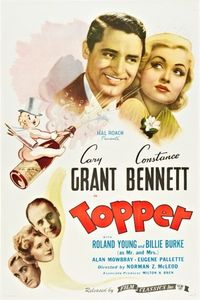
(On Cable TV, October 2021) The 1930s were surprisingly heavy in movies about spiritism, mediums, clairvoyants and such. Supernatural comedy Topper is squarely in that tradition, as it features a henpecked husband affranchising himself with some help from a couple of deceased free spirits. It was a box-office smash, got good reviews and launched a series that ended up with three films, but this first instalment is, to contemporary viewers, slightly maddening. For one thing, it keeps a young Cary Grant in a very supporting role as a bon vivant husband suddenly dead. Don’t cry for him—his character is just as lively in the afterlife, and Grant himself would use Topper as a springboard to an astonishing steak of terrific performances in better-remembered screwball comedies. Close behind him in likability is Constance Bennett, playing a carefree ghost only too happy to be as flirtatious as she wants. Finally, there’s Roland Young, playing the actual protagonist of the film: Cosmo Topper, a banker of high status but terrible home life, with a wife only too happy to tell him what to do in minute detail. (If you’re not happy with this review’s late introduction of the protagonist, just keep telling yourself that I’m merely aping the film, which spends a good ten full fun minutes with Grant and Bennett before sighing and going through the motions of introducing its real and less-fun protagonist.) While amusing, Topper pales in comparison of other comedies of the same period: it’s amiable and cute, but it doesn’t quite reach for the full possibilities of having two ghosts running around making life crazier or better for a live protagonist. It does not help that Topper is lazy in setting up the rules of its ghosts, who can appear or not, but always manipulate physical objects. It all leads to an acceptable ending, with a (hidden, for this was the Hays Code era) glimpse at fancy lingerie as proof that our protagonist and his wife were back on the mend and mutually satisfying physical intimacy. As for our ghosts, well, they apparently disappear having completed their good action, which does seem awfully indulgent. As I said: Topper works, but just barely. I find it significant that the second sequel would let go of its original premise to take a far more overtly comedic turn in the midst of a murder investigation, becoming far closer to the occult detective narrative. Then, as now, when a formula is broken, filmmakers will change it to follow what everyone else is doing!