Author: Christian Sauvé

  • City on Fire, Walter Jon Williams

    Harper Prism, 1997, 498 pages, C$32.00 hc, ISBN 0-06-105213-2

    Walter Jon Williams is undoubtedly one of the best SF writers today. The fascinating thing is that he has become such by producing an array of remarkably different novels: From cyberpunk (Hardwired) to near-future police procedural (Days of Atonement) to all-out Big SF (Aristoi) to humorous comedy of manners (The Drake Maijstral trilogy), Williams manages to entertain with considerable wit and style.

    His latest book, City on Fire is the first “straight” sequel he has written. Strangely, it’s a book that manages to be sufficiently different from the original to be interesting, all the while being a logical successor to the previous work: Metropolitan was probably the truest example of urban fantasy ever. Starting from the basic premise that certain arrangements of metal and concrete produce a quasi-magical force called plasm, Williams crafted a novel of ambition, revolution and multifaceted power. Aiah, a lowly plasm inspector, accidentally discovers a hidden plasm reserve, which she then offers it to one of the aristocrat (Constantine, a Metropolitan) of her city. Romance and revolution ensued, with the result that Metropolitan ended with a newly-conquered city, and tons of loose ends.

    City on Fire begins as Aiah returns to the newly conquered city, ostensibly to take up a new job as head of a plasm enforcement unit, but also to be closer to Constantine. Most of the book is political in nature: The crosses and double-crosses necessary to maintain a fragile new alliance over the recently liberated city are numerous, and not uninteresting.

    The sequel is a bigger book than the original, and also possibly a better work. After the first few pages, the reader is completely integrated in Williams’ latest world. Political fiction always run the danger of becoming a meaningless jumble of names and parties but fortunately, Williams’ storytelling skills avoid this.

    The style has a certain flourish, but most readers won’t notice this, as they’ll be caught up in Aiah’s rise through the city’s hierarchy. The main protagonists are exceptionally well handled, and even minor characters are distinct and easily remembered. Every scene in the book is intercut with headlines and ads from the city’s media, an effective trick that was under-used in Metropolitan.

    Since this series seems to be headed toward being a trilogy, it is interesting to note that in Metropolitan, Aiah is Constantine’s subordinate. By the End of City on Fire, however, she is beginning to be his equal. This will be interesting to watch in the third volume.

    Metropolitan had the distinction of being a fantasy with most of hard science-fiction’s concern for consistency and world-building. Indeed, some reviewers called Metropolitan SF, rationalizing the shield and plasm as sufficiently advanced technology. The debate isn’t likely to be resolved in City on Fire, but the indicators seem to point toward an interesting sequel…

    While City on Fire isn’t exciting at the level of Williams’ best novels, it is a sufficiently attractive read for any reader with an interest in the author, Metropolitan, or complex political stories. Perhaps not flamboyant enough to warrant being bought in hardcover, but probably worth the paperback price.

  • The New Alchemists, Robert M. Hazen

    Times Books, 1993, 286 pages, C$30.00 hc, ISBN 0-8129-2275-1

    Before reading this book, I thought I knew about pressure. A veteran of several college exam weeks, I just know that these times are some of the most pressurized situations anyone can expect to meet. Seemingly ordinary elements will begin to experience radical changes at high pressures, exhibiting strange new properties and even cracking up under the pressure. My family can testify that even middle-mannered me can develop troubling characteristics while under pressure.

    Which means absolutely anything, except to introduce the subject of an impulse buy and this review: The New Alchemists, by Robert M. Hazen.

    This nonfiction book is divided in two parts: Section one is titled “The Diamond Makers”, and details the various theories, experiments and failures that led to the synthesis of the first diamonds. The account begin at the beginning of chemistry, and spends quite a lot of time discussing the various failures met on the road of diamond making. As Hazen reminds us in the introduction, failures can be as enlightening as successes.

    And a fascinating history it is: From the early 19th century, many scientists and charlatans have tried to make diamonds. (In an excellent first chapter, Hazen oversees the history, properties and beauty of diamonds, thus setting the stage for the desirability of its synthesis) It does take a few attempts, but scientists finally find out that diamond is the product of intense pressure and heat applied to ordinary carbon.

    From then, attempts are more focused, but not necessarily more successful. A Swedish team finally obtains something in 1953, using one of the weirdest process I’ve ever read about. However, it will take until late 1955 and a General Electric team of researcher to devise a working, less cumbersome method and broadcast the results to the world. (The story or the breakthrough itself is immensely fascinating reading, offering a glimpse into scientific feuds and unresolved recriminations.)

    From then on, it becomes an engineering problem to produce the most synthetic diamonds for the less money. Now, GE has a virtual diamond mine in Ohio, where they produce more than 33 tons of diamond a year.

    But the story isn’t over; the diamonds made by high-pressure physics are now helping high-pressure physics itself: Using “diamond anvils”, researchers are pushing back the barriers of pressure, attaining higher and higher levels each year… The second part of this book is titled “The Diamond Breakers”, and tells of some of these researches. Perhaps less focused (and hence, less gripping) than the first part, it nevertheless makes engrossing reading.

    Robert Hazen knows how to write, and this book shows it. This isn’t some dry exposé of unfathomable researchers: The community of high-pressure scientists has a gallery of colorful personalities and events, and The New Alchemists takes delight in telling them. Tales of frauds, explosions, smuggling and “bags of diamonds” abound. This is better reading than most of the novels I’ve read this year.

    I highly recommend The New Alchemists: For everyone who wishes to have an insight into what scientists do, to the fans of fascinating stories. This is one book not to be missed: I place it near the top of my shelf for scientific literature.

    (Post note: While talking to a ex-physics teacher of mine (Serges Desgrenier, University of Ottawa), I discovered that he has his name in The New Alchemists… something I hadn’t caught when I read the book. My amazement at this fact was only compounded by my annoyance at this failure of my pattern-recognition software.)

  • Threshold, Ben Mezrich

    Warner, 1996, 336 pages, C$8.99 mmpb, ISBN 0-446-60521-2

    A smart, competent hero. A beautiful heroine apt to be the target of bad guys. A mad scientist. A plan to radically change humanity. Explosions, guns, shadowy government projects and enough technical jargon to confuse the heck out of anyone not remotely familiar with the subject.

    And the question was: What are ingredients to a good techno-thriller?

    Threshold has all the required qualities of a good techno-thriller. The surprise is that it comes from a new author rather than one of the established masters of the genre.

    Jeremy Ross is headed for a solid medical career when, suddenly, a ghost from his past appears and asks for help: Robin Kelly, an ex-girlfriend. Her father, the secretary of defense, (never mind this unlikely coincidence…) died a few weeks back and she doesn’t think it was an accident. So it’s up to Ross’s skills at medical hacking to uncover the truth. But when bullets start flying, he’s quick to realize that he’s in something far deadlier than a simple autopsy analysis…

    A better-than-average thriller ensues, with car chases, creepy world domination plans, serviceable characters and stupid mistakes by the bad guys. The prose is as exciting as it should be, if not entirely clear at a few critical junctions. Threshold makes perfect summer reading.

    Which is not to say that the novel is flawless: Serious suspension of disbelief is necessary at a few place (60 billion$?). The villains’ actions aren’t always logical (why two set of pursuers in the car chase?). A few characters aren’t kept on stage long enough (Christina Guarrez). The remarkably young age of many characters -while plausible- is sure to annoy a few. A final objection is that the villain’s plan is so… compelling, that the elitist reader will eventually root for its success. (The ultimate resolution also appears a bit tidy.)

    As a first novel, Threshold is quite impressive. Mezrich has the potential for being a serious competitor for Crichton, Cook or Clancy: He’s got it as far as pacing, intelligence or characterization goes. This reviewer will anxiously await Ben Mezrich’s next novel.

  • Star Trek Phase II, Judith and Garfield Reeves-Stevens

    Pocket, 1997, 357 pages, C$21.50 tpb, ISBN 0-671-56839-6

    I was a teenage Star Trek fan.

    But I’m much better now.

    Science-Fiction is a terribly pernicious addiction. When you begin, everything is good stuff, regardless of actual value. But as one increases one’s level of SF literacy, some things don’t appear so hot. Clichés, déjà-vus, staleness begin to creep in.

    This is where most non-prose SF (Media-SF) doesn’t hold up. Most of the time, it rediscovers concepts that were introduced, explored, and discarded years before by written SF. (And, usually do them wrong!) Add to that the unsatisfying nature of episodic SF and…

    The epitome of Media-SF is certainly Star Trek, whose history is now the source of countless legends, and almost as countless spin-off products. A fascinating case in itself, Star Trek is one of the only TV series to successfully re-invent itself, nearly twenty years after its first diffusion. The Original Series mutated in The Next Generation, and the rest is TV history.

    But the path from TOS to TNG included one surprising attempt at a Star Trek sequel, starring most of the cast from The Original Series. The name, Star Trek II. The time: 1977.

    While the tale had been quickly sketched elsewhere, most notably in George Takei’s autobiography, Star Trek Phase II presents the “official” history of the aborted series.

    In a series of event roughly paralleled in 1994 with UPN and Star Trek: Voyager, Paramount announced in 1977 that it would launch a new network of its own, using a revived Star Trek series as its flagship. (pun; ha-ha) Actors were signed, scripts were written, sets were constructed… but funding was lacking, so the series was scrapped and the pilot episode transformed in STAR TREK: THE MOTION PICTURE.

    Star Trek Phase II is divided in four parts. The first, -by far the most interesting- is a journalistic account of Star Trek II’s creation and downfall. Informative and even entertaining, this is the heart of the book. The second part presents the series “bible”; an exceptional document for Star Trek completists and TV series students. The third part contains the original story treatment by Alan Dean Foster and the first draft script by Harold Livingston for what would become STAR TREK: THE MOTION PICTURE. This section is of interest mainly for ST:TMP fans, if any are left (see below). The fourth part is nothing less than a few of the initial ideas for episodes of STAR TREK II. Notable are works of Ted Sturgeon, Norman Spinrad, and the complete script of the ST II episode that was eventually remade as the ST:TNG episode “The Child” The interest of this last section is highly variable: Most of the time, the story outlines made references to characters (Illia, Xon, Decker) unfamiliar to the casual reader.

    Star Trek Phase II is definitely for the confirmed Trek fan. Other will want to read something… fresher.

    Addenda: The very same day that I put down the book in question, I was zapping through channels when a familiar name in a familiar font attracted my attention: “Executive producer: Gene Roddenberry.” Three bars of music later, I was sitting down for three hours. ST: TMP had begun.

    I used to consider this movie one of my favorite (for the slickness of the production alone) but sadly, my memories don’t match up to the actual film. It’s long, it’s almost plot-less and by goodness, the then-much-lauded special effects are now almost ridiculous!

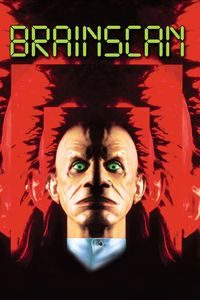
  • Mimic (1997)

    Mimic (1997)

    (In theaters, August 1997) Dark, creepy but also surprisingly forgettable suspense movie about giant insects taking over the lower levels of the New York subway. (And, presumably, the world afterward since those pesky insects are pretty much unstoppable, y’know?) Mira Sorvino is quite pleasing to look at as a top-notch entomologist, and director Del Torro sure knows how to effectively create a suspenseful atmosphere. Low points include a letdown finale (earlier scripts reportedly had a more appropriate, if darker, conclusion) and a really annoying subplot about an autistic child. (High points, however, include the killing of sympathetic children and a dead dog in the same scene, so there’s still hope for Hollywood scriptwriters…) A decent video rental for those in the mood for a “bug” movie.

  • Resurrection Man, Sean Stewart

    Ace, 1995, 248 pages, C$14.50 tpb, ISBN 0-441-00121-1

    Resurrection Man is a quirky book.

    There’s no other way to characterize a book which opens with the protagonist making an autopsy on his own body. Or a novel where family matters are explored more thoroughly than a completely original backdrop where magic has returned to the world. Or a narrative that contains both some of the funniest and the saddest passages in recent memory.

    Sean Stewart made quite a splash in the Canadian SF scene with his debut novel, Passion Play (Winner of the 1993 Aurora Award, as was his second novel, Nobody’s Son.) Resurrection Man is likely to enhance his reputation as one of the most accomplished SF writer in Canada today.

    What if the horrors of World War II had been enough to bring back magic in this world? Many fine novels could be written to explore the concept but -perhaps unfortunately- Stewart’s offbeat fantasy doesn’t really care about the big concept, focusing instead on a dysfunctional family, the Ratkays. The protagonist has to deal with the fact that he’s becoming a powerful magic channel, the sister is an overweight and bitter stand-up comedian, the father is an authoritative physician, the aunt… well, you get the picture. Add a few deep, dark family secrets and soon you’ll be saying “and I though my family was mucked-up!”

    From the first pages (the self-autopsy), it is apparent that this isn’t a run-of-the-mill, escapist fantasy novel. Steward is writing in the laborious style so beloved of literary aficionados everywhere. Neat turns of phrase and sharply drawn characters almost hide that the book’s plot is perhaps less than overwhelming. You’ll laugh, you’ll cry, you might even be bored.

    Since this is a novel about a family, the characterization is truly top-notch. Characters spend a lot of time pondering themselves, their dislike for each other and the assorted armful of childhood traumas that seems to loom over everyone in this type of fiction.

    This also means that the background setting is deliberately out of focus, at the intense disappointment of this reviewer: The truly non-classical view of magic (where minotaurs, butterflies, coins and grandfather clocks all are magical symbols) would have been fascinating to read about. Another weak element is a part of the conclusion (“But of course it wasn’t mine; it was his!”) that is highly doubtful and doesn’t make much “classical” sense. Fortunately, by the point Steward has redefined the novel’s internal coherency so much that most readers are likely to shrug and enjoy the remainder of the conclusion, which is fairly moving.

    Whether or not Resurrection Man will be liked depends mostly on the reader’s personal preferences: Is he fond of complex characterization, polished prose, nontraditional fantasy and family-type novels? Or is he more interested in fast-moving action, world-building or logical extrapolations? This isn’t a breathlessly entertaining thriller, a mindless action novel or a fluffy-goody fantasy; readers beware!

    Fans of complex family-affairs novels will want to take a look at Resurrection Man. As for others, though it may be heresy to say so, Harry Turtledove’s The Case of the Toxic Spell Dump is a more entertaining look at a contemporary magical world.

  • Metro (1997)

    Metro (1997)

    (On VHS, August 1997) A bland title for an even more unmemorable movie. The plot has been seen a thousand times (Hero cop. Dead partner. Smart bad guy. Car chase. Girlfriend in peril. Explosion. The End. Oh, there’s a New Partner in there somewhere) and Metro confuses smart touches with incoherence (or maybe the other way around). The Girlfriend is cute and there’s one rousing good sequence in the movie (the car chase, surprise!) but the remainder will flee out of your memory as the credits scroll. At least, I didn’t pay to see it.

  • Mars Attacks! (1996)

    Mars Attacks! (1996)

    (Second viewing, On VHS, August 1997) Seen last year during its first week of release, and again this month with great pleasure. By no means a great movie, but one that’s just cool to miss. See it again for the subtle stuff; most of the comedy in this movie is of the type “I can’t believe I’m seeing this.” In retrospect, one of my favorite of 1996.

    (Third viewing, On DVD, January 2009) Twelve years later, this spoof of Alien invasions works just as well, and maybe even a little bit better than when it was released. There have been a certain number of alien invasion films since then (and even a few alien invasion spoofs), but Mars Attacks! still holds up thanks to self-conscious camp material, a visual style of its own, and performances from a variety of actors you may not expect, from Jack Nicholson to Jack Black. There’s a cheerfully counter-authoritarian streak running through the film, as the victims are usually people with inflated opinions of themselves and the plucky working-class heroes manage to triumph over everything. It’s still decently amusing, and some of the gags are best appreciated with prior knowledge of the film rather than seen cold.

  • Kull The Conqueror (1997)

    Kull The Conqueror (1997)

    (In theaters, August 1997) Worst movie of the summer, but it’s so much fun (in a sick kind of way) that you’re unlikely to notice, or to be angry at the picture. Slightly different narrative scheme (Kull becomes king in the first few minutes) is unlikely to mask the awful dialogue straight out of comic books. Acting is uniformly bad; Tia Carrere should do much better. (But she’s redheaded here, so all things balance out!) An enjoyable Friday-night TV movie for a crowd of rowdy MST3Kers (“Brings new sense to the term frigid!”, etc…) but scarcely anything else.

  • A Miracle of Rare Design, Mike Resnick

    Tor, 1994, 247 pages, C$6.99 mmpb, ISBN 0-812-52424-1

    The best science-fiction does two things.

    First, it uses the traditional science-fiction devices to bring light on what it means to be human. The point of SF is not the gadgets, but the gadget’s effects on the human mind.

    Also, the best SF entertains as much as it enlightens.

    A Miracle of Rare Design fares very well in both regards.

    Xavier William Lennox is an author, an anthropologist and a very driven human being. In the first chapter, he gets caught by aliens in a sacred temple, and is almost killed for his troubles. Mutilated but not beaten, he then agrees to be transformed into an alien to study them better.

    The book is unpredictable: It goes on for longer and covers more territory that would be expected. Along the way, we get glimpses of a few fascinating alien races. Unusually, Resnick doesn’t bore with interminable descriptions of alien societies and mores: He moves on to other things. At times, the novel almost reads as a fix-up, but an single theme underlies the whole book.

    Strangely, as Lennox becomes more alien, he also appears more human: His drive toward understanding, exploration and new experiences will strike most as being more representative of the ideal human drive than the more conservative supporting cast of characters.

    Almost readable in a single sitting, A Miracle of Rare Design is also a miracle of economic writing. The prose is lean, and propels the reader from one adventure to another. There is a very definite narrative drive. It is almost strange to speak of suspense in the case of this novel, but it is put away only with the greatest reluctance. A Miracle of Rare design is good, satisfying SF. It can be read either as entertainment or literature, and succeeds well on both levels. Recommended.

    BRIEFLY: The Widowmaker, by the same author, is another entertaining short novel, readable in a flash and as enjoyable as anything written in the genre. The story of Jefferson Nighthawk (clone of the famous bounty hunter Widowmaker) is told quickly and simply. There are more than a few memorable scenes, and even more good replies. In many ways, The Widowmaker is a throwback to the simpler, more amusing years of classical SF. The biggest flaw of the book is that it eventually moves beyond its initially light tone to become much darker and tragic. Otherwise, good stuff for all. First in a trilogy, but stands quite well alone.

  • Event Horizon (1997)

    Event Horizon (1997)

    (In theaters, August 1997) The first 10-20 minutes of this scary, stylish thriller include some of the best visuals ever seen in the SF genre. After oscillating between Alien, Solaris, The Shining and Hellraiser, the movie then goes firmly into the last’s territory, with all the nonsensical bloodbaths (literally) that presupposes. Definitely scary and unsettling, yes, but also very unsatisfying in it uneasy mix of Hard SF and shlocko horror: Who’s the bad guy? Satan himself! Effective direction by Mortal Kombat alumni Paul Anderson and superb techno-medieval set design make this a much more watchable movie than otherwise deserved. Good acting and impressive Special Effects are also notable. Writer Phil Eisner should take a crash course in Hard-SF, among other things. I predict a certain cult following.

    (Second viewing, On DVD, July 2006) Curiously enough, I hadn’t revisited this film since its original theatre release: Event Horizon remains one of the few horror film to make me lose some sleep in contemplation. Fortunately, time caught up with me by offering a much-enhanced “Special Edition” version of the film, complete with almost a decade’s worth of hindsight. As DVD aficionados will tell you, the real story about a film takes a few years to emerge, and the “second generation” DVDs can usually afford to annoy people who have since moved on. And so director Paul Anderson takes some pleasure in talking about Event Horizon‘s rushed production, insane post-production deadlines and difficult testing process. He’s the first to acknowledge that the finished film isn’t as good as it could have been. Certainly, a second look at it can’t match the experience of seeing it on a really really big screen: at home, it simply comes across as a serviceable horror/SF hybrid, more thrilling than horrific and yet less flawed than I perceived it at the time. Blame it on more realistic impressions, maybe: these days, I’m more likely to be thankful for what does work than indignant at what doesn’t. While Event Horizon remains an imperfect film, it’s still a good treat for SF/horror fans, and it still plays well despite the pre-digital effects. Interestingly enough, I re-discovered that much of the soundtrack came from artists (Orbital and the Prodigy) that I would later embrace with enthusiasm.

  • Absolute Power (1997)

    Absolute Power (1997)

    (On VHS, August 1997) Good actors, suspicious plotting, bad ending and way too long. Difficult to be excited over the tale of a recluse thief who witness a scuffle ending in death involving the President, his mistress and two Secret Service agents. One or two good scenes, the remainder is an exercise in doing-something-else-while- the-movie-plays-out.

  • Bellwether, Connie Willis

    Bantam Spectra, 1996, 247 pages, C$8.99 mmpb, ISBN 0-553-56296-7

    The human mind is a fascinating thing. Witness the phenomenon of fads, fashions, celebrities, popular entertainment and other temporary manifestations of insanity. Men and Women of this technological society always crave the cool, the hip, the new.

    Almost as entertaining as these manias are the explanations concerning them. Especially interesting is the concept of “memes”, or self-replicating ideas… a ideological analogue to biological viruses. Considering the anti-communist paranoia of the fifties as being a sociological plague is oddly appealing. In this context, fads may just be a harmless (?) analogue to the flu. Makes you reconsider grunge, right?

    While Connie Willis doesn’t use “memes” anywhere in the narrative, Bellwether is at the same time an enjoyable character study of an enormously likable protagonist, a touching love story, and a genuine present-day science-fiction story.

    Sandra Foster is single, literate, funny and a sociologist. Her area of study: Fads… and what causes them. But the way to scientific discovery is chaotic at best, and Sandra will have to battle management, acronyms, incompetent secretaries, sheep and shortsighted libraries to attain her goal… if she can figure out what it is.

    Bellwether is told in a quick, humane, light tone. This isn’t the manipulative tearjerker that Doomsday Book was, nor is it the meaningless tale that Unexplored Territory was. A hasty judgment on this novel would (rightfully) blast the incoherent treatment of science, management or administrative assistants (which ranges from dead-on to way-off) but of course… that would be ignoring the satiric tone of the novel.

    Bellwether is a surprising book. As Uncle Bob would say: “No nekkid boobs, no bullets, 00 on the vomit-meter.” Only a few “rapid-movement” scenes, and they’re more funny than exciting. And yet… this reviewer was glued to the book during his rare free moments on an otherwise hectic day, staying up way too late to finish it. Higher praise is almost impossible.

    No extraterrestrials or fancy futuristic high-technology are included here. Indeed, despite the satiric mode, Bellwether might contain one of the most realistic depiction of scientific research ever included in a SF novel. Even if half of it’s implausible (everything connected to the Niebnitz grant, for instance), it’s the other half that counts.

    No comments are necessary on the romance subplot… except that it’s mature, quiet and should appeal to even the most cynical hard-SF fan.

    Said SF-fans should relish the lumps of exposition scattered here and there in the novel. Did you know that color fads are usually caused by technological progress? Or that the most popular fads require a low ability threshold? (A most telling anecdote happened a few days after reading Bellwether: While walking through downtown Ottawa, this reviewer heard bongo drums played by a couple a street musicians and immediately thought back to the corresponding passage in the novel: “Oh yeah; low ability threshold!”)

    Bellwether redeems Connie Willis after the overrated Doomsday Book and the overpriced, underwhelming Remake. The potential appeal of this book is enormous, even reaching far outside the usual boundaries of the genre: This might even be one book you’d want to give to SF-challenged relatives who are always asking why you keep reading “this Buck Rogers stuff”.

    Thoroughly recommended.

  • Mainline, Deborah Christian

    Tor, 1996, 374 pages, C$7.99 mmpb, ISBN 0-812-54908-2

    I really wanted to like Mainline. After all, it’s a good SF thriller; full of explosions, double-crosses, sophisticated gadgetry and bisexual females… but the overall effect is more akin to ennui than to excitement.

    In other words, “I just wasn’t in the mood, dear.”

    The plot summary is promising enough: So in the far future, there’s this expert assassin named Reva. She’s got an advantage that other assassin would very certainly kill for: The ability to see, and travel to parallel realities. Is this a threatening situation? Quick check on the fourth axis: Yeah? Okay… Want to escape quickly? Exit by the orthogonal plane…

    As the novel opens, Reva is used to this kind of stuff. Good at her job, she doesn’t have any friends (hard to keep’em when travelling across realities) nor any kind of moral fibre: He reaction to danger is to flee.

    But, -ah-ha!- she soon hooks up with a girl called Lish and suddenly, it’s not so easy to leave a reality behind. (Meanwhile, Lish has problems all of her own. Like a few million dollars worth of debt, and two assassins with contracts on her life. But that’s later on.) A lot of potential there for a thoughtful exploration of tenacity and friendship: Actual execution is only fair, with moments of brilliance and others of mere adequacy.

    (French-speaking readers will have no doubt noticed that Lish is pronounced much like the French equivalent to… nah…)

    At 374 pages, Mainline is too long; a few subplots could have been axed, to be replaced by other threads if necessary. Characters are okay, and so is the ending. My lukewarm reaction to this book doesn’t mean that this is an inferior novel… just that subjective opinions can, and are, less than constant.

    I felt that Reva’s almost-magical psi-power was a bit misused (a usual problem with psi-powers) but that the various gadgets were fairly imaginative, and sure to be stolen by some movie in the near future. Miss Christian (love the name 🙂 ) writes mean action scenes, once the reader is immersed in her prose.

    I do not enthusiastically recommend Mainline, but neither do I really recommend avoiding it. Call it “a foreign movie” on the Sid-and-Nancy scale, and a “Borrow it if there’s nothing else to read” rating on the library scale.

  • Wildside, Steven Gould

    Tor, 1996, 316 pages, C$7.99 mmpb, ISBN 0-812-52398-9

    Readers of Wildside may very well find one word ringing in their mind during the whole book.

    Heinlein.

    Ultra-competent young hero. Importance of self-sufficiency. Sex-hungry cast of characters. Distrust of the power of government. Coming-of-age novel. Easily readable yet detailed prose. Enjoyable first-person POV… Yep, that’s a Heinlein book all right!

    While modern, civilised man is a creature of flesh, asphalt and silicon, there is always a part of us that mourns for the untouched beauty of nature. How else to explain natural parks, summer homes in rural regions, camping and the popularity of westerns? Similarly, most of us would pay obscene amounts of money to have a pristine “world” all of our own.

    Enters Science-Fiction, which has years of experience in describing The Doorway. (In addition of being a doorway in itself) The Doorway is usually some kind of unassuming passage, leading to a world very much unlike our own. In Wildside, it’s an alternate Earth untouched by humans. Wondrous creatures such as passenger pigeons, sabertooth tigers and mammoths still roam free though the countryside.

    But, as the jacket copy says, “the door belongs to Charlie Newell”. And that’s a problem in itself. Not that Charlie is weak or incompetent: He’s able to take care of himself, live alone on a small ranch and pilot planes. Not bad for someone whose high-school graduation occurs in the first pages of the novel.

    But every protagonist has to have a few problems, and Charlie’s no exception. He loves Marie who’s going out with Joey, who has a drinking problem. All of the above will have an impact on subsequent events. When Charlie shows The Doorway to four of his friends (Marie and Joey included) and make them an offer they can’t really refuse, the plot begins.

    A fascinating part of the novel are the meticulous preparations Charlie and his friends must take to function on the Wildside: Small planes, support equipment, skydiving lessons and pilot training for everyone. For once, conquering the unexplored doesn’t seem to be an improvisational endeavour. The steps are authentically detailed, down to the small-aircraft lingo.

    Technically, this is an admirable novel: The prose is dirt-simple, but not without merit. All characters are meticulously defined. After only a few pages, they begin to take form. The plot is well handled (if not without lengths in the second third), the conclusion is suitably mind-expanding… and Charlie finally does get (a) girl.

    Wildside is sufficiently impressive to make one interested in the author’s previous works. After all, could one read only one Heinlein novel?