Movie Review

  • Monsieur Verdoux (1947)

    Monsieur Verdoux (1947)

    (Criterion Streaming, April 2020) Charlie Chaplin’s filmography is tempered by drama and pathos throughout, but Monsieur Verdoux is an outlier even by those standards. Completely abandoning the Tramp character and leaving much of the crowd-pleasing comedy out of sight, this late-career film turns out to be a very dark thriller about a man deliberately targeting rich women for murder. There is some comedy left, but it’s dark enough to be imperceptible: Chaplin plays the murderous protagonist as a frustrated politician, explicitly making parallels between his small-scale murders and the butchery of the then-recent WW2. Monsieur Verdoux is an atypical Chaplin, but an interesting one: He’s so associated with the Tramp character than it’s easy to tire of them both, so seeing him try something radically new is a way to reinvigorate anyone’s interest in his late career, and the remarkably dark humour for its era may explain how it has withstood the test of time. Still, don’t expect too much from the result, which suffers from authorial interference: the structure feels off, all the way to a conclusion designed to teach a harsh lesson rather than offer a climax of some sort. While Chaplin has been dark in movies other than Monsieur Verdoux, he has rarely been as bleak.

  • Angels with Dirty Faces (1938)

    Angels with Dirty Faces (1938)

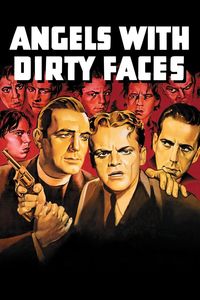
    (YouTube Streaming, April 2020) If you’re looking for a 1930s gangster movie, you could do much worse than Angels with Dirty Faces, a street-level crime thriller set in Manhattan that showcases no less than James Cagney and Humphrey Bogart in a plot that blends criminals, priests, kids, lawyers and fifteen years’ worth of resentment. Unusually enough, the film severely undermines the image of its lead gangster is the most effective way possible—by having him beg for mercy at the moment of his execution, showing just how much of a coward he truly is. Cagney has a great iconic role here, and he doesn’t let anyone forget it. Meanwhile, Bogart is in a stranger position: While the role is good and the Bogartian speech patterns are there, he here plays a white-collar scoundrel, underdeveloped when compared to his later roles. Meryn Leroy directs the film with sharpness and precision, whether it’s setting up a complex street scene, or fluently going over years of events through newspaper headlines and documents. The result is quite a good proto-noir film, especially when measured against similar movies of the time.

  • Murder! (1930)

    Murder! (1930)

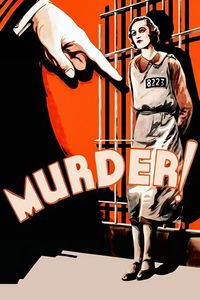
    (YouTube Streaming, April 2020) It’s amazing that Alfred Hitchcock’s career spanned six decades, from silent cinema in the 1920s to the New Hollywood of the 1970s. Of course, the farther back in time you go, the less distinctive his movies become and by the time we get to the period when cinema transitioned to sound, we’re not necessarily left with “Hitchcock Movies” as much as genre exercise in which he shows his increasing mastery of the craft. So it is that Murder! is a lower-tier Hitchcock, but still a serviceable film by the standards of the time. It does play with some favourite Hitchcock themes, including an innocent man investigating a crime, a look in specialized spheres (here, the circus and the theatre, as the protagonist is an actor) and a few playful winks to the audience, such as a final scene revealed to be within a play. It’s a clear step up from Hitchcock’s silent movies of only a few years earlier, although it only hints at what the writer-director would eventually be able to accomplish. Hitchcock fans will get the most out of Murder!, although early-thriller fans will probably enjoy it as well.

  • I’m Gonna Git You Sucka (1988)

    I’m Gonna Git You Sucka (1988)

    (On TV, March 2020) I’m not sure that I’m Gonna Git You Sucka is as distinctive today as it was when it came out. Black voices in cinema are significantly more numerous now, and you can now program at least a day’s worth of a blaxploitation spoof film festival. But there’s a semi-pioneering aspect to writer-director-star Keenen Ivory Wayans’s big-screen debut that should be highlighted along the film’s innate qualities. Not that I’m Gonna Git You Sucka is any less silly not knowing the context—although knowing more about Blaxploitation certainly helps, as the film finds roles (big and small) for stars of the earlier era of black-starring thrillers and rarely wastes an occasion to make specific references. It’s generally funny, although there’s some awkwardness to the way the film tries to be absurd and yet sustain a strong narrative—there are plenty of times where twenty-first-century viewers (perhaps trained on more modern takes on similar material) will wonder when the next joke is coming. To be fair, I’m Gonna Git You Sucka does find a surer footing in its later half as the gags become more visual, more self-assured and more focused. It even weaves in some stinging social commentary without overdoing it in the way that more modern takes have often done, so there’s plenty to dig into beyond just jokes. There’s a surprisingly good cast here, including Chris Rock’s debut in a small but showy role. The spoof comedy subgenre has certainly seen far worse—indeed, tracking the Wayan’s downward trajectory in matters of crudeness, it’s regrettable that the family didn’t follow in the tradition of I’m Gonna Git You Sucka rather than end up with White Chicks and digging downward.

  • Sgt. Bilko (1996)

    Sgt. Bilko (1996)

    (On TV, March 2020) One of the endearing things about the United States is their ability to be self-critical… at least once in a while. In-between the militarism of the national culture, you can find a surprisingly robust subculture of acid military comedy (Catch-22, Stripes, Buffalo Soldiers, Jarhead, etc.) taking potshots at the institution, its profligate waste and meaningless traditions. This is a lot of weight to place on a silly comedy like Sgt. Bilko (although, as the credits say, “The filmmakers gratefully acknowledge the total lack of cooperation from the United States Army.”), but I have a feeling that it wouldn’t have been a viable commercial project if it wasn’t for the veteran masses, who understand all too well what goes on within the US armed forces. Still, Sgt. Bilko wouldn’t be nearly as funny as it is without the match between Steve Martin and the titular character, a fast-talking smart-aleck trickster figure who happens to make US Army money flow in his direction. It’s quite a character, and it allows Martin to play up a good chunk of his physical comedy powers—in many ways, this plays closer to 1980s-era Martin than the syrupy family-friendly films he did increasingly often during the 1990s. (Not that Sgt. Bilko isn’t family-friendly—the film is rated PG despite its institutional anarchism.) In addition to the great cast (Dan Aykroyd, Phil Hartman, Glenne Headly and others), it’s a real pleasure to see Martin tear into the material—pratfalls, wisecracks, sure-footed self-confidence rampaging through anyone trying to trap him. But there we succumb once again to social analysis: Bilko is a symbol of what happens when unshackled self-interested capitalism makes its way inside the socialist enclave of military administration meant to provide benefits for all. Yes, Sgt. Bilko is a silly, fun, slightly dumb family comedy. But it also works as something more, and there’s where lies the interest of the film.

  • Sabrina (1995)

    Sabrina (1995)

    (On TV, March 2020) Remaking a Bogart/Hepburn movie is a losing proposition, especially if the original film was written and directed by Billy Wilder. Having established this, this updated remake of Sabrina is not that much of an embarrassment, as long as you’re in an indulgent mood. At the top of the ticket, Harrison Ford is good (but not Bogart and uncomfortable in the part), while Julia Ormond is all right, but can’t come closer to Aubrey Hepburn than anyone else. Plot-wise, the filmmakers do what they can to update the 1950s material to the 1980s, even if the most notable difference between the two films is in the technical aspects—including a notable improvement to the Paris sequence, which is actually shot in Paris. Otherwise, well—the story is still about an awkward man romancing someone significantly younger than him, blending business and old-money surroundings and romance. This Sabrina works if you soft-pedal a lot of the film’s fairytale trappings, excuse Ford for not being ideally suited to the role, ignore the age and/or class difference between the two, and gloss over the pacing. Which is admittedly asking for a lot. Surprisingly, the one thing that has aged rather well is the 1990s setting, now almost as distant and exotic to viewers as the 1950s were to remake viewers. (Note: this does not mean I’m advocating for another remake.) Still, there’s still some charm to this remake—Ford in glasses and suits, Ormond’s curly hair and the soft-focus gloss of 1990s romantic comedies. It’s not quite enough to dislodge the first film as the better Sabrina, but it’s just enough to make this remake its own entity.

  • The Garbage Pail Kids Movie (1987)

    The Garbage Pail Kids Movie (1987)

    (On Cable TV, March 2020) In case you’re wondering: Yes, The Garbage Pail Kids Movie is a real thing, and it’s repulsive. In case you’re wondering what it’s about, here’s a refresher: it’s a movie adaptation of a set of crudely humorous trading cards that satirized the syrupy-sweet Cabbage Patch Kids. I’m old enough to remember the furor around the cards when they were released in the mid-1980s, and while the negative reaction to the cards was overblown (there’s nothing in the cards that wasn’t done earlier by MAD Magazine, Edward Gorey or EC Comics), the aghast reaction to the movie adaptation is entirely justified. Literalizing the grotesque drawings and studied weirdness of the cards into live action leads us straight into the uncanny valley—using short-stature actors under plastic makeup to play the Kids is immediately heave-inducing, and the film doubles down repeatedly on its original sin through crude dumb jokes, amateurish filmmaking, perplexing staging, atrocious dialogue and whatever else can go wrong in a movie. As if that wasn’t enough, the film even has the audacity to push a message about beauty… that’s thoroughly muddled by everything the film does. The only question you’ll be asking is “whyyyyyy?“ While The Garbage Pail Kids Movie has acquired some notoriety as a cult movie in the past few decades, anyone even remotely tempted to watch it should be warned that it’s going to play as an endurance contest.

  • Bai she chuan shuo [The Sorcerer and the White Snake] (2011)

    Bai she chuan shuo [The Sorcerer and the White Snake] (2011)

    (On TV, March 2020) Jet Li stars in action fantasy film The Sorcerer and the White Snake and that has become a bit of a strong selling point now that Li has almost retired from acting. (He was ill for much of the mid-2010s and noticeably older when he recovered, which is a notable factor for an action star persona.) The film itself is… fine. The story has something to do with forbidden love between humans and snake demons, meaning that there’s a lot (and I mean a lot) of CGI being used to execute the near-incessant fight scenes within this film’s 93 minutes. The CGI, alas, is very, very rough—about 10–15 years behind Western movies at that point. (Chinese films greatly improved their CGI throughout the 2010s, but it remains a bit of a dodgy area.) The romantic aspect adds a bit of heart, but most of The Sorcerer and the White Snake is one fight after another while CGI stuff is thrown on-screen, meaning that it overstays its welcome despite its short duration. I found it entertaining but nothing more: somewhat different from western fantasy epics, but not necessarily worth the watch considering that there’s much-better similar material being done at a steady pace. Although, admittedly, without Jet Li.

  • Born to Dance (1936)

    Born to Dance (1936)

    (On Cable TV, March 2020) Eleanor Powell is always worth watching, but James Stewart singing in a song-and-dance musical? Now that’s definitely worth a watch. No, as Born to Dance shows, he’s not good at it: there’s a reason why, in a long career, Stewart didn’t do many musical comedies. But to see him try to hold a note while Powell tap-dances up a storm around him is something well worth experiencing. The plot is an old staple of movie musicals: sailors on leave getting up to all sorts of romantic and comic hijinks. Still, it works well as a receptacle in which to place the musical numbers. Perhaps the most impressive of those is the finale, in which Powell tap-dances on a stage meant to look like a battleship: the kind of lavish, expansive musical numbers that defined the 1930s movie musical. Since Powell didn’t star in that many movies in a ten-year career, this performance (like many of her other ones) is a gem—and adding a young premier like Steward merely sweetens the pot. The rest of Born to Dance? Watchable, amusing, not necessarily memorable but quite entertaining in its own way. Powell, though: unforgettable.

  • Journey Into Fear (1943)

    Journey Into Fear (1943)

    (On Cable TV, March 2020) There’s something slightly insane about those WW2 thrillers shot and released as the war was going on—trying to comment on topical events despite the long length of film production (which was admittedly shorter then than now) and the possibility that real-world events would overtake them. And that’s not even mentioning the biggest uncertainty of all: not knowing how the war would end. Usually, screenwriters went around this problem by focusing on personal adventures, slightly blurring the background, cranking up the propaganda and hoping for the best. Journey into Fear is one of those instant-WW2 thrillers, but making life even harder on itself by adapting a 1940 novel. (Famously, the film’s protagonist has to escape to another country than in the book because France had been overrun by the Nazis in-between.) The result is a claustrophobic thriller about escaping the Nazis in one of the less overexposed fronts of WW2: Turkey. Journey into Fear is short (68 minutes!) and to the point, with a rather good action climax after a film that largely takes place aboard a passenger ship filled with tension. Orson Welles shows up on-screen and seems to have fun as a Turkish general, but the film’s messy production history holds that Welles was also involved as screenwriter, director and producer—effectively making this an unofficial early-Welles picture. Joseph Cotten and the beautiful Dolores Del Río also co-star to good effect. While not a great movie, Journey into Fear remains an effective thriller, and to think it was produced as the war went or, with no less a mercurial presence as Welles, is almost mind-boggling.

  • Nine Months (1995)

    Nine Months (1995)

    (On TV, March 2020) Writer-director Chris Columbus’ assignment on Nine Months was simple: turn in a slightly hysterical portrayal of a commitment-phobe young man in the process of becoming a father. Whether he succeeded is debatable. There are certainly good arguments in favour: Hugh Grant is in full befuddled floppy-raised butterfly-blinking mode here, almost sending up his own early-career persona. If you care about cutie redheads, there’s a young and soft Julianne Moore, plus Joan Cusack as an unexpected bonus. A strong supporting cast includes Tom Arnold, Jeff Goldblum and Robin Williams doing an Eastern-European shtick. Nine Months is luminously shot in beautiful San Francisco, and has a few amusing comic moments. Alas, it’s not all good, and what’s not good arguably overwhelms the rest. Columbus has significant problems striking an even tone between the universality of its premise and the wild comic extremes of some sequences. Much of the character drama that should emerge organically instead seems contrived through characters who make dumb choices because the script requires it to prolong the tension. Even for comic effects, the protagonist seems remarkably clueless. Suspension of disbelief snaps a few times, whether it’s from perplexing character actions, or even simple physics. (No, you can’t be suddenly hit in the face by a swing you’re casually pushing.) Nine Months tries hard, and probably too hard: it tries to take two directions at once and ends up confused about what it was trying to do.

  • Hud (1963)

    Hud (1963)

    (On Cable TV, March 2020) The mark of a great actor can be to make you cheer, even reluctantly, for a terrible character. This, thanks to Paul Newman, is the key to Hud: He plays a strikingly unpleasant person, but somehow transforms it into a compelling performance through sheer charisma. Perhaps aware that such a character is best watched from afar, the film doesn’t give Hud the viewpoint character—that goes to a younger man who’s initially smitten with Hud’s personality, but grows progressively disillusioned as the film goes by and nearly everyone walks away from Hud after seeing who he truly is. While comfortably set in 1960s rural western America, Hud is not a traditional western: in various ways, it undermines and destroys the myth of the morally superior self-reliant rancher. By the end of the film, Hud finds himself alone, on a farm with nearly nothing left of his father’s efforts. Some moments are hard to watch, either because of basic empathy (the cattle slaughter) or because of psychological devastation (as Hud becomes isolated). This makes Newman’s anchor performance even more important in drawing viewers even as everything goes wrong. A great supporting cast wraps it up. I would suggest a double-bill with the somewhat similar The Last Picture Show (they both share roots in a Larry McMurty novel), but only if you can stand nearly four hours of unalloyed rural Texas misery.

  • Once Upon a Time… in Hollywood (2019)

    Once Upon a Time… in Hollywood (2019)

    (On Cable TV, March 2020) Considering Quentin Tarantino’s fascination for older movies, it was almost inevitable that he’d end up recreating Hollywood history sooner or later. With Once Upon a Time… in Hollywood, he gets to recreate 1969 Los Angeles in his own idiosyncratic fashion, playing up the iconography but avoiding many clichés along the way. In some ways, it’s a less overly experimental film than many of his previous ones: the direction remains grounded most of the time, and the film doesn’t overuse splashy effects. On the other hand, it’s still Tarantino and that means it’s quite unlike most other movies at the multiplex: it eventually becomes an alternate-reality drama, it has fun with narration, it plays off its actors’ career and it makes copious use of very long sequences that play almost in real-time. At times, Once Upon a Time… in Hollywood is less of a story and more of an immersion in a reality fifty years distant, taking in the mundane sights and sounds of a specific time and place. It’s quite a bit of fun even when it multiplies the obscure references of its day-in-the-life style, and the actors look as if they’re having fun. Brad Pitt has a terrific role as the guy who’s usually smarter than anyone else in the room and Margot Robbie is luminous as a Sharon Tate saved from her real-world fate (a justifiable historical inaccuracy) but the real winners here are the viewers for a quick trip through a time machine.

    (On Cable TV, July 2021) Having just read Quentin Tarantino’s “novelization” of his own Once Upon a Time… in Hollywood, which departs from the film in many delightful ways, I had to re-watch it again: both for pleasure but also to make sure that I had a good handle on the differences between both. In many ways, I enjoyed the film even more on a second go-around. One thing that worked better this time was the homage to 1960s Hollywood – but that’s almost inevitable given that my own knowledge of the period has grown in the year since I first saw the film. Knowing what to expect from the film’s staggering running time also helped in settling into the slow pacing of the result. But the book also clarified things that may not have been obvious from a simple second view. It provide some fascinating additional background to the characters, chiefly in establishing Cliff’s incredibly violent personal history apart from Brad Pitt’s personal charm. While I still consider Once Upon a Time… in Hollywood to be middle-tier Tarantino, it does have the advantage of being somewhat better-natured than many of his other films – even the violence, when it ignites, seems to be unusually justified: you’ve never felt so good seeing a hippie girl being repeatedly face-smashed into furniture, considering that it saves Sharon Tate from a terrible death. So are the strange ironies of a film that could only have been made by a filmmaker with the creative freedom of Tarantino.

  • Way Out West (1930)

    Way Out West (1930)

    (On Cable TV, March 2020) In many ways, there isn’t much to gnaw upon in Way Out West—it’s a comedy western made at a very rough stage of American filmmaking, with sound technology not meshing particularly well with the on-location shooting and a not-so-great image quality. The story, about a city slicker huckster being forced to pay back his debts on a tough-guys ranch, is amusing but not particularly revolutionary. But the one exception to this autopilot comedy western is not a small one—dating from the wilder and woollier Pre-Code era, Way Out West was freer to be quite suggestive. Lead actor William Haines was one of the few acknowledged homosexual leading men in Hollywood at the time, and if you know where to look, the film is crammed with saucy allusions about him being in a big macho camp. (As per the film’s most noticeable double entendre goes: “I’m the wildest pansy you ever picked.”) It’s not a consistent queer reading of the film, as a romance is forced into the plot and the dialogue loses its sassiness in its last act, but it does add a lot to a film that was effectively banned through the Production Code years and could have been forgotten along the way. Nowadays, well, Way Out West becomes one of the most interesting westerns of the early 1930s because it’s so off-colour.

  • Take Me Out to the Ball Game (1949)

    Take Me Out to the Ball Game (1949)

    (On Cable TV, March 2020) Part of the fun of watching Hollywood history is seeing talented performers getting paired up even when the match isn’t quite harmonious. Frank Sinatra—brilliant singer. Gene Kelly—terrific dancer. Both of them together? Well, you have to see Take Me Out to the Ball Game how they play together… and having Esther Williams as the female lead doesn’t hurt either. A prestige song-and-dance show from MGM (in Technicolour!), it blends its leads’ skills with America’s sport and the usual trappings of musical comedies. The highlight is the theme song, but there are a few good moments elsewhere too: Esther Williams inevitably dips into a pool at some point, and while director Busby Berkeley’s imprint on the film is faint (he only shot a small portion of it, and the rest was reportedly completed by Kelly and Stanley Donen), there are still traces of it in the finished product. On the other hand, there’s some weird stuff as well: the references to suicide and pedophilia in the middle of an upbeat wolf-whistling song are a bit off-putting to say the least. Also not quite as controlled for twenty-first century viewers: double standards in how a determined woman is portrayed compared to the equally persistent male characters. Ah well—this is from the late 1940s, after all. Still, a muddled average and no high peaks means that Take Me Out to the Ball Game suffers in comparison to other Sinatra/Kelly vehicles like On the Town and Anchors Aweigh. They can’t all be perfect. In this case, it still means we get Sinatra singing and Kelly dancing.