Reviews

  • My Salinger Year (2020)

    My Salinger Year (2020)

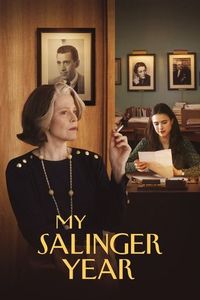
    (On Cable TV, July 2021) While the contemporary filmmaking landscape is flirting with post-literacy (at least at the top of the box-office), we have recently seen a vigorous subgenre of dramas set in the literary world — I’m thinking of (among others) Can You Ever Forgive Me?, Genius, Trumbo, The End of the Tour, Tolkien, Wild Nights with Emily — and that’s only between 2015 and 2020. We can now add My Salinger Year to this boiling pot — an adaptation of a memoir from a young woman who momentarily became an administrative assistant in the agency representing Salinger, and who witnessed first-hand both the impact of the famously reclusive writer, but also the personality of the agency president in dealing with a client like Salinger. My Salinger Year is a modest Canadian production from writer-director Philippe Falardeau, but it clearly follows the precepts of Hollywood screenwriting: it’s about its main character’s voyage of self-discovery and only tangentially about Salinger. The look at the inner working of a creative agency is interesting but clearly subordinated to the requirements of filmed drama. Fortunately, a pair of good performances are at the heart of the film: Margaret Qualley as the young writer looking for a job and the courage to pursue her dreams, and Sigourney Weaver in fine form as the brassy agency owner who ends up teaching her many lessons. Salinger is a shadow here — often a voice, sometimes a silhouette. It’s all a bit mechanical, not really surprising, but still effective. The mid-1990s setting leads to a few cheap technology jokes, but the film itself does have a timeless quality. It makes for entertaining viewing, with additional bonus points if, like me, you’re invested in films about writers. The only problem? My Salinger Year is, like its title, something that passes and fades from memory.

  • Speed of Life (2019)

    Speed of Life (2019)

    (On Cable TV, July 2021) As someone who spent a lot of time reading prose Science Fiction, and who had a strong preference for scientifically plausible SF (save for an FTL handwave or two), I always get curiously annoyed by science fiction film that take a loose and fuzzy approach to their imaginary devices. Sure, I’ll allow that Speed of Life, which riffs off David Bowie themes in a way that’s closer to fantasy than SF, is not meant to be rigorous or even rational. It starts with an argument between an ill-matched couple, which gets interrupted mid-stream by the man falling into a wormhole that just opens in their living room. Fast-forwarding thirty years later, the woman (who’s about to flee the US for Canada due to restrictions on what 60+ years old can do) sees her life change when the wormhole re-opens and the man walks out, not understanding what’s happening. That, by itself, is a silly but workable Science Fictional premise, especially as the characters (and those around them) struggle with the consequences of having a man out of time in their midst, and how relationships are altered by this intrusion. Speed of Life’s willingness to present a future not unlike the present is blunt and not really sensical (has no one noticed that 60+ years old vote a lot?) but it’s there and tips the film toward genre-based assessments. There are a few good moments along the way: Ann Dowd is rather good as the older woman who sees a past love re-emerge into her life, and I wouldn’t mind seeing Vella Lovell in other films. Speed of Life occasionally scores good character-based moments, but it gets increasingly ludicrous and unfulfilling the longer it goes on. By the time the characters hop in time-travelling wormholes at will, the shaky rigour of the premise is completely shot and anything can happen — limiting the consequences of the choices. I also kept waiting for the film to at least acknowledge how the woman’s memory of the relationship was belied by what we saw (anyone witnessing that opening argument would think that a breakup was the only outcome), but that’s a topic that Speed of Life seems unwilling to confront.   In the end, a mildly intriguing opening ends up deflating to a big blob of incoherence and missed opportunities. While I like that writer-director Liz Manashil took Bowie’s death personally enough to create a film about it, the result stops well short of offering satisfaction, and feels undercooked at 76 minutes.

  • Pipe Dreams (1976)

    Pipe Dreams (1976)

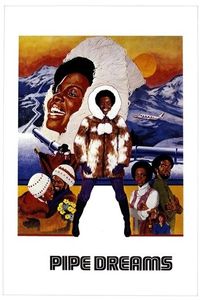
    (On Cable TV, July 2021) Clunky yet distinctive, Pipe Dreams feature no less than the very likable soul singer Gladys Knight as a woman heading to Alaska in order to reconnect with her husband. The storyline is thin and not particularly focused, but the film remains interesting due to other factors — Knight herself and the film’s lack of hesitation in featuring her on the soundtrack, and the often-magnificent Alaskan landscape as our protagonist hangs around pipeline fields and small towns. The tone of the film isn’t quite sure of itself and there are many ways the subplots would have been reinforced, but the film isn’t even 90 minutes long and does offer a period piece (which is probably not that outdated) of roughnecks in Alaska in the mid-1970s. I’ve seen better yet more forgettable films than Pipe Dreams this week.

  • Convoy (1978)

    Convoy (1978)

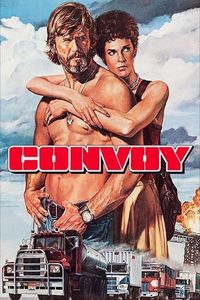
    (Tubi Streaming, July 2021) Considering that I was three years old when Convoy came out and something like six when it made its way to broadcast TV, I have this diffuse familiarity with the film, yet no specific recollection of having seen it. Hence, perhaps, my eagerness to watch it as soon as I saw it pop up on Tubi’s lineup — for all of the commercial success that it was at the time, Convoy doesn’t appear all that often on streaming sites and TV channels. Now, after watching the film, I’m open to the suggestion that it’s not a very good movie. If you’re approaching it as a piece of director Sam Peckinpah’s filmography, you’d bound to be disappointed by its lack of bite and almost cartoonish approach to violence. If you’re the kind of person who cares about tonal unity, you will be disappointed by some abrupt gear shifts between serious(ish) drama and comic(ish) hijinks. If you’re after stunts and action, you may be disappointed at the limited number of set-pieces. If you’re thirsting for a movie that goes to the next level, you’re probably not going to like how it glances at some issues, then ricochets without digging too deep. But here’s the thing: Save for a third-quarter lull, I had quite a good time taking in Convoy as my Saturday night movie. Coming from a decade of outlaw chic, it goes for some relevant commentary on police abuse of authority and some gentle grittiness. There’s some intriguing racial casting (most notably Madge Sinclair) alongside superstar Kris Kristofferson and Ali MacGraw (who answers the question, “What does a supermodel with a terrible haircut look like?” with the obvious “Still a supermodel!”) It helps that I’m fond of the highway outlaw movies of the time, from The Cannonball Run to Smokey and the Bandit and others — that “55 speed limit” thing really ignited some fun movies back then. While the number of stunts in Convoy may pale compared to some of those other movies, there are still a few good moments here — and I was amused to find out that one of my favourite stunts in the film, the truck turning over in a tight turn, was a completely unscripted accident that was hurriedly written back into the narrative. Peckinpah fans may be reassured by rumours that much of the film was directed by James Coburn (!) due to Peckinpah’s substance abuse. Many of Convoy’s contemporary reviews mention it coming too late in the CB/trucker craze to impress, but that issue has been considerably flattened by more than four decades — it’s now a fascinating period piece whose datedness is part of the charm. Oh, I won’t argue that Convoy could have been much better if there had there been a better screenwriter at the helm and a more reliable director than Peckinpah. But even without that, it’s a very enjoyable film as it is.

  • Games (1967)

    Games (1967)

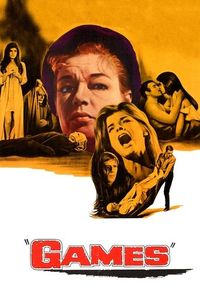
    (On Cable TV, July 2021) I had a momentarily double take in looking at Games’ TV log entry — talking about a 1967ish film featuring “A young couple who are into kinky mind games,” screams Who’s Afraid of Virginia Woolf? to me, but as a viewing attests, there’s a gulf of difference between the two movies: Games is a pure genre thriller, occasionally silly and ultimately quite glum. It does feature a couple into mind games (first shown as party tricks) but slowly sinks into a tangled web of deception and murder. Simone Signoret is the film’s most remarkable asset as a mysterious older woman who turns the tables on the couple, even if said couple is played by none other than Katharine Ross and a surprisingly young James Caan. For noted iconoclast director Curtis Harrington, Games is about as close to mainstream stuff as he did — there’s a pleasant lunacy to the overlapping plots that come to dominate the film, but it’s executed in relatively straightforward fashion for a twisty thriller. The colourful cinematography is very much of tis time, and now gives an interesting period patina to the result. You can slot Games squarely in the “solid movie” category — not a masterpiece nor particularly memorable, but well-made and entertaining enough to make up an evening’s entertainment.

  • The Cowboy (2016)

    (On TV, July 2021) While the version of The Cowboy that I saw was presented as a feature-length documentary, I see that IMDB lists the film as a two-episodes series, which does make sense considering the clear change in topic midway through. The entire film is presented as a documentary homage to the western movie genre, and specifically the archetypical figure of the cowboy. It’s produced and directed by Canadian documentarian Derick Murray, which is interesting in how the result shares one common annoyance with Murray’s better-known “I Am” biographical series: it’s utterly uninterested in delivering an impartial take on its topic. If you’re looking for an incisive commentary on the cowboy archetype, go elsewhere because, while The Cowboy will gladly discuss differences between movie cowboys and real-life historical figures, it’s firmly in the “print the legend” camp: there’s no critical re-evaluation of the toxicity of the archetype, its decreasing relevance to a more complex society that values cooperation over self-reliance, or the sometime-repulsive incarnation of American racism through the cowboy. Seeing Adam Beach being present to praise the character of Tonto is… interesting. While The Cowboy is too smart a piece of filmmaking to not at least mention those issues, they’re quickly forgotten as the narrative moves to an overall loving appreciation of its subject. (This too is a characteristic of the “I am” series: they’ll fleetingly mention and minimize the flaws but then rush past it to tell us how wonderful their subject was.)  But I’m probably being a bit too harsh on what remains, in the end, a serviceable documentary. Talking heads (including the always-entertaining Ben Mankiewicz) are interspaced with movie footage to first present a short history of the western genre, and then (in the film’s second half) compare historical figures with their Hollywood adaptations. Many of the people interviewed in the film are part of western appreciation societies or are associated with horse-riding, and that probably influences the tone of the film as well, never daring to stray too far from their enthusiasm for their lifestyle. Seen five years after production, The Cowboy also has odd notes due to the topicality of some of its material. Produced close to the release of Seth MacFarlaine’s western parody A Million Ways to Die in the West (about as high-profile a western film as there has been in 2010s Hollywood), it places an emphasis on that film that seems unwarranted only a few years later. Ah well — I suppose that a play-nice documentary is a better commercial prospect than one that really prods its topic, and The Cowboy does have its moments of insight despite the upbeat tone.

  • The Three Musketeers (1939)

    The Three Musketeers (1939)

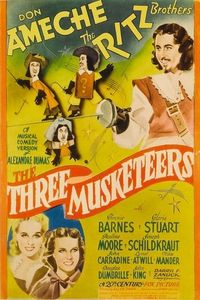
    (On TV, July 2021) There have been many different takes on Alexandre Dumas’ The Three Musketeers throughout cinema’s history — it’s a fun story fit to be reinterpreted however filmmakers want, either by focusing on the adventure, the action, the historical fancy or the relationships between the characters. But there’s only one version featuring Don Ameche and the other musketeers (The Ritz Brothers comedy trio) lustily singing their way through the plot. The reinterpretation of the story as a musical comedy is smoother than you’d think — the grander-than-life nature of the Musketeers, having been a good fit for oversized personalities such as Douglas Fairbanks and Gene Kelly, also works in the heightened reality of movie musicals. Having Ameche happily walk and sing through his numbers reinforces the essential vitality of D’Artagnan’s character as much as any sword-fight would. This being said, the tension between delivering on the bare bones of the book’s plot and letting Ameche and the Ritz Brothers do their comic things grows worse over time — sure, you can do whatever you want in the first half-hour of the film, but eventually you have to get down to the business of plotting, and that’s when this version of The Three Musketeers gets creaky. Still, there are a few rather wonderful moments here if you’re not overly attached to the original (and reading modern reviews, it’s clear that twenty-first century audiences have been conditioned to be far more tolerant of comedic takes on classic material) and it does help this version of The Three Musketeers remain curiously distinctive even eighty years and many other remakes later.

  • Teen Titans Go! See Space Jam (2021)

    Teen Titans Go! See Space Jam (2021)

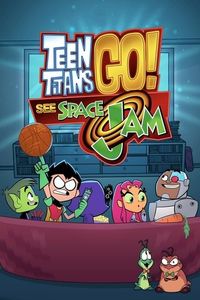
    (On TV, July 2021) If the corporations’ encroaching stranglehold over intellectual property is teaching us anything, it’s that given time, corporate-controlled pop culture will eat itself. Any takedown will be allowed if it can be profitable, or if it gives the semblance of boosting another more recent project. There’s no other way to explain the existence of Teen Titans Go! See Space Jam, a weird cultural artifact that can only exist when a single entity (Warner Brothers) controls three different Intellectual Properties (Space Jam, Teen Titans and Looney Tunes) and has a hot new project to promote. Obviously scheduled to coincide with the release of Space Jam: A New Legacy, this “film” consists in having the Teen Titan Go! crew do a comic riff on an abbreviated version of the original Space Jam (keeping the special effects and cartoon characters, explicitly fast-forwarding through the duller material between humans), with a minimal amount of framing material in having the alien Nerdlucks visit the Teen Titans and watching the film. Inspired by Mystery Science Theater 3000, they interject commentary over the original film (sometimes freeze-framing the action), break for commercial and poke fun at 1990s moviemaking conventions. The irreverent humour of the Teen Titan Go series is there, but it’s clear that for all of the poking at the original Space Jam, it’s a piece of IP meant to prime the kiddie audience in being interested in the newest sequel. The comedy is limited, and much of the film is really about rewatching Space Jam in abbreviated form. It’s far more interesting as an artifact of how far tie-in product owners are willing to go, even in derision, when a conglomerate has its tentacles squeezing tightly around popular culture.

  • The Woman in Red (1935)

    The Woman in Red (1935)

    (On Cable TV, July 2021) Liking classic films doesn’t mean giving a free pass to those with particularly idiotic plotting or lopsided structure. The main draw of The Woman in Red is easy to see: here’s Barbara Stanwyck getting a chance to play a character going through terrible events — a horse rider hobnobbing uneasily with the New England elite, with a cross-class marriage leading to further trouble and then, in the last half-hour of the film, a death that brings up even more trouble, especially when the characters become morons who won’t tell the truth. The Woman in Red feels like three movies smashed together, from romance to rich-person drama to murder/courtroom thriller. But maybe Stanwyck’s latter stature now gives the film too big a set of expectations to satisfy — in most other aspects, this feels like the kind of seat-warmer that Warner Brothers (like most other studios) churned out on a near-weekly basis throughout the 1930s. Stanwyck certainly elevates the material, but there’s only so much substance to elevate in The Woman in Red. It’s a rather disappointing part of her filmography, but not every film can be a triumph.

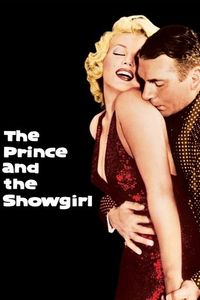
  • The Prince and the Showgirl (1957)

    The Prince and the Showgirl (1957)

    (On Cable TV, July 2021) In many ways, the trivia about The Prince and the Showgirl (Marilyn Monroe meets Laurence Olivier!) is more captivating than the film itself. There’s even a movie, My Week with Marilyn, that revolves around its production. But The Prince and the Showgirl itself is surprisingly dull, especially if you’re familiar with movies in which commoners hobnob with aristocracy. It doesn’t help that the film has a strong nostalgic attachment to the trappings of classic European aristocracy (the story takes place in 1911), which can be of very limited interest to twenty-first century audiences. In all fairness, the film does hold back on the clichés, especially toward the end, which is more along the lines of “things are looking up” rather than “…and they lived happily ever after.”  Lavishly produced in colour to take advantage of the sets and costumes, it does carry the weight of that overwrought production: the directing can be stultifying at times, moving glacially through moments that should have the fast pacing of a light comedy. Monroe herself is not particularly interesting here — the heaviness of the production holding back her natural comedic skills — while Olivier (who stars and directs) seems most to blame for the ponderousness of the result. Surprisingly underwhelming, The Prince and the Showgirl ends up being more interesting to the meta-narrative of Monroe’s career. Even though she produced it, there’s a sense that she would have been happier without it.

  • Los tallos amargos [The Bitter Stems] (1956)

    Los tallos amargos [The Bitter Stems] (1956)

    (On Cable TV, July 2021) I always get a kick out of movies being brought back from the edge of extinction. As Eddie Muller detailed with some relish in his TCM introduction to the film, his Noir Foundation was instrumental in restoring award-winning Argentinian noir The Bitter Stems from a single 35mm negative (plus a soundtrack from a 16mm copy) and brought it to the attention of the English-speaking world. The film “premiered” again in 2016, sixty years after its initial run. Since Muller is a noir expert, we can trust his judgment when he recommends a film and The Bitter Stems is indeed a pure noir from a non-American perspective. Here we have a journalist associating himself with a Hungarian immigrant in order to create a shady correspondence school, only to grow suspicious of his partner when various details don’t add up. A shocking mid-movie murder sends the rest of the film in another direction, all the way to an implacable conclusion. What makes The Bitter Stems fascinating to anyone is likely to be the film’s exceptional cinematography, not only playing in noir motifs, but also bringing in expressionistic dream sequences as a bonus — and that’s not counting the shots in which sagacious lighting changes create a dreamlike effect. Both lead actors (Carlos Cores and Vassili Lambrinos) are quite effective, even if the film around them is often far more remarkable than their acting achievements. It’s quite a rediscovery, and another proof that the cinematic past is not necessarily as set in stone as we may think.

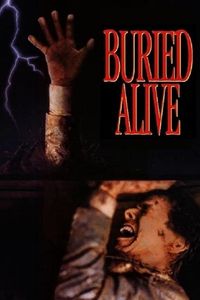
  • Buried Alive (1990)

    Buried Alive (1990)

    (In French, On Cable TV, July 2021) There are two ways to take in Buried Alive: You can either approach it as a made-for-TV suspense film and be pleasantly surprised at how well it plays, or that Frank Darabont directed it and expect far too much from this early effort. It’s better for everyone to see it as a successful low-budget TV movie. Much of Buried Alive’s first half has the look and feel of a neo-noir film, as it follows a good small-town contractor who doesn’t know that his wife and the local doctor are conspiring to kill him in order to inherit his house and fortune. As a straight-ahead suspense film, Buried Alive delivers on its promises all the way to our protagonist being poisoned and buried. But take a look at the title: the poison dose wasn’t strong enough, and neither was the cheap coffin cover. Before long, our protagonist is out and about, his thoughts focusing on unforgiving revenge. Much of the film is from the perspective of the murderous wife (an effective Jennifer Jason Leigh), as it shifts genres around her and we go from neo-noir to revenge thriller. Darabont’s direction is quite good given the constraints of the budget, and there are a few good shots to keep things interesting. The action is padded to make it past 90 minutes, but it’s not really a film that overstays its welcome. As I began by saying, approach Buried Alive as a Darabont film and you’ll be disappointed, but approach it as a TV movie and it becomes a small, entertaining surprise.

  • Nothing Left to Fear (2013)

    Nothing Left to Fear (2013)

    (In French, On Cable TV, July 2021) There are times when I seriously think that stupidity is a defining feature of the horror genre, either in the characters doing silly things, in the filmmakers for thinking that such shortcuts are acceptable, or in us audiences for accepting that swill. Nothing Left to Fear is not that terrible from an execution point of view — it’s carefully shot, features some nice effects for such a low-budgeted film and occasionally stumbles into a sense of small-town dread that suggests much better later on. But as with many horror films that can’t manage to present a coherent whole, the film ends up feeling like two or three scripts hastily stapled together, and not much can be done to patch incoherencies at the shooting or editing stage. Much of the film’s first act is Midwestern folk horror, as the family of a pastor clearly more used to urban settings moves to a small Kansas town so that he can take over the parish. There are plenty of unsettling portents of doom for them to ignore, as is their privilege as stupid horror characters. As the minutes crawl by, we eventually learn that the small town of Stull, Kansas, is really a portal to hell and that human sacrifice is needed to keep it shut. But then there’s this affliction that hits one of the characters, in which they turn monochrome and get a big scary CGI mouth and that’s roughly the point where you get that the filmmakers have so little faith in their own material that folk horror isn’t enough, hellish portals aren’t enough, there’s got to be this CGI creature to make it look really spooky even though we’re supposed to close the hellish portal before it starts spewing horrors like that one. Ah well — the film laboriously gets to its pre-ordained (ahem) conclusion with much of a fuss, raising more questions than is recommended about why this horror film had to exist at all. As mentioned previously, only some competence in the execution saves this from being a complete dud, and perhaps Anne Heche’s presence as well. Otherwise — not much to see here, and whatever is here doesn’t make much sense. Better reviewers than I have already noted that “Nothing Left to Fear” is its own worst critical one-liner.

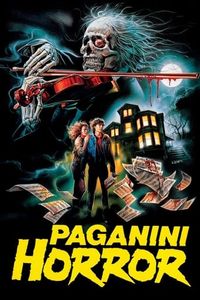
  • Paganini Horror (1988)

    Paganini Horror (1988)

    (In French, On Cable TV, July 2021) I can be lenient on bad movies that show some promise, and Paganini Horror almost gets there. I was momentarily charmed, at some point, by the horror film’s emphasis on an all-female rock band and, more generally, weaving a strong musical theme in what remains a low-budget horror film. Daria Nicolodi is not uninteresting as the protagonist, a rock-goddess lead singer who gets to tangle with the demonic presence left by the evil composer Paganini. But the film steadily degenerates throughout its running time, becoming nothing more than a series of weird stuff piled one upon the other, with very little coherence and even worse plotting. By the last act, it’s one horror cliché after another, and whatever promise the early section of the film may have shown has completely disappeared. This is where some background information may help in understanding what happened: In a few words, Paganini Horror was made quickly and cheaply to capitalize on the anticipated success of Klaus Kinski’s Paganini, with writer-director Luigi Cozzi dumped in the project at the last minute and told to do well with a slashed budget requiring an eleventh-hour rewrite. No wonder the result is so poor — in fact, we’re almost tempted to applaud Cozzi for managing to complete the project under such circumstances. Still, that doesn’t do much for us viewers right now — so it’s probably best to avoid Paganini Horror entirely.

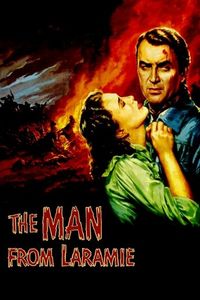
  • The Man from Laramie (1955)

    The Man from Laramie (1955)

    (On Cable TV, July 2021) While it’s interesting to see Jimmy Stewart take on darker roles in 1950s western, there’s a feeling that once you’ve seen two or three of them, you’ve seen almost all of them. Oh, I wouldn’t necessarily call The Man from Laramie generic or uninteresting — it’s got plenty of plotting going on in-between its protagonist, warring ranchers, weapon deals and superb landscapes. But Stewart isn’t nearly as interesting here as in similar 1950s westerns — he’s closer to his all-American likable persona, and you don’t sense his character having the kind of big flaws that drove much of the other movies. What’s left is a serviceable western — well-directed by Anthony Mann in early CinemaScope, but generic in theme and tone. It’s not a bad movie, but you may have trouble recalling what The Man from Laramie is about shortly after seeing it, doubly so when compared to the other Mann/Stewart films or the era.