Reviews

  • The Burglar (1957)

    The Burglar (1957)

    (On Cable TV, July 2021) Perhaps best characterized as a better-than-average middle-tier film noir, The Burglar takes a familiar crime premise (thieves on the run after a robbery getting increasingly uncomfortable with each other) and gives it a spin that’s both stylish and regional. Much of the film was shot on location in Philadelphia and Atlantic City, giving it a welcome difference from the usual California or New York City noir. Director Paul Wendkos also does much to give his own spin on standard material, with a newsreel opening, unusual camera angles and a stronger sense of camerawork than many contemporaries. Much of The Burglar’s claim to fame (and its reason for being released by a big studio years after its regional production) is starring a pre-stardom Jayne Mansfield, along with noir veteran Dan Duryea. Still, the film holds up reasonably well on its own — it doesn’t have mordant dialogue or memorable plotting (although the amusement park finale works rather well), but it executes its premise well enough to be entertaining.

  • It’s a Big Country: An American Anthology (1951)

    It’s a Big Country: An American Anthology (1951)

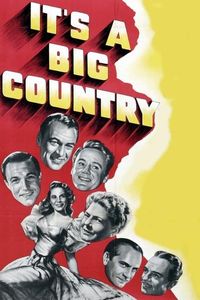
    (On Cable TV, July 2021) Watching many Hollywood movies requires, in some ways, buying into the self-aggrandizing mythology of the United States as the shining beacon on the hill. Over time, you often get used to it and maybe even stop noticing the unspoken assumptions… until an even more blatant example of the form comes along and strips away the pretence. I realize that there’s some irony in watching as blatant a propaganda piece as It’s a Big Country: An American Anthology on July 1st (Canada Day), but sometimes celebration is calibrated by comparison. Meant as a big showcase of MGM stars celebrating various aspects of American life through an anthology of short segments, It’s a Big Country remains a nexus for anyone trying to complete filmographies for stars as varied as Gene Kelly, Gary Cooper, S.Z. Sakall, William Powell, Ethel Barrymore, Janet Leigh, Fredric March or Van Johnson. If nothing else, you get snippets of familiar actors usually playing their screen personas in small roles — and there’s some fun in seeing Kelly romancing Leigh and going head-to-head with Sakall, or Gary Cooper playing a rancher “dispelling” some Texas-is-bigger myths. (It’s easily the best segment of the bunch.)  But I suspect that that biggest issue with It’s a Big Country sixty years later isn’t as much the depth of its America-can-do-no-wrong attitude (which is not unprecedented), but the spectrum on American values that the film tries to address. A segment purports to showcase black Americans, but plays more as an itemized list of “valuable citizens” making contributions to a country that still had institutionalized segregation. Another segment deals with a grieving mother being reassured that the war in Korea was about the values of America being projected upon the world. A late segment explicitly links religion (but a very specific religion) to the President of the United States. It’s quite a lot to take in at once, and few segments have the ironic humour of the Texas-is-best one to diffuse the earnestness. After a while, it’s a relief to see more dramatic segments that don’t explicitly wrap themselves in the flag and the cross — It’s a Big Country is best when it deals with characters rather than national virtues. It’s still worth a look if only for the talent assembled, but contemporary viewers may have a hard time not criticizing what the film ignores or sweeps under the rug.

  • Crawlspace (1986)

    Crawlspace (1986)

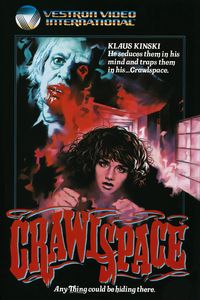
    (In French, On Cable TV, June 2021) If you’re looking for a reason to watch Crawlspace, I’ll tell it to you straight: Klaus Kinski as a landlord. Need more? Klaus Kinski as a Nazi-descended landlord who observes, tortures and kills female renters. Oh, you did not need that much? Well, too bad, because even the film’s production history is about Klaus Kinski being a terror on set, earning the enmity of the cast, crew, producers (who reportedly considered having the actor killed for the insurance money and de-aggravation factor) and director David Schmoeller, who later directed the short essay Please Kill Mr. Kinski. Considering all of this, it makes sense to report that Kinski is just about the most interesting thing is this humdrum slasher/torture horror movie. While the cinematography occasionally scores a striking image, the rest of Crawlspace isn’t much more than a young-man-versus-psychopath thing that we’ve seen countless times, made even more exploitative by Nazi imagery. But hey: Klaus Kinski.

  • A Novel Romance (2015)

    A Novel Romance (2015)

    (On TV, June 2021) The two reasons why I make a point to watch movies featuring novelists are mutually contradictory. As someone who has written novels and counts several novelists as friends, I can identify with those characters, and novelists—for some strange reason—seem far more prevalent than IT professionals in cinema. The other, arguably better reason why I’m interested in films featuring novelists is the sometimes-ludicrous dramatization of the craft. In movies, novelists scarcely spend any time writing; they’re hounded by editors so that their book can appear the next month (something screamingly hilarious if you know all about publishing timelines), live the high life at publicity cocktails, agonize over writer’s block as if it was the most important thing ever experienced, and can’t write a thing unless they’ve personally lived it. NONE OF THIS is even remotely true… but it makes for good fiction and the lousier the film, the more these ancillary aspects to the writer’s life (which is really about interminable hours typing, procrastinating and staring off into space) take over and present a deliciously demented misconception of what it is to be a novelist. (Don’t think this is accidental — most scripts are penned by writers who know perfectly well what the craft is about.) This long-winded introduction is more than A Novel Romance deserves — as a Hallmark Channel romantic comedy, it’s clearly not interested in a single whiff of authenticity. It features novelists as romantic creatures and natural enemies of critics, which makes it inevitable that a romance would bloom between the protagonist and his fiercest reviewer. Never mind that the identity of a romance writer is here supposed to be a big secret rather than a commercial conceit. If it wasn’t for the innocuousness of the genre and an understanding that none of this is meant to be real (such as googling “Sophia Portland” and expecting a useful result), the entire thing would feel slightly psychopathic with the male character pretending to be someone else… but this is a hunk doing outlandish things in a female-centred romance so everything is forgiven. The script is merely serviceable even by the Hallmark standards, complete with another one of those weird time-skips meant to expedite the conclusion. By wider cinematic standards, this is terrible. By Hallmark standards, it remains worse than average, with an unremarkable lead (Amy Acker, bland), standard tropes and unconvincing details. Even by my own the-wilder-the-better assessment of over-dramatic movies about novelists, A Novel Romance is a dud: nothing worth getting angry about, but still not particularly enjoyable.

  • Critical Care (1997)

    Critical Care (1997)

    (On Cable TV, June 2021) There’s something fantastically creepy about Critical Care’s darkly comic approach to the American medical system, so advanced that it can keep anyone alive but only if the money is there. James Spader plays a young doctor who learns the real world in between a cynical mentor and two sisters trying to seduce him into pulling the plug on their dearest, richest father. Under the direction of a sardonic Sidney Lumet, the film never cracks a smile and so, perhaps, doesn’t tip its hand as to whether it’s really a comedy. The clinical set design borrowing (still) from science fiction doesn’t necessarily make things any funnier, although if you’re not cracking a smile at the seduction scenes, then you may not be paying attention. The god complex of doctors is fully scrutinized and the deeply unhealthy relationship between patient care and their financial means also goes under the microscope. While Critical Care was not a commercial success, it’s got an interesting cast that becomes stronger with time. Just have a look at these names: Kyra Sedgwick, Helen Mirren, Anne Bancroft, Albert Brooks (terrific and terrifying), Jeffrey Wright, Margo Martindale, Wallace Shawn, Colm Feore… that’s a nice cast. The film is not without missteps and missed opportunities: the move to a courtroom late in the film breaks its spatial unity, and I’m not sure that all of its thematic opportunities have been equally well explored. But Critical Care is still acerbic enough to classify as a bit of an overlooked film — not a classic, not even a gem, but something surprising enough to be worth a look if deadpan comedies with a bitter edge have any appeal.

  • No Way Out (1950)

    No Way Out (1950)

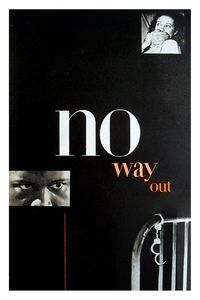
    (On Cable TV, June 2021) It’s almost amazing to realize that No Way Out was Sidney Poitier’s feature film debut, because it already shows the characteristics and the persona that would transform him into a movie star during the following decade. Here, he plays a black doctor confronted with a deeply racist criminal as a patient (Richard Widmark, fully playing up his cad persona) that he nonetheless has to treat. A mysterious death ends up causing no end of troubles for the young doctor, and the film keeps exploring racism in a way that still resonates today. Written and directed by the legendary Joseph L. Mankiewicz, No Way Out is well-written and well-structured — a joy to watch despite the tough subject matter. Poitier is already exceptional and the script’s naked racism still rankles today.

  • The Eighteenth Angel (1997)

    The Eighteenth Angel (1997)

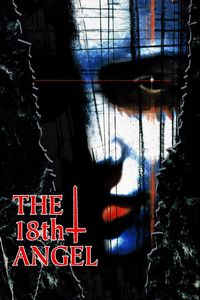
    (In French, On Cable TV, June 2021) An intriguing cast is certainly no guarantee of success, and while you may feel bad for skipping over horror film The Eighteenth Angel given its top-billed cast, I can assure you that you haven’t missed a thing. Sure, here you have Christopher McDonald, Rachael Leigh Cook, a young Stanley Tucci (an actor who has aged remarkably well) and Maximilian Schell in a story about a father/daughter pair battling an apocalyptic cult obsessed with hastening the return of Satan. But the execution is soporific in ways that defy prediction. For a film delving into prophecies, satanic rituals, age-old cults and the weight of a mother’s death (much of it against the backdrop of rural Italy), The Eighteenth Angel seems detached, almost entirely uninterested in what it’s presenting. The narrative is dull, and the slow-moving, pedestrian execution does nothing to improve on the substance. While it’s true that there have been many, many, many more similar films since then, it really doesn’t excuse the failings of The Eighteenth Angel. Just ignore the cast and go watch something else.

  • The Celluloid Closet (1995)

    The Celluloid Closet (1995)

    (On Cable TV, June 2021) The topic of how Hollywood depicted homosexuals through its history is not quite as niche as you’d think — It dovetails quite well with the forces that affected moviemaking through the decades. It’s about what could be said and shown (or not) on-screen, but also more regrettably what was said about a group identified for marginalization. The Celluloid Closet may date from 1995, but it’s far less dated than you’d think in exploring the evolution of gay characters and narratives throughout cinema’s history. Building on the written work of Vito Russo, directors Rob Epstein and Jeffrey Friedman offers an overview of how Hollywood portrayed homosexuality prior, during and after the restrictive production code: Stereotypes studied include “the sissy” and depraved killers, but perhaps most notably the absence of fully realized homosexual characters until quite late in history. Numerous celebrities and activist interviews (many of them with elderly celebrities since then deceased) are complemented by a large assortment of film clips. One thing that does set apart The Celluloid Closet from similar films and helps ensure its freshness even a quarter-century later is the witty and often very funny editing of film sequences, especially as the film examines the way coded messages were sent from gay creators to gay audiences in the middle of otherwise straight films — In context, some sequences are almost riotously on-the-nose, and even more so when few people catch the allusions. It’s worth noting that much of the film’s first half could play almost as well today — as a historical overview, it’s rich and compelling, and it’s not as if the corpus of mainstream Hollywood classic film has changed significantly since then. The creaking starts to show in the second half — not because the material is less interesting, but because the examples used to anchor the latest progress have, themselves, become dated — Philadelphia is the last major film discussed here, and while there’s been some progress since then (the 2010s were a big year for pan-denomination representativeness — I suppose Rocket Man would be another modest landmark), a sequel becomes more urgent as The Celluloid Closet nears its end. There are a few topics that the film could have covered in more detail — Specifically, the way Hollywood was shaped by homosexual filmmakers and the gulf between how Hollywood thought of homosexuality within the thirty-mile-zone and the way it showed it to the rest of the world. I also would have liked film clips and speaking heads to be more frequently identified. Still, The Celluloid Closet remains a remarkable documentary, and I strongly suspect that it’s because the world has caught up with it — Had I seen the film in 1995, I probably would have found it a bit bold in its worldview… but by 2021, it reflects a somewhat mainstream attitude toward homosexuality that makes the film feel self-evident. That’s progress of a sort, I suppose.

  • Suddenly, Last Summer (1959)

    Suddenly, Last Summer (1959)

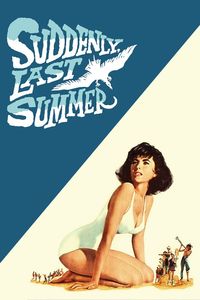
    (On Cable TV, June 2021) It strikes me that a good way to distinguish between new classic movie fans and veteran ones is to ask them about Suddenly, Last Summer: Novice film fans, not having seen the film, are likely to be astounded by the top talent assembled here: Elizabeth Taylor, Montgomery Cliff and Katharine Hepburn on the acting front, with Joseph L. Mankiewicz at the direction and none other than Gore Vidal and Tennessee Williams penning the script, how can it be anything than terrific? Then there are the veteran classic movie fans who, having seen the film, are simply shaking their heads while saying, “You should see it before getting excited.” The most important name here is probably Tennessee Williams, since his specific sensibilities dominate the film’s narrative in such a way as to influence everything else. True to form for Williams, the story he’s telling is a melodrama with a central (but faceless) character who’s as homosexual as could be at the time. If I understand the film’s production history, the Williams one-act play was then adapted for the screen by Gore Vidal, leading both to accuse the other of sabotaging the result. No matter who wrote it, director Mankiewicz went for maximal melodrama in executing it, with Hepburn being an enthusiastic participant in the result — her role as a family matriarch is heightened opera the moment she descends on-screen in an enclosed throne, and the flowery soliloquies she delivers would have been ridiculous from any other actress. Cliff does his best to keep up as the audience’s representative in understanding the profoundly dysfunctional family in which he’s been asked to intervene, but he routinely gets overshadowed by Hepburn’s arch overacting and Taylor’s ability to take her dialogue right up to eleven even with a heaving low-cut dress. The score is another intrusive participant, underlining every sordid revelation with a heavy note. It’s quite wild, and the narrative never stops one-upping itself, eventually reaching for a cannibalistic conclusion reinforcing the era’s prejudice against homosexuals. What’s more, I’m glossing over the rape, incest, and intended lobotomy as a way to keep the family secret — as I’ve said, it’s a wild movie, and one that’s more impressive for how quickly it becomes untethered from reality than for producing the results that the cast and crew would have preferred. By sheer happenstance, I followed up Suddenly Last Summer by the viewing of homosexuality-in-Hollywood-history documentary The Celluloid Closet, and I’m fortunate that this was the order I watched both films because The Celluloid Closet’s description of Suddenly Last Summer’s ludicrousness would have been too wild to believe if I hadn’t just watched the film. There are plenty of landmark movies in classic Hollywood history, and if Suddenly Last Summer is really not one of them, I still feel as if I just graduated to another stage of understanding Hollywood history simply by having watched it. Incredulously.

  • Les amazones du temple d’or [Golden Temple Amazons] (1986)

    Les amazones du temple d’or [Golden Temple Amazons] (1986)

    (On Cable TV, June 2021) What a terrible movie.  Lazily designed, incompetently executed and without any redeeming value, Les amazones du temple d’or is cheap exploitation cinema at its near-worst. The plot is something about a young woman taking revenge on a savage tribe fifteen years after they murdered her parents, but that’s really an excuse to portray naked women, perfunctory violence, shoddy sets and terrible acting. A fair warning, though: the women look nice, but the nudity is not worth the aggravation of the rest of the film. Bad-movie aficionados will recognize that the film wasn’t bad by accident: as an Eurocine production co-directed (that should be “serially directed”) by Jess Franco and Alain Payet, the film was never made to be good: it was made to be just good enough to play in eurotrash theatres and rake in the profits from patrons lured in by the (admittedly good) poster. While bloody, the film avoids the kind of extreme gore that many similar films went for, so that’s already a step up from the bottom of the barrel. Oh, and there are some nice (non-murdery) interactions with wildlife that are not all out of stock footage. Clearly, I’m grasping at straws to say something nice about something that’s fundamentally not good. But most casual film fans do not know that there’s an entire subcategory of cinema that does not aspire to artistic merit and can’t even manage acceptable execution—Les amazones du temple d’or is not good, but even then it’s far from the worst example of those.

  • Out of the Dark (1988)

    Out of the Dark (1988)

    (In French, On Cable TV, June 2021) Considering my loathing of slasher horror films, I probably would have been better off not watching Out of the Dark. While generously billed as a horror comedy, it remains one of those detestable films with a masked killer preying on young women. Much of the movie is structured around violent deaths and the fantasy of phone-sex operators going through the motions of their jobs. There’s more nudity than the norm for that kind of film and some of the actresses look nice, but little of it is interesting when the next bloody murder is just around the corner. In the hands of director Michael Schroeder, the script’s idea of comedy seems to lie in dull post-mortem one-liners, which feels more psychopathic than actually funny. The outcome of the film was foregone from the start — it’s a mean, nasty, wholly useless slasher and given that it came well after the slasher cycle of the early 1980s, you can’t even excuse it for being part of a bigger commercial scheme. Just avoid.

  • Monte Carlo or Bust! aka Those Daring Young Men in Their Jaunty Jalopies (1969)

    Monte Carlo or Bust! aka Those Daring Young Men in Their Jaunty Jalopies (1969)

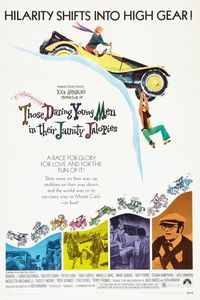
    (On TV, June 2021) If you’re noticing a slight titling resemblance between Those Daring Young Men in Their Jaunty Jalopies and the better known Those Magnificent Men in Their Flying Machines, well, that’s not an accident: Monte Carlo or Bust! was made as a sequel to the earlier flying film, and the American release simply retitled the result to make it even more clearly related to its 1965 predecessor. The premise is a ground-bound variant, the characters are similar but not meant to be related (even if some of the cast is the same, no character is meant to carry from one to the other), and the style is very similar: Random comic mayhem across a large ensemble cast, structured around a race that’s never as simple as it would appear in the first place. Terry-Thomas plays a large part in this film, but the ensemble cast includes such notables as Tony Curtis (who, for extra bonus points, also played a racer in the similarly-themed but funnier The Great Race), Dudley Moore, and Gert Fröbe. The 1920s setting means that we’re back in a somewhat heroic era for racing, with many mishaps along the way that would do not exist in a more modern age. Monte Carlo or Bust is decently amusing, but it is not snappy: at slightly more than two hours, it’s very much an epic comedy that favours large-scale practical gags rather than tight dialogue or fast pacing. There’s a little bit of romance to make it sweeter, but the overall impression remains of an amiable, often spectacular sort of comedy. It hasn’t aged as well as it should, but it keeps some of its period charm.

  • Druk [Another Round] (2020)

    Druk [Another Round] (2020)

    (On Cable TV, June 2021) Considering my muted-to-hatred reaction to much of Thomas Vinterberg’s filmography, saying that I didn’t dislike Druk is actually high praise of a sort. Of course, as a lifelong non-drinker, the idea of a film revolving around middle-aged men drinking his way through their midlife crises is perplexing. Still, Druk takes us to Copenhagen through a school year in which our protagonist (Mads Mikkelsen) and three friends decide to test the theory that humans are happier in a constant state of mild inebriation. It gets worse when they decide to graduate from constant day drinking to hardcore binge-drinking. No one will be particularly surprised to learn that a Vinterberg “comedy” eventually leads to a firing, two separations and a suicide. Fortunately, the suicide leads the survivors to regain their joie de vivre, somehow glossing over their involvement in driving their friend to the consequences of their alcoholism. But it’s all right: The last few minutes have Mikkelsen dancing up a storm, and the result won an Oscar! But as I said: I didn’t dislike Druk. It’s not always as interesting as it should be, but the immersion in modern-day Denmark is interesting, Mikkelson is rarely less than compelling, and there are a few good touches of humour scattered here and there. But in typical Vinterberg fashion, the pacing is often slack, the refusal to adhere to a clear tone can be maddening, and the result can be messy. Still, it could have been worse: I’ve seen other Vinterberg movies.

  • Nothing Sacred (1937)

    Nothing Sacred (1937)

    (On TV, June 2021) As much as it may displease some classic-movie fans, I often feel that colour films of the 1930s-40s have an advantage over their black-and-white equivalents. It’s not as if I dislike black-and-white movies or even make much of a fuss when I see one — I fact, I can talk up a storm about the crispness of great black-and-white cinematography, especially during the rather long period during which colour cinematography was typically blurrier and more artificial than time-tested monochrome. But seeing a film like Nothing Sacred emerge from the 1930s even in muted colours (and I say this having seen the terrible-quality public domain version) is a bit of a thrill. Never mind the story — my favourite scene is the one in which a small plane approaches late-1930s Manhattan in colour, with its sparse skyline and green fields in viewing distance of Manhattan. (For bonus points, we also have in that sequence a character bah-humbugging the sight of the Statue of Liberty while mentioning a character named Oliver Stone.)  There’s also the unusual sight of a screwball comedy in colour, and the only colour film to feature Carole Lombard. The film is also notable, I’m told, for pioneering special effects work, most notably in superposing shots and rear projection mixing location photography and studio characters. Still, there’s more than colour cinematography at play here. At 75 minutes, Nothing Sacred doesn’t have a lot of time to spend in elaborate plotting, but it does make the best of its running time for rapid-fire jokes and bon mots that don’t beg for laughs. The story is thin but still mordant in its depiction of media rapaciousness in service of viewership by proposing a journalist’s quest to promote the impending death-by-sickness of a young woman, even as the young woman herself knows she’s not sick and takes advantage of the opportunity to visit the big city. Change a few details, and it would be just as relevant in this age of clickbait “journalism” and Munchausen by Internet — the cynical attitude alone, far more than the cinematography, makes Nothing Sacred timeless.

  • Blackboard Jungle (1955)

    Blackboard Jungle (1955)

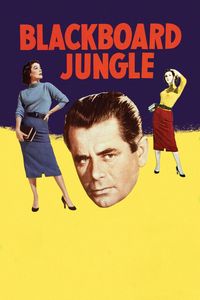
    (On Cable TV, June 2021) I stand corrected — for as long as there’s been a definition of the teenager in the postwar economic boom, there have been movies about teenage delinquency and its obvious counterpart, the inspiring teacher film. Blackboard Jungle is part of that first cohort of movies warning parents about the teenage threat lurking at home and delighting teenagers who realized what they were capable of doing. On the one hand, it’s undoubtedly a film of its time in its period depiction of a tough New York City school, its teenaged hoodlums and the righteousness of its protagonist (Glenn Ford, quite likable) in trying to save the worthy kids and expel the bad ones. At the same time, there’s also a timeless quality to the hostility that the teacher faces from the students, the ways he tries to reach them through their façade, and the power plays going on in a class of many different students. It’s even surprisingly modern in depicting how teachers react to the constant stress of a confrontational classroom, the way third-parties can be harassed and how public comments can be twisted to discredit someone. Socially engaged, Blackboard Jungle works itself up to a gripping climax as a classroom lesson escalates to a knife fight between an incorrigible bad apple and a teacher who has decided he’s got nothing left to lose. Also notable for introducing the use of a pop song as the main theme (the all-time classic “Rock Around the Clock”), and one of Sydney Poitier’s early roles — in which he predictably excels. (He’d play the flip side of the student/teacher divide twelve years later in To Sir, With Love.)  Contemporary commentary on Blackboard Jungle shows how much the film pushed the envelope at the time, and how the studio took political hits for it. But at the same time, it’s a film that suggests what could have been had Hollywood had been just a bit more willing to engage with social issues at a crucial time, and what would have happened if the Hays Code had disappeared even a decade earlier.