Reviews

  • The Comic (1969)

    The Comic (1969)

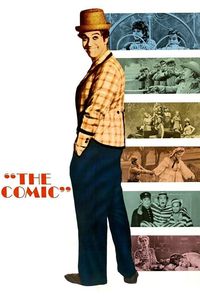
    (On Cable TV, March 2021) There’s a lot to like in The Comic for fans of early silent comedy — with Dick Van Dyke playing a silent comedian struggling to stay relevant in a world moving forward, the film ends up being a melancholic take on the careers of people such as Buster Keaton and Harold Lloyd, whose careers never quite adapted to the sound era. Still, let’s not read too much into the film’s character as a version of those two — the protagonist here is a terrible person marginally made tolerable by a talent for a very specific kind of physical comedy that became far less popular after the end of silent cinema. The rest of the film, narrated from the casket, doesn’t get any better for him — divorce follows his adultery, his son disappears from his life and a trip to Europe doesn’t improve his fortune at all. It’s not hard to understand why Dick Van Dyke is perfect for the role, as he plays the slapstick perfectly in silent film sequences faithfully re-created by writer/director Carl Reiner — aside from the too-good visual quality, you’d swear those were real silent films. There’s also quite a bit of more dramatic material for Van Dyke to play, as his character just keeps digging himself deeper into a hole and refuses to move on with the times while alienating everyone who does. (This is where the Keaton comparisons most definitely end — Keaton’s fall from grace had more to do with a bad contract that led to many damaging outcomes, such as alcoholism: he otherwise kept working until his death, including as a gagman to MGM and a mentor to younger comedians such as Red Skelton.)  This is another entry in the sad-films-about-comedians subgenre but it’s not entirely glum nor unjustified: the lead character is not admirable outside his performances, and the entire film feels closer to tragedy than humiliation. The post-mortem narration does help take the edge off, obviously, although I don’t think that the film quite closes the loop on that. Still, while The Comic is not as funny an experience as many would like (the final shot is a big sad statement), there’s quite a bit here for fans of Van Dyke, Reiner or silent cinema to chew on.
  • A Kiss in the Dark (1949)

    A Kiss in the Dark (1949)

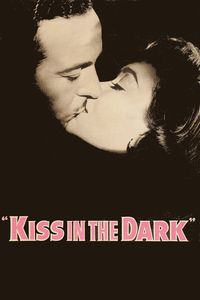
    (On Cable TV, March 2021) Short and perfunctory, A Kiss in the Dark works best as a showcase for David Niven and Jane Wyman, as he plays a concert pianist who discovers he’s the owner of a slightly dilapidated apartment building in Manhattan. Investigating the situation, he comes to meet the eccentric tenants and finds himself captivated by the cutest of them all (Wyman, obviously). As a comedy film, it runs a bit long even at 87 minutes — the narrative arcs are familiar, from the easily-resolved romantic triangle to the workaholic-no-more theme to the bellowing tenant tortured into submission. (Wait, what? Well, yes — the film does suffer from a bit of protagonist-centred morality in how a tenant is cruelly sleep-deprived. You’d argue that he had it coming by punching the protagonist in the first place, but that only raises more disturbing questions as to why the film seems so fond of its characters frequently punching each other in the face and why the police aren’t brought in for assault charges.)  This is not sophisticated stuff, although Niven’s stereotypically British persona and Wyman’s attractiveness will make anyone overlook most of the film’s flaws. It’s also fun to see Broderick Crawford in a supporting role as a cranky-and-violent antagonist. Still, there simply isn’t enough in A Kiss in the Dark (not the best title!) to stay interesting. Despite the building’s 53 tenants, the film focuses on too few of them and pads its comic scenes with too much repetition. There’s some chemistry between the leads and it’s all too likable to dislike… but this is an average comedy as best, one that just happened to star compelling performers.

  • Funny Man (1994)

    Funny Man (1994)

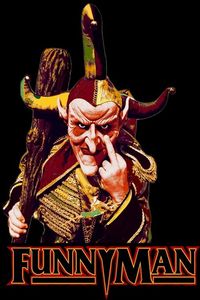
    (In French, On Cable TV, March 2021) No one will ever mistake Funny Man for a good movie, but to recognize its value fairly, it does have the undeniable advantage of being so weird as to be compelling. The barebones plotting (a man moves into a house he just won at cards from Christopher Lee and discovered that it’s haunted by a jester-looking monster who slaughters everyone in sight) is just an excuse for eerie visuals, taking a jester archetype to its goriest extreme. There are plenty of stretched latex, slime, gore and overdone sound effects in the over-the-top death sequences, and the result isn’t disgusting as much as it’s surreal and far more imaginative than death sequences in tamer horror films. There’s clearly an intention to go all-out here, taking advantage of the jester figure to straddle a thin line between extreme horror and frazzled comedy. (Keep an eye out for a visual reference to Scooby Doo’s Velma.)  Lee barely has more than a cameo, but it’s a good cameo. Tim James has a lot more to do as the Jester (occasionally addressing the audience). Among the victims, Pauline Black does make a stronger impression than other actors as a “psychic commando.”  Witty and self-aware, Funny Man is a bit of a surprise — it’s not as well-known as many staider horror films of the era, but it has a confirmed loopiness that keeps it interesting long after it should have become repetitive. I’m not completely uncomfortable placing it in the same rough category as the Sam Raimi and Peter Jackson films of the 1990s, although there’s clearly a noticeable gap in quality between the two. Still, Funny Man is much better than its direct-to-video pedigree may suggest.

  • Eurovision Song Contest: The Story of Fire Saga (2020)

    Eurovision Song Contest: The Story of Fire Saga (2020)

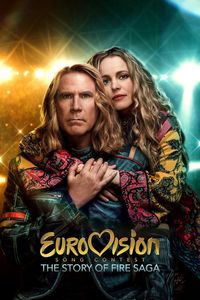
    (Netflix Streaming, March 2021) At this point, it seems to be even odds that Will Ferrell (now 53) will keep playing man-child characters with poor impulse control until the end of his acting career. Despite a few welcome attempts to expand his comic repertoire, Ferrell often goes back to familiar archetypes, and his middle-aged singing dreamer in the Eurovision Song Contest: The Story of Fire Saga is nothing new. Taking affectionate aim at the Eurovision Song Contest (which, to be fair, owes much of its current popularity to a semi-comic sensibility already), it does boil down to a familiar arc — lovable losers asked to surpass themselves in front of a large audience and work out their personal conflicts along the way. Ferrell plays a character who should be at least twenty years younger, but that’s how the Ferrell brand of comedy rolls and will keep rolling. While Eurovision does have its moments of mirth, it’s rarely as enjoyable as during its musical numbers — the highlight being a medley performance from several past Eurovision contestants. It becomes far more laborious when it stops singing and moves through a familiar narrative without too many surprises. Rachel McAdams outshines Ferrell by playing the straight woman to his more ludicrous character and committing herself to an acting/singing performance. (She’s dubbed, but it sounds good.)  Meanwhile Dan Stevens also earns some attention with a strong supporting performance. Still, the film’s saving grace may be that it’s joyous and colourful — even as it runs through the usual Ferrell narrative, it unleashes itself when it counts, which is to say during the musical numbers. That’s probably the bare minimum expected from this film, considering its pedigree — you go into Eurovision knowing what to expect.

  • The Raven (1963)

    The Raven (1963)

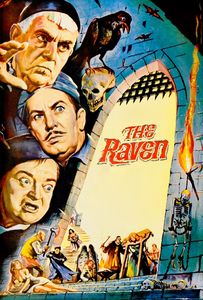
    (On Cable TV, March 2021) Some movies should come with warnings along the line of “don’t watch this before you watch those other movies.”  If that was applied to The Raven, the prerequisite would probably include movies featuring Vincent Price, Boris Karloff and Peter Lorre just so you’d come into it expecting their screen persona. You would probably also want to include at least one of producer/director Roger Corman’s horror films of the period just to give an idea of what audiences were expecting. Finally, it wouldn’t be a bad idea to throw in a later film from Jack Nicholson to show how far he’d go from this film to superstardom, and probably a modern fantasy film just to highlight what happens when a genre becomes fully defined. But let me explain — Roger Corman, at the time, was adapting classical works of horror literature (many of them from Edgar Allan Poe) as pretexts for horror films. Price and Karloff were already horror movie icons, whereas Lorre was a fixture as “creepy guy” in a variety of films. Jack Nicholson was barely beginning his long career, and fantasy as a genre (not just as movie genre) was at least a decade from being codified. But The Raven tried something weirdly different, delivering a fantasy comedy based on Poe’s “The Raven” that allowed Price and Karloff to portray rival sorcerers trying to one-up each other. The poem’s “Lenore” is a traitorous harridan, while Lorre portrays The Raven, occasionally spitting feathers. It’s definitely a comedy, although modern viewers may want to temper their expectations regarding the density and impact of the jokes. Sometimes, The Raven seems to bask simply in how weird it is, without going the extra mile of making itself funny — but then again, I suspect that Corman’s idea of what’s funny wasn’t that of a conventional comedian. From modern lenses, the weirdness of the film also comes from working with unbuilt tropes — picture “wizard” in your head, and you won’t match the film’s vision of “wizard” because it came in ten years before the printed version of The Lord of the Rings and, in turn, the way wizards have been portrayed in fantasy literature since then. Any circa-2021 attempt to retell the same story would be far more overly funny, but would also deal in visual archetypes familiar to audiences from decades of fantasy films all going for the same iconography. Where that leaves The Raven for modern audiences is more akin to interesting experiment… as long as you’re familiar with the prerequisites of the film. Seeing Karloff and Price in a lighter register than usual is fun, but the film stops well short of hilarious. If you’ve seen the prerequisites, though, go ahead and have fun — The Raven is meant to be playful all the way to its closing lines: Nevermore!

  • Hangar 18 (1980)

    Hangar 18 (1980)

    (On TV, March 2021) I distinctly recall watching at least the vivid conclusion of Hangar 18 as a teenager, meaning that I started this second viewing with the apprehension that I knew how it would all turn out. But as the film advanced, images from another film kept intruding: Capricorn One, which (three years before Hangar 18) also played with a conspiracy theorist’s view of the space program, shadowy officials prepared to kill as part of a cover-up and astronauts involved in car chases (with sabotaged brakes!) to find the truth. But whereas Capricorn One is a good movie, Hangar 18 definitely isn’t. Oh, there are a few interesting moments — the opening sequence set aboard the then-prototypical space shuttle is intriguing despite being ridiculously inaccurate, the car chase sequence has its moments despite basic staging issues, and the sombre machinations by ruthless government managers are enough to make any conspiracy thriller fans happy. Alas, a lot of indulgence is required throughout — the narrative never makes sense on a basic level, whether it’s getting a UFO in a government hangar, or the final flourish of trying to bomb the hangar to keep a secret. (!) The script is hampered by its ridiculous assertions that this is somehow based on a true story and as a result never bother distinguishing most of its characters — something further compounded by casting that largely sought out the same middle-aged white males. (If it helps, Robert Vaughn is in the film and he’s distinguishable because, hey, he’s Robert Vaughn.)  The expected ending feels like a bit of a murderous cheat considering that the white male characters live even as the more diverse supporting cast presumably bites it around them. There’s a sense that the film believes just a bit too much in its conspiracies to be able to create a believable narrative — it seems to address wide-eyed believers, assuming that they’ll accept anything. It’s too bad, because you can recognize here the elements that could lead to a much better film if they were handled with more wit. But instead, we get a B-grade version of a B-grade movie. Notwithstanding that memorable last shot, it’s really not enough.

  • All of Me (1984)

    All of Me (1984)

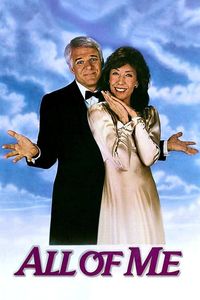
    (On Cable TV, March 2021) While it may not be mentioned as often as The Jerk or Roxanne or other Martin films between 1979 and 1988, All of Me is just as representative of Steve Martin’s earlier, funnier film performances. (Its lower profile probably comes from the fact that Martin isn’t credited with co-writing the script.)  While its body-possessing premise may not be as cheerfully absurdist as other Martin films of the time, it does let him perform several sequences of pure body comedy. Playing a meek man whose body ends up half-possessed by a rich heiress, Martin pulls out all the stops in showing a man half-controlling his movements, with the other half freaking out at the predicament. Much of the good stuff, however, takes place in the buildup of the film — perhaps sensing overexposure, the body comedy gradually leaves enough space for a strong comic narrative in tie for a satisfying ending. Martin gets some astonishing support from Lily Tomlin as the heiress whose possession plans ran amuck — Director Carl Reiner keeps her in the film long after her death by having her show up in mirrors to talk to Martin’s protagonist, leading to a final shot that becomes a likable romantic flourish on top of the entire film. The entire film is in a slightly different comic register than other Martin movies, but it holds up very well even today, and probably deserves a bit more attention — the best sequences are anthology-worthy.

  • Odds Against Tomorrow (1959)

    Odds Against Tomorrow (1959)

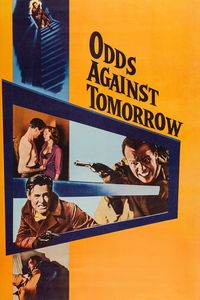
    (On Cable TV, March 2021) Coming from the end of the classic film noir era, Odds Against Tomorrow does have one interesting wrinkle for an urban subgenre that remained surprisingly Caucasian-tinted throughout its first iteration: A black main character. While much of the story will feel very familiar and bridges the gap between classic noir and bank robbery thrillers, the race of the main character does bring something different and interesting to the results. Of course, much of this has to do with Harry Belafonte (who also co-produced the film)— always a charismatic performer, and fascinating to watch in a film focused on harder-edged crime suspense. Racism becomes a further source of tension between the men plotting the bank robbery and as things predictably blow up toward the end of the film, it does add an extra dimension of social commentary to a film not completely focused on genre mechanics. (The coda is not subtle about the essential meaninglessness of race in those circumstances, but it’s far better than avoiding the issue.)  Director Robert Wise was never an accomplished stylist, but he here manages to create an effective sense of tension, at least when the action gets started in the second half. Odds Against Tomorrow does falter when compared to other bank heist films of the 1950s, but the racial element alone distinguishes it from a lot of similar films, and justifies by itself a look at the result — if it’s not already on your viewing list if only for Belafonte’s presence.

  • The Story of Three Loves (1953)

    The Story of Three Loves (1953)

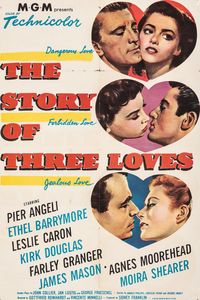
    (On Cable TV, March 2021) As much as we can admire classic Hollywood’s greatest hits, talk fondly about its actors and follow the filmography of its directors, not every film of the era leaves a mark, even when it does feature great directors and a cast of known names. That’s the case with The Story of Three Loves given its severe structural issues: an anthology film composed of three segments, it suffers from the usual afflictions of such movies. The actors are only there for a third of the time, the tone shifts all over the place, the segments aren’t equally interesting, and there’s less time to attach ourselves to the characters, which is particularly bad in discussing character-based romance. Accordingly, perhaps, each segment has its own gimmick — from ballet dancing to body-switching to trapeze. Alas, the three segments also feel like short takes on topics that would be best approached in better full-length movies such as The Red Shoes, Big and Trapeze, respectively. Sure, there’s Kirk Douglas tearing up the screen, Leslie Caron speaking French and James Mason’s distinctive vocal cadence. But they’re not there for the entire film — in fact, they’re in three different segments. Vincente Minnelli directs one segment but not the others. Perhaps inevitably, The Story of Three Loves doesn’t leave much of an impression, nor much to chew upon. It is an eloquent example of what early-1950s MGM could bring to bear on a project, but it’s not, by itself, something particularly striking.

  • Days of Wine and Roses (1962)

    Days of Wine and Roses (1962)

    (On Cable TV, March 2021) Considering the gallons of alcohol apparently drunk on-screen during the Hollywood movies of the 1960s and the industry’s tolerance of the habit, it’s almost refreshing to see a film of the era squarely tackle the problems of alcoholism in a non-glamorous, often unsettling way. It all begins as our protagonist (Jack Lemmon, quite unlike other roles in his filmography) argues about the ethics of alcohol-fuelled schmoozing events with a likable secretary (Lee Remick, often quite good). One thing leads to another, and soon they’re not only married with a daughter, but chugging back heroic quantities of booze under the pretence of social drinking. He loses his job; she sets a fire to their apartment that almost kills her and their daughter. He realizes that he’s got no choice than to go sober — but she doesn’t see it that way. The initial breezy romantic comedy of the first few minutes eventually gives way to dramatic thunder-and-lightning dramatic scenes, glasshouse trashing and a runaway wife. This isn’t meant to be a comedy, and the haunting final shot suggests that the troubles are never going away. Lemmon is particularly interesting here, as his gift for comedy is used to get our sympathy, and then turn it inside out as his dramatic outbursts end up being even more striking because they feel out of character. Still, despite slightly misogynist notes in the screenplay, I think that Remick gets the best role as the teetotaller with addictive tendencies who gets overwhelmed by the overwhelming appeal of alcoholism — she goes from picture-perfect secretary to a wild-haired floozy in less than 90 minutes. (Both of them got Oscar nominations out of the film.) There’s some irony in seeing that the film is an early entry in director Blake Edwards’s filmography — alcohol fuels much of the comedy of his later films, but he himself became sober a year after wrapping up production on Days of Wine and Roses (there was apparently a lot of drinking going on during filming for him and Lemmon, who also went sober years later). While the film can’t resist exploitation and melodrama, it is unflinching about the cumulative damage of heavy drinking. The result is something that still has quite a bit of resonance today, and a welcome demonstration of what Lemmon and Remick could do with the right material.

  • Countryman (1982)

    Countryman (1982)

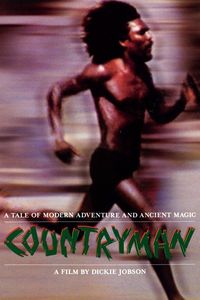
    (On Cable TV, February 2021) Some movies are more about atmosphere than plot, and that certainly applies to Countryman, a rather ordinary early-1980s action/adventure film that distinguishes itself by sole virtue of being made and set in Jamaica. Reggae music prominently features on the soundtrack, as a Jamaican action hero rescues an American woman and manages to overturn a plot by a dangerous colonel. Much of the film is a standard succession of low-octane chases and shootouts, but it’s proudly set in Jamaica with Rastafarian lingo (subtitles are suggested) and attitudes to match. The hero is unusually humanist by action movie standards, eschewing violence in an attempt to reinforce Bob Marley’s message of peace, love and understanding. It’s quite an unusual mixture, and I wouldn’t be opposed to seeing a modernized update and the same attitude toward action films. The technical production values are very, very rough, but the soundtrack is amazing and the attitude is almost unlike anything else. Writer-director Dickie Jobson’s Countryman may be a curio, but it’s an interesting curio.

  • The Swing of Things (2020)

    The Swing of Things (2020)

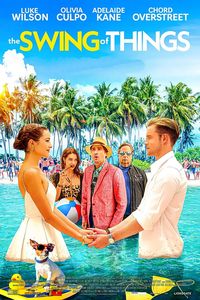
    (On Cable TV, February 2021) American sex comedies tend to be a hit-or-miss kind of genre, with far many more of them falling toward the “miss” end of the spectrum: Part of it is the very weird relationship that American society has with sexuality, torn between basic desire and puritan embarrassment. This often leads to sex comedies using humiliation as a primary comic device, just to make sure that no one enjoys themselves too much. When coupled with the ludicrous nature of the MPAA ratings system when it comes to sexuality, which either classifies things as pornographic or not, there’s a wide chasm between what films may want to talk about and what can be seen on-screen. Then there’s the third factor, which is terminal laziness whenever salacious topics are brought up: American sex comedies think it’s enough to use coarse language, bare skin and call it a day — after all, aren’t viewers going to be satisfied with just that? I’ll stop the analytical enumeration right here before it turns into a Ted Talk, but suffice to say that The Swing of Things ends up at the intersection of all three issues, with the laziness factor being the dominant reason for the film’s overall muted impact. The premise is contrived but simple enough, as two families heading south for a destination wedding somehow end up as a swinger’s resort to celebrate the nuptials. Things then predictably fall apart, as the wedding couple is tested by temptations. Interestingly enough, the conclusion is quite a bit gentler than you’d expect, as the characters learn to live with their desires. (Much of the comedy also goes under the “old people having sex” trope, which is another thing that American society is weirded out about — but I promised that the Ted Talk was over, right?)  Still, The Swing of Thing is more interesting to analyze than to watch. Lazy bottom-basement filmmaking makes even the splendid Jamaican backdrops feel boring, and there’s never a spark of comic competence in the way director Matt Shapira handles the underwhelming script. Flat staging and actors left to their own devices can’t really help the result. While the script could have ben retooled to greater impact, this would have meant getting away from its juvenile attitude and fondness for humiliation. Nudity can’t save the film, and only highlights the need for creating the kind of acceptable social middle ground between comedy and pornography in which there can be honest (even comic) discussion about sexuality, desire, jealousy and the notion of infidelity. But really — I’m lending The Swing of Things far too much gravitas in associating it with those issues. It’s really just a silly sex comedy, and it’s probably best appreciated (or not) as such.

  • Brand New-U aka Identicals (2015)

    Brand New-U aka Identicals (2015)

    (On Cable TV, February 2021) My attitude toward Science Fiction movies is informed by decades of appreciation for the genre (especially in its written form), so I can be both a sympathetic audience and a merciless critic. Every time, I hope for the best… but often, I am scornfully disappointed. My optimism often translates in the hope that even a shaky opening will be redeemed later on, but this approach does not work with Brand New-U: whatever haziness there is about the premise, plotting, characters or tone during the opening moments either remains the same or gets worse as the film unfolds. As best as I can make sense of it, the narrative has something to do with a company offering cloning and replacing someone similar to you in their much-better lives. Even in so few words, the premise doesn’t make any sense — why would a company cater to the lower-class in offering to replace someone better and richer? Past takes on similar topics (think Seconds or Self/Less) have always explored the super-rich trade for obvious reasons. But such narrative haziness is among Brand New-U’s many failings, as I defy anyone to make sense of the characters in their multiple permutations, the meaningless finale, the torpid pacing of the film, the neon visuals or the irritating droning that make up most of the film’s soundtrack. Brand New-U wants to be more than just a cheap SF film, but it achieves even worse results — calling it incomprehensible may be pushing it too far when you can just say that it’s so unpleasant that no one wants to make sense of it. By the end, as nothing is wrapped up, I felt the hollow disappointment made so familiar by countless bad Science Fiction movies that can’t be bothered to master even the most basic elements of a good film. It’s a miserable experience and a stain on writer/director Simon Pummell’s filmography. Even as an optimistic ever-hopeful kind of SF fan, I’d rather not have Science Fiction movies if the alternative is something as terrible as Brand New-U.

  • Maximum Impact (2017)

    Maximum Impact (2017)

    (On Cable TV, February 2021) Coming from a parallel universe where humour is very different and plotting is pure melodramatic silliness, Maximum Impact is… no, wait: It comes from Russia, which explains everything. With apologies to any Russian readers, this is a film that revels in low-budget contrivances to produce something that barely satisfies the requirements for a feature film aimed at the basic direct-to-streaming market segment. Featuring a blend of Russian actors/bodybuilders and American actors often best known for their low-budget film appearances, Maximum Impact can’t quite figure out its own plot — it starts with a secret summit between American and Russian diplomats, then shifts gear to focus on the kidnapping of the American representative, even when the antagonist (a former TV martial arts star turned international terrorist?!) can’t quite decide what kind of mayhem he wants to create. To be fair, the film is meant to be funny —although the meaning of comedy here is intensely subjective and can’t always be distinguished from an awkward lack of competence. The American cast is just interesting enough to nudge viewers toward a casual watch — Tom Arnold, Danny Trejo, Kelly Hu, Eric Roberts (hilariously cast as an upper-echelon diplomat) and Bai Ling are a motley crew of B-movie goodness, and director Andrzej Bartkowiak is not an unknown quantity, even despite the eight years since his previous film. Unfortunately, even forgiving viewers will have a hard time liking the result in its funhouse conception of an action thriller. Sure, it’s fun to see Bai Ling act as a nymphomaniac intelligence official — but the film simply can’t create the kind of reality in which this is not awkward. Kelly Hu is likable, but she’s paired with the impassible Alexander Nevsky, creating a difficult mix. I strongly suspect that clashing cultural sensibilities may be to blame for much of the film’s execution problems, although a bad script is probably at the root of it all. I mean — Tom Arnold can be funny, but being saddled with a one-joke character (“I have to go to the bathroom! Again!”) is not the way to use him effectively. Despite the many problems of the film, what saves Maximum Impact from the worst is a rough idea of its own goofiness: even with the cross-cultural issues, the actors clearly aren’t playing seriously. Alas, the director can’t quite get a handle on its own material, so everything is stuck in a halfway state of restrained humour, low-budget action and awkward acting. Too bad: Maximum Impact is not worth a recommendation, but it’s not the worst movie I’ve seen today.

  • No One Lives (2012)

    No One Lives (2012)

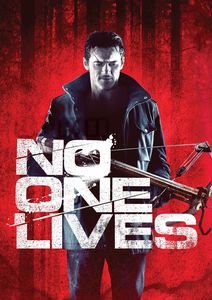
    (On Cable TV, February 2021) Some movies seem custom-made to irritate me, and No One Lives threads perilously close to the point where I’d condemn the film entirely. It’s a horror film that plays rough: The violence is frequent and brutal, with pieces of people casually flying, spilling, exploding or flowing. It makes a protagonist out of an amoral serial killer that takes pride in the flamboyance of his evil and tries to get another character to follow in his footsteps. It’s largely shot at night in grimy environments. The plot doesn’t make sense if you think even slightly about it, depending on a paranoid vision of the world that only exists in horror movies. The line-by-line dialogue is frequently terrible, indulging in exasperating clichés. Perhaps worst of all, it’s far more interested in the detail of its gore than using horror to discuss larger topics. In other words, it has nearly everything that I truly hate about the dumbest variants of the horror genre — it’s the find of film that just makes me sad about humanity in general. Don’t watch No One Lives — it’s a nihilistic gore-fest that will only make your day worse. But even with that assessment, it does have one or two things to save it from worthlessness. The premise is mildly amusing, what with psychopath killers going after what they think is an easy mark in the form of a well-to-do travelling couple, only to realize that they’ve stumbled onto something much worse than they are. Then there is the above-average execution: director Ryuhei Kitamura is stuck with a terrible project, but his execution is dynamic and interesting even despite the gory interludes. Furthermore, Luke Evans is not badly cast as an utter psychopath. In other words, if you’re the kind of person who likes those movies, then this is a well-made movie in that genre. Too bad I’m not part of that group.