Reviews

  • Topper Returns (1941)

    Topper Returns (1941)

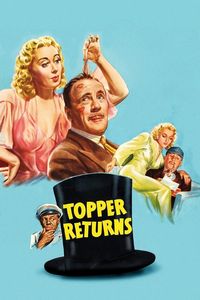
    (On Cable TV, September 2020) As much as I’ve grown allergic to overly laborious origin stories in other circumstances (for instance, in movies about already widely-known characters), there is a definite strangeness in stepping into a series through the third instalments, with many series characteristics already established and in play without much justification. Topper Returns is the third instalment in a series featuring a mild-mannered banker with the power of seeing ghosts, and the complications that ensue when his wife doesn’t understand what’s going on. Clearly playing into its established mythology, it does move at a fairly fast clip—our heroine gets killed (taking it rather well), then finds Topper and recruits him to both solve her own murder and prevent her friend from being murdered as well. The tone of the film is semi-comic—despite the violence inherent in the premise, the characters are upbeat, and the film can’t help but feature a befuddled wife and a bewildered black servant. (I’d like for the servant character to be less stereotyped, but it’s a 1941 film, and the character goes gets a decent amount of screentime.) There’s a pleasant, well-oiled quality to the way the film runs through its paces, exploiting its spooky house setting (always a favourite of mine) and actually going through a surprising amount of plot in less than 90 minutes. The optical special effects are quite good in their own way. Topper Returns is arguably more popular today than its predecessors thanks to accidentally ending up in the public domain, but it’s a reasonably good movie in its own right.

    (Second Viewing, On Cable TV, October 2021) The third instalment of the supernatural comedy Topper series, Topper Returns, abruptly takes a different tack than the previous two. After a pair of romantic comedies fuelled by ghostly intervention, this instalment takes on a murder mystery as a deceased woman (the beautiful Joan Blondell) collaborates with series protagonist Cosmo Topper to find out who killed her. But that’s an overly simplistic description of what goes on in this film, as it blends elements of haunted mansions (with numerous twisty back-passages), crime comedy (with an exasperated police inspector), traditional romance, bickering couples, and even a small star vehicle for noted black comedian Eddie “Rochester” Anderson. Far denser than the previous two films, Topper Returns is also significantly more fun. As someone who loves mysterious old mansions with back passages, the setting has a clear appeal. I still don’t like the series’ inconsistent approach to its ghosts able to appear or materialize at will, but at this point it’s funnier to focus on the vivacious Blondell, helping resolve her own murder with a very striking lack of angst. There’s so much going on that the same plot could have been, with minor revisions, be used to focus on three or four different protagonists—Topper not being the most interesting of them. Still, there’s quite a bit of fun here—Anderson’s portrayal of a black chauffeur will strike some as insufferably racist, but by 1941 standards it’s not that bad, and by having incredulous reactions to the ghostly weirdness around him, he becomes the character through which the audience channels their own reactions. Some special effects still impress. The plotting gets slack toward the end, but the integration of murder mysteries (which were a big B-movie genre at the time) with the series’ ghostly elements works better than expect. Topper Returns is an unexpectedly entertaining film, worth viewing even if you haven’t seen the first two in the series.

  • Someone’s Watching Me! (1978)

    Someone’s Watching Me! (1978)

    (In French, On Cable TV, September 2020) Predictably enough, Someone’s Watching Me! checks off most items on the list of characteristics for early rough movies from a now-famous director: It was made for TV, features a simplistic plot line, and keeps costs low by shooting near Los Angeles. For a long time, this early effort from John Carpenter was almost impossible to find due to its humble origins, and I suspect that catching it on a French-language channel is a bit of a fluke. Still, even for early pre-Halloween work from Carpenter, there are a few nice things here. It’s directed with some competence within the limits of its production: the action moves at a decent pace, the budgetary limits don’t show all that much and it’s not unpleasant to watch. Perhaps more significantly, here we have a 1978 film already tackling the now-commonplace issue of a technologically savvy stalker harassing a single woman. The film is fascinated with then-cutting-edge technology (something reinforced by its opening credits typeface) and the patina now given by the period setting is increasingly fascinating. In other words, Someone’s Watching Me! remains an interesting film even if you abstract the fact that it was directed by Carpenter—a small-scale techno-thriller with a likable heroine (plus a sidekick being played by Adrienne Barbeau) and a great matter-of-fact late-1970s atmosphere.

  • The Tunnel of Love (1958)

    The Tunnel of Love (1958)

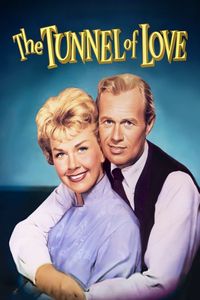
    (On Cable TV, September 2020) The late 1950s were a turning point for legendary singer-dancer-actor Gene Kelly: getting older, he turned his MGM fame into an opportunity to start directing movies. The best known of them probably remains Hello Dolly!, but the first would be the comparatively little-known The Tunnel of Love, a romantic comedy that pushes some disquieting buttons, such as marital infidelity. (Heck—much of the film’s later half is built on the suggestion of infidelity leading to a pregnancy leading to a baby being adopted by the man and his increasingly furious wife.) With such touchy material, it’s no wonder if the film flopped and the critics were not kind—with a number of contemporary reviews being particularly uncomfortable about the boundaries that the film was pushing in terms of sexual frankness. The Tunnel of Love feels tame today, but there’s still some material in here that seems cruel to the female lead: a combination of patriarchal aloofness and contrived avoidance of essential discussions that makes the film less than pleasant to watch even today. (This is one of those films where the plot falls apart if the two main characters had good ongoing communication.) Filmed in black-and-white, it also carries a connotation of seriousness that other colour comedies of the time didn’t have. Richard Widmark is not entirely suited to a role that crucially carries the film—Doris Day, meanwhile, is more pitiable than comic as his long-suffering wife. The direction itself is somewhat unremarkable, perhaps more noteworthy for the topic matter than the actual craftsmanship that it demonstrates. Kelly would later do much better as a director: even in the same infidelity-comedy ballpark, A Guide for the Married Man, ten years later, would be funnier and more interesting to watch, probably buoyed by changing mores and acceptance of a saucy topic matter.

  • The Exterminator (1980)

    The Exterminator (1980)

    (In French, On Cable TV, September 2020) If you want an illustration of how ugly cinema became in the 1970s and how ready it was for this ugliness to be glossed up in the 1980s, you could scarcely do better than watch The Exterminator, which seems dead intent to redo Death Wish except with even more sadism. The story is about a Vietnam veteran taking revenge over a gang of criminals that sent an old combat buddy in a coma, but if you were fast-forwarding throughout the film, you could be forgiven for thinking that the film is about a PTSD-afflicted vet going on a gory rampage throughout Manhattan—threatening people with a flamethrower, leaving them to be eaten by rats, and dumping one of them in a meat grinder. There’s usually a line between anti-hero and psychotic nutcase, but The Exterminator doesn’t really know about that. Writer-director James Glickenhaus justifies its gory vigilantism by creating a climate of overwhelming darkness as per the prevailing mood of the 1970s, complete with a sitting US senator torturing a young woman with a soldering iron in the basement of a Manhattan brothel. It’s all too much, too ridiculous, too over-the-top and out-of-touch. While the opening Vietnam segment feels cheap, the rest of the film manages to claw its way to simple competency, but it’s the ugliness of the message that stays with viewers. Now, let’s not kid ourselves: 1980s vigilante action movies were not necessarily less gruesome in their celebration of so-called heroes killing criminals in cold blood—but they realized that the gore had to be toned down and transformed into rousing action, and that heroes needed more background for audience empathy. Still, The Exterminator shows a sorry intersection between ugly 1970s urban thrillers and out-and-out slasher movies: it’s not a high point.

  • Till the Clouds Roll By (1946)

    Till the Clouds Roll By (1946)

    (On TV, September 2020) Nominally a biopic about the life of composer Jerome Kern, Till the Clouds Roll By is perhaps best seen as an anthology showcase for MGM’s roster of musical talents. The story itself is perfunctory, largely fictional, and revolves around Kern’s best-remembered Show Boat. (Amusingly enough, Till the Clouds Roll By begins with a twenty-minute recreation of several of Show Boat’s set-pieces, years before MGM’s official adaptation—which also featured Kathryn Grayson in the same role.) There’s some additional resonance knowing that Kern died during filming—it’s too bad that his Hollywood years were scarcely covered here, the climax of the fictionalized story having occurred earlier. But that overall plot quickly gets forgiven and trivialized when you get down to the meat of the film, which is a series of nearly thirty musical numbers (some of them very short) featuring some very well-known names and fan favourites. The film gets off to a very strong start during its Show Boat sequence with performances by Kathryn Grayson, the always-funny Virginia O’Brien and a spellbinding Lena Horne. Later highlights include a surprisingly saucy Angela Lansbury, Dinah Shore, a trio of numbers by Judy Garland, Lucille Bremer with Van Johnson, a very short but still impressive dance number with Cyd Charisse, and a final rendition of “Ol’ Man River” by none other than a young Frank Sinatra. When you have such a strong cast of performers, the plot itself becomes inconsequential. While Till the Clouds Roll By doesn’t manage to create the alchemy required to become a great movie musical, it’s a strong collection of material and performers, and it will be best appreciated by those with some understanding (and appreciation) for the roster of mid-1940s MGM musical performers. [December 2021: Now that I’ve seen the 1951 version of Show Boat and read about its production, Till the Clouds Roll By becomes a precious document: a glimpse into an alternate reality where Lena Horne would have played the part that was so well suited to her rather than Ava Gardner.]

  • Orphée [Orpheus] (1950)

    Orphée [Orpheus] (1950)

    (On Cable TV, September 2020) Avant-garde cinema and I aren’t good friends, so it would be trivially easy for me to dismiss Orphée as nothing more than a pretentious experiment. But I like the result more than I expected: In taking Greek mythology and setting it in then-contemporary 1950 France, Jean Cocteau already has something interesting as a foundation. Trying to present a fantasy story with the special effects limits of the time is a further challenge—and given Cocteau’s oft-demonstrated stylistic flair for the poetic, he wouldn’t settle for cheap and ridiculous if cheap and effective was available. So it is that relatively simple optical tricks are used to good effect to portray ghosts and people walking through mirrors, or strolling through a devastated post-mortem landscape with the protagonist standing out as being more real than the dead. (One of the few times that rear-projection degradation is used to stylistic effect.) Other shots include reversed images and other eeriness that do create an effective atmosphere. And that’s not even getting into the updates to the Orpheus myth, with things as mundane as a radio or a rear-view mirror taking on symbolic meaning. While Jean Marais is intermittently annoying as Orpheus (the silted dialogue doesn’t help, nor the odd tonal shifts), María Casares is fascinating as a representative of death—her character seems surprisingly modern in the middle of so much formalism. Now, there are clear limits to my appreciation of the result—my rational mind can’t really rest well in the middle of so much artistic haze, and you can find Cocteau’s commentary about Orphée in my dictionary as the definition of insufferable. But there’s a bit more to Orphée than many French films of the period, and I would argue that the film is now more effective than it ever was, because we are now looking at a millennia-old myth filtered through a poetic take based on reality now seventy years distant. There’s an additional dimension there that was absent for contemporary audiences, and that does help Orphée become an even more fascinating film.

  • Dangerous When Wet (1953)

    Dangerous When Wet (1953)

    (On Cable TV, September 2020) There were a lot of movie musicals in the 1950s, and they can’t all be memorable or effective. Dangerous When Wet, to its credit, does have a semi-memorable hook, what with noted aquatic actor/dancer Esther Williams as the elder daughter of a family of fitness freaks. When their eccentric nature is discovered by a promoter who develops a crush on Williams’s character, he contrives a way to stay close to them by proposing a publicity stunt to have them swim across the English Channel. So far so distinctive, and the film’s most memorable sequence has Esther “swimming” with Tom and Jerry in an animated segment that brings to mind a similar sequence in Gene Kelly’s Anchors Aweigh. The rest of Dangerous When Wet is hit and miss—the opening act in rural America is decently funny, but the film seems to scatter once it heads to Europe and goes back and forth across the channel as an international love triangle develops and resolves itself. Williams herself is a likable presence, although she can’t be as eccentric as the supporting characters that make up her film family. Still, the film suffers from having few snappy tunes or expansive showcase sequences—the Tom and Jerry number is nice, but it’s not over the top. Still, if you’re attuned to the “voice” of 1950s MGM musicals, Dangerous When Wet is a representative example of the form: it can be watched easily, does have a few laughs along the way and features a likable heroine in Williams.

  • Children of the Damned (1964)

    Children of the Damned (1964)

    (On Cable TV, September 2020) I’m not sure that the original Village of the Damned needed a follow-up, and after watching Children of the Damned I’m even more convinced of that idea. To be fair, it does not pick up where the explosive finale of the first classic film ended: it takes the idea of hyperintelligent children with no morals and runs with it in a slightly different direction, except without the intriguing buildup of the first film or its likable protagonist. The result is not terrible—it plays with moral ambiguity, has some chilling set-pieces, and ends on a suitably bittersweet note—but it’s not all that interesting either. It’s a remix that does more to evoke memories of the original than to do its own thing, and as such can’t get away from the shadow cast by its predecessor. There are plenty of ways the film could have been made better, especially through a reworked ending. Even for fans of the first film, Children of the Damned is not essential: at best it’s a surprise for those who have seen and enjoyed the first, albeit coming in with low expectations.

  • Gold Diggers of 1935 (1935)

    Gold Diggers of 1935 (1935)

    (On Cable TV, September 2020) Despite clearly tying itself to Gold Diggers of 1933, the follow-up Gold Diggers of 1935 is a different beast in many ways. The plot is completely different, as could be expected—while a theme of good-natured “gold-diggers” (though they’re rather prefer being called “wealth seekers” or simply “aiming to marry high”) is carried through, the plot itself is different and doesn’t carry any of the characters. More importantly, this film came in right after the imposition of the prurient Hays Code dictating the material that could or could not be shown, and as a result the film feels considerably tamer than its prequel. Which doesn’t entirely invalidate it, of course: Once again, the light comedy material holds the picture long enough until the distinctive Busby Berkeley musical numbers have a chance to wow audiences. While “I’m Going Shopping with You” makes for an early funny song, the film moves in higher gear with “The Words Are in My Heart,” a number that echoes the neon violins of the previous film by undulating movie grand pianos as far as the eye can see. Still, the masterpiece of Gold Diggers of 1935 has to be “Lullaby of Broadway,” which is a self-contained number describing a day in the life of Broadway, with numerous tight stylized shots of people waking up, going to work and going to the shows afterward. It’s quite a good capper to a relatively average film, although those who are interested in 1930s movie musicals will eventually see this one even if for no other reason than to see Berkeley at work. Having such names as Dick Powell, Adolphe Menjou or Gloria Stuart doesn’t hurt, though. There would be two other instalments in the Gold Digger series, but Gold Diggers of 1935, along with the 1933 original, remains the best known of them.

  • Body Bags (1993)

    Body Bags (1993)

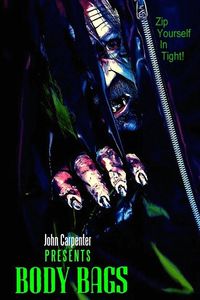
    (In French, On Cable TV, September 2020) Clearly a film by and for horror fans, Body Bags can best be described as another horror anthology movie (patched together from a failed proposal for an episodic TV series), with a moody framing device (John Carpenter playing a morgue worker messing around for the audience) setting the stage for three twenty-some-minute-long segments. The first is “The Gas Station,” featuring Alex Datcher as a student taking up a gas station attendant job in the middle of the night, and (rightfully) feeling scared when a killer is identified as prowling around. Directed by John Carpenter, this a rather straightforward action thriller segment is well-executed but familiar in its topic matter. The second segment, “Hair” (directed by Tobe Hooper), is somewhat more comedic, as a middle-aged Stacy Keach takes increasingly drastic steps to reverse his increasing baldness. It ends in creepy-funny material, although the abrupt end once the joke is explained seems unsatisfying—at least it takes the time to properly dissect the various reactions of its characters to encroaching baldness. The third segment, “Eye,” lands us in straighter horror territory as a baseball player (Mark Hamill with an unfortunate moustache) who lost an eye in a car accident is the recipient of a transplanted eye… who belonged to a serial killer. The eye predictably takes over with disastrous results. As an anthology film, Body Bags is not all that bad—but its most distinctive feature is its unapologetic appeal to horror audiences: There are tons of cameos from horror director here, and the tone is the kind of horror/comedy that reaches as far back as the early EC comics. It’s not world-changing entertainment, but it’s a chance to see a few familiar names having fun, and one of Carpenter’s last good films.

  • C.C. & Company (1970)

    C.C. & Company (1970)

    (On Cable TV, September 2020) The more I explore the movies from earlier decades, the more I realize that while the best-known movies (the “classics”) have a timeless quality, you have to dig into the lesser-known one in order to get a better atmosphere of the times, its pet obsessions, fads and mood. Bikers were a big thing in 1970 with the rise of the Hells Angels, the success of Easy Rider and the free lifestyle that they pursued. It would be inevitable that cash-in pictures would follow, and that’s probably the best way of describing C.C. & Company. This one does have a few things going for it, though, the first of those being none other than Ann-Margret as a journalist who is seduced by our free-living protagonist and eventually kidnapped by his opponent. Much of the fun of the film is in its period detail, naïve-sounding approach to the subject matter, trying to be edgy and cool but today sounding a bit blunt and idealized. Still, considering the mood at the time, C.C. & Company was made to ruffle feathers: bad language and promiscuity abound, taking up the New Hollywood norms over traditional ones. It’s not a particularly good film: the script is not elegant, the shock effect is deployed in lieu of sophistication, and the climax hovers on the edge of ridiculousness. But it’s clearly a reflection of its times, and whose can be worth a look by themselves.

  • Deddo sushi [Dead Sushi] (2012)

    Deddo sushi [Dead Sushi] (2012)

    (In French, On Cable TV, September 2020) If I have properly understood the dynamics of the Japanese film market, there is a minority of movies out there that are made to be excessive, even by Japanese standards. Unfortunately, those are the films that are distributed widely in North America, skewing our perception of what’s happening over there. (Still, you can’t convince me that there’s not a secret clause in the Japanese Constitution that mandates that the country should set a proud world standard for weirdness.) Dead Sushi would clearly be in that tradition: A horror comedy featuring nothing less than homicidal sushi reanimated from the dead thanks to a nonsense serum; it’s clearly a joke writ large. There’s nothing subtle, nothing serious, nothing profound here: just gore effects used to execute a comic premise. I’m not always convinced by gory horror comedies, but Dead Sushi does manage to keep the balance between horror and humour: it’s ridiculous more than anything else, and that makes the dismemberments, impalements and general mayhem easier to take. Curiously enough, the film does spend some time discussing the intricacies of creating sushi, and the good form for eating it—adding substance to the film, but also, paradoxically, making it even funnier once it takes into account the seriousness of the characters about their sushi. I would be wary of showing Dead Sushi to just about any audience, but fans or horror comedies should have a great time watching it.

  • Stray Dolls (2019)

    Stray Dolls (2019)

    (On Cable TV, September 2020) You may go in Stray Dolls expecting another exploitation film in which two downtrodden women take up arms against bad boyfriends and The Man—I certainly did, based on the logline and an incorrect assumption that the title was referencing “Straw Dogs.” The truth, as the very first few moments make clear, is considerably more nuanced. As writer-director Sonejuhi Sinha makes clear, the film is in a grimmer, more superficially realistic tone. As an Indian immigrant (played quite well by Geetanjali Thapa) finds a job as a maid in a seedy hotel, she is forced to befriend a rebellious American girl (Olivia DeJonge, in full trashy demeanour) and quickly gets swept up in a succession of escalating crimes. Drugs, sex, not much rock-and-roll: Taking place in the depressing reality of ultra-capitalistic lower-class America, Stray Dolls goes through the fatalistic descent into hell that marginalized characters are forced into. There’s a decent amount of character development along the way: our Indian immigrant, for instance, if far from being the immaculate flower that other movies could have shown—scar and special skills betray a troubled past, and makes her introduction in the underworld of rural New York State easier than you could imagine at first. I can’t say that I liked the film—It’s dirty, deliberately made to be as un-fun as possible, and the fleeing-to-Canada ending seems like what was left on the table after better ideas were taken away. But Stray Dolls does introduce a few new actors and filmmakers to watch. I do like its willingness to remain serious about a topic that could have spun into exploitative fantasies, and even the grimy settings have their reason in the context of the film.

  • The Marrying Kind (1952)

    The Marrying Kind (1952)

    (On Cable TV, September 2020) According to contemporary accounts, audiences didn’t quite know what to make of The Marrying Kind’s blend of comedy and drama, as it worked its way backward in flashbacks from the divorce court to show the strains of an ordinary marriage. Helmed by George Cukor, the film showcased funny scenes in between more dramatic ones, and I can understand how unpleasant it must have felt for critics and audiences back then to sit through what feels like ninety minutes of arguments between husband and wife. But there’s been a critical re-evaluation of the film by later generations, helped along by a growing familiarity with movies blending comedy and drama—we can draw parallels with 2019’s Marriage Story as a sombre film with darkly comic moments, and quite a few romantic comedies willing to showcase more serious moments on their way to a happy conclusion. It’s not a stretch to say that modern audiences are more sophisticated about their movies—or at least that they’ve seen many kinds of tones and moods. As a result, The Marrying Kind does work relatively well today: The unusual flashback-filled structure is more interesting than most similar films of the time, Cukor makes good use of ironic visuals to counterpoint spoken narration, and there’s an attempt to depict an unglamorous reality at work here. Far from the idealized portrait of marriage and archetypical characters, here we have two people struggling to make it work, suffering humbling setbacks and yet building something together. Judy Holliday does well as the wife, while Aldo Ray is sometimes a bit caricatural as the husband. Still, their work does find a happy compromise between the attempt at realism and the glossiness of studio pictures at the time. It’s a bit too dark to be fully enjoyable, but it will be interesting for those looking for evidence that the studios knew about real life even at the beginning of the glossy glam 1950s.

  • The Invisible Man (2020)

    The Invisible Man (2020)

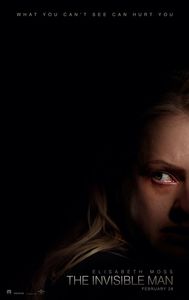
    (On Cable TV, September 2020) While I was on-board for the idea of a “Dark Universe” reimagining the classic Universal Monsters for modern audiences, the evidence so far is clear: the movies that attempted to play in the shared universe were not good, and the ones that didn’t were better. The most recent proof of this can be found in The Invisible Man, a clever rethinking of the classic premise in a modern and surprisingly intimate setting. Rather than blowing up trains, the invisible man here is a supporting character—a sociopathic abuser who keeps tormenting his girlfriend even after death. Starting with a surprisingly disturbing portrait of spousal abuse, The Invisible Man relegates its title character to supporting antagonist status, and instead focuses on the victim as the lead character. Played very well by Elizabeth Moss (not an actress I like, but one that I respect), our heroine spends most of the movie being tormented in various ways by an opponent she can’t see. Cleverly melding cinematic form with theme, writer-director Leigh Whannell spends a lot of time ratcheting us the tension by showing us… nothing. As the camera pans to reveal an empty corridor, as it composes its shots away from its speaking characters to include vast expanses of… nothing where the antagonist could be, it creates a great sense of tension over what may or may not be there. Surprisingly enough, it takes about fifty minutes for the film to start using the special effects that we expect: much of the starting sequences are in fairly realistic mode, with little here to show us the science-fictional aspect of the story. But The Invisible Man is, at its core, a horror film and it’s really effective as such: Fresh from his work on Upgrade, here we have Whannell delivering another well-executed project. It’s not perfect: it’s definitely a bit long and repetitive at first, and the climax is intentionally not the one we could have expected. But it’s suspenseful and effective, and it shows that salvation for the Universal movie monsters is to be found in smaller, heartfelt projects rather than grandiose plans for yet another cinematic universe.