Reviews

  • The Big Knife (1955)

    The Big Knife (1955)

    (On TV, September 2020) Considering my fondness for Hollywood stories about Hollywood, I’m surprised that I don’t like The Big Knife as much as I probably should. The story of an actor negotiating a new contract with his studio while blackmailed due to a few sordid stories (both past and current) sounds like something right up my alley. It’s not as if the film doesn’t have other qualities either: Ida Lupino is wonderful as usual, Rod Steiger chews a lot of scenery, and Jack Palance is sort-of interesting. But in the end, it’s the entire film that fails to impress—perhaps too bleak for esoteric reasons (blame playwriter Clifford Odet, who wrote the theatrical play from which this is adapted), perhaps too stuck to the florid dialogue of the original, perhaps a bit too sedate and stage-bound as the theatrical play itself. I’m not sure there’s a crowd-pleasing movie to be made about an actor declining a wealth-making studio contract, and certainly not in the way the film ends. Too bad, because there are flashes of wit in the dialogue, and some fun performances—just not the kind of material that transforms a film into something compelling. In the end, I just could not make myself believe in The Big Knife.

  • Three Smart Girls (1936)

    Three Smart Girls (1936)

    (On Cable TV, September 2020) Deanna Durbin was a short-lived star—her time at the top of the box office lasted barely more than a decade, after which she retired and apparently lived a long happy life away from the cameras. While brief, her stardom was justified by the mixture of youthful cuteness, singing talent and comic timing she brought to the screen—if you’re thinking about Judy Garland, well, only a bit of fate separated those two from the MGM star-making factory. You can get a glimpse of her talents in her feature film debut Three Smart Girls, as she plays one of three sisters trying to prevent their father from marrying a gold-digging young woman. Frankly, it’s not that good of a film—in trying to demonstrate Durbin’s multiple talents, director Henry Koster is shackled to a script that throws in various elements in a whole that doesn’t come together. The musical numbers seem to stick out, and the comedy is quite generic. And it all fits in 84 minutes! Somehow, it was nominated for the Best Picture Oscar for its year. Still, there are good bits and pieces here—plus Durbin’s performance. As far as star-vehicle comedies of that time go, Three Smart Girls is unobjectionable—although there are better roles in Durbin’s later filmography.

  • Boy Erased (2018)

    Boy Erased (2018)

    (On Cable TV, September 2020) You don’t have to be directly involved in LGBT+ issues to be infuriated by the conversion therapies as detailed in Boy Erased, a drama adapted from the memoirs of a young man sent to such a conversion camp by his parents. The very idea that sexual orientation can be therapied out feels absurd to most viewers, and writer-director-producer-star Joel Edgerton clearly plays to such audiences in showcasing the regressive nature of those implementing or supporting those conversion programs. High-profile stars such as Lucas Hedges, Nicole Kidman, Xavier Dolan and a heavyset Russell Crowe lend further prestige to the production in its militant goals. It would be easy to wrap up the review by only talking about its topic matter, but there are two other things than nag me about Boy Erased. The first is a rape sequence in the first third of the film that seems incredibly pivotal and problematic and then seems shunted off, perhaps because it would distract from the film’s clean “no therapy” message. I’m not knowledgeable enough to correctly assess what happened there, but it still seems to stick out of the film’s narrative without proper acknowledgement or resolution. The second thing is perhaps more fundamental—Boy Erased is a message movie, and agreeing with the message doesn’t quite negate that the film itself is a bit underplayed—facile, predictable and conventional even in the ways it pushes its audience’s indignation buttons. (A lot of the most extreme material seems to be an invention of the film when compared to the book, and to bring together two related things, there’s a whole discussion about whether to keep the rape sequence without properly examining its fallout, while inventing scenes of abuse that never existed.) A better movie exists somewhere, just as militant in its good intentions but more successful in its execution—perhaps with a better script, perhaps with other actors.

  • A Connecticut Yankee in King Arthur’s Court (1948)

    A Connecticut Yankee in King Arthur’s Court (1948)

    (On Cable TV, September 2020) My memories of having read the original Mark Twain novel A Connecticut Yankee in King Arthur’s Court are dim by now, but I remember enough to be able to say that this film adaptation diverges in significant ways from its inspiration. That’s part of the fun in seeing much-adapted classic works of literature, really—you can pinpoint an era’s obsession with the spin they give to the original material. In this case, it’s fair (and accurate) to say that late-1940s Hollywood was seriously obsessed by Bing Crosby, given that his starring turn in A Connecticut Yankee in King Arthur’s Court effectively makes him a bigger auteur of the film than Twain himself. Hey, it’s not as if Twain had his protagonist croon to the cute ladies of the court and lead big musical numbers, right? But yes: This 1948 take on the material transforms it into a Technicolor musical, complete with singing and dancing. While many of Twain’s imaginative plot devices have become stock for clichés, most of the film is watchable enough—especially if you like Crosby. There’s definitely a curiosity value in seeing how thoroughly the material was changed to reflect its leading man, but all of this fuss doesn’t necessarily make this a good movie. In fact, once it’s all sung and done, A Connecticut Yankee in King Arthur’s Court is more notable as a star vehicle than for being an adaptation of a classic literary work… or much of a film by itself.

  • Battle for the Planet of the Apes (1973)

    Battle for the Planet of the Apes (1973)

    (On Blu-ray, September 2020) I expected to dislike the original Planet of the Apes series the more I went into the later much-derided instalments, but on the contrary, I find myself unexpectedly impressed by how much the series was able to put on the table even then—the inspiration for the 2010s remakes is clearly seen in the last few films of the original series. But even I struggle to find anything more to say about the last film of the original series. The fifth instalment Battle for the Planet of the Apes certainly feels like an epilogue looking for something to say—it repeats points of previous episodes, looks as if it was filmed with enthusiastic LARPers on a weekend getaway and tortures itself by staying close to the previous films despite an obvious time skip. It’s worth a look for the material it laid out for the later remake series, but it can be a slog to get through thanks to the slow pacing, rough dialogue and meaningless plotting. There are a few extended battle scenes later on that highlight where the meagre budget has been spent, and it’s hard to stay mad at a film that ends the series with an ambiguous message of interspecies harmony. Still, it’s a whimper of a conclusion rather than a bang: the earlier instalments had much more to say.

  • Conquest of the Planet of the Apes (1972)

    Conquest of the Planet of the Apes (1972)

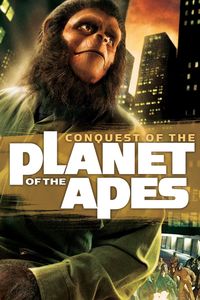
    (On Blu-ray, September 2020) I hadn’t really explored the later instalments of the original Planet of the Apes series, but now that I am, I realize how little the rather good 2010s remake series actually invented. In Conquest of the Planet of the Apes, the story takes a time skip into the near-future (from 1972’s perspective) and tells us about how apes replaced cats and dogs as pets, learned to talk and eventually rebelled thanks to the leadership of the baby ape born of its time-travelling parents. Conceptually, the Big Idea is intriguing, and some of the smaller ideas work as well. On-screen, however, the film is hampered by a low budget, dialogue-level silliness, and a lack of expertise in deploying science-fictional devices. (A compliant common to most of the later movies of the series.) While the film does build to a haunting climax, it seldom makes a lot of sense getting there—the idea of future-ape being the catalyst barely makes sense, considering the sudden intelligence of the apes kept as pets and servants—and that’s not even getting into the unimaginable logistics of getting so many apes as pets in a decade or two. But as with many SF movies of the early 1970s, the point is more about the allegory than the nuts and bolts of the plot: there are a lot of parallels here between the apes and the civil rights movement and Conquest of the Planet of the Apes doesn’t even try to be subtle about it. It does add a layer of additional respectability to a film that wouldn’t be so admirable on purely technical grounds. Of course, the recent remake series has redone all of this except much better and with a far better tonal control. The original series may still be worth a look, though, if only to show the kernel of the idea being worked out.

  • Escape from the Planet of the Apes (1971)

    Escape from the Planet of the Apes (1971)

    (On Blu-ray, September 2020) I’ve never been a big fan of the original Planet of the Apes series, and Escape from the Planet of the Apes is the series’ last gasp of interest before sinking lower and lower into nonsense. There are still some undeniable strengths to this third instalment, starting with how the screenwriters found a way to keep the story going even after the all-destroying climax of the previous film. Now, apes get back to circa-1971 California through more time-travel shenanigans and we can see a reverted image of the first film in how they are welcomed, feared and destroyed by human society. The potential for social commentary here is rich, especially given the era Civil-Rights in which the film was produced, and it’s to the film’s credit that some effort is invested in making the ape protagonists likable, and to try to show how the world reacts to them. Unfortunately, the script seems to have been written with an impossible deadline and a compendium of dumb movie clichés because the first half-hour is so dumb that it becomes exasperating. The film flies from one implausible situation to another not because it’s trying to be funny, but because it’s deliberately avoiding logical plot progression out of a misguided intention to save some revelations for Big Scenes—it doesn’t help that the scientists in this film are among the more incompetent ones ever assembled for a first-contact situation. As a result, Escape from the Planet of the Apes exhausts all goodwill even before it gets where it wanted to go through that slap-dash first act. It leaves a bad impression that can’t be entirely corrected by later improvements in the film’s overall quality. The unrefined dialogue can’t do justice to the ideas that the film wants to explore, and the action doesn’t fly particularly high either. The actors are fine, but the limits of the film’s budget clearly show throughout—although it’s fun to see the 1970s brought to life so unpretentiously. Still, the beginning hurts, and so does the overly pessimistic ending (although this was now the New Hollywood grim-dark era, and it’s not as if the series do far didn’t already feature two of the bleakest endings in American cinema at that point). I’m glad I didn’t stop watching when the script’s stupidity was unbearable because Escape from the Planet of the Apes does improve significantly after a while. But it brings my appreciation to a muddled ambivalence rather than anything overly positive.

  • Sons and Lovers (1960)

    Sons and Lovers (1960)

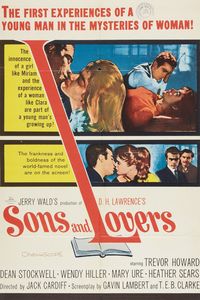
    (On Cable TV, September 2020) I’m making a point of trying to watch ever single Best Picture Academy Award nominee, and I’m having a generally good time! The vast majority of the movies having earned such an honour are of high cinematic quality, and many of them do have that extra special ingredient that makes them worthwhile even decades later. But there are exceptions, and the English adaptation of D. H. Lawrence’s Sons and Lovers is one of them for me. Proudly belonging to the “subtle psychological drama” school of Oscar nominations, it’s a low-octane, intimate story of a young man’s inability to form bonds with anyone else but his mother, and it’s about as dreary as it sounds. Filmed in semi-realistic black-and-white, with actors clearly working within a subdued emotional palette, it’s meant as a small-scale small-town drama and is unfortunately far too successful as such: the characters are boring, the pacing is glacial, and the ending is a deliberate downer. Dean Stockwell stars but does not impress. There are far better choices out there, and to think—Spartacus wasn’t even nominated for that year’s Best Picture award, while Sons and Lovers was.

  • Leave Her to Heaven (1945)

    Leave Her to Heaven (1945)

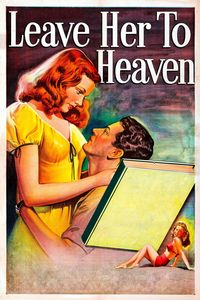
    (On TV, September 2020) The first half-hour of Leave Her to Heaven had me very, very confused—it’s a film noir, and yet I was served a Technicolor romantic drama about a man and his possessive new wife. While the images were spectacular (That lodge! Wow, that lodge!) and a foreboding prologue promised much, we were so deep in melodramatic territory that I found my attention slipping—Sure, Gene Tierney is always worth a look (although Jeanne Crain has her beat here), but would the film eventually get any better? And then it does, spectacularly. After a few arguments realistic enough to be uncomfortable, the film cranks it up midway through as a shocking death puts the female lead’s psychological cruelty to the forefront, and then it’s off to races as things get more and more convoluted for our likable protagonist. There are femmes fatales in film noir, and then there’s Gene Tierney’s character here, willing to plot revenge from beyond the grave in an effort to ensure that her husband will remain hers no matter what. By the end of Leave Her to Heaven, the film’s moniker as “the first Technicolor film noir” made complete sense—although I note with some amusement that it does provide a somewhat uplifting ending after so much misery. The blend of genres may be off-putting on a first viewing, but it does make the film stand out, even today, as something refreshingly different. Cornel Wilde is fine in the male lead role and Vincent Price does make a mark in a relatively short turn as a jilted then prosecuting attorney. But the film belongs to Gene Tierney, who was nominated for an Oscar for her performance. I’ll note that the film fits rather well in the “domestic thriller” subgenre of the era, albeit gender-flipped so that it’s the woman who is the threat rather than the husband. From an inauspicious beginning, Leave Her to Heaven does pack quite a punch in its later half. If you’re bored still after the first few minutes, keep watching—it gets much better.

  • Viva Zapata! (1952)

    Viva Zapata! (1952)

    (On TV, September 2020) The best reason to watch Viva Zapata is for Marlon Brando, and Marlon Brando is probably the best reason not to watch the film as well. Of course, that statement will hinge a lot on how you feel about Brando playing a Mexican revolutionary through a mixture of a stereotypical accent and quite a bit of mumbling. I pretty much loathed it (in keeping with a surprisingly large chunk of Brando’s filmography), and that’s probably where my review should stop. Alas, there’s more to it. Directed by Elia Kazan, featuring an Academy Award-winning supporting performance by Anthony Quinn and a screenplay by John Steinbeck (plus Daryl F. Zanuck producing), Viva Zapata is no lightweight fly-by-night production: It was intended as a prestige film, and the two things preventing the film from being recognized as an epic 1950s film are its restrained length (less than two hours) and black-and-white cinematography. It surely plays fast and loose with the historical facts—Zapata here is presented as a populist folk hero, illiterate (which wasn’t true) and utterly unremarkable from a political point of view. Worst of all is the somewhat tepid pacing and lack of sustained interest. At least Quinn is reasonably authentic. As for the rest of Viva Zapata—well, can you stand two hours of Brando mumbling? Some think that’s the best thing ever; others will want to claw their way to the exit.

  • Quiz Show (1994)

    Quiz Show (1994)

    (Second Viewing, Youtube Streaming, September 2020) I first saw Quiz Show in the mid-1990s and had kept the memory of a dense, smart, compulsively watchable drama about the early days of television quiz shows. Fortunately, a second viewing sustains those high expectations. A historical fictionalization of the quiz show-fixing scandals that roiled TV networks in the 1950s, it’s a throwback to another era but with the same human flaws. Ralph Fiennes plays a telegenic academic from a respected family who comes to accept being fed the answers by the quiz show producers, while John Turturro is the less appealing participant whose volatile personality ends up being a key element in uncovering the scandal. Directed by Robert Redford, Quiz Show is a handsome, polished mid-budget production that seldom talks down to its audience—perhaps the kind of film that is endangered today. It still has a lot to say, as it grapples with the perennial sin of fraud for entertainment, and the irresistible impulse to arrange, guide and control even that’s supposed to be spontaneous. By virtue of being a sober period drama, Quiz Show hasn’t aged much in cinematographic terms, and certainly remains of interest at an age of artifice, high and low.

  • Sometimes They Come Back (1991)

    Sometimes They Come Back (1991)

    (In French, On Cable TV, September 2020) You can certainly see glimpses of better Stephen King stories in Sometimes They Come Back—having a character confront supernatural horrors from an event thirty years before certainly smacks of It, and having an American classic car take centre stage is obviously reminiscent of Christine. We’ll never know how much of this was producer Dino De Laurentiis leering at other King properties he didn’t have the rights to. Not that it matters, considering that the film is weak stuff all-around: a ghost story spanning three decades, it’s about a schoolteacher coming back thirty years later and being forced to finish what he had started in avenging the death of his brother at the hands of a greaser gang. Sometimes They Come Back is not strictly terrible, but it’s intensely generic: production values aren’t that high, and the casting is indifferent at best. There are clearly worse King adaptations, but not so many of them that this warrants attention.

  • Alone in the Dark (1982)

    Alone in the Dark (1982)

    (In French, On Cable TV, September 2020) Coming at the tail end of the 1979–1982 slasher craze, Alone in the Dark definitely knew what it was doing in revolving around a handful of psycho killers escaping from an insane asylum during a power outage and targeting their psychiatrist. Quickly shifting to home-invasion thriller, the film clearly upholds the tropes of the subgenre, and doesn’t care much about narrative cohesion. The biggest draw of the film, even today, is a cast that throws in Jack Palance, Donald Pleasence and Martin Landau together as psychiatrists and psychopaths. (Elsewhere in the film, Lin Shaye has an early brief role.) Better executed than average by writer-director Jack Sholder, Alone in the Dark does, however, remain a first-wave slasher—interesting if you’re into the whole psychopaths-with-knives thing; otherwise not very much.

    (Second Viewing, On Cable TV, January 2021) Not remembering my first viewing, it took me a few false starts before I was able to make it (again) through Alone in the Dark. Either I stopped midway through, or I left it running while I was doing something else and realized by the end of it that I was never compelled to follow what was happening. When I finally sat down to watch with (mostly) undivided attention, I’m not sure I got much more out of it. The first half-hour does have something worth paying attention to: As a psychologist takes residence at an insane asylum, he has trouble connecting to a close-knit foursome of violent criminals, who blame him for the death of their previous psychiatrist. When a power outage strikes, they soon escape and head for his residence. The rest of the film, alas, is more or less a home-invasion thriller, albeit with a twist that can unfortunately be seen (or rather not seen) from the very introduction of the antagonists. If there’s any reason to watch the film, it’s probably for the casting of a few familiar actors: Jack Palance, Martin Landau and Donald Pleasence all have substantial roles here, with none other than Lin Shaye (who finally achieved horror stardom three decades later!) making a short appearance early in the movie. Alone is the Dark does work well in its execution, but it does boil down to a very average early-1980s horror film. That may not sound like much (it partially explains why I didn’t even remember seeing the film a few months ago), but it’s slightly more interesting than the omnipresent slashers of that time.

  • Wanda (1970)

    Wanda (1970)

    (On Cable TV, September 2020) While, on paper, Wanda looks like the kind of couple-on-the-run movies that were so popular in 1970s New Hollywood, the film is nothing like that. Almost entirely conceived (written, directed, produced) and starring Barbara Loden, it’s a character study of an aimless young woman who latches on to a bank robber as she leaves the rest of her miserable life behind. Road movie, aimless drama and gritty portrait of an unglamorous low-rent America, Wanda is all that and more, or maybe less, considering how threadbare, stripped-down, slow-paced and meandering it is. You can recognize the ambition to create something new and personal here—this is absolutely feminist filmmaking despite presenting a character so weak and flawed as to be loathsome. Representation can take the form of a character study as much as fist-pumping inspiration. Wanda may not be for everyone, but its historical importance seems secure (as, I’m told, the first film written, directed and played by the same woman)—and it’s not as if we’re forcing people to see it.

  • Incubo sulla città contaminata [Nightmare City aka City of the Walking Dead] (1980)

    Incubo sulla città contaminata [Nightmare City aka City of the Walking Dead] (1980)

    (In French, On TV, September 2020) I have no perceptible affection for circa-1980 Italian horror films (whether they’re about zombies of cannibals—same difference) but there were a few times in Nightmare City when I caught myself thinking, “Hey, this is almost interesting.” Not often, and never for too long, but still—I suppose I’m reacting more favourably to the idea of a city-wide zombie emergency, to the promising opening sequence (in which a cargo plane disgorges a group of zombies, effectively beginning the apocalypse), and to an audaciously dumb double-jot-nightmare ending. Alas, it doesn’t amount to much because director Umberto Lenzi doesn’t have the budget nor the wits to keep this interesting on a moment-to-moment basis. The makeup effects are not good, and the film’s cheap production values keep undermining whatever it wanted to do: gore in a well-made film can be tolerable, but it just looks laughable and pretentious in a cheap film like Nightmare City. Whatever promise it has is frequently wiped out, and, in the end, only confirmed my prejudices against that horror film subgenre.